
Patient Assistance Programs from Drug Companies: Eligibility Criteria Explained
 Feb, 22 2026
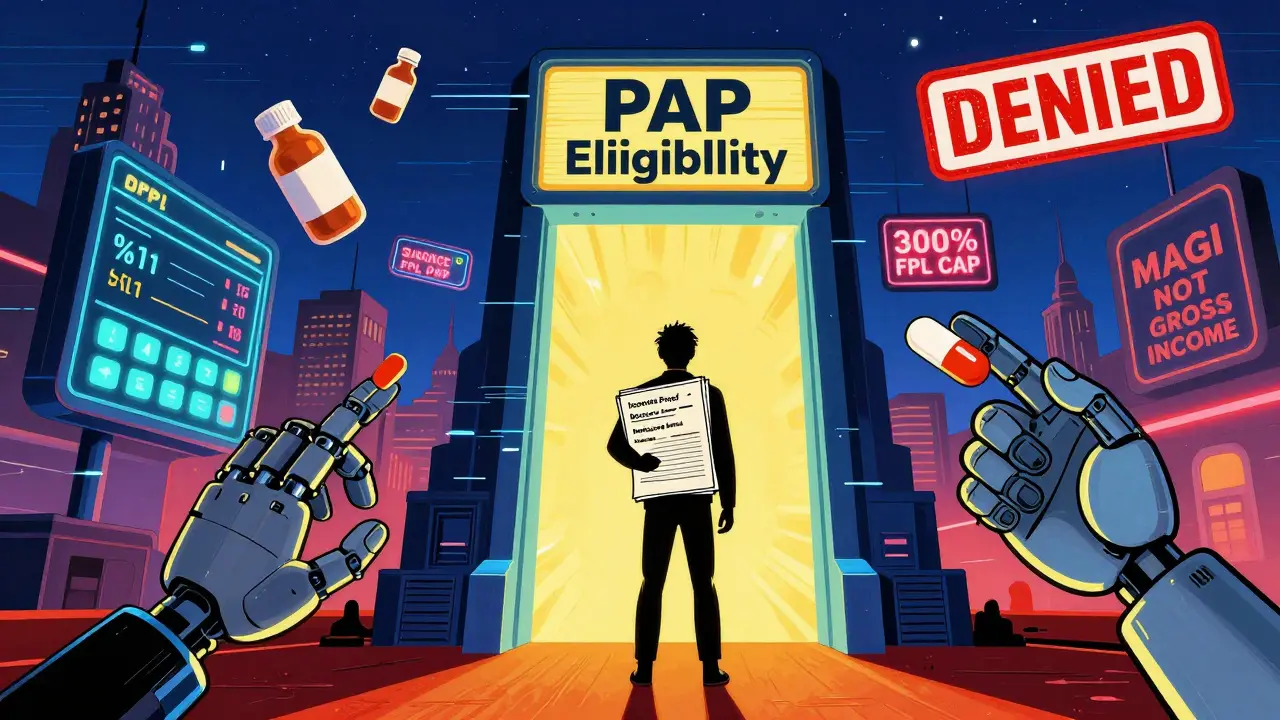
Getting life-saving medication shouldn’t mean choosing between rent and refills. But for millions of Americans, high drug prices make that choice real. That’s where patient assistance programs (PAPs) come in - free or deeply discounted medicines offered directly by drug companies to people who can’t afford them. But here’s the catch: eligibility isn’t simple. It’s full of hidden rules, income limits, insurance traps, and paperwork nightmares. If you’re struggling to pay for prescriptions, this isn’t just helpful - it’s essential reading.
Who Actually Qualifies?
The biggest myth about these programs is that they’re for the completely uninsured. That’s only partly true. Most major drug companies - Pfizer, Merck, AbbVie, GSK, Takeda - require you to be either uninsured or underinsured. But what does "underinsured" really mean? It means your insurance doesn’t cover the drug you need, or your out-of-pocket costs are so high they push you into financial hardship. You can’t just have any insurance and still qualify. For example, Pfizer’s program outright denies people with commercial insurance, even if their plan doesn’t cover the medication. The same goes for GSK and AbbVie. If your insurer tells you to apply to the drug company’s program to get your drug, you’re already disqualified.Income Is the Gatekeeper
Nearly every program uses income as the main filter. The standard? A percentage of the Federal Poverty Level (FPL). For 2023, 500% of FPL means $75,000 a year for a single person, and $153,000 for a family of four. That sounds high - until you realize most programs don’t let you go that high. Pfizer’s program for routine medications like Eucrisa caps eligibility at 300% FPL - $43,200 for one person. For cancer drugs? They bump it up to 500-600% FPL. GSK uses $58,650 for one person and $120,570 for four. Merck allows hardship exceptions for insured people, but only if income is below 400% FPL and you can prove medical and financial distress.Here’s what trips people up: they report gross income, but programs use Modified Adjusted Gross Income (MAGI). That’s the number the IRS uses for Obamacare subsidies - it’s not your paycheck total. It’s your income minus certain deductions. If you file taxes, use your Form 1040. If you don’t, you’ll need pay stubs, W-2s, or a signed letter from your employer. One study found 31% of applicants messed up this step. Don’t be one of them.
The Medicare Trap
If you’re on Medicare, things get even trickier. Most drug company programs won’t help you if you’re enrolled in Medicare Part D - unless you’re below 150% FPL ($20,385 for one person in 2023). Even then, you must first apply for Medicare’s Extra Help program and get denied. Only then can you qualify for the manufacturer’s PAP. Why? Because Medicare doesn’t want drug companies subsidizing costs that should count toward your catastrophic coverage limit. If a PAP pays for your drug, that payment doesn’t count toward your $8,000 out-of-pocket threshold (2024 level). That means you stay stuck in the "donut hole" longer. Some people with income between $18,000 and $20,000 fall into a gap: too rich for Extra Help, too poor for PAPs. That’s real. That’s why 42% of applicants had to apply three or more times just to get approved.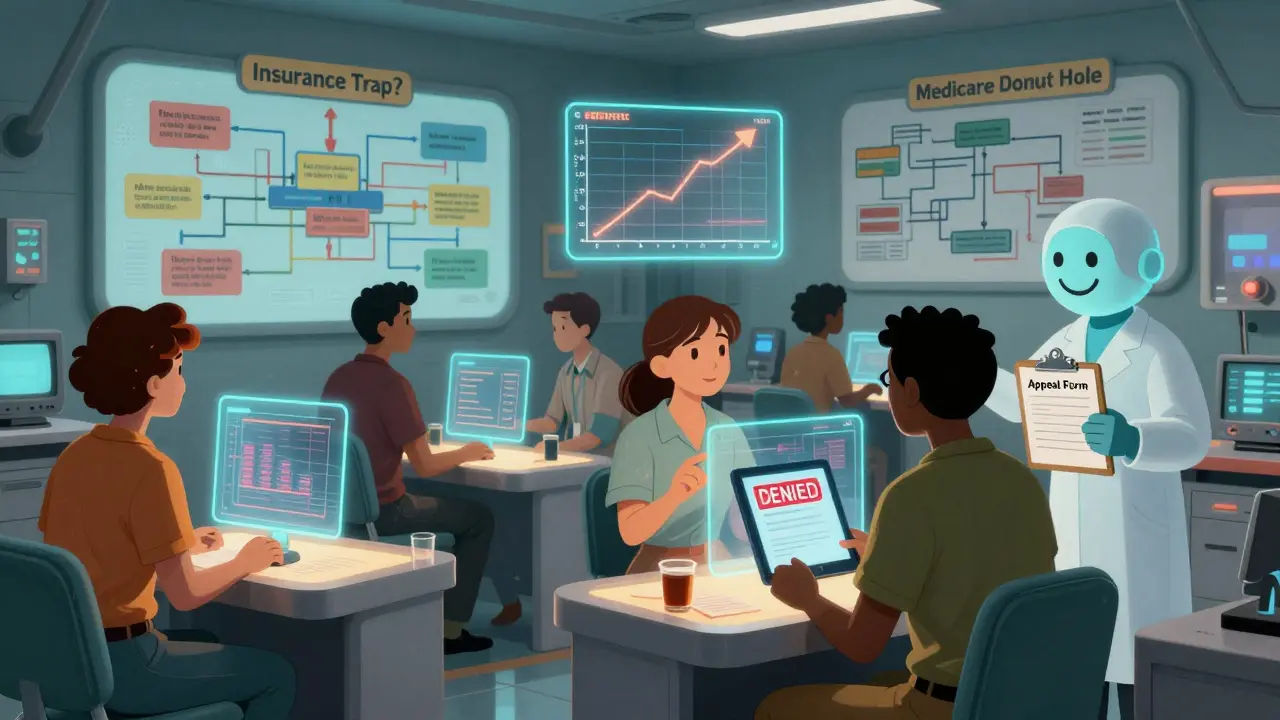
Insurance Isn’t the Only Barrier
You need more than income. You need proof you live in the U.S. and are treated by a U.S.-licensed doctor. No exceptions. No international patients. No telehealth from abroad. You also need your doctor to sign off - not just a prescription, but a form verifying your diagnosis, treatment plan, and that you can’t afford the drug. This step alone delays approvals by an average of 28 days. And don’t forget: you’ll need to reapply. Every year for basic meds. Every three months for expensive cancer or autoimmune drugs. GSK requires annual re-enrollment. Pfizer asks for quarterly updates on specialty drugs. If you miss a deadline, your medication stops.What Drugs Are Covered?
Not all drugs are created equal. PAPs focus on high-cost medications - the kind that cost $10,000 a year or more. Oncology drugs? Almost always covered. Insulin? Yes. Rheumatoid arthritis biologics? Yes. Antibiotics? No. Blood pressure pills? Rarely. The median annual cost of a drug covered by a PAP is $1,157. For drugs not covered? Just $367. That tells you everything: these programs exist to help with specialty drugs, not generics. If your drug is cheaper than $500 a year, you probably won’t qualify. The programs aren’t designed for that.How to Apply - And Avoid Rejection
Here’s the reality: 37% of initial applications get denied. The top reason? Incomplete paperwork. Here’s how to avoid it:- Go to the drug company’s official PAP website. Don’t trust third-party sites.
- Use their online portal. Pfizer’s RxPathways, GSK’s Patient Assistance Foundation, Merck’s program - all have web forms now.
- Have these ready: Social Security number, proof of income (tax return, pay stubs, employer letter), proof of address, doctor’s contact info, prescription details.
- Double-check household size. 52% of errors happen here. Include everyone living with you who contributes to or depends on your income.
- Get your doctor to sign the form early. Call them. Don’t wait for them to call you.
- Apply for Extra Help first if you’re on Medicare. Save the denial letter.
AbbVie’s user testing showed the average application takes 27 minutes. Most errors happen in the income section. Use the IRS MAGI calculator if you’re unsure. And if you’re denied, don’t give up. Appeals are common. Many people get approved on the second try.
What If You Don’t Qualify?
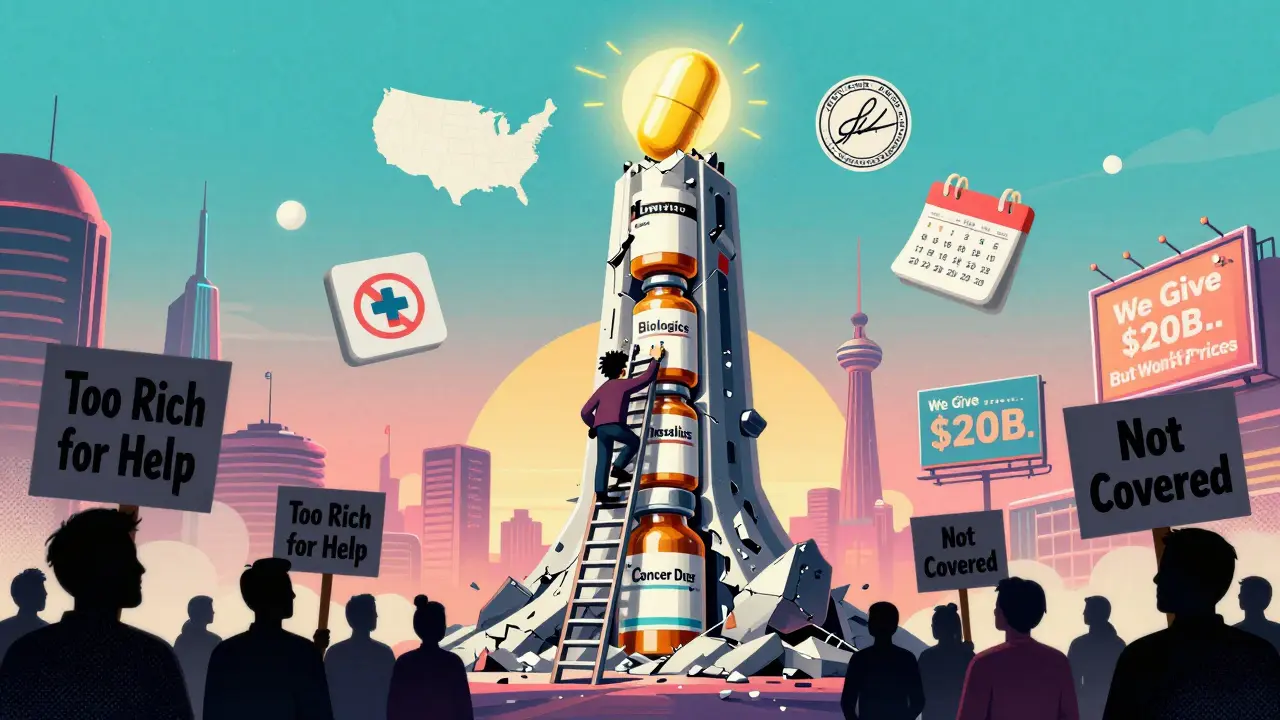
If you’re turned down by the drug company, look elsewhere. Independent charities like the PAN Foundation and HealthWell Foundation sometimes help people who don’t qualify for manufacturer programs. They have stricter income caps (usually 400-500% FPL) but are more flexible on insurance. They don’t care if your plan tells you to apply to the manufacturer - they’ll help anyway. They cover over 60% of all charity PAPs now. You can also check with local clinics, pharmacies, or nonprofit groups like the Patient Advocate Foundation. They have navigators who can help you fill out forms and appeal denials.The Bigger Picture
These programs exist because drug prices are unsustainable. In 2021, pharmaceutical companies gave away over $20 billion in free meds. That’s a lot - but it’s still only 2.3% of total U.S. drug spending. Critics say PAPs let companies avoid lowering prices. They’re right. As long as patients can get help through these programs, there’s little pressure to cut costs. But for now, they’re the only safety net for millions. The Inflation Reduction Act will cap Medicare out-of-pocket costs at $2,000 in 2025. That could cut PAP use among seniors by 40%. But for the 27.5 million underinsured Americans - people with high deductibles, no coverage for certain drugs, or jobs without insurance - PAPs will still be a lifeline.Can I get help if I have private insurance?
Usually not. Most drug company programs require you to be uninsured or have insurance that doesn’t cover your specific medication. If your insurer tells you to apply to the manufacturer’s program, you’re automatically ineligible. Some exceptions exist for hardship cases under Merck’s program, but you must prove extreme financial and medical need.
Do I need to be a U.S. citizen to qualify?
No. Citizenship isn’t required. But you must live in the United States and receive treatment from a U.S.-licensed doctor. Proof of U.S. address - like a utility bill or lease agreement - is mandatory. Programs won’t help people living abroad, even if they’re U.S. citizens.
How long does it take to get approved?
Approval usually takes 7 to 14 days. Once approved, most people receive their medication within 72 hours. Delays happen when paperwork is incomplete. Doctor signatures, income documents, and Medicare denial letters are the most common holdups. Applying early and double-checking every form can cut processing time in half.
Can I apply for multiple drug assistance programs at once?
Yes. If you take several expensive medications, apply for each program separately. Many people get help for insulin from one company, cancer drugs from another, and autoimmune meds from a third. There’s no rule against applying to multiple programs. Just make sure you meet each one’s specific eligibility rules.
What if my income changes after I’m approved?
You must report it. Most programs require you to re-verify income every year - or every three months for specialty drugs. If your income goes above the limit, your aid may stop. If it drops lower, you might qualify for more help. Don’t wait. Contact the program immediately. Most have dedicated phone lines or online portals to update your status.
Are PAPs the same as coupons or discount cards?
No. Coupons and discount cards (like GoodRx) are for people with insurance and only reduce your copay. They don’t cover the full cost. PAPs give you the medication for free or at a very low cost. You can’t use coupons if you’re on Medicare Part D - but you can use PAPs if you meet the income rules. They’re completely different systems.
Brooke Exley
February 24, 2026 AT 07:34Just got approved for my insulin PAP after 3 tries-seriously, y’all need to know this stuff. I’m a single mom working two jobs, and my insurance says ‘we cover insulin’ but only if you pay $1,200/month. That’s not coverage, that’s a joke. The form took 45 minutes, my doctor almost didn’t sign it, and I had to fax my pay stubs from my side gig. But I got it. Don’t give up. You’re not alone. And yes, MAGI is NOT gross income-learn that one early. I used the IRS calculator. It saved me.
Also-apply for Extra Help even if you think you’re too rich. I was denied, then appealed, then got approved. The system is broken, but it still works if you fight it.
And for the love of god, don’t use third-party sites. Go straight to the manufacturer. Pfizer’s RxPathways is clunky but reliable. GSK’s portal? Still loads like it’s 2012. But it works.
Alfred Noble
February 26, 2026 AT 00:41bro i just applied for my rheumatoid arthritis med and got denied bc they said my income was too high?? i make 48k a year and live in ohio w my mom and 2 cats. how is that too high?? i used my 2023 tax return and everything. i even called their helpline and the lady said ‘well according to the algorithm you’re at 310% fpl’ i said ‘but i have no other income’ and she said ‘the system doesn’t see it that way’
so now im trying pan foundation. also i have a dog. he’s a good boy. he licks my face when i cry. that’s my therapy.
ps. i typed ‘magi’ as ‘magi’ 3 times. forgive me. i’m tired.
Matthew Brooker
February 26, 2026 AT 21:44Let me tell you something real. These programs aren’t charity-they’re damage control. Pharma companies make billions off these drugs, then turn around and offer ‘free’ meds to people who can’t afford them. It’s a PR stunt wrapped in bureaucracy. But guess what? I don’t care. If it gets me my medication, I’ll fill out 100 forms. I’ll call my doctor at 11 p.m. I’ll beg. I’ll cry. Because I’m alive because of this system.
And yeah, the income limits are arbitrary. The paperwork is insane. The Medicare trap? Real. But you know what’s worse? Not getting your insulin. Not getting your cancer drug. Not getting your next dose.
So apply. Even if you think you’re ineligible. Even if you’re scared. Even if you’re tired. Do it. Someone out there needs to hear this: you’re worth the fight.
Emily Wolff
February 27, 2026 AT 22:50Uninsured? Underinsured? Please. This is just a glorified welfare system for people who can’t budget. If you’re making over $50k and can’t afford a $300/month drug, maybe you shouldn’t have bought that Tesla, or that vacation to Bali, or the 12 subscriptions you didn’t cancel. These programs exist because Americans have zero financial discipline. Stop acting like you’re a victim. Get a second job. Sell something. Live cheaper. This isn’t a right-it’s a privilege granted by corporations who are tired of being sued.
Lou Suito
February 27, 2026 AT 23:01Wait-so you’re telling me if I’m on Medicare Part D AND I have an income above 150% FPL, I’m SOL? Even if my drug isn’t covered? Even if I have a $10k deductible? Even if I’m paying $1,500/month out of pocket? And the government won’t let the manufacturer help because it ‘doesn’t count toward catastrophic coverage’? That’s not policy-that’s a glitch in the matrix. Someone wrote this system in a dream. Or maybe a spreadsheet. Or maybe a lobbyist who got paid to make sure no one got help unless they jumped through 17 flaming hoops while blindfolded. Also, ‘MAGI’? Who came up with that? It sounds like a spell from Harry Potter. ‘MAGI! MAGI! MAGI!’
Joseph Cantu
February 28, 2026 AT 16:14I’ve been denied twice. Twice. And I know why. It’s not the income. It’s not the paperwork. It’s the government. They’re working with Big Pharma to keep us sick. Why? Because if we get healthy, we stop buying. And if we stop buying, they lose money. They don’t want us to heal. They want us to stay dependent. They want us to keep applying, keep waiting, keep begging. And when we finally get approved? They track us. They know our names. Our addresses. Our Socials. They’re building a database. I saw a post on a forum-someone said their PAP account was flagged for ‘high risk behavior.’ What does that even mean? Are they watching us? Are they making sure we stay sick? I’m not paranoid. I’m informed. And I’m not applying again. I’m done playing their game.
Jacob Carthy
February 28, 2026 AT 22:44Why are we letting drug companies hand out free medicine like it’s Christmas? This is America. If you can’t afford your meds, get a better job. Move to a cheaper state. Stop living like a European. We don’t need handouts. We need grit. I worked two jobs, went to community college, and paid for my own diabetes meds. I didn’t cry. I didn’t beg. I just worked. And now I’m a manager. You can too. Stop expecting free stuff. Earn it. That’s what this country was built on. Not paperwork. Not forms. Not MAGI. HARD WORK.
William James
March 2, 2026 AT 08:58There’s a quiet dignity in fighting for your health. You don’t see it on TV. You don’t hear it in the news. But it’s there-in the 3 a.m. calls to doctors, the fax machines that never work, the third time you reapply because your income changed by $200. This isn’t about politics. It’s about people. Real people. With names. With pets. With kids. With dreams. And yes, the system is broken. But it’s not hopeless. I’ve helped 12 people through this process. I’m not a social worker. I’m just someone who got lucky once. Now I pay it forward. If you’re reading this-you’re not alone. You’re not a burden. You’re a warrior. And you’re doing better than you think.
David McKie
March 2, 2026 AT 21:34Oh, you’re ‘underinsured’? How adorable. You think your $800/month insulin is expensive? Try living in the UK. We pay £20. That’s $25. For EVERY prescription. No forms. No MAGI. No ‘hardship exceptions.’ Just a card. A system. A government that actually cares. You Americans have the most advanced medical technology on Earth… and you’ve turned healthcare into a horror show. You have insurance companies that profit from your illness. You have drug companies that charge 10x what they cost to make. And you wonder why people are angry? You’re not being helped-you’re being exploited. And you’re letting it happen. I’m not even American, and I’m ashamed for you.