
FDA Safety Communications Archive: How to Research Historical Drug Warnings
 May, 24 2026
FDA Safety Communication Research Guide
Quick Reference
-
DSCs: 2010–2024
Broad safety alerts -
SrLC Database: Jan 2016+
Specific label changes -
Device Alerts: Ongoing
Clinical recommendations -
FDA.gov Archive: Historical
Removed/outdated pages
Imagine finding a critical safety warning about a medication your patient has been taking for years. You need proof of when that warning was issued and what it said. That is exactly why the FDA Safety Communications Archive is a comprehensive collection of risk communications issued by the U.S. Food and Drug Administration regarding drug and medical device safety concerns matters. It is not just a digital filing cabinet; it is a vital tool for researchers, clinicians, and legal professionals trying to understand how our understanding of drug risks has evolved.
Whether you are writing a paper on post-market surveillance or checking if a specific labeling change aligns with current guidelines, navigating these resources can feel overwhelming. The system is split into different databases with different rules. Let’s break down exactly where to look and what you will find.
Understanding the Core Components
The archive is not one single page. It is made up of distinct systems that serve different purposes. Knowing which one you need saves hours of searching.
First, there are the Drug Safety Communications (DSCs). These are organized chronologically by year, covering the period from 2010 through 2024. If you see older documents from 2010 to 2015 marked as archived, do not panic. The FDA notes that these are archived because newer DSCs contain updated information. Always check the most recent version first.
Second, there is the Drug Safety-related Labeling Changes (SrLC) Database. This is a specialized resource launched in January 2016. It tracks specific changes to safety information in prescription drug labels. Unlike general communications, this database focuses on technical updates mandated by law or initiated by companies. It covers sections like Boxed Warnings, Contraindications, and Adverse Reactions.
Third, we have Medical Device Safety Communications. These operate differently than drug alerts. They describe the FDA's analysis of current issues and provide clinical recommendations. Recently, in September 2025, the FDA expanded its Early Alerts program to include all medical devices, signaling a shift toward more proactive communication for serious recalls.
Navigating the SrLC Database
If your research involves specific label changes, the SrLC Database is your primary source. It implements requirements from Section 505(o)(4) of the Federal Food, Drug, and Cosmetic Act (FD&C Act). This means every entry here represents a formal, regulatory-driven update.
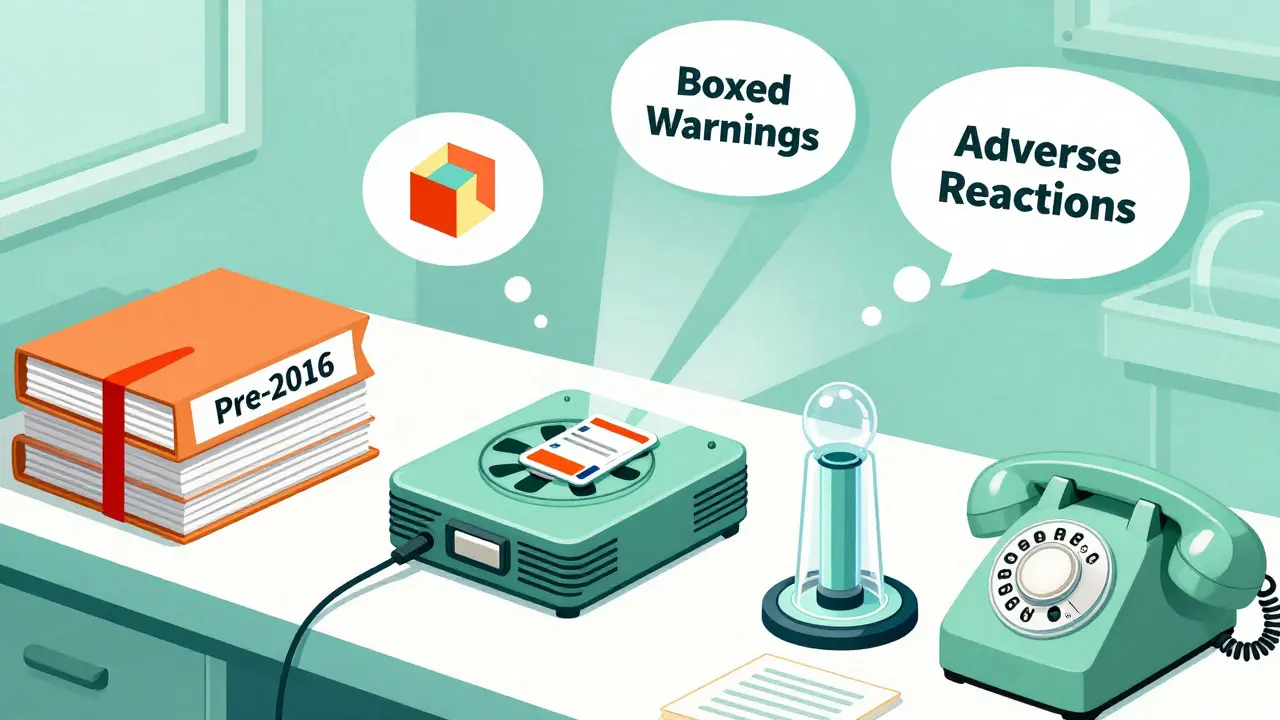
When using this database, keep in mind its limitations. It only contains data from January 2016 onward. If you are looking for labeling changes before that date, this database will not help you. You will need to dig deeper into historical records or use the FDA.gov Archive feature to view previous versions of web pages.
The database includes changes initiated by both the company and the FDA. For example, if a new drug interaction is discovered, the label must be updated. The SrLC Database captures these updates in sections such as:
- Boxed Warning
- Contraindications
- Warnings and Precautions
- Adverse Reactions
- Drug Interactions
- Use in Specific Populations
This level of detail allows researchers to track exactly how safety messaging has shifted over time for specific medications.
Comparing Safety Communication Systems
| Resource | Focus Area | Date Range | Key Feature |
|---|---|---|---|
| DSCs | Drugs | 2010-2024 | Broad safety alerts, chronological archive |
| SrLC Database | Prescription Drugs | Jan 2016-Present | Specific labeling changes, regulatory compliance |
| Device Alerts | Medical Devices | Ongoing | Clinical recommendations, Early Alerts for serious recalls |
| FDA.gov Archive | All Content | Historical | Access to removed or outdated web pages |
Notice how the FDA system differs from other health alert networks. The CDC’s Health Alert Network focuses on infectious diseases. The European Medicines Agency (EMA) has safety communications, but their historical organization prior to 2015 is less systematic than the FDA’s. Health Canada uses a unified database for recalls and alerts, whereas the FDA keeps drugs and devices separate. This specialization helps experts find relevant data faster but requires knowing which silo to enter.
Researching Pre-2016 Data
What happens if you need information from before the modern digital era? The FDA’s authority expanded significantly with the 2007 FDA Amendments Act (FDAAA), which required systematic evaluation of new evidence. However, digital archives did not start until later.
For pre-2016 labeling changes, you must use the FDA.gov Archive. This tool lets you view previous versions of FDA web pages that are no longer on the current site. It is essential for tracking the evolution of safety messages that were superseded by newer documents.
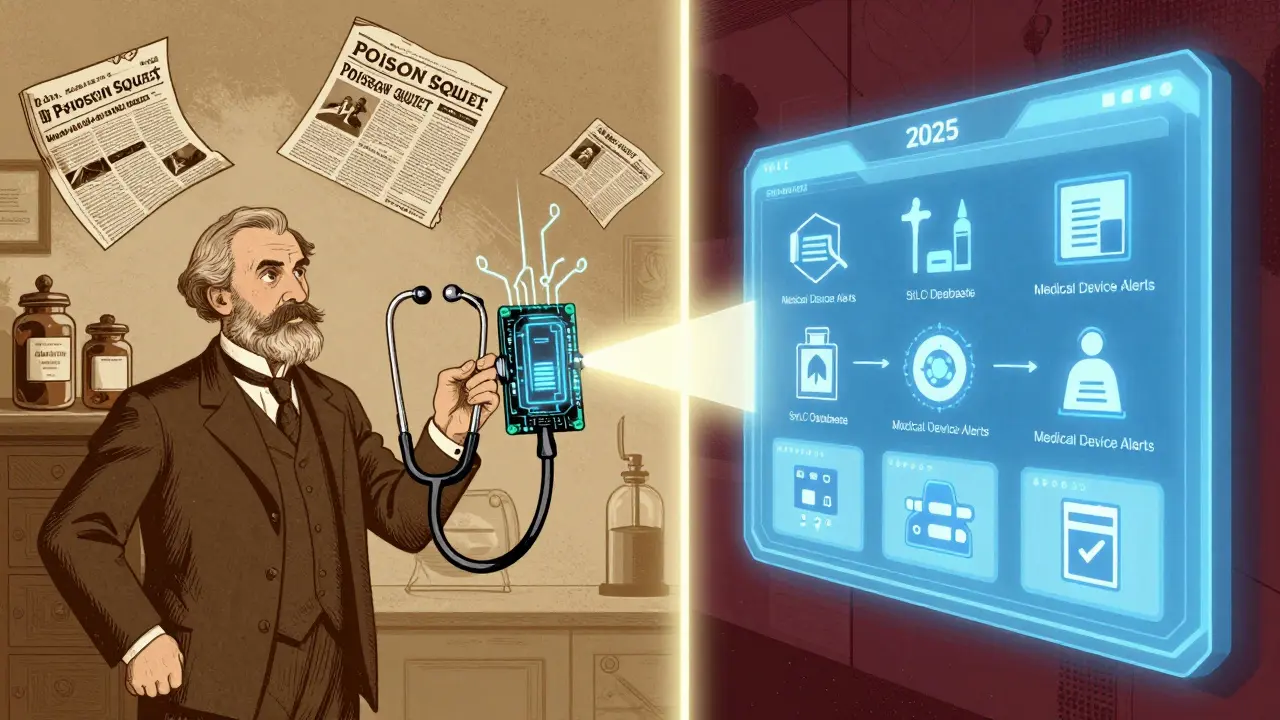
For even deeper history, go to the National Archives. They hold Records of the Food and Drug Administration (Record Group 88) dating back to 1877. This includes textual records from Philadelphia covering manufacturers and distributors from 1906 to 1946. Dr. Harvey Washington Wiley’s “Poison Squad” experiments from 1902-1907 laid the groundwork for the 1906 Pure Food and Drug Act. His 1914 article “Swindled Getting Slim” shows that fighting fraudulent health claims is a century-old mission. Understanding this context helps explain why today’s rigorous post-market surveillance exists.
Practical Tips for Researchers
Efficiency is key when digging through these archives. Here are some strategies to streamline your work:
- Start with the latest DSC: Always check the most recent Drug Safety Communication first. Older ones may be archived because they contain outdated info.
- Use the SrLC Database for specifics: If you need to prove a label changed on a specific date, this is your best bet for post-2016 data.
- Check Medical Device Early Alerts: Since late 2025, these cover all devices. Look here for immediate, high-risk recall information.
- Contact CDER directly: If you hit a dead end, the Division of Drug Information can help. Call (855) 543-3784 or email [email protected].
- Leverage Drugs@FDA: This resource integrates approved drug information with safety communications, providing a fuller picture.
A 2012 study in PMC noted that risk communication is complex. Some FDA advisories had immediate impacts on healthcare utilization, while others had delayed or no impact. As a researcher, you should consider not just what was communicated, but how effectively it reached providers and patients. The FDA continues to refine its methods, launching new resources in October 2023 to assist researchers collecting historical approval data.
Why Historical Context Matters
Looking at past warnings helps us understand current regulations. The shift from addressing fraudulent claims in the early 1900s to managing complex post-market data today reflects a maturing regulatory framework. The FDAAA empowered the FDA to respond systematically to accumulating evidence. Today, that system produces hundreds of communications annually.
For legal cases, clinical trials, or public health studies, having access to this timeline is crucial. It provides the evidence trail needed to demonstrate due diligence or identify trends in adverse events. The integration of these archives with tools like Drugs@FDA makes it easier than ever to connect a drug’s approval history with its safety profile.
Where can I find Drug Safety Communications from before 2016?
You can find older Drug Safety Communications via the FDA.gov Archive, which allows you to view previous versions of FDA web pages. For very old records, consult the National Archives, which holds FDA records dating back to 1877.
What is the difference between DSCs and the SrLC Database?
Drug Safety Communications (DSCs) are broad alerts about safety concerns issued since 2010. The SrLC Database specifically tracks changes to prescription drug labels required by law or initiated by companies, starting from January 2016.
Are medical device safety alerts included in the same archive as drugs?
No, they are separate. Medical Device Safety Communications focus on device-specific issues and clinical recommendations. As of September 2025, the FDA expanded its Early Alerts program to cover all medical devices.
How can I contact the FDA for help with safety communication research?
You can contact the Division of Drug Information (CDER) at (855) 543-3784 or (301) 796-3400, or email [email protected] for specific inquiries.
Is there a cost to access the FDA Safety Communications Archive?
No, all FDA safety communications and databases are freely accessible through the FDA website without any cost.
Madeline Petes
May 25, 2026 AT 18:18Ramanath Rao
May 26, 2026 AT 06:16irine sabrina
May 28, 2026 AT 04:19Gary Helminiak
May 28, 2026 AT 06:18dane thorp
May 29, 2026 AT 15:49Michael Schurmann
May 31, 2026 AT 05:09Christina Mitchell
May 31, 2026 AT 09:23Christopher Laver
May 31, 2026 AT 22:20Russell Russell
June 2, 2026 AT 15:17Naresh Chandra
June 4, 2026 AT 09:15Cyburg Adeoye
June 6, 2026 AT 00:47Joseph Teichman
June 6, 2026 AT 01:21Sharon O’Mahonh
June 6, 2026 AT 04:27