
Why Cheaper Drugs Feel Less Effective: The Psychology Behind Price and Perceived Power
 Jan, 12 2026
You’ve probably felt it. You pick up your prescription, and the pill looks different-smaller, white, unmarked. The pharmacist says, "It’s the same medicine, just cheaper." But inside, you wonder: Is it really the same? Maybe it won’t work as well. Maybe it’s weaker. Maybe you’re taking a downgrade.
This isn’t just in your head. It’s a real, measurable psychological effect. People consistently believe more expensive drugs work better-even when they’re identical to cheaper ones. And this belief actually changes how they feel.
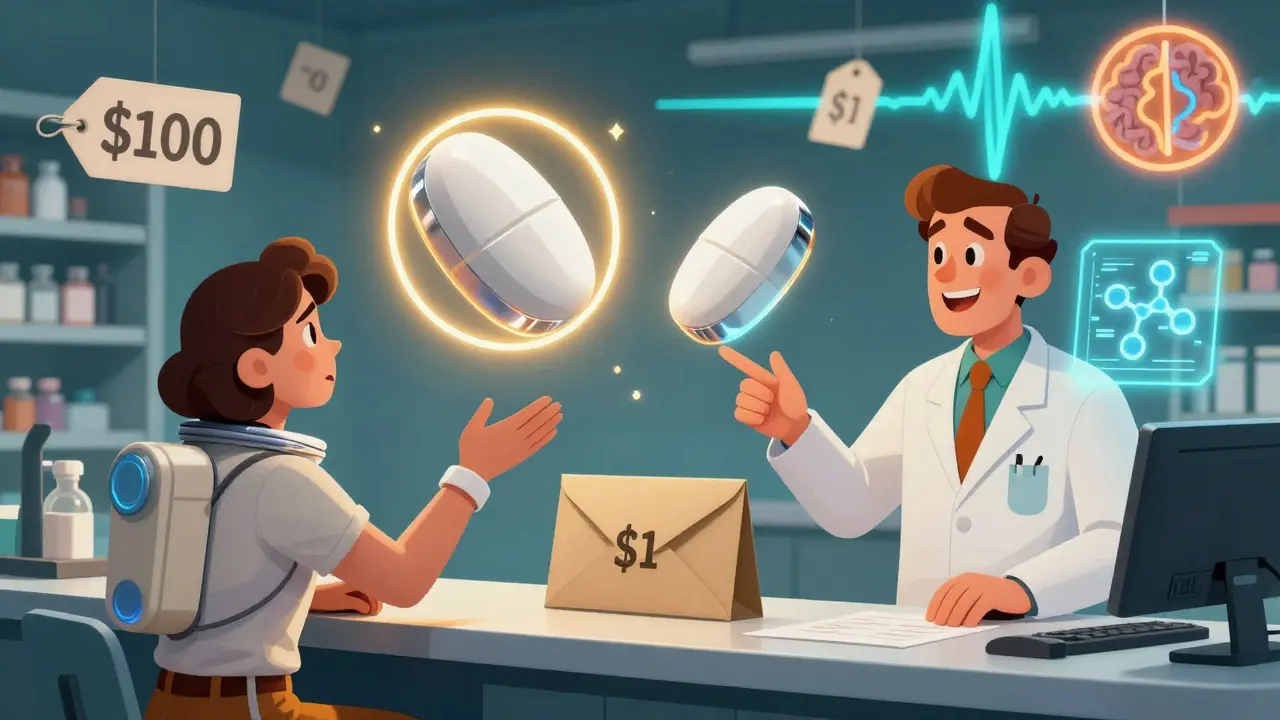
In a 2023 study, 60 volunteers were given a placebo pill and told it was either expensive or cheap. Half were told the drug cost $100 per dose. The other half were told it cost $1. Both groups got the exact same sugar pill. Afterward, those who thought they took the expensive version reported significantly better results. Even though nothing in the pill changed, their brains believed it worked harder. That’s not magic. That’s the brain’s built-in shortcut: high price = high quality.
This isn’t just about placebos. It happens with real medications too. In one experiment, people took two different pills for headaches-both were fake ibuprofen. One was labeled "brand name," the other "generic." The brand-labeled pill gave them more relief. The generic? Less pain relief. More side effects. Even though both pills were identical. The only difference? The label. The price tag. The packaging.
Why does this happen? Because your brain doesn’t evaluate drugs like a chemist. It evaluates them like a shopper. You’ve been trained to assume that expensive things are better. A luxury watch. A premium phone. A designer jacket. So when you see a $20 pill next to a $5 one, your brain automatically assumes the pricier one is stronger. It doesn’t check the active ingredient. It doesn’t read the FDA approval. It just goes with the feeling.
And it’s not just you. A national survey found that 25% of Americans believe generic drugs are less effective. Another 20% think they’re less safe. Nearly half are unsure. That’s not ignorance-it’s expectation. And expectations shape reality.
Even the shape and taste of the pill matter. A brand-name pill might have a shiny coating, a smooth texture, a mild flavor. The generic? Sometimes it’s chalky, bitter, or oddly shaped. That’s not because it’s inferior. It’s because the generic manufacturer uses different fillers, binders, or coatings to cut costs. But your brain doesn’t care about cost. It cares about feel. And if it feels cheap, your brain thinks it is cheap.
One patient in a focus group put it simply: "Generic medicine is less potent... other medicine is stronger." Another said, "Name brand is more powerful than the generic." These aren’t medical opinions. They’re emotional reactions. And they’re common.
Here’s the scary part: this belief affects real outcomes. People who think generics are weaker are less likely to take them. They might skip doses. They might switch back to pricier brands-even if it means going without other essentials. A study in Houston found that people who believed generics were just as effective were three times more likely to use discount programs for them. That’s not just about money. That’s about trust.
And yet, the science is clear. The FDA requires generic drugs to contain the exact same active ingredient as the brand name. They must be absorbed into the bloodstream at the same rate and to the same extent. The allowed difference? Only 80-125%. That’s tighter than many food safety standards. Generic drugs aren’t "weaker versions." They’re the same medicine, sold without the marketing budget.
So why does this gap between fact and feeling still exist? Because trust doesn’t come from brochures. It comes from conversations.
Research shows that the single biggest factor in whether someone accepts a generic drug isn’t their income, their education, or even their belief in science. It’s what their doctor says. If the doctor says, "This generic is just as good," and explains why, patients are far more likely to trust it. If the doctor just hands over the pill and says, "It’s cheaper," patients feel dismissed. They think, "If it’s so good, why don’t you take it?"
One study found that when doctors took the time to talk about generics-explaining bioequivalence, addressing fears, validating concerns-patients not only accepted them, but reported better outcomes. Not because the pill changed. But because their belief in it did.
Even when patients are educated about generics, their perception doesn’t always shift. In one trial, participants were taught how generics work. They understood the science. But when they actually took the pills, they still felt the brand version worked better. Why? Because belief isn’t just logical. It’s emotional. And emotions don’t flip on a dime.
Pharmaceutical companies know this. That’s why brand-name drugs spend billions on ads, sleek packaging, and celebrity endorsements. They’re not selling chemistry. They’re selling confidence. And in a world where people are anxious about their health, confidence is currency.
Meanwhile, generic manufacturers can’t compete with that. They don’t run TV commercials. They don’t design fancy pills. They make the same medicine, in plain packaging, for a fraction of the cost. And that’s exactly why so many people doubt them.
But here’s the truth: the $37 billion saved every year in the U.S. because of generic drugs? That money keeps people alive. It lets diabetics afford insulin. It lets asthma patients refill their inhalers. It lets seniors take their blood pressure meds without choosing between medicine and groceries.
When you reject a generic because you think it’s weaker, you’re not protecting your health. You’re feeding a myth. And that myth costs more than money. It costs peace of mind.
The solution isn’t to shame people for feeling this way. It’s to meet them where they are. Doctors need to talk about generics like they talk about vaccines-not as a compromise, but as a smart, safe, science-backed choice. Pharmacists need to explain the differences in appearance without making it sound like a defect. And patients need to hear, again and again: "This pill works the same. It’s not less. It’s just priced differently."
Because the medicine doesn’t care how much it costs. Your body does. And if you believe it works, it will.
Angel Molano
January 13, 2026 AT 06:20Stop lying to yourselves. Cheap doesn’t mean weak. If your brain thinks a $1 pill is useless, that’s your problem, not the FDA’s.
Vinaypriy Wane
January 15, 2026 AT 03:42I’ve seen this in my family-my mother refused generics for years… until her doctor sat down, showed her the bioequivalence charts, and said, ‘This is your medicine, just without the ads.’ She cried. Not because she was scared-but because she finally felt heard.
Randall Little
January 16, 2026 AT 03:39So let me get this straight: your brain is a marketing department that ignores pharmacokinetics? Fascinating. So if I slap a $500 price tag on tap water, you’ll start claiming it’s ‘enhanced with quantum hydration’? The placebo effect is real-but it’s not a license to ignore science.
lucy cooke
January 16, 2026 AT 11:17Oh, darling, it’s not about the pill-it’s about the ritual. The ritual of paying more, of believing you deserve better, of clinging to the illusion that suffering can be priced. The brand-name pill? It’s not medicine-it’s a talisman. A tiny, white, round prayer against mortality. And yes, it works. Because belief is the only religion left that still has a pharmacy.
Trevor Whipple
January 17, 2026 AT 10:55bro i took generics for my anxiety and they were totally different like i felt like a zombie for a week then switched back and boom back to normal. so yeah maybe they’re ‘the same’ but my body said nope.
Robin Williams
January 17, 2026 AT 19:00It’s not about the pill. It’s about the story you tell yourself. You’re not buying chemistry-you’re buying peace. And if the cheap version doesn’t give you that peace? Then it’s not working, no matter what the FDA says. Your mind is your first doctor. Listen to it.
jefferson fernandes
January 17, 2026 AT 23:49Listen. I’ve been a pharmacist for 22 years. I’ve seen people die because they skipped doses because they thought generics were ‘inferior.’ This isn’t psychology-it’s a public health crisis. If your doctor says it’s the same, trust them. If they don’t explain it? Find a new one. Your life isn’t a marketing experiment.
John Tran
January 18, 2026 AT 13:40Think about it: we live in a world where a $200 sneaker is ‘artisanal craftsmanship’ and a $10 one is ‘cheap plastic.’ We’ve been trained to equate price with value, with dignity, with identity. So when you take a generic, you’re not just taking a pill-you’re taking a hit to your self-image. ‘Am I the kind of person who settles?’ That’s the real question. And the answer? You’re not settling. You’re surviving. And survival isn’t glamorous. But it’s sacred.
mike swinchoski
January 20, 2026 AT 07:03People are dumb. If you can’t tell the difference between a $5 pill and a $50 pill, you shouldn’t be allowed to take medicine. Just take what the doctor gives you and shut up.
Priyanka Kumari
January 21, 2026 AT 15:34My aunt in Delhi switched to generics after her husband’s heart attack-they couldn’t afford the brand. She told me, ‘I was scared. But when I saw how well he slept, how he could walk to the market again… I realized the pill didn’t care about the label. Only we do.’ She’s right. The medicine doesn’t know what it costs. Your body does. And yours knows better than you think.
Avneet Singh
January 22, 2026 AT 21:57The cognitive dissonance here is statistically significant, but the epistemic authority of pharmaceutical branding remains hegemonic within the neoliberal pharmacopoeia. The commodification of therapeutic efficacy via perceptual scaffolding-i.e., packaging, color, and price anchoring-reifies a biopolitical illusion of quality. In layman’s terms: you’re being manipulated by corporate aesthetics.
vishnu priyanka
January 23, 2026 AT 01:08Man, I used to think generics were sketchy till I tried one for my back pain. Same pill. Same results. But now I laugh when I see people paying triple for the same thing. Like, bro, you’re not buying medicine-you’re buying a logo. And that logo? It’s not gonna heal you.
Pankaj Singh
January 24, 2026 AT 21:54So you’re saying people are stupid for believing what they feel? Congrats, you’ve discovered the placebo effect. Now go tell a diabetic they don’t need insulin because ‘it’s just chemistry.’ You’re not smart-you’re cruel.