
What Are Authorized Generics? Complete Explanation
 Mar, 22 2026
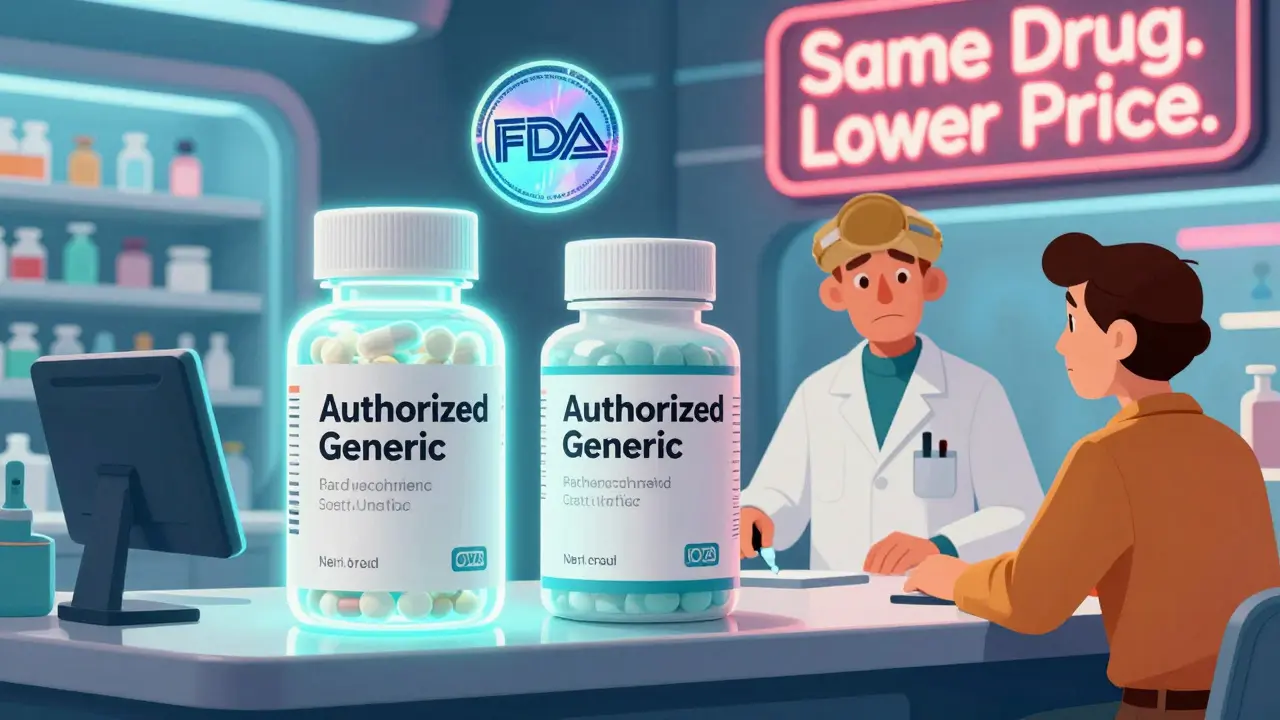
Have you ever picked up a prescription and noticed the pill looks exactly like your usual brand-name drug, but the label says something completely different? And maybe it cost a lot less? That’s probably an authorized generic. It’s not a trick. It’s not a counterfeit. It’s the real thing - just without the brand name on the box.
What Exactly Is an Authorized Generic?
An authorized generic is a drug that’s made by the same company that produces the original brand-name medication. It contains the exact same active ingredients, same inactive ingredients, same strength, same shape, same dosage form - everything. The only difference? It doesn’t carry the brand name on the label.
The U.S. Food and Drug Administration (FDA) defines it clearly: "An approved brand name drug that is marketed without the brand name on its label. Other than the fact that it does not have the brand name on its label, it is the exact same drug product as the branded product."
This isn’t a generic drug in the traditional sense. Traditional generics are made by other companies after the patent expires. They have to prove they work the same way through testing. Authorized generics skip all that. They’re made under the original brand’s approval. No extra studies. No extra paperwork. Just the same pill, same factory, same quality control - just sold under a different label.
How Is It Different From a Regular Generic?
This is where things get confusing. Most people think "generic" means "cheaper version made by someone else." But authorized generics are different.
Traditional generics:
- Are made by a different company
- Must prove bioequivalence to the brand-name drug
- May have different inactive ingredients (like fillers or dyes)
- Are listed in the FDA’s "Orange Book" as approved equivalents
Authorized generics:
- Are made by the original brand manufacturer (or under license to another company)
- Use the exact same formulation - active and inactive ingredients match perfectly
- Do NOT appear in the FDA’s Orange Book
- Are approved under the original brand’s New Drug Application (NDA), not a separate generic application
That last point matters. Because they’re not listed in the Orange Book, pharmacists and doctors don’t always know they’re available. You won’t find them when you search for "generic versions" of your drug. You have to ask.
Why Do Drug Companies Make Authorized Generics?
It sounds odd. Why would a company that just spent millions developing a drug turn around and sell its own product as a cheaper version? The answer is strategy.
When a brand-name drug’s patent expires, other companies can make traditional generics. That usually causes prices to drop - sometimes dramatically. But if the original company launches its own authorized generic at the same time, it can keep a big chunk of the market.
Research from Health Affairs (2022) found that between 2010 and 2019, pharmaceutical companies launched 854 authorized generics. In 75% of cases, they waited until after traditional generics had already entered the market. That’s not random. It’s calculated.
Here’s how it works:
- Patent expires
- Another company applies to make a traditional generic
- The brand company waits - sometimes months - then releases its own version as an authorized generic
- Patients who were used to the brand now get a cheaper version… but it’s still made by the same company
- The brand company keeps its customer base and profits
It’s not evil. It’s business. But it does mean that sometimes the cheapest option isn’t the traditional generic - it’s the authorized one. And it might not even be available until after the market has already started changing.
Are Authorized Generics Safe?
Yes. Completely.
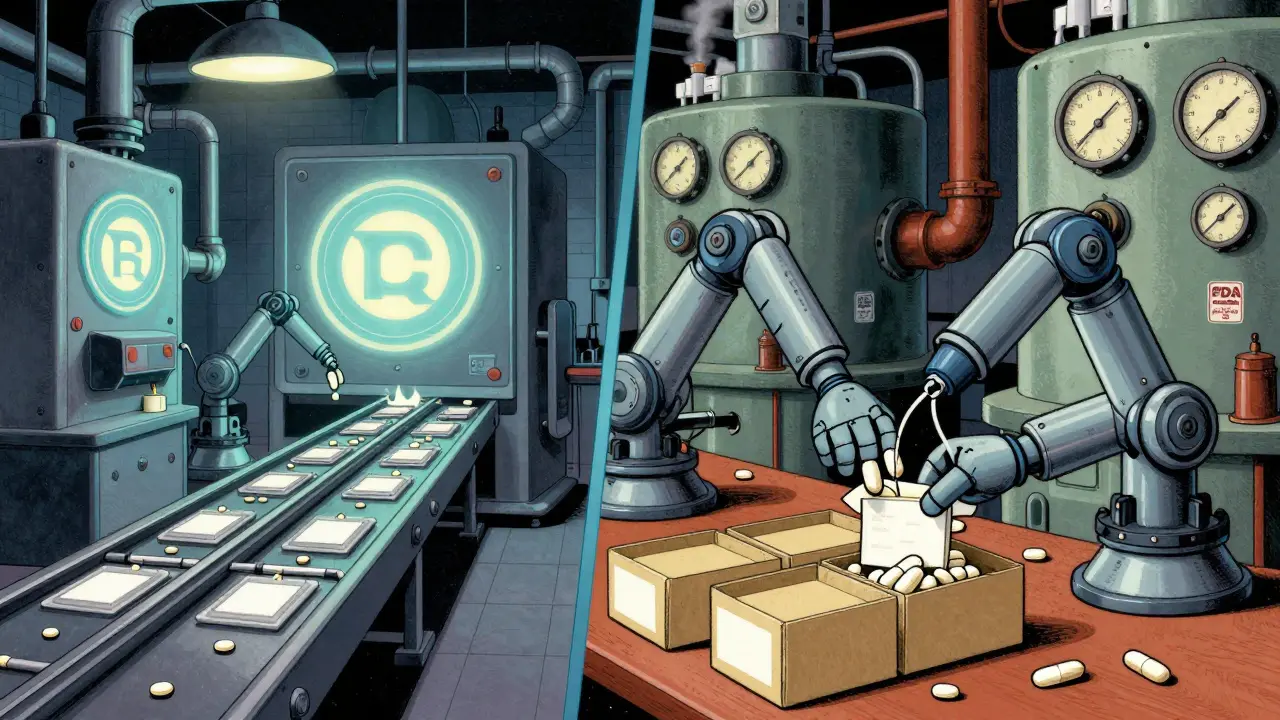
Because they’re made in the same facility, with the same equipment, under the same quality standards as the brand-name drug, they’re as safe and effective as the original. There’s no risk of inferior quality. No hidden differences. No surprises.
In fact, for patients who’ve had bad reactions to traditional generics - like stomach upset from a different filler, or a rash from a dye - authorized generics can be a better option. Since the inactive ingredients are identical, the body reacts the same way.
Some patients report confusion when they get an authorized generic. "This looks exactly like my old pill, but why is it cheaper?" That’s normal. The change in packaging and labeling can be jarring, even if the drug itself hasn’t changed.
Examples of Authorized Generics
You’ve probably taken one without knowing it. Here are real examples:
- Colchicine - authorized generic of Colcrys
- Methylphenidate ER - authorized generic of Concerta
- Celecoxib - authorized generic of Celebrex
- Levothyroxine - authorized generic of Unithroid
These are all major medications used for gout, ADHD, arthritis, and thyroid conditions. If you take any of these, there’s a good chance your pharmacy has the authorized generic on hand.
How Much Do They Cost?
Prices vary. But generally:
- Authorized generics cost 15-25% less than the brand-name drug
- They’re often more expensive than traditional generics - especially after multiple generic makers enter the market
- Sometimes they’re the cheapest option available - especially early in the generic transition
Why the price difference? Because the brand company still has overhead: marketing, distribution, and brand loyalty. They’re not trying to undercut the market. They’re trying to hold onto it.
For patients, this means: always ask your pharmacist if an authorized generic is available. It might be cheaper than the traditional generic - especially if it just launched.
How to Find Out If You’re Taking One
It’s not easy. Authorized generics aren’t listed in the FDA’s public database of approved generics (the Orange Book). So you can’t just look them up online.
Here’s what to do:
- Check your prescription label. Does it say the name of the brand, or just the generic name?
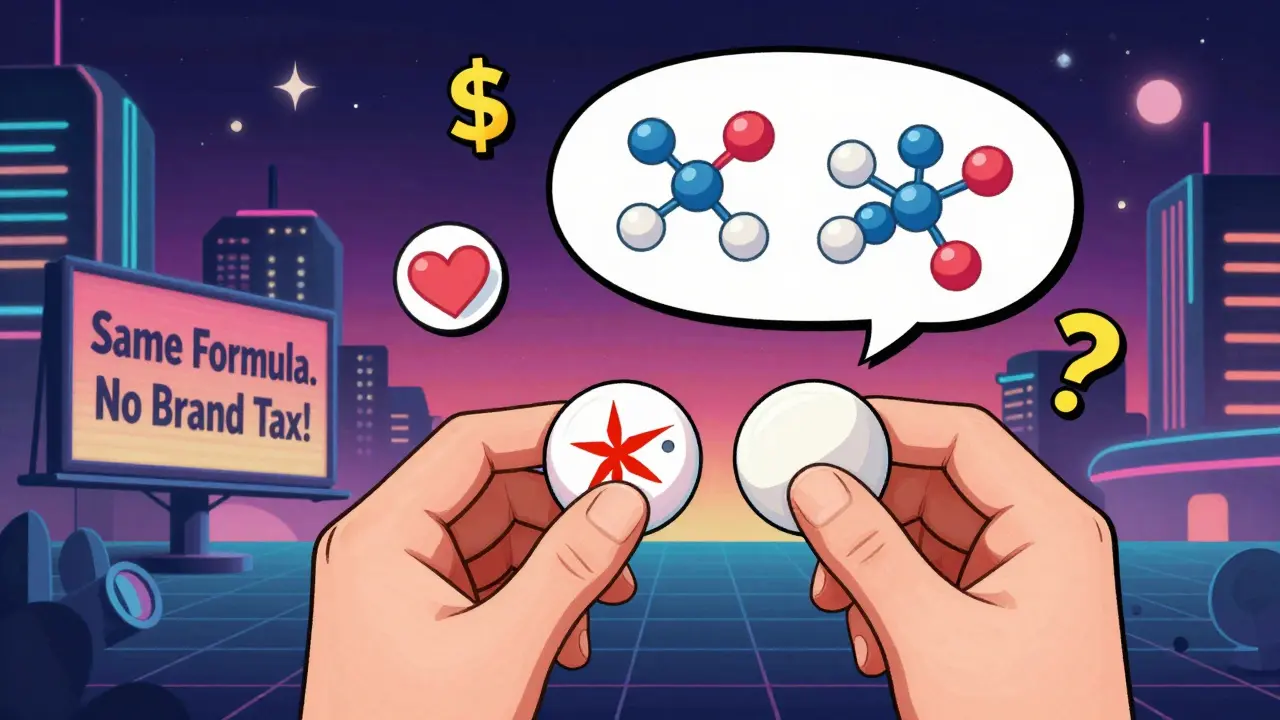
- Look at the pill. Does it look identical to the brand you used to take? Same color, same shape, same imprint?
- Ask your pharmacist: "Is this an authorized generic?" They’ll know - especially if they’ve been around for a few years.
- Check the manufacturer name on the bottle. If it’s the same company that makes the brand-name version (like Pfizer, AbbVie, or Johnson & Johnson), it’s likely an authorized generic.
Some pharmacies will even tell you: "This is the same drug as your brand, but cheaper. We’re dispensing it because it’s an authorized generic."
What Patients and Pharmacists Say
Many patients don’t even realize they’re taking an authorized generic. Pharmacists say it’s one of the most common sources of confusion.
"I’ve had patients come in angry because they think we switched them to a different drug," says one community pharmacist in Brighton. "They say, ‘My old pill had a green stripe. This one has a red one.’ But it’s the same medicine. Same manufacturer. Same everything."
On the flip side, pharmacists appreciate authorized generics because they’re reliable. No bioequivalence issues. No complaints about side effects from new fillers. Just consistent performance.
Doctors, too, are learning. Some still assume all generics are the same. But as more patients report better tolerance with authorized versions, prescribing habits are slowly shifting.
What’s Next for Authorized Generics?
The number of authorized generics has grown steadily over the last 15 years. They’re not going away. In fact, they’re becoming a standard tool for brand manufacturers facing patent cliffs.
Regulators are watching. The FDA has acknowledged their role but hasn’t changed how they’re regulated. They still don’t need to be approved separately - just notified.
Some experts worry this gives big drug companies too much control. If they can delay true competition by launching their own generic first, they might keep prices higher longer.
Others say it’s a win for patients: more affordable options, without the risk of switching to a different formulation.
One thing’s clear: if you’re taking a brand-name drug that’s losing its patent, keep an eye out. The authorized generic might be your best bet - not because it’s the cheapest, but because it’s the most familiar.
Are authorized generics as safe as brand-name drugs?
Yes. Authorized generics are made by the same manufacturer using the exact same formula, ingredients, and production process as the brand-name drug. The only difference is the label. The FDA considers them identical in every way that matters for safety and effectiveness.
Why don’t authorized generics appear in the FDA’s Orange Book?
The Orange Book lists only traditional generics that have gone through the Abbreviated New Drug Application (ANDA) process and proven bioequivalence. Authorized generics are marketed under the original brand’s New Drug Application (NDA), so they don’t need separate approval. That’s why they’re not listed - not because they’re less reliable, but because they’re not treated as a separate drug product.
Can I ask my pharmacist for an authorized generic?
Absolutely. If your prescription is for a drug that has an authorized generic available, your pharmacist can usually substitute it - especially if you’re paying out of pocket or your insurance doesn’t cover the brand. Just ask: "Is there an authorized generic for this?" They’ll know.
Do authorized generics work the same way as brand-name drugs?
Yes. Because they’re manufactured using the exact same process and ingredients, they work identically in the body. There’s no difference in how they’re absorbed, how long they last, or how effective they are. Any perceived difference is usually due to changes in pill appearance or packaging, not the drug itself.
Why would a drug company make its own generic?
It’s a business strategy. When a patent expires, other companies can make cheaper generics. By launching its own authorized generic, the brand company can keep customers, maintain market share, and still make money - even at a lower price. It’s not about helping patients save money; it’s about keeping them from switching to a competitor’s generic.
Zola Parker
March 23, 2026 AT 07:39florence matthews
March 24, 2026 AT 10:10Kenneth Jones
March 24, 2026 AT 18:26Mihir Patel
March 25, 2026 AT 14:57Rachele Tycksen
March 27, 2026 AT 07:14Grace Kusta Nasralla
March 29, 2026 AT 05:58Pat Fur
March 29, 2026 AT 18:27Natasha Rodríguez Lara
March 31, 2026 AT 02:03J. Murphy
March 31, 2026 AT 10:08