
Statin Medications: Cholesterol Benefits and Muscle Pain Risks Explained
 Jan, 22 2026
For millions of people, statins are a daily pill that keeps their heart safe. But for others, that same pill brings aching legs, tired muscles, and sleepless nights wondering if the trade-off is worth it. If you’ve been prescribed a statin-or are considering one-you’re probably caught between two truths: statin medications save lives, but they can also make you feel worse. Let’s cut through the noise and look at what really happens when you take them.
How Statins Actually Lower Cholesterol
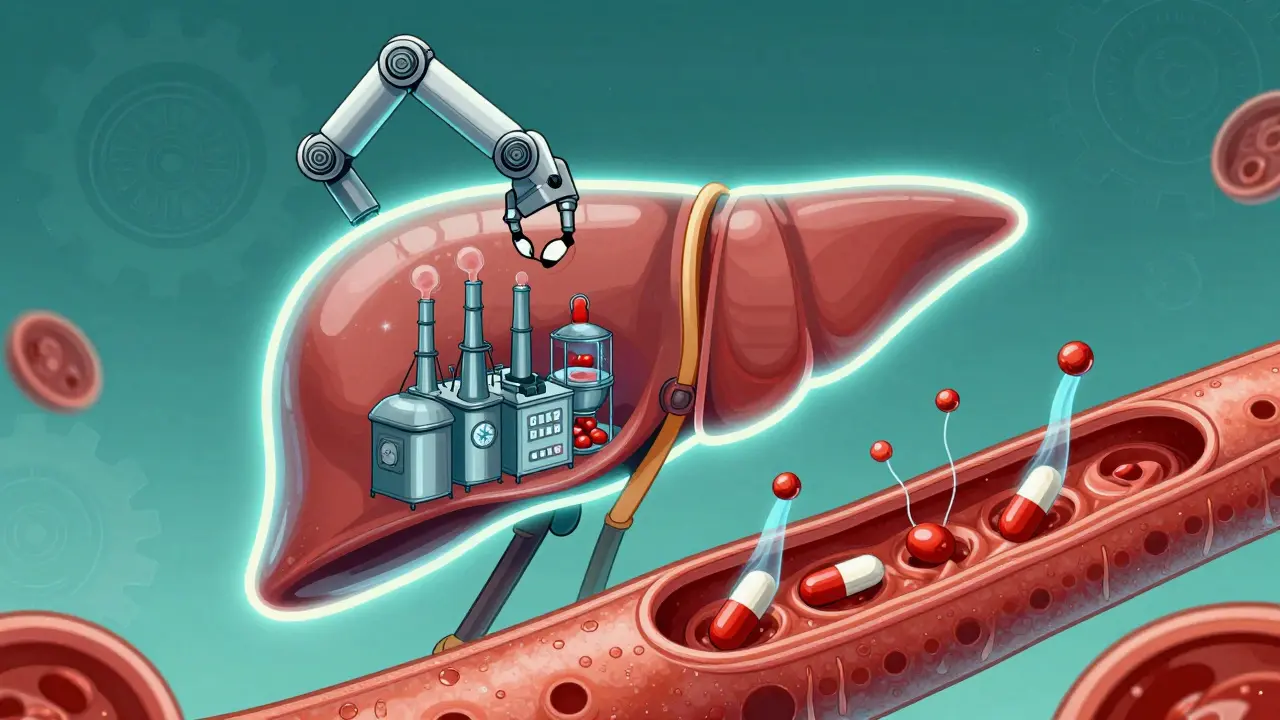
Statins don’t just "lower cholesterol" like a magic switch. They work by blocking an enzyme in your liver called HMG-CoA reductase. This enzyme is the main factory for making cholesterol. When you take a statin, your liver produces less cholesterol-about 25% to 60% less, depending on the drug and dose. That sounds simple, but here’s the clever part: your liver notices the drop and starts pulling more LDL (bad cholesterol) out of your blood to make up for it. That’s why your blood LDL levels fall so dramatically-often by 1.8 mmol/L (70 mg/dL) or more.That drop isn’t just a number on a lab report. For every 1 mmol/L reduction in LDL, your risk of a heart attack or stroke drops by about 22%. In large studies like the Heart Protection Study, people on statins had 30% fewer major heart events. For someone who’s had a heart attack or has diabetes and high blood pressure, that’s not a small benefit-it’s life-changing.
But statins do more than lower cholesterol. They calm inflammation in your blood vessels. They help stabilize fatty plaques so they’re less likely to rupture and cause a clot. They even improve how well the lining of your arteries works. These effects happen even before LDL drops significantly, which is why some people feel better quickly-even if their cholesterol hasn’t changed much yet.
The Real Risk: Muscle Pain and Weakness
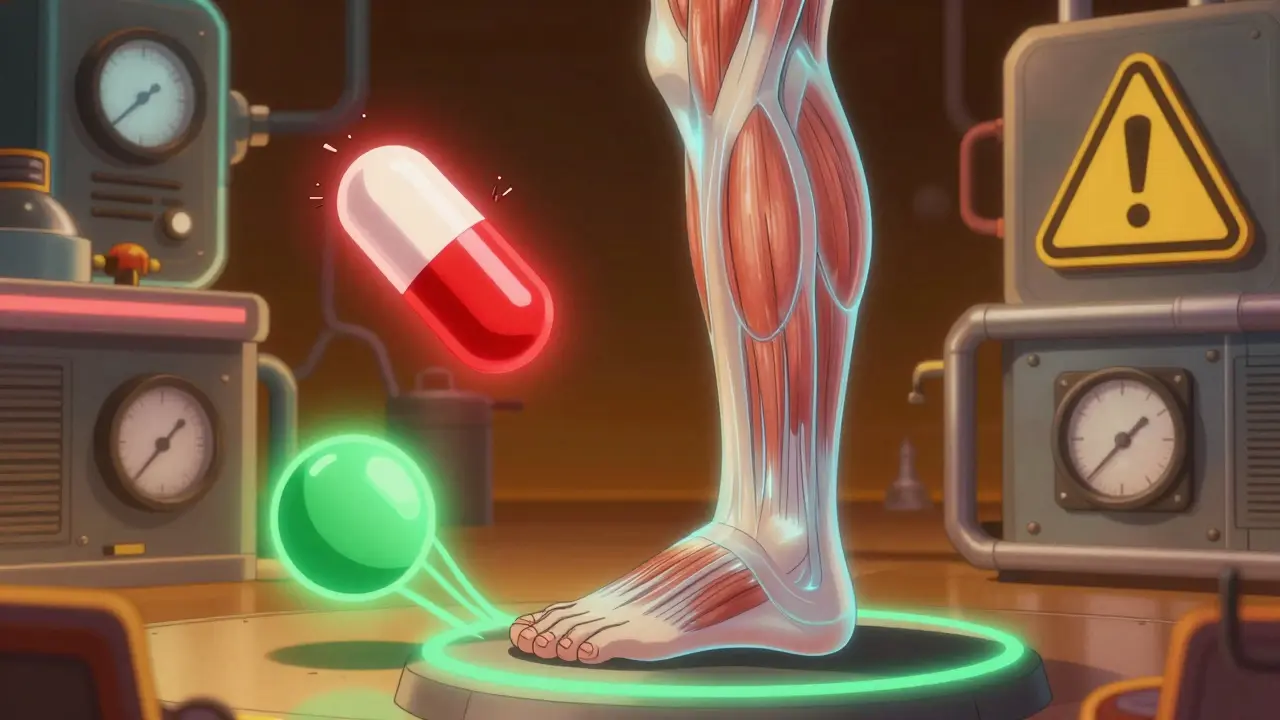
Here’s where things get messy. Muscle pain is the most common side effect. It’s not rare. Studies show between 5% and 29% of people on statins report muscle aches, cramps, or weakness. That’s not just a few people-it’s one in five or even one in three.Most of the time, it’s mild. You might notice your thighs feel heavy after walking, or your shoulders ache when you reach overhead. It often starts after a few weeks or months. Some people think it’s just aging, or getting out of shape. But if the pain goes away after stopping the statin and comes back when you restart it, that’s a strong sign it’s related.
Severe muscle damage-rhabdomyolysis-is extremely rare. Less than 1 in 1,000 people experience it. But when it happens, it’s serious. It can cause kidney failure. That’s why doctors check your creatine kinase (CK) levels if you report muscle pain. But here’s the problem: most muscle pain happens without any rise in CK. That means your blood test can look normal, and you can still be in real discomfort.
Some statins are more likely to cause this than others. Simvastatin, especially at higher doses, has a higher risk. Rosuvastatin and atorvastatin are stronger, but not always worse for muscles. Pravastatin and fluvastatin tend to be gentler on muscles. That’s why many doctors will switch you from simvastatin to pravastatin if you develop pain-it often helps.
Who’s Most at Risk for Muscle Problems?
Not everyone gets muscle pain. But some people are more likely to. Age matters. People over 65 are more sensitive. Women report muscle symptoms more often than men. If you have a small body frame, thyroid problems, kidney disease, or take other medications like fibrates or certain antibiotics, your risk goes up. Even vitamin D deficiency can make muscle pain worse.There’s also a genetic factor. A gene called SLCO1B1 affects how your body clears simvastatin. If you have a certain version of this gene, your body holds onto more of the drug, which increases the chance of muscle damage. Testing for this isn’t routine yet, but some specialists do it for patients with repeated side effects.
And then there’s the nocebo effect-the opposite of placebo. If you’ve heard stories about statins causing muscle pain, you’re more likely to notice normal aches and blame the pill. Studies show that when people don’t know they’re taking a statin, they report fewer side effects. That doesn’t mean the pain isn’t real-it just means your brain plays a role in how you experience it.
What to Do If You Have Muscle Pain
Don’t just quit cold turkey. Stopping statins without a plan can raise your heart risk fast. Instead, talk to your doctor. Here’s what usually works:- Switch to a different statin. Pravastatin or fluvastatin are often better tolerated.
- Lower the dose. Sometimes half a tablet still gives you 80% of the heart protection.
- Try every-other-day dosing. Some statins, like atorvastatin, last long enough in your body that skipping a day still keeps LDL down.
- Check your vitamin D and thyroid levels. Fixing those can make a big difference.
- Try coenzyme Q10. It’s not a cure, but some people feel better taking 100-200 mg daily. The science isn’t solid, but it’s low-risk.
One patient I know switched from rosuvastatin to pravastatin after six months of leg cramps that made walking hard. Within two weeks, the pain vanished. Her LDL only went up by 5%. She kept taking it. She’s still here, five years later, with no heart problems.
The Bigger Picture: Benefits vs. Risks
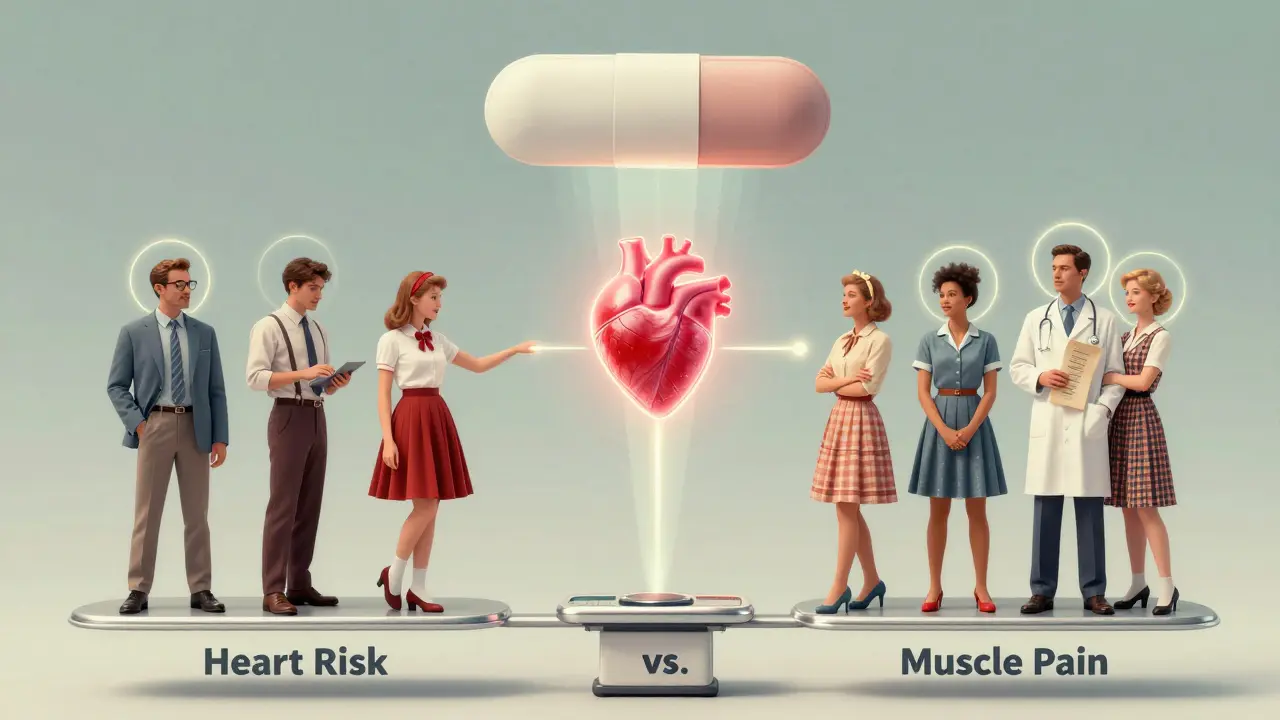
Let’s put this in perspective. For someone with a history of heart disease, taking a statin reduces their risk of dying from a heart attack by about 30% over five years. That’s like cutting your risk in half. For someone with high cholesterol but no heart disease, the benefit is smaller-but still real. In people over 75, the data is less clear, but many still benefit if they’re otherwise healthy.On the other side, the chance of serious muscle damage is less than 0.1%. The chance of liver damage? Less than 0.5%. The chance of developing diabetes? A small increase-about 1 in 200 over five years. That’s real, but it’s far less dangerous than a heart attack.
And here’s the thing: most people who stop statins because of muscle pain never go back. But many of them end up in the hospital anyway, years later, because their cholesterol crept back up. A study found nearly half of people quit statins within a year. The ones who stayed on had far fewer heart events.
What’s Next for Statins?
Researchers are working on smarter versions. Some are trying to design statins that only act on liver cells, not muscle cells. Others are testing lower doses combined with newer drugs like ezetimibe or PCSK9 inhibitors to get the same effect with fewer side effects. Genetic testing might one day tell you which statin you should take-or if you should avoid them altogether.But right now, the best tool we have is still the statin. It’s cheap, proven, and works for most people. If you’re worried about muscle pain, don’t assume it’s all in your head. But don’t assume it’s a reason to quit either. Work with your doctor. Try a different one. Adjust the dose. Give it time. Your heart will thank you.
Do statins really reduce heart attacks?
Yes. Large clinical trials show statins reduce major heart events-like heart attacks and strokes-by about 30% in people with existing heart disease or high risk. For every 1 mmol/L drop in LDL cholesterol, the risk of a heart event falls by 22%. This benefit is consistent across age groups, genders, and ethnicities.
How common is muscle pain with statins?
Muscle pain affects between 5% and 29% of people taking statins, depending on the study and how it’s measured. Mild aches are common; severe damage like rhabdomyolysis is rare-under 0.1%. Many cases are mild and improve with dose changes or switching to a different statin.
Can I take coenzyme Q10 to prevent muscle pain?
Some people report feeling better taking 100-200 mg of coenzyme Q10 daily. Statins lower CoQ10 levels in the body, which may contribute to muscle fatigue. While studies haven’t proven it works for everyone, it’s safe and worth trying if you’re experiencing mild pain. It’s not a replacement for medical advice, though.
Which statin has the least muscle side effects?
Pravastatin and fluvastatin are generally associated with fewer muscle-related side effects compared to simvastatin or rosuvastatin. Atorvastatin falls in the middle. If you have muscle pain, switching from simvastatin to pravastatin is one of the most effective strategies doctors use.
Should I stop statins if I have muscle pain?
No-not without talking to your doctor first. Stopping statins suddenly increases your risk of heart attack or stroke. Instead, ask about switching statins, lowering the dose, or trying a different schedule. Many people find relief without giving up the benefits.
Are generic statins as good as brand names?
Yes. Generic statins like atorvastatin, simvastatin, and pravastatin are chemically identical to their brand-name versions (Lipitor, Zocor, Pravachol). They’re held to the same FDA standards. The only difference is cost-generics often cost under $4 a month. There’s no medical reason to pay more for the brand.
Jamie Hooper
January 24, 2026 AT 10:21so i took simvastatin for 3 months and my legs felt like lead bricks after walking to the fridge 🥲 like… i didn’t even go to the gym. my doc said ‘it’s just aging’ but bro i was 42. switched to pravastatin and suddenly i could climb stairs again. no joke. statins aren’t evil, but simva is basically the villain in this movie.
Phil Maxwell
January 25, 2026 AT 16:48my dad’s been on atorvastatin for 12 years. no muscle pain, no issues. his LDL’s at 68. he says the pill’s cheaper than his morning coffee. i’m gonna start one next year-my numbers are creeping up. if it works for him, why not?
Shelby Marcel
January 25, 2026 AT 21:44i read somewhere that coq10 helps with muscle pain but i’m not sure if it’s real or just internet magic. anyone actually feel a difference taking it? also why do they say it’s not proven but still recommend it??
Tommy Sandri
January 26, 2026 AT 20:24Statins represent one of the most robustly validated interventions in preventive cardiology. The risk-benefit ratio, particularly in secondary prevention, is overwhelmingly favorable. Muscle symptoms, while frequently reported, rarely correlate with elevated creatine kinase levels, suggesting a complex interplay of physiological and psychological factors.
Luke Davidson
January 27, 2026 AT 05:05my aunt was on rosuvastatin and could barely lift her coffee cup-felt like her arms were full of wet sand. she switched to pravastatin, cut her dose in half, and started taking CoQ10 like it was gummy vitamins. now she’s hiking in the Rockies at 71. statins aren’t the enemy, but listening to your body? that’s the real superpower. also-vibes matter. if you walk into the pharmacy thinking ‘this is gonna wreck me,’ your muscles will believe you. no cap.
Sushrita Chakraborty
January 28, 2026 AT 21:02It is imperative to note that the incidence of rhabdomyolysis remains exceedingly low, and the benefits of statin therapy in reducing cardiovascular mortality are well-documented in meta-analyses involving over one million patients. Discontinuation of statins without medical supervision is a significant public health concern, particularly in populations with established atherosclerotic disease.
Josh McEvoy
January 29, 2026 AT 00:44just took my statin today. felt fine. then i sneezed and my left hamstring screamed. is this it? am i dying? 😭 or is this just my body being dramatic??
Heather McCubbin
January 30, 2026 AT 21:36everyone’s so scared of statins like they’re some evil pharmaceutical plot but let’s be real-your cholesterol is probably high because you eat 12 donuts a week and think ‘it’s fine, i’m young’ well guess what? your heart doesn’t care how young you feel. statins aren’t the problem. your lifestyle is. stop blaming the pill and start blaming your freezer full of pizza rolls.
Sawyer Vitela
February 1, 2026 AT 06:065-29% muscle pain? That’s not a side effect. That’s a feature. Most people who report it are just lazy. CoQ10 doesn’t work. Switching statins is placebo. Dose reduction? Fine. But don’t pretend it’s not your fault.
Shanta Blank
February 1, 2026 AT 14:25they told me my muscle pain was ‘in my head’ but then i found a Reddit thread from a guy who quit statins and started lifting again-turns out his CK was normal but his soul was broken. i’m not saying it’s all psychological, but… maybe we’re all just tired of being told to ‘push through’? my legs aren’t broken, they’re betrayed.
Tiffany Wagner
February 2, 2026 AT 04:16i took pravastatin for a year and never had any issues. i didn’t even think about it until my mom asked if it was making me tired. i was like… wait, i’m tired? oh right. i’m 55. maybe it’s just life. statin’s still in my drawer. no complaints.
Amelia Williams
February 3, 2026 AT 03:05if you’re scared of statins because of muscle pain, you’re not alone. but if you stop because you’re scared-you’re giving up on your future self. i switched from simva to fluvastatin, took CoQ10, and now i’m dancing at my nephew’s wedding. your heart doesn’t need perfection. it just needs you to show up. and yeah, sometimes that means swallowing a tiny blue pill even when your legs feel weird. you got this.