
SSRI Antidepressants: How They Work and Common Side Effects
 Dec, 26 2025
When you’re struggling with depression or anxiety, the idea of taking medication can feel overwhelming. But if you’ve been told about SSRIs - the most common type of antidepressant prescribed today - you’re not alone. SSRI antidepressants are used by millions of people worldwide, and for many, they make a real difference. But how do they actually work? And what should you expect when you start taking one?
What SSRIs Are and Why They’re So Common
SSRIs stand for Selective Serotonin Reuptake Inhibitors. They’re a group of medications designed to help balance chemicals in your brain, specifically serotonin. Serotonin is a neurotransmitter that helps regulate mood, sleep, appetite, and even how you handle stress. Low serotonin levels are linked to depression and anxiety, though it’s not the whole story - depression is more complex than just a chemical imbalance. The first SSRI, fluoxetine (Prozac), hit the market in 1987. It was a game-changer because earlier antidepressants, like tricyclics and MAOIs, had harsh side effects - dry mouth, dizziness, heart problems, even deadly overdose risks. SSRIs were safer, easier to tolerate, and just as effective for most people. Today, they make up about 70% of all antidepressant prescriptions in the U.S. and are the go-to first-line treatment for depression, panic disorder, OCD, social anxiety, and even some cases of bulimia.How SSRIs Actually Work in Your Brain
Here’s the simple version: SSRIs block the serotonin transporter, a protein that pulls serotonin back into the nerve cell after it’s been released. Normally, serotonin gets reused quickly. SSRIs stop that, so more serotonin stays in the space between nerve cells - the synaptic cleft - where it can keep signaling to neighboring cells. This sounds like it should work right away. But it doesn’t. Within hours, serotonin levels rise. Yet most people don’t feel better for 4 to 6 weeks. Why? The real change isn’t just more serotonin - it’s what happens after. Over time, the brain adapts. Serotonin receptors called 5HT1A autoreceptors, which normally slow down serotonin production, become less sensitive. This lets neurons fire more freely, releasing even more serotonin in key areas like the prefrontal cortex and limbic system. That’s when mood starts to improve. Think of it like turning up the volume on a quiet radio - you don’t hear the music clearly until the static fades. Studies using brain scans show that people who respond well to SSRIs have normalized activity in the subcallosal cingulate cortex - a region tied to emotional regulation. There’s also evidence SSRIs boost brain-derived neurotrophic factor (BDNF), a protein that helps neurons grow and connect. In other words, these drugs might not just fix chemistry - they might help your brain heal.The Six Main SSRIs You’ll Encounter
There are six primary SSRIs approved in the U.S.:- Fluoxetine (Prozac) - Longest half-life (up to 16 days), good for people who forget doses, but can cause jitteriness early on.
- Sertraline (Zoloft) - Most commonly prescribed, well-tolerated, often first choice for depression and anxiety.
- Escitalopram (Lexapro) - Active form of citalopram, slightly more effective for some, fewer side effects.
- Citalopram (Celexa) - Similar to escitalopram but less potent; higher doses carry a small heart rhythm risk.
- Paroxetine (Paxil) - Shortest half-life, strong sedative effect, but worst for withdrawal symptoms.
- Fluvoxamine (Luvox) - Less commonly used in the U.S., mainly for OCD, and has some unique effects on sleep and cognition.
Common Side Effects - What to Expect
Side effects are real. Most people experience some at the start. But they often fade after 2 to 4 weeks. Here’s what you might notice:- Nausea or stomach upset - Happens in about 20-30% of users. Taking the pill with food helps.
- Insomnia or drowsiness - Some SSRIs wake you up (fluoxetine), others make you sleepy (paroxetine). Timing the dose helps.
- Sexual side effects - This is the most common long-term issue. Up to 58% of users report reduced libido, delayed orgasm, or erectile problems. It’s not always discussed, but it’s widespread.
- Emotional blunting - Some people feel “numb” - not sad, but not happy either. They say they feel like they’re watching life through glass.
- Headaches and dizziness - Usually mild and temporary.
Discontinuation Syndrome - Don’t Quit Cold Turkey
Stopping SSRIs suddenly can cause withdrawal symptoms - even if you’ve taken them exactly as prescribed. This isn’t addiction. It’s your brain readjusting to life without the drug. Symptoms include:- Electric shock sensations in the head (“brain zaps”)
- Dizziness, nausea, flu-like feelings
- Insomnia, vivid dreams, anxiety
- Mood swings, irritability
Who Should Avoid SSRIs?
SSRIs aren’t for everyone. Certain situations need caution:- Under 25 - The FDA requires a black box warning: SSRIs may increase suicidal thoughts in teens and young adults during the first 1-2 months. This doesn’t mean they cause suicide - it means close monitoring is essential.
- On blood thinners - SSRIs like fluoxetine and sertraline can increase bleeding risk, especially with aspirin or warfarin.
- With certain other meds - Avoid combining SSRIs with MAOIs or certain migraine drugs (triptans) - risk of serotonin syndrome, a rare but dangerous condition.
- With bipolar disorder - SSRIs can trigger mania if not paired with a mood stabilizer.
How Long Do You Need to Take Them?
Most guidelines recommend staying on SSRIs for at least 6 to 12 months after you start feeling better. Stopping too soon increases the chance of relapse. For people with recurrent depression, long-term use - sometimes years - is common and often necessary. There’s no shame in needing them long-term. Think of it like insulin for diabetes. You’re not broken - you’re managing a condition. Many people find that after 1-2 years, they can slowly reduce the dose with their doctor’s help. Others stay on low doses indefinitely because it lets them live their best life.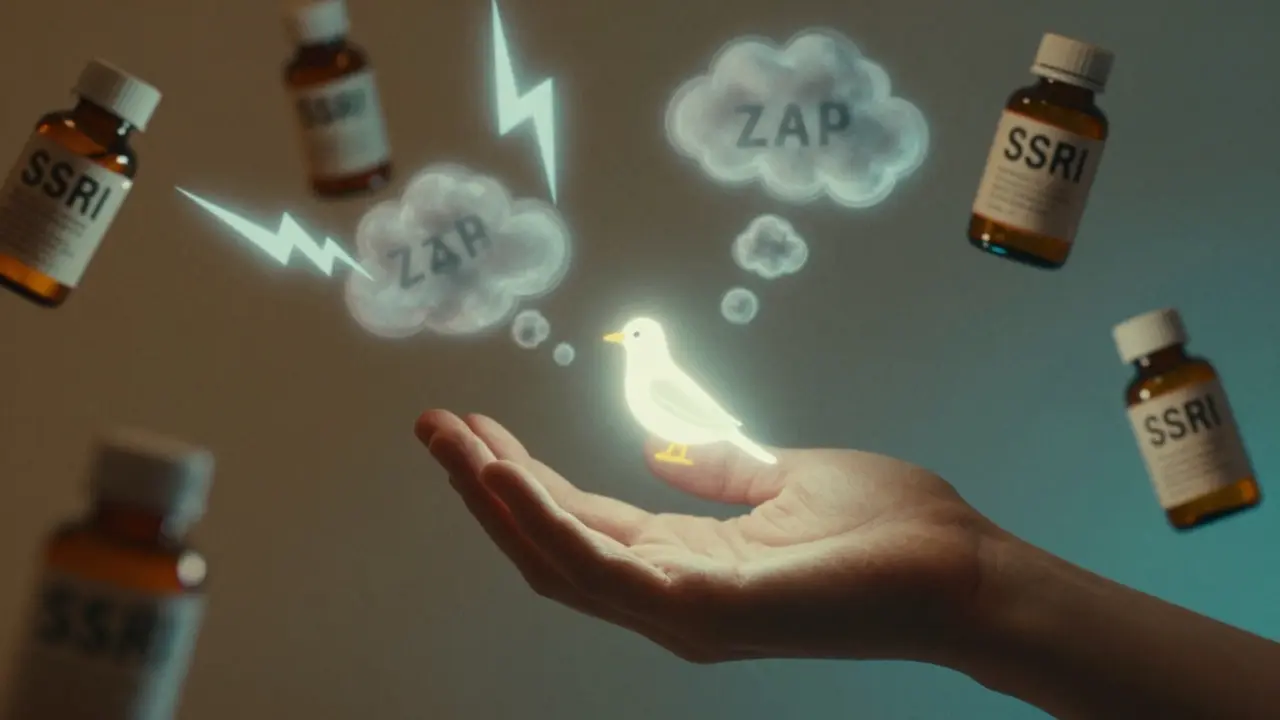
What If SSRIs Don’t Work?
About 30-40% of people don’t respond to the first SSRI they try. That’s normal. It doesn’t mean you’re hopeless - it means you need a different approach. Options include:- Switching to another SSRI (some people respond to one but not another)
- Adding another medication, like bupropion (Wellbutrin), to counteract sexual side effects or boost energy
- Trying a different class, like SNRIs (venlafaxine, duloxetine) or newer agents like vortioxetine
- Combining medication with therapy - CBT, in particular, has strong evidence for working with SSRIs
Genetics and the Future of SSRI Treatment
Science is moving toward personalization. Researchers have found that variations in the SLC6A4 gene - which controls the serotonin transporter - can predict whether someone will respond to SSRIs with 78% accuracy. Blood tests for inflammation markers (like CRP) are also showing promise: people with high inflammation tend to respond worse to SSRIs. Newer drugs like vilazodone (Viibryd) combine SSRI action with serotonin receptor modulation, offering fewer sexual side effects. Slow-release formulations are being tested to smooth out withdrawal. The goal isn’t to replace SSRIs - it’s to make them better, safer, and more precise.Final Thoughts: SSRIs Are a Tool, Not a Cure
SSRIs aren’t magic. They don’t fix your life, your trauma, or your stress. But they can give you the mental space to do the work - therapy, exercise, sleep, connection - that actually leads to lasting change. They’re not perfect. Side effects happen. Some people don’t respond. But for millions, they’re the reason they got out of bed, went back to work, or held their child again. If you’re considering one, talk to your doctor. Ask about alternatives. Ask about tapering. Ask about what to expect. You’re not weak for needing help. You’re human. And SSRIs, for all their flaws, are one of the most studied, safest, and most effective tools we have to help you feel like yourself again.Do SSRIs change your personality?
No, SSRIs don’t change your core personality. But some people report emotional blunting - feeling less intense emotions, both good and bad. This is often temporary and can be managed by adjusting the dose or switching medications. If you feel like you’ve lost yourself, talk to your doctor. It’s not normal to feel numb long-term.
Can you drink alcohol while taking SSRIs?
It’s not recommended. Alcohol can worsen depression and anxiety, and mixing it with SSRIs increases drowsiness, dizziness, and risk of liver damage. Even moderate drinking can reduce the effectiveness of the medication. If you choose to drink, do so very cautiously and only after your body has adjusted to the drug.
How long until SSRIs start working?
You might notice small changes in energy or sleep within 1-2 weeks, but full benefits usually take 4 to 6 weeks. Some people need up to 12 weeks. Don’t give up if you don’t feel better right away. The brain needs time to adapt.
Are SSRIs addictive?
No, SSRIs are not addictive. You won’t crave them or need higher doses to get the same effect. But stopping suddenly can cause withdrawal symptoms - called discontinuation syndrome - which is why you should always taper off under medical supervision.
What’s the best SSRI for anxiety?
Sertraline and escitalopram are most often recommended for anxiety disorders because they’re effective and well-tolerated. Paroxetine works too, but its side effects and withdrawal make it a second choice. Fluoxetine can be too stimulating for some with anxiety. Always start low and go slow.
Can SSRIs cause weight gain?
Some SSRIs can lead to weight gain over time, especially paroxetine and citalopram. Others, like fluoxetine, may cause mild weight loss early on. Weight changes vary by person. If it becomes a concern, your doctor can adjust your medication or suggest lifestyle changes.
Jay Ara
December 27, 2025 AT 05:52took sertraline for 8 months felt like a zombie but finally got my spark back
its not magic but it gave me space to fix myself
Dan Alatepe
December 28, 2025 AT 20:45bruh i took paroxetine and it felt like my brain was doing the cha-cha with a chainsaw 😵💫
withdrawal was worse than my ex’s text messages
SHAKTI BHARDWAJ
December 30, 2025 AT 11:39SSRIs are just corporate brainwashing disguised as medicine lol
you think you're healing but you're just numbing your soul to fit into a capitalist grind
therapy is free and real
Michael Bond
December 30, 2025 AT 23:47My therapist said SSRIs aren't a fix, they're a foundation.
That stuck with me.
Matthew Ingersoll
December 31, 2025 AT 03:09One of the most balanced, accurate summaries of SSRIs I’ve ever read.
Should be required reading for anyone considering them.
david jackson
December 31, 2025 AT 05:46Okay but have you ever considered that the entire serotonin theory is basically a 1980s marketing ploy by Big Pharma to sell pills to people who just needed more sunlight and less social isolation? I mean, we’ve known for decades that exercise, sleep, and community are the real antidepressants. SSRIs are like putting a bandaid on a broken leg and calling it a cure. And don’t even get me started on the sexual side effects - I know people who’ve been on them for 12 years and still can’t orgasm. That’s not treatment, that’s a trade-off no one talks about. And then you’re told to just ‘push through’ like it’s a character flaw. Meanwhile, the same people who prescribe these drugs are the ones who never had to live with the brain zaps or the emotional flatlining. It’s not that I’m against medication - I’m against the cult of quick fixes that ignores trauma, poverty, and systemic despair. We treat symptoms, not causes. And that’s why so many people cycle through SSRIs like they’re laundry detergent.
wendy parrales fong
January 1, 2026 AT 17:37i just want to say thank you for writing this
it made me feel less alone
and i needed that
Zina Constantin
January 2, 2026 AT 11:44As someone who’s been on escitalopram for 4 years, I’ll say this: it didn’t make me happy - it made me capable of wanting to be happy again.
That distinction matters. SSRIs don’t rewrite your life story - they give you the pen back.
Also, side note: if you’re on paroxetine and your doctor says ‘just tough it out’ during withdrawal, find a new doctor. That’s not medical care - that’s negligence.
josue robert figueroa salazar
January 2, 2026 AT 13:48everyone says SSRIs work but nobody talks about how they turn you into a polite robot
you stop crying but you also stop laughing
you stop being angry but you also stop being excited
is that healing or just emotional amputation?
carissa projo
January 3, 2026 AT 11:49There’s a quiet dignity in needing help and still showing up.
SSRIs aren’t weakness - they’re the bridge between surviving and living.
And if someone tells you otherwise, they’ve never sat in the dark and begged for a light switch.
Also - emotional blunting? Real. But often temporary. Talk to your prescriber. Don’t quit cold. You deserve to feel *all* the feels again.
Bryan Woods
January 4, 2026 AT 13:24Thank you for including the genetic research and inflammation markers. This is the future of psychiatric care - precision, not trial and error.
It’s encouraging to see science moving beyond the ‘one-size-fits-all’ model.
Angela Spagnolo
January 5, 2026 AT 09:42...i just wanted to say... i tried fluoxetine... and it made me feel like i was watching my life through a foggy window... and then... i switched to sertraline... and i cried for an hour the first day i felt... real... emotions again...
thank you for writing this... i needed to read it...
Lori Anne Franklin
January 7, 2026 AT 07:46so i started zoloft last month and yeah the nausea was wild
but i slept through my alarm for the first time in 3 years and it felt like a win
small things
Kuldipsinh Rathod
January 7, 2026 AT 07:57my mom was on citalopram for 15 years
she says it kept her alive
she never called it a cure
she called it her daily bread
and that’s okay