
Silicosis and Asbestosis: How to Prevent Occupational Lung Diseases
 May, 19 2026
Imagine breathing in something so tiny you can’t see it, yet it scars your lungs permanently. That is exactly what happens with occupational lung diseases like silicosis and asbestosis. These are not accidents; they are preventable conditions caused by inhaling hazardous particles on the job. Despite being entirely avoidable with proper safety measures, thousands of workers still develop these life-altering illnesses every year. The good news? We know exactly how to stop them.
The Hidden Dangers of Silica and Asbestos
To understand how to protect yourself, you first need to know what you’re up against. Silicosis is a progressive lung disease caused by inhaling crystalline silica dust. This dust comes from sand, stone, concrete, and brick-materials used daily in construction, mining, and manufacturing. When you breathe this dust in, the particles embed themselves deep in your lung tissue, causing inflammation and scarring that never goes away.
Asbestosis, on the other hand, results from prolonged exposure to asbestos fibers. Asbestos was once popular for insulation and fireproofing because it’s cheap and effective. But those microscopic fibers act like needles in your lungs, leading to severe scarring and increased risk of lung cancer and mesothelioma. Even though asbestos use has declined, millions of tons remain in older buildings, making renovation and demolition work particularly risky.
The history of these diseases is long but sobering. Silicosis was formally recognized in 1870 among Italian miners, while asbestosis was identified in 1906 after a young factory worker died in London. Today, the stakes are just as high. According to data from the National Institute for Occupational Safety and Health (NIOSH), silicosis accounts for approximately 1,200 deaths annually in the United States alone. Between 2004 and 2014, over 1,100 U.S. workers died from asbestosis. These numbers aren’t just statistics; they represent lives cut short due to preventable exposures.
Who Is at Risk?
You might think these diseases only affect miners or old-school factory workers, but the reality is much broader. Construction workers face some of the highest risks, especially when cutting concrete, drilling into stone, or sanding masonry. Other high-risk groups include:
- Mining and quarrying personnel handling rock and ore
- Manufacturing employees working with glass, ceramics, or foundry sands
- Shipbuilders and repair crews dealing with insulated pipes and boilers
- Demolition workers tearing down structures built before the 1980s
- Plumbers and electricians drilling through walls containing asbestos-containing materials
The Bureau of Labor Statistics reports that construction, mining, and manufacturing account for 75% of all occupational lung disease cases. If your job involves dust, dirt, or older building materials, you are potentially in the danger zone.
The Hierarchy of Controls: Your Best Defense
Preventing occupational lung diseases isn’t about luck-it’s about strategy. Safety experts use a framework called the “Hierarchy of Controls” to determine the most effective ways to reduce exposure. Understanding this hierarchy helps you prioritize which protections matter most.
| Control Level | Description | Estimated Exposure Reduction |
|---|---|---|
| Elimination/Substitution | Remove the hazard entirely or use safer alternatives | 100% |
| Engineering Controls | Ventilation systems, wet methods, enclosures | 80-90% |
| Administrative Controls | Training, rotation schedules, signage | 50-70% |
| Personal Protective Equipment (PPE) | Respirators (N-95, P-100) | 40-60% |
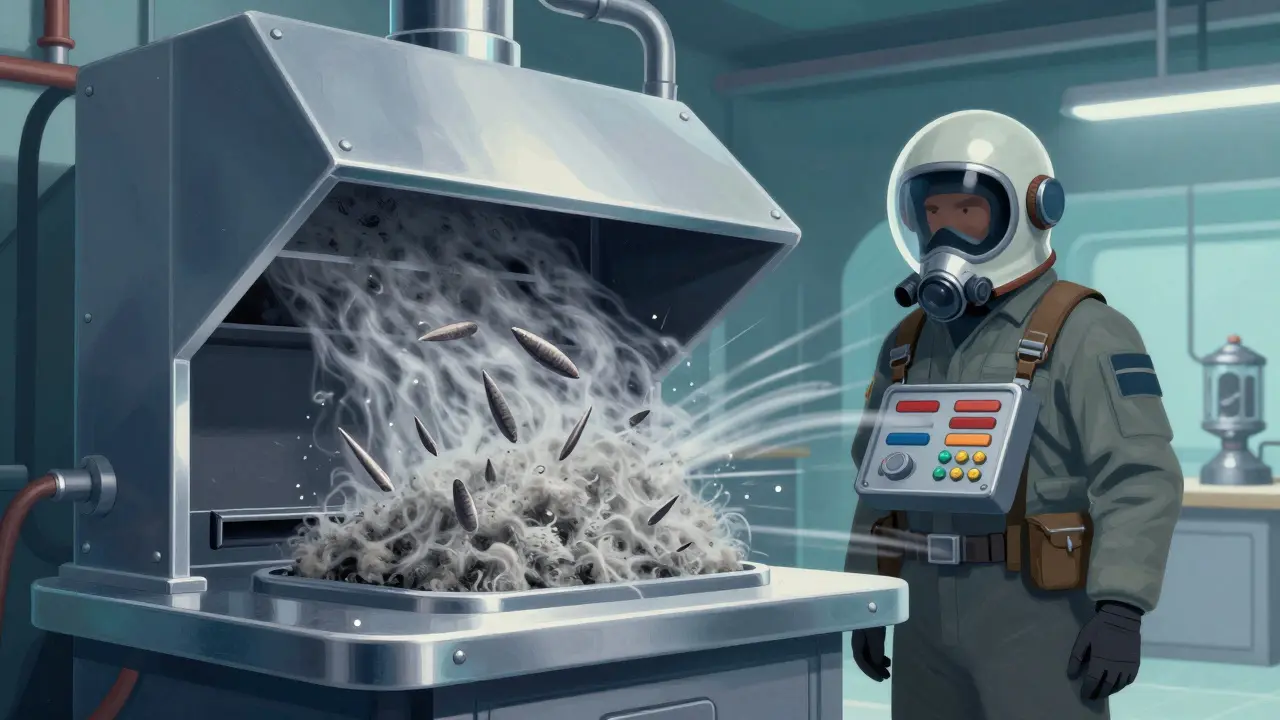
Engineering controls are the workhorses of prevention. For example, local exhaust ventilation systems must maintain an air velocity of 100-150 feet per minute at the source to effectively capture airborne particles. Wet cutting methods can reduce silica dust exposure by up to 90% compared to dry cutting. Enclosing hazardous tasks ensures that at least 95% of generated dust stays contained. These solutions tackle the problem at its source, rather than relying on human behavior.
Why PPE Alone Isn’t Enough
Many workers rely solely on masks, but personal protective equipment (PPE) is the last line of defense-and often the weakest if misused. An N-95 respirator filters out 95% of particles 0.3 microns in size, while a P-100 respirator offers 99.97% filtration. Sounds impressive, right? But here’s the catch: these numbers assume a perfect seal around your face.
In real-world conditions, compliance drops significantly. A study by the CDC’s NIOSH found that 68% of worker complaints about respiratory protection were related to improper fit or discomfort. In summer months, when temperatures exceed 90 degrees Fahrenheit, compliance with wearing P-100 respirators can drop to just 40%. Workers modify their masks to make them more comfortable, compromising their protection. Without annual fit testing mandated by OSHA standard 1910.134, even the best mask is useless.
This is why engineering controls are superior. They don’t depend on remembering to wear a mask or enduring heat stress. They remove the hazard before it reaches your lungs.
Early Detection Saves Lives
If you’ve been exposed to silica or asbestos, early detection is critical. Symptoms like coughing, shortness of breath, and chest pain often appear only after significant damage has occurred. That’s why regular health monitoring is essential.
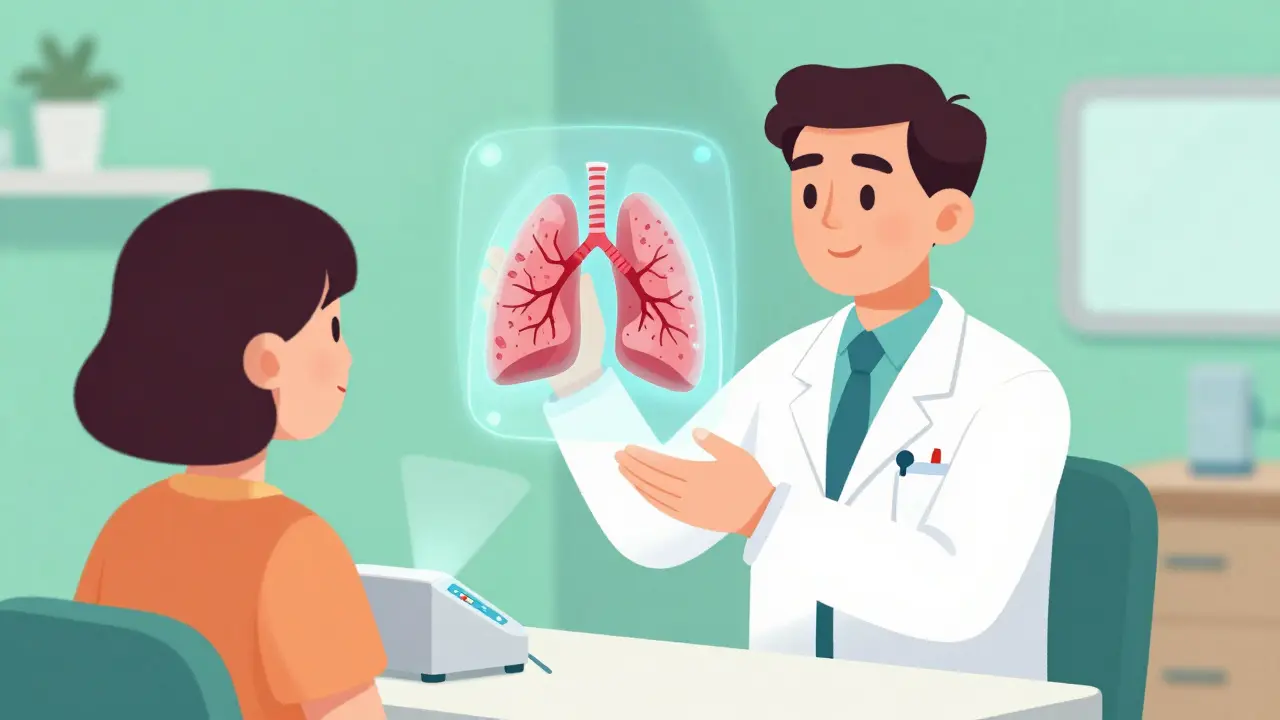
Spirometry testing measures how well your lungs work by tracking how much air you can inhale and exhale. Guidelines recommend baseline spirometry tests upon starting a high-risk job, followed by tests at least every five years. For workers with pre-existing respiratory conditions, annual testing is advised. The American Thoracic Society notes that early detection can slow disease progression by 30-50%, giving you more time to intervene and preserve lung function.
Don’t wait for symptoms. If you work in a high-risk industry, ask your employer about health surveillance programs. If they don’t offer one, consider seeing an occupational medicine specialist for independent testing.
Building a Culture of Safety
Technology and regulations are only part of the equation. Human behavior plays a huge role in preventing occupational lung diseases. Successful implementation requires buy-in from everyone-from supervisors to entry-level workers.
Supervisors should model proper PPE use 100% of the time. If bosses skip safety protocols, workers will too. Training programs should go beyond the minimum two hours required by OSHA. The American Lung Association recommends four to six hours of initial training with annual refreshers. Topics should include recognizing hazards, using equipment correctly, and understanding legal rights.
Small businesses face unique challenges. Data from Wisconsin’s Department of Health showed that 78% of companies with fewer than 20 employees lacked comprehensive respiratory protection programs. However, investing in safety pays off. Proper installation of local exhaust ventilation costs between $2,000 and $5,000 per workstation, but returns on investment are realized within 18-24 months through reduced workers’ compensation claims.
Finally, foster a culture where workers feel empowered to report unsafe conditions without fear of retaliation. OSHA’s Whistleblower Protection Program exists to support this. When safety becomes a core value rather than a compliance burden, incidents drop dramatically. Case studies from 15 construction companies show a 65% reduction in respiratory incidents over three years when leadership prioritized worker health.
Looking Ahead: New Tools and Regulations
The fight against occupational lung diseases continues to evolve. In 2023, NIOSH launched the "Prevent eTool," a digital platform providing industry-specific guidance for 15 high-risk sectors. Early data shows a 40% reduction in respiratory incidents among participating companies within six months. Meanwhile, OSHA’s National Emphasis Program on silica has conducted over 1,200 inspections since October 2022, resulting in nearly 1,000 citations and millions in fines.
Emerging technologies like wearable sensors provide real-time dust exposure data, allowing workers and employers to adjust practices instantly. Globally, the European Respiratory Society aims to eliminate occupational lung diseases by 2030 through coordinated action across 30 countries. Pilot programs in Germany have already achieved a 55% reduction in new cases through mandatory health surveillance and stricter enforcement.
Despite progress, challenges remain. Aging infrastructure means more asbestos abatement work ahead. New chemical substances enter the market annually, some with unknown respiratory effects. And with 25% of construction workers now over age 55, many have pre-existing conditions that increase vulnerability. Vigilance, innovation, and unwavering commitment to safety are non-negotiable.
What are the main symptoms of silicosis?
Common symptoms include persistent coughing, shortness of breath, chest pain, and fatigue. In advanced stages, patients may experience weight loss and fever. Symptoms often develop slowly over years, which is why regular spirometry testing is crucial for early detection.
Can asbestosis be cured once diagnosed?
No, asbestosis cannot be cured because the scarring in the lungs is permanent. Treatment focuses on managing symptoms, slowing progression, and improving quality of life. Oxygen therapy, pulmonary rehabilitation, and avoiding further exposure are key components of care.
How often should I get tested for lung function if I work with silica?
You should undergo baseline spirometry testing when you start a high-risk job. After that, tests should be conducted at least every five years. If you have pre-existing respiratory conditions, annual testing is recommended to monitor any decline in lung function.
Is an N-95 mask enough protection against silica dust?
An N-95 respirator provides 95% filtration efficiency for particles 0.3 microns in size, which includes silica dust. However, its effectiveness depends entirely on a proper facial seal. Annual fit testing is mandatory under OSHA standards. For higher-risk environments, a P-100 respirator offering 99.97% filtration is preferred.
What industries have the highest risk of occupational lung diseases?
Construction, mining, and manufacturing account for 75% of all occupational lung disease cases. Specific high-risk roles include stone cutters, miners, plumbers, electricians, shipbuilders, and demolition workers who frequently encounter silica dust or asbestos fibers.
Does smoking increase the risk of developing silicosis or asbestosis?
Yes, smoking increases the risk of developing occupational lung diseases by 50-70%. It also worsens outcomes and accelerates disease progression. The American Lung Association advocates for total tobacco-free workplaces to mitigate this compounded risk.
Are there legal penalties for employers who fail to provide adequate respiratory protection?
Yes, OSHA enforces strict regulations regarding respiratory protection. In 2021 alone, OSHA cited over 1,000 construction companies for silica violations, issuing $3.2 million in fines. Employers must implement engineering controls, provide appropriate PPE, conduct fit testing, and train workers properly to comply with federal standards.