
Sick Day Rules for Diabetes Medications: What to Stop, Start, and When to Call for Help
 Dec, 20 2025
When you’re sick-whether it’s a cold, flu, stomach bug, or fever-your body is under stress. For people with diabetes, that stress can turn a minor illness into a medical emergency. Diabetes medications don’t work the same way when you’re not eating, vomiting, or dehydrated. Ignoring sick day rules can lead to diabetic ketoacidosis (DKA) or acute kidney injury (AKI), both of which can land you in the hospital. And it’s not rare: nearly 1 in 8 diabetes-related hospitalizations happen because someone kept taking the wrong meds while sick.
Why Illness Changes Everything for Diabetes Medications
When you’re ill, your body releases stress hormones like cortisol and adrenaline. These hormones make your liver dump more glucose into your blood-even if you’re not eating. At the same time, you might not be drinking enough fluids, or you could be losing them through vomiting or diarrhea. This combo is dangerous for people on certain diabetes drugs. For example, metformin is usually safe, but when your kidneys are under strain from dehydration, it can build up and cause lactic acidosis-a rare but life-threatening condition. SGLT2 inhibitors (like dapagliflozin or empagliflozin) are designed to flush sugar out through urine, but when you’re dehydrated, that same mechanism can trigger euglycemic DKA, where ketones rise even though your blood sugar looks normal. And ACE inhibitors or ARBs, often taken for blood pressure, can suddenly cause your kidneys to shut down if you’re not drinking enough. The numbers don’t lie. A 2022 JAMA study of almost 48,000 hospital admissions found that people with diabetes had a 300% higher chance of developing DKA when sick. Acute kidney injury risk jumped 200%. These aren’t theoretical risks-they happen every flu season.Which Medications to Stop-and When
Not all diabetes meds need to be stopped, but some absolutely must be paused during illness. Here’s what the latest guidelines say:- Metformin: Stop immediately if you’re vomiting, have diarrhea, or have a fever above 100.4°F (38°C). Even if you feel fine, your kidneys are working harder. The risk of lactic acidosis spikes when creatinine levels rise, which happens fast when you’re dehydrated. Don’t wait until you feel worse-stop at the first sign.
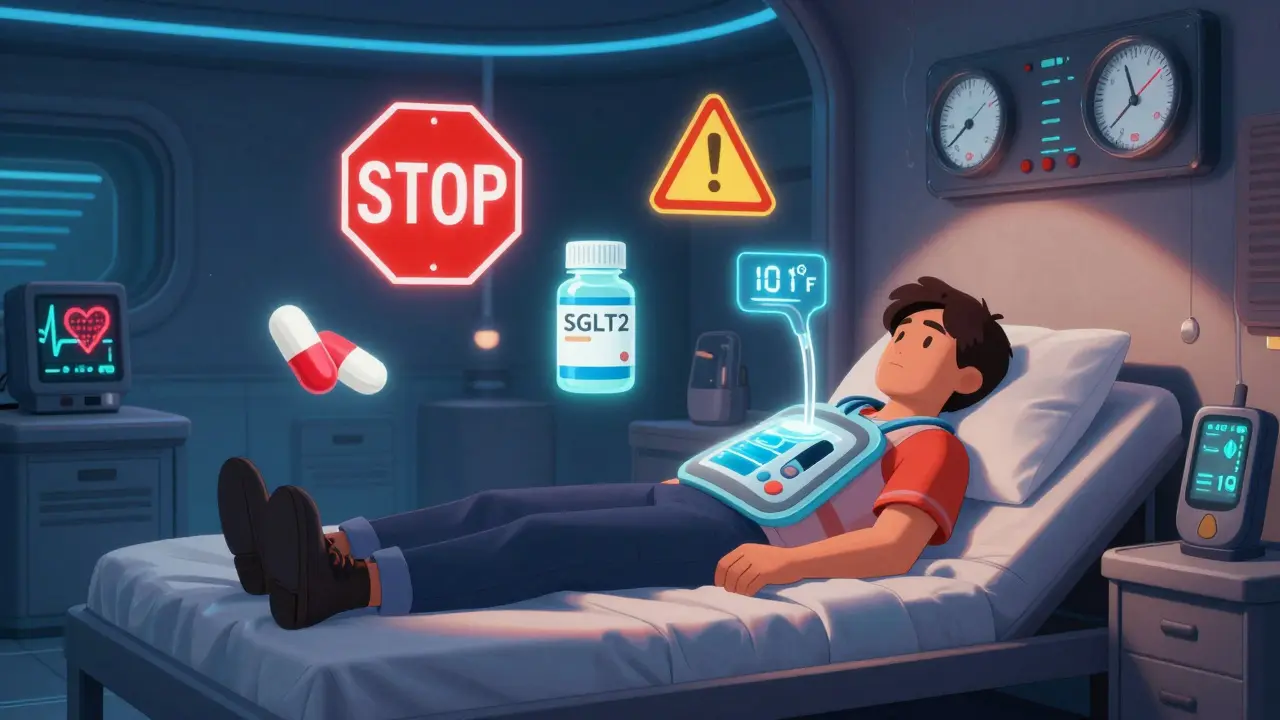
- SGLT2 inhibitors: Discontinue as soon as you get sick. This includes drugs like Jardiance, Farxiga, and Invokana. The FDA issued a safety alert in 2021 after over 1,200 cases of DKA linked to these drugs during illness. The danger? You can develop DKA even if your blood sugar is only 200-300 mg/dL. That’s why it’s called “euglycemic DKA”-it sneaks up on you.
- ACE inhibitors and ARBs: Pause these if you’re drinking less than 1,500 mL (about 6 cups) of fluid in 24 hours. These blood pressure meds reduce blood flow to the kidneys. When you’re dehydrated, that reduction can cause your kidneys to fail within hours. If you’re on lisinopril, losartan, or similar, keep track of how much you’re drinking. If you’re not making urine or feel dizzy when standing, call your doctor.
- Sulfonylureas (like glipizide or glyburide): These can cause low blood sugar when you’re not eating. You might need to reduce the dose, but don’t stop them unless your provider says so. Hypoglycemia is more common than lactic acidosis with these drugs.
Insulin is different. You never stop insulin-no matter how sick you are. In fact, you often need more. Type 1 diabetes patients may need to increase their basal insulin by 10-20% every 4 hours if blood sugar stays above 270 mg/dL (15 mmol/L). Type 2 patients on insulin should check with their provider ahead of time for a sick day plan. A 2023 Diabetes Care study showed 68% of type 2 insulin users needed higher doses when ill.
What to Do Instead: Hydration, Monitoring, and Nutrition
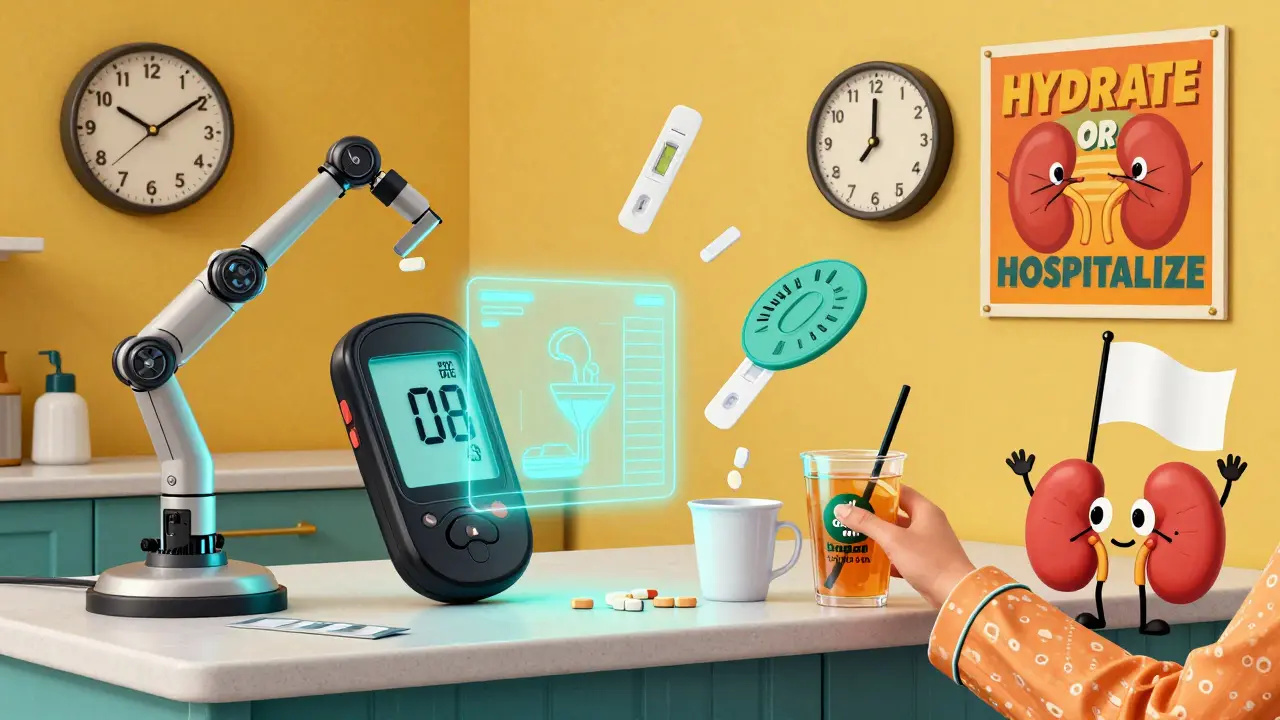
Stopping meds isn’t the only part of sick day rules. You also need to replace fluids, monitor closely, and keep some calories in.- Drink fluids: Aim for at least 1.5 liters (6 cups) per day. Water is best, but if you’re vomiting or have diarrhea, use electrolyte drinks like Nuun, Pedialyte, or sugar-free Gatorade. Avoid sugary sodas unless you’re treating low blood sugar.
- Check blood sugar every 2-4 hours: That’s at least six times a day. Use a glucose meter. Don’t rely on CGM alarms alone-they can be wrong when you’re dehydrated. Write down each reading. If you don’t have a log, use the ADA’s free Sick Day Log template online.
- Test for ketones: If your blood sugar is above 240 mg/dL (13.3 mmol/L), test for ketones using urine strips or a blood ketone meter. Blood ketones above 0.6 mmol/L mean danger. Above 1.5 mmol/L? Call your doctor or go to the ER. Don’t wait.
- Eat something: Even if you’re not hungry, try to eat 15 grams of carbs every hour. Think: half a bagel, 4 crackers, 1 cup of broth with noodles, or ½ cup of applesauce. Skipping food while on insulin or sulfonylureas can cause dangerous lows.
- Use the 15-15 rule for lows: If your blood sugar drops below 70 mg/dL, take 15 grams of fast-acting sugar (glucose tablets, juice, honey). Wait 15 minutes. Check again. Repeat if needed. This works even when you’re sick.
When to Call for Help-The Red Flags
You don’t need to wait until you’re collapsing to get help. These signs mean you need medical attention now:- Blood sugar below 70 mg/dL that doesn’t improve after two rounds of the 15-15 rule
- Ketones above 1.5 mmol/L that stay high after 2 hours of fluids and insulin
- Vomiting for more than 4 hours
- Diarrhea for more than 6 hours
- Not urinating in 8 hours or noticing swelling in your legs or face
- Breathing fast and deep (Kussmaul breathing) or smelling fruity on your breath
If you’re unsure, call your doctor or the ADA helpline (1-800-DIABETES). They’ve answered calls since 1982 and know what to ask. Don’t wait for someone to tell you it’s an emergency-your body already is.
Prepare Before You Get Sick
The best sick day plan is the one you make before you’re too sick to think clearly. Set up a sick-day kit by October each year:- Glucose meter with 50+ test strips
- Ketone strips (at least 10)
- 7-day supply of all your meds (in case you can’t get to the pharmacy)
- 6 bottles of sugar-free electrolyte drinks
- Glucose tablets or juice boxes
- Simple snacks: crackers, broth, applesauce
- Written plan from your doctor: what to stop, what to keep, when to call
People who prepare these kits are 78% less likely to end up in the hospital, according to data from Joslin Diabetes Center. It’s not glamorous-but it saves lives.
Why Everyone’s Giving Different Advice
You might hear conflicting things. Your endocrinologist says keep metformin. The ADA website says stop it. Your pharmacist says to check your kidneys. That’s because guidelines aren’t perfectly aligned.- The ADA says you can keep metformin during mild illness if you’re eating and drinking.
- The IDF (International Diabetes Federation) says stop it at the first sign of illness.
- The UK’s NICE guidelines say pause meds if you drink less than 1,200 mL/day-stricter than the ADA’s 1,500 mL.
- Some clinics still say, “Just keep taking your meds unless told otherwise.”
A 2024 survey found 41% of patients got conflicting advice from different providers. That’s why you need a written plan from your own doctor. Don’t rely on websites or apps alone. Print it out. Keep it with your sick-day kit.
What’s Missing From the Guidelines
The truth? Current rules were made for younger, healthier people. They don’t fit well for older adults with kidney disease, heart failure, or multiple meds. A 2023 study found that 31% of elderly patients still had complications-even when they followed the rules. Also, newer drugs like GLP-1 agonists (Ozempic, Mounjaro) don’t have clear sick day guidance yet. They’re not linked to DKA like SGLT2 inhibitors, but they slow digestion. If you’re vomiting, you might not absorb your insulin properly. That’s a gray area most doctors haven’t figured out yet. And no one has a good algorithm for insulin adjustments during illness. Everyone’s different. Your dose might need to go up 10%. Mine might need to go up 40%. That’s why personalized plans matter more than generic advice.Final Thought: It’s Not About Perfection-It’s About Action
You don’t need to memorize every number or rule. Just remember this:- If you’re sick, test your blood sugar more often.
- If you’re vomiting or not drinking, stop metformin and SGLT2 inhibitors.
- If your ketones are high or you’re not peeing, call for help.
- If you’re unsure, call your doctor-even at 2 a.m.
Diabetes doesn’t take a sick day. Your body needs you to act-quickly, clearly, and confidently. The difference between staying home and ending up in the ER is often just one phone call.
Should I stop my metformin if I have a stomach bug?
Yes. If you’re vomiting, have diarrhea, or have a fever, stop metformin immediately. Your kidneys are under stress, and metformin can build up in your blood, leading to lactic acidosis-a rare but serious condition. Restart only after you’re eating and drinking normally for at least 24 hours-and only after checking with your doctor.
Can I get DKA even if my blood sugar isn’t high?
Yes. This is called euglycemic DKA, and it’s most common with SGLT2 inhibitors like Farxiga or Jardiance. Even if your blood sugar is only 180-250 mg/dL, ketones can rise dangerously if you’re dehydrated. Test for ketones anytime your blood sugar is above 240 mg/dL-or if you feel nauseous, tired, or have fruity breath. Don’t wait for high numbers.
Do I need to stop my blood pressure meds when I’m sick?
If you take an ACE inhibitor (like lisinopril) or ARB (like losartan), pause them if you’re drinking less than 1,500 mL (6 cups) of fluid in 24 hours. These drugs reduce blood flow to your kidneys. When you’re dehydrated, that can cause sudden kidney injury. Check your urine output-if you haven’t peed in 8 hours, call your doctor.
What should I eat if I can’t keep food down?
Even if you’re nauseous, try to get 15 grams of carbs every hour. Options include: 4 saltine crackers, ½ cup of applesauce, 1 cup of broth with noodles, or ½ cup of frozen juice popsicle. Avoid fatty or greasy foods-they worsen nausea. If you can’t eat at all, sip sugar-free electrolyte drinks and check your ketones every 2 hours.
Can I use a CGM instead of a glucose meter when I’m sick?
CGMs are helpful, but don’t rely on them alone when you’re sick. Dehydration can make readings inaccurate. Always confirm high or low readings with a fingerstick glucose meter. Also, CGMs don’t measure ketones. You still need separate ketone strips or a blood ketone meter if your sugar is above 240 mg/dL.
How long should I wait before restarting my meds after being sick?
Don’t restart metformin, SGLT2 inhibitors, or ACE inhibitors until you’re eating and drinking normally for at least 24 hours-and you’ve checked your kidney function with a blood test if you were severely ill. For insulin and sulfonylureas, adjust doses based on your blood sugar patterns. Always call your provider before restarting any stopped medication.
Is it safe to take over-the-counter cold meds with diabetes?
Some cold medicines contain sugar, alcohol, or decongestants that raise blood sugar. Look for sugar-free versions. Avoid decongestants like pseudoephedrine if you have high blood pressure-they can spike glucose. Always check with your pharmacist before taking anything new. Tylenol (acetaminophen) is usually safe for fever and pain.
Siobhan K.
December 21, 2025 AT 09:52Brian Furnell
December 21, 2025 AT 22:51Meina Taiwo
December 23, 2025 AT 00:01Adrian Thompson
December 24, 2025 AT 11:46Southern NH Pagan Pride
December 25, 2025 AT 02:27Orlando Marquez Jr
December 26, 2025 AT 02:36Jackie Be
December 28, 2025 AT 01:03John Hay
December 28, 2025 AT 17:17Jon Paramore
December 29, 2025 AT 21:34Swapneel Mehta
December 30, 2025 AT 16:05Stacey Smith
December 31, 2025 AT 23:35Ben Warren
January 1, 2026 AT 05:28Teya Derksen Friesen
January 2, 2026 AT 14:43Sandy Crux
January 2, 2026 AT 20:51Hannah Taylor
January 4, 2026 AT 11:38