
RSV Infections: Risks for Infants, Older Adults, and How to Prevent Them
 Jan, 13 2026
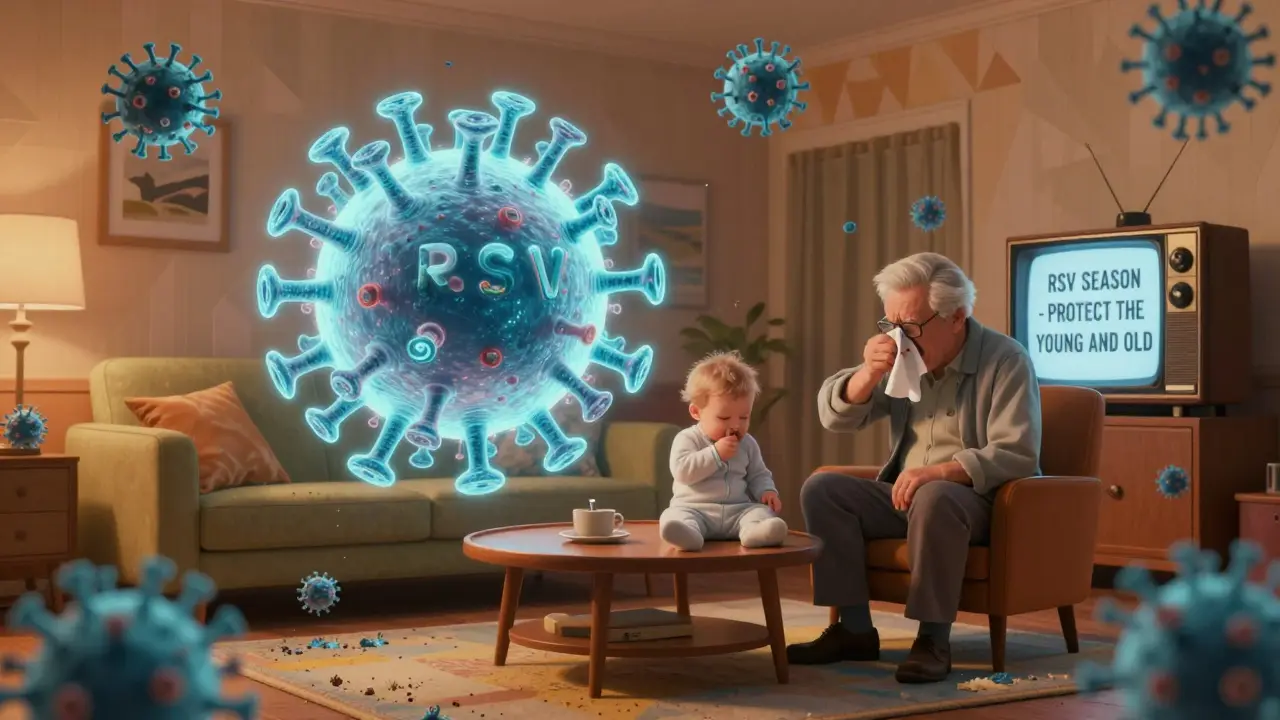
Every winter, something quiet but dangerous sweeps through homes, hospitals, and daycare centers. It starts with a runny nose, a cough, maybe a fever. For most adults, it’s just a cold. But for infants and older adults, it can turn deadly. That something is RSV - Respiratory Syncytial Virus. It’s not new, but the tools to fight it are finally here.
What RSV Actually Does to the Body
RSV doesn’t just give you a stuffy nose. It attacks the small airways in the lungs, especially in young children and older adults. The virus spreads easily - through coughs, sneezes, or touching a doorknob that an infected person just touched. The virus can live on surfaces for nearly 10 hours. You don’t even need to be sick to spread it. People can pass it on before they feel ill, and kids under 1 can keep spreading it for up to four weeks.In healthy adults, RSV usually causes mild cold symptoms: runny nose (78% of cases), sore throat, fatigue, and low-grade fever. But in babies under 6 months, it can quickly become serious. The airways swell, fill with mucus, and make breathing a struggle. That’s when you see the signs: fast, shallow breaths, ribs pulling in with each inhale, flaring nostrils, and refusing to eat because breathing takes too much effort.
Why Infants Are Most at Risk
Babies under 1 year, especially those born prematurely or with heart or lung conditions, are the most vulnerable. Their airways are tiny - about the size of a drinking straw. When RSV inflames those tubes, they practically close up. About 2-3% of all infants under 6 months end up in the hospital each year because of RSV. In the U.S. alone, that’s 58,000 to 80,000 hospitalizations for kids under 5.High-risk infants include:
- Babies born before 29 weeks’ gestation - they face 3 to 5 times higher risk of hospitalization
- Children with congenital heart disease - up to 25 times more likely to get severely ill
- Babies with chronic lung disease - 10 to 15 times higher risk
Global numbers are even starker. Over 97% of RSV-related deaths in children under 5 happen in low- and middle-income countries. In rural Kenya, the death rate from RSV is 2.5%. In remote parts of Papua New Guinea, it’s over 15%. Why? No oxygen, no ventilators, no access to IV fluids or intensive care.
Older Adults Are Now a Major Target
For years, RSV was seen as a "child’s virus." That changed. In 2023, the CDC confirmed RSV causes 60,000 to 160,000 hospitalizations and 6,000 to 14,000 deaths each year in U.S. adults over 65. That’s more than seasonal flu in some years.Why are older adults so vulnerable? Their immune systems weaken with age. Even if they’ve had RSV before, their bodies don’t fight it off like they used to. And if they have COPD, heart failure, or diabetes, RSV turns into a crisis. One study found:
- People with COPD are 4.2 times more likely to be hospitalized
- Those with heart failure have 2.8 times higher risk
- Adults over 75 stay in the hospital 2.3 times longer than younger patients
- 34% of hospitalized older adults need ICU care
And it’s not just about surviving the infection. After RSV, 42% of seniors develop new problems - they can’t bathe, dress, or walk without help. Nearly 1 in 3 need to move to a rehab center or nursing home after hospital discharge.
The Long-Term Damage RSV Leaves Behind
Even if a child survives RSV, the damage doesn’t always disappear. Kids who were hospitalized with RSV bronchiolitis before age 2 are:- 4.3 times more likely to develop recurrent wheezing
- 3.2 times more likely to be diagnosed with asthma by age 7
Studies tracking these children into their teens show their lungs never fully catch up. Their lung function - measured by how much air they can forcefully exhale - remains 8-12% lower than normal. This isn’t just a childhood illness. It can shape their health for life.
How to Prevent RSV: The New Tools
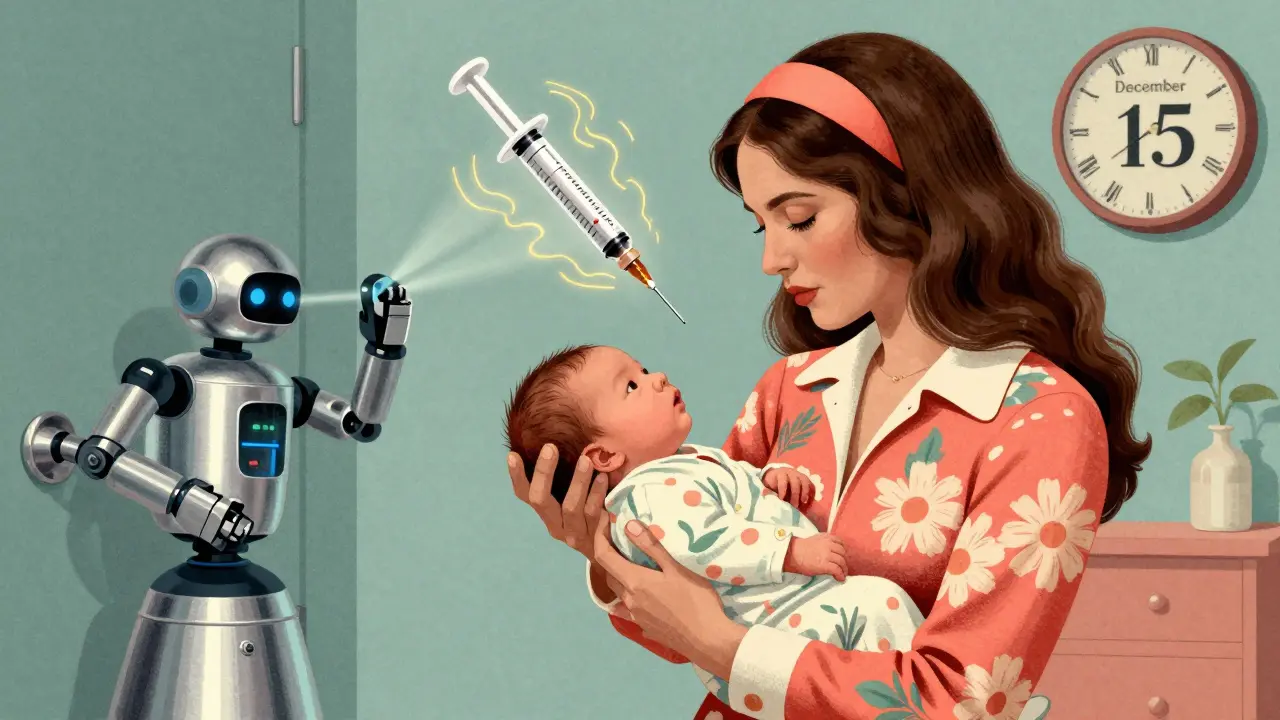
For decades, the only prevention for high-risk babies was a monthly shot called palivizumab. It helped, but it was expensive and required 5 shots over the RSV season. Now, everything has changed.Nirsevimab (Beyfortus™) - approved in July 2023 - is a game-changer. It’s a single injection that protects babies for the entire RSV season (about 5 months). Clinical trials showed it cuts the risk of hospitalization by 75%. The CDC now recommends it for all infants under 8 months entering their first RSV season, no matter their health status. High-risk kids 8 to 19 months old should get it too.
For older adults, two vaccines are now available:
- GSK’s Arexvy - 82.6% effective at preventing lower respiratory tract disease
- Pfizer’s Abrysvo - 66.7% effective
Both are single-dose shots recommended for adults 60 and older. The CDC says you should talk to your doctor about whether it’s right for you - especially if you have heart or lung disease.
And there’s more: Pfizer’s Abrysvo was also approved in August 2023 for use in pregnant people between 32 and 36 weeks. It passes protective antibodies to the baby before birth, offering protection from day one. This maternal vaccine cut severe RSV illness in newborns by 81.8%.
What You Can Do Right Now
Even with new vaccines and shots, basic steps still matter - especially if someone in your home is at risk.- Wash hands with soap for at least 20 seconds - it cuts transmission by 35-50%
- Avoid close contact with sick people, especially around babies and older adults
- Don’t kiss babies on the face or hands if you have a cold
- Clean high-touch surfaces daily - doorknobs, light switches, toys - with EPA-approved disinfectants. This reduces RSV on surfaces by up to 95%
- Stay home when sick - even if you think it’s "just a cold"
For families with high-risk children, avoid crowded places like malls or daycare during peak RSV season (December to February). If you’re over 60, ask your doctor about the RSV vaccine. It’s not optional anymore - it’s essential.
Why Access Still Isn’t Equal
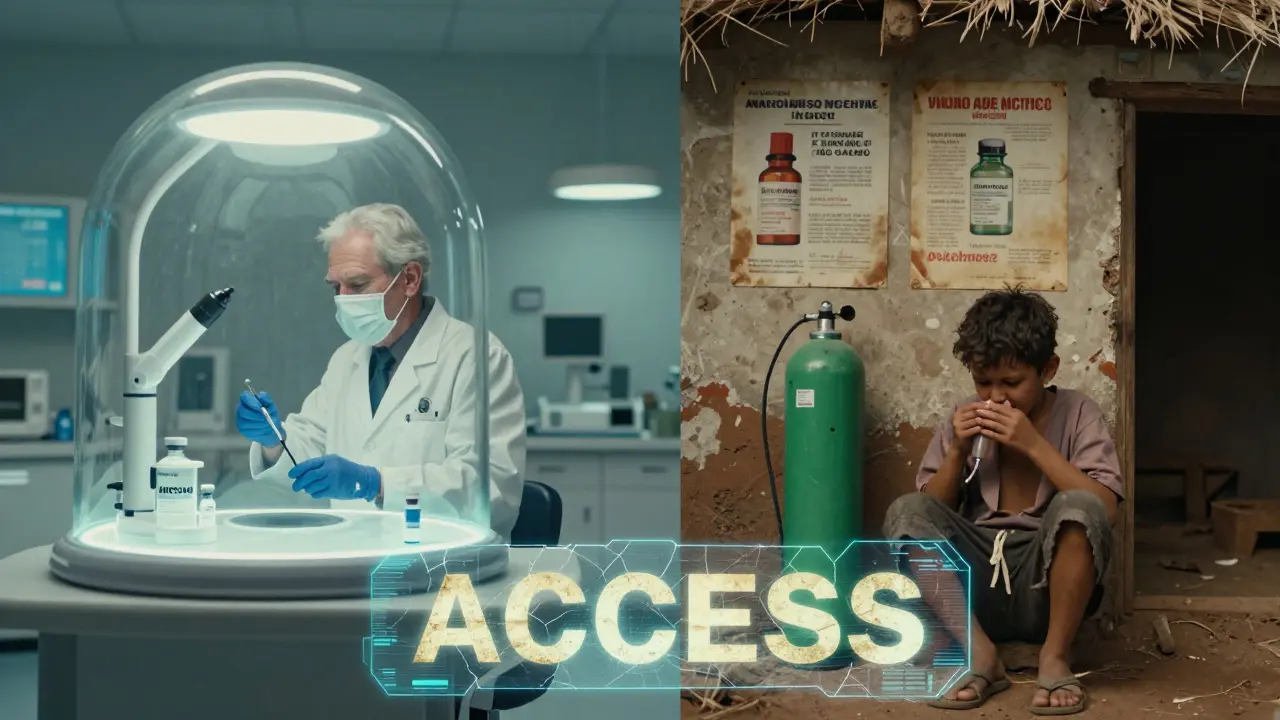
The good news? We have the tools. The bad news? Not everyone can get them.In the U.S., Beyfortus costs around $500 per dose. Arexvy and Abrysvo are priced at $295 each. In low-income countries, these prices are impossible. Most families there don’t have access to oxygen, let alone monoclonal antibodies or vaccines. As of late 2023, RSV vaccine coverage in these regions is nearly zero.
WHO estimates that if these tools reach everyone who needs them, we could prevent 400,000 to 600,000 hospitalizations worldwide by 2030 - and slash deaths by 30-50%. But that won’t happen without global action, fair pricing, and better distribution.
For now, if you’re in a country with access - use it. Protect your babies. Protect your parents. RSV doesn’t care who you are. But now, you have the power to fight back.
Can adults get RSV more than once?
Yes. You can get RSV multiple times in your life. The first infection is usually the worst. After that, your body builds some immunity, so later infections tend to be milder - like a bad cold. But in older adults and people with weak immune systems, even repeat infections can be serious.
Is RSV the same as the flu or COVID?
No. RSV, flu, and COVID-19 are different viruses, though they cause similar symptoms: cough, fever, runny nose, and fatigue. The key difference is who gets seriously ill. RSV hits infants and older adults hardest. Flu can affect all ages, but COVID-19 has a broader range of severe outcomes across age groups. Testing is the only way to know for sure which virus you have.
Can I get the RSV vaccine and flu shot at the same time?
Yes. The CDC says it’s safe to get the RSV vaccine and flu shot on the same day, in different arms. Many older adults choose to do this during their annual checkup. Side effects are mild - sore arm, fatigue, headache - and similar to what you’d get with either shot alone.
How do I know if my baby needs emergency care for RSV?
Call 911 or go to the ER if your baby has: breathing faster than 60 breaths per minute, ribs pulling in with each breath, blue lips or fingernails, extreme lethargy, or refuses to feed for more than 8 hours. These are signs of severe respiratory distress. Don’t wait - get help immediately.
Does breastfeeding protect against RSV?
Breastfeeding gives babies antibodies and helps build their immune system, which can reduce the severity of RSV. But it doesn’t prevent infection. It’s still important to follow other prevention steps like handwashing, avoiding sick visitors, and getting nirsevimab if your baby is eligible.
Gregory Parschauer
January 15, 2026 AT 02:40Let me be perfectly clear: if you're not getting your infant the Beyfortus shot, you're essentially gambling with their life. This isn't just prevention-it's moral responsibility. The science is settled, the data is irrefutable, and yet parents still cling to outdated myths about "natural immunity." You wouldn't skip a measles vaccine, so why are you hesitating on a 75% effective RSV shield that costs less than a monthly coffee subscription? This isn't about fear-it's about accountability.
jefferson fernandes
January 16, 2026 AT 02:38Just wanted to add-this is the most comprehensive, well-researched piece I've seen on RSV in years. Seriously, thank you for including the global context. In rural India, we don't have access to monoclonal antibodies or vaccines, but we do have clean water, handwashing, and community health workers. The CDC guidelines are great, but they assume a healthcare infrastructure that doesn't exist everywhere. We need global equity, not just American solutions.
Trevor Whipple
January 17, 2026 AT 16:51ok so i just read this and like… i thought rsv was just a bad cold? turns out its basically a silent killer for babies and old folks?? wow. also i got the vaccine last week and my arm hurts but honestly worth it. my mom is 72 and has copd so i made her go too. she said she felt like a "medical experiment" but now she’s chillin’ with her grandkids again. also, why is this not on every news channel?? this is bigger than flu season.
Milla Masliy
January 18, 2026 AT 02:49I’m from the U.S., but I’ve worked in maternal health in rural Nepal for the past five years. What’s missing from this article is the cultural layer-how families in low-resource settings perceive illness. In many places, fever in infants is seen as "a test from God," not a medical emergency. And while vaccines are critical, we also need culturally grounded education-mothers who can explain RSV symptoms in local languages, using familiar metaphors. The tools exist. But the bridge between science and community? Still under construction.
Damario Brown
January 18, 2026 AT 19:27lol you guys are acting like rsv is some new demon. i had it 3 times as a kid. my grandma had it at 80 and slept it off. the real problem? overdiagnosis. hospitals are cashing in. why do you think they pushed this vaccine so hard? profit. also, did you know palivizumab was originally developed for cancer patients? now it's for babies? red flag. and don't even get me started on the "maternal vaccine"-who approved this? big pharma? again, i'm not anti-vax, i'm anti-manipulation.
sam abas
January 20, 2026 AT 13:53Okay, let’s unpack this. First, the 75% efficacy claim for nirsevimab? That’s relative risk reduction-not absolute. In a population with a baseline hospitalization rate of 2%, a 75% reduction means going from 2% to 0.5%. That’s a 1.5 percentage point difference. Meanwhile, the cost per QALY (quality-adjusted life year) for Beyfortus exceeds $500,000 in most modeling studies. And let’s not forget: the RSV season is only 5 months long. So we’re giving a single-dose monoclonal antibody to every infant under 8 months, at a cost of $500 per child, to prevent a condition that most kids recover from without intervention? And yet, we’re not mandating universal flu shots for children? The logic here is… inconsistent. And the media’s portrayal of this as a "miracle" is irresponsible.
Clay .Haeber
January 21, 2026 AT 22:31So let me get this straight-we’ve got a virus that kills babies in Kenya and grandpas in Ohio, and the solution is… a $500 shot that only works for five months? Meanwhile, the CDC tells us to wash our hands like we’re surgeons, but nobody’s talking about how air conditioning units in nursing homes circulate this virus like a haunted HVAC system? And don’t even get me started on daycare centers where toddlers are coughing into stuffed animals like they’re auditioning for a horror movie. This isn’t medicine. It’s a $10 billion PR campaign wrapped in a lab coat. I’m just here for the popcorn.
Priyanka Kumari
January 22, 2026 AT 09:14As someone who lost a cousin to RSV in rural India-no oxygen, no hospital, just a mother holding her baby until the end-I can say this: every word here matters. But let’s not stop at vaccines. We need mobile clinics, community health volunteers trained to recognize breathing distress, and simple pulse oximeters in every village. Prevention isn’t just about shots-it’s about dignity. And if we can deliver a $500 antibody to every American baby, we can deliver $10 oxygen sensors to every village that needs them. Let’s make sure no mother has to whisper, "I didn’t know it was this bad," again.