
Priority vs Standard Review: How FDA Prioritizes Generic Drug Applications
 Dec, 19 2025
The U.S. Food and Drug Administration (FDA) doesn’t treat every generic drug application the same. Two paths exist: priority review and standard review. The difference isn’t just paperwork-it’s money, timing, and access to life-saving medications. If you’re a manufacturer, a pharmacist, or just someone who depends on affordable drugs, understanding how the FDA picks which applications move faster can change everything.
What’s the Real Difference Between Priority and Standard Review?
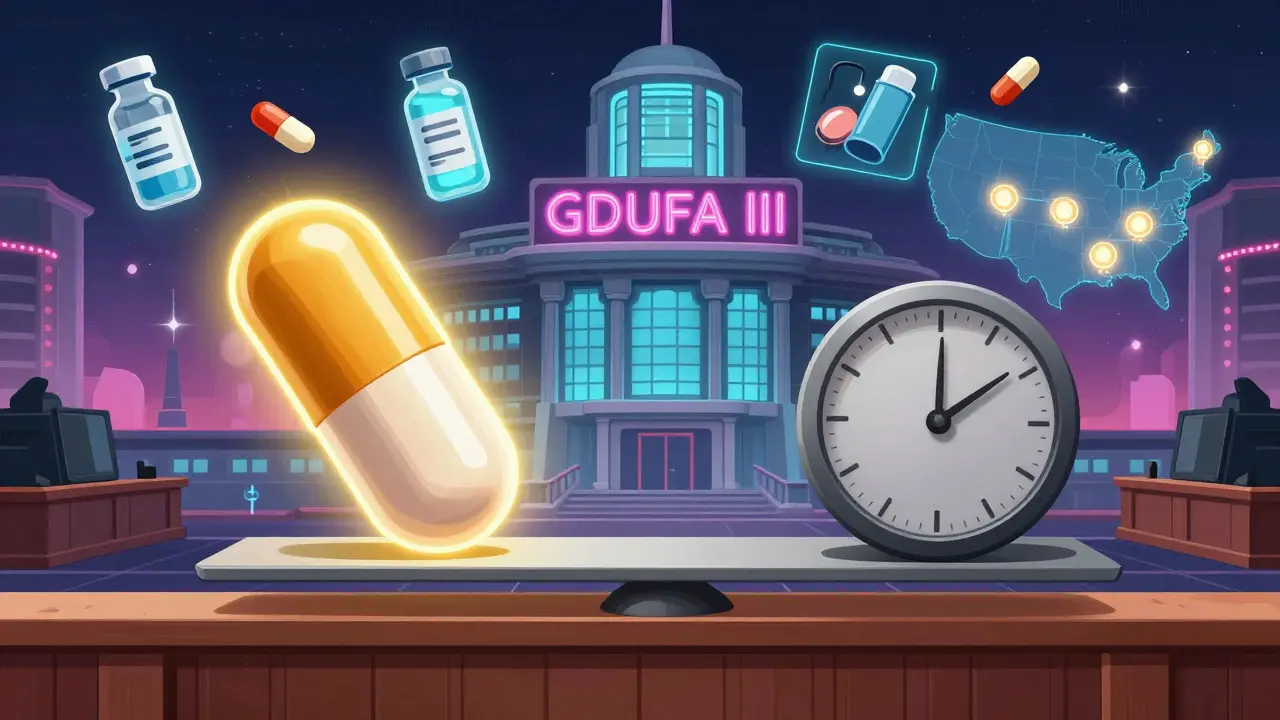
The timeline is the most obvious distinction. For standard review, the FDA aims to complete its evaluation in 10 months from the day the application is officially filed. Priority review cuts that down to 8 months. That two-month gap might sound small, but in the generic drug world, it’s a race worth millions. This isn’t arbitrary. The rules come from the Generic Drug User Fee Amendments (GDUFA) III, which took effect in October 2022 and runs through 2027. Before GDUFA, timelines were looser. Now, they’re locked in. The FDA tracks every clock. Miss the deadline? The agency has to explain why. But here’s the catch: not every application qualifies for priority. Only specific types get the fast track. That’s where the real strategy begins.Who Gets Priority Review?
The FDA doesn’t hand out priority review like free samples. There are three clear triggers:- First generic-the very first company to submit a complete application after a brand-name drug’s patents and exclusivity expire. This is the golden ticket. The first generic gets 180 days of market exclusivity, meaning no other generic can enter until that period ends. That’s a huge financial advantage.
- Drugs in shortage-if a medication is hard to find, and patients are at risk, the FDA fast-tracks any generic that can help. This includes antibiotics, insulin, and heart medications that keep running out.
- Medically important advances-if a generic version improves safety, dosing, or delivery compared to what’s already on the market, it qualifies. For example, a tablet that doesn’t need refrigeration or a formulation that reduces side effects.
The New Domestic Manufacturing Pilot
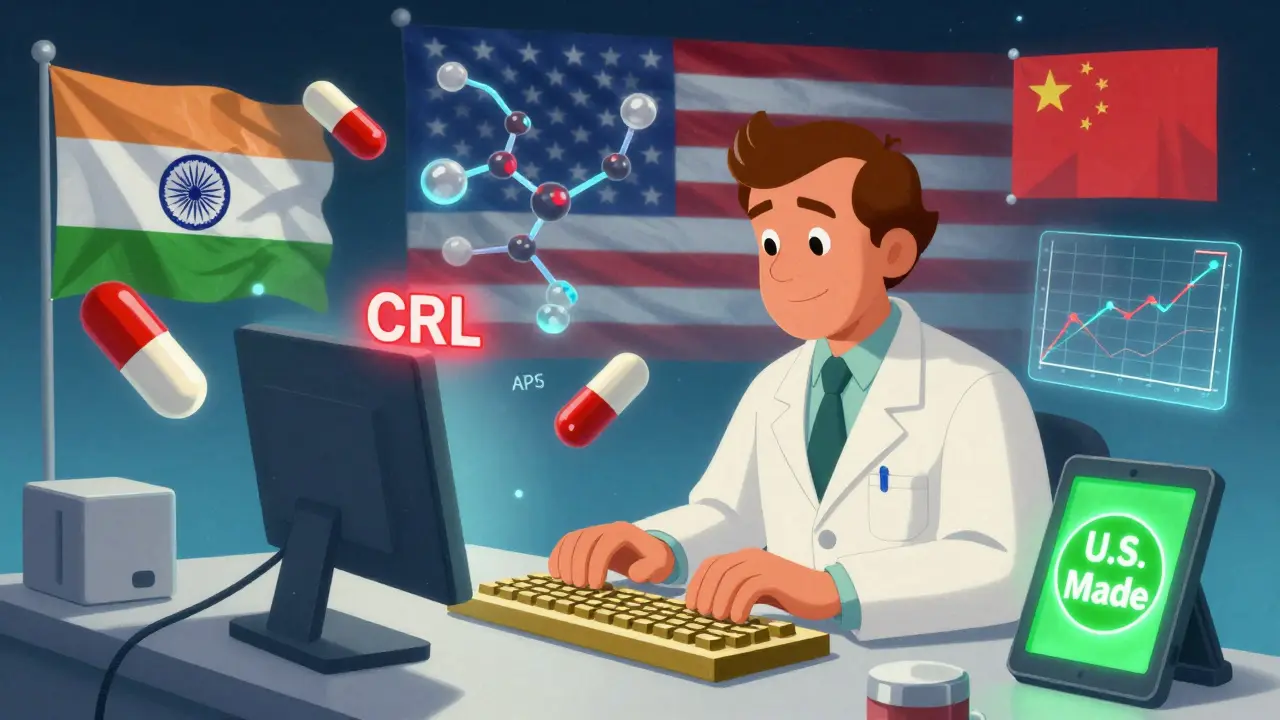
In October 2023, the FDA dropped a bombshell: a new pilot program that gives extra priority to generics made in the U.S. To qualify, a company must prove three things:- The bioequivalence studies were done in the United States.
- The finished drug product (the pill, capsule, or injection) is made in a U.S. facility.
- The active pharmaceutical ingredient (API)-the actual medicine inside-comes from a U.S. supplier.
Why This Matters to You
If you’re a patient, this affects your wallet. Generic drugs make up 90% of prescriptions in the U.S. but cost only 15% of what brand-name drugs do. Faster approvals mean more competition, lower prices, and better access. If you’re a pharmacist, you’ll see new generics hit shelves sooner. That’s good news when a drug is on backorder. If you’re a manufacturer, this is a game of chess. You have to decide: do you invest in U.S. facilities and testing? Do you chase first-to-file status? Or do you play it safe with standard review and wait your turn? The numbers show the stakes. A first generic on the market can earn $200-500 million in extra revenue over its exclusivity period. That’s why companies spend millions on legal teams to fight patents and on regulatory experts to make sure their application is flawless.What Happens When an Application Gets Rejected?
Getting a rejection letter from the FDA isn’t the end-it’s the beginning of a longer, more expensive journey. About 31.7% of ANDAs get at least one Complete Response Letter (CRL) in 2022. That means the FDA found something wrong. Most often, it’s about chemistry, manufacturing, or controls (CMC). Maybe the pill doesn’t dissolve the right way. Maybe the manufacturing process isn’t consistent. Maybe the labeling doesn’t match the brand drug exactly. Each CRL adds about 4.2 months to the timeline. And you have to pay another filing fee-$164,880 in 2024-to resubmit. That’s why more companies are using pre-submission meetings. In 2020, only 41% of sponsors talked to the FDA before filing. By 2023, that number jumped to 63%. These meetings let companies ask: “Will you approve this?” before spending hundreds of thousands on testing and paperwork. The result? First-cycle approval rates rose from 24.1% to 38.7% for those who used the program.
What About Complex Generics?
Not all drugs are simple pills. Inhalers, injectables, topical creams, and extended-release tablets are harder to copy. These are called “complex generics.” They make up 18.3% of pending applications but only 9.7% of approvals. Why? Because proving they’re equivalent to the brand drug is much harder. The FDA needs more data, more testing, more time. To help, the FDA launched the Complex Generic Drug Product Pilot Program in January 2023. It offers early scientific advice-like a pre-approval consultation-to help sponsors avoid costly mistakes. Companies using this program are seeing better outcomes. They’re not guessing what the FDA wants. They’re building it into their design from day one.What’s Next?
The FDA isn’t stopping. By late 2024, they plan to roll out AI tools to help review straightforward applications faster. In testing, these tools cut review times by 18.7%. They also expect 1,275 ANDA submissions in 2024-up 12.5% from last year. Priority reviews will make up nearly one-third of those. The goal? Get more affordable drugs to market faster. And keep them made in the U.S. The system isn’t perfect. Delays still happen. Complex drugs still take too long. But the rules are clearer than ever. And the incentives-financial, strategic, and national-are stronger than they’ve ever been. If you’re waiting for a generic drug to become available, the answer isn’t just “when.” It’s “who,” “how,” and “where” it was made.What’s the difference between priority review and standard review for generic drugs?
Priority review takes 8 months from filing to decision, while standard review takes 10 months. Priority review is only given to applications that meet specific criteria: first generic approval, drugs in shortage, or those offering a meaningful clinical improvement over existing options.
How do I know if my generic drug qualifies for priority review?
Your application qualifies if you’re the first to submit a complete ANDA after patent expiration, if your drug addresses a documented shortage, or if it’s a medically important improvement over existing versions. The FDA uses the Orange Book to check patent status and exclusivity. For the new pilot, you must also prove U.S.-based manufacturing and testing.
Why does the FDA care where generic drugs are made?
During the pandemic, 80% of active ingredients came from outside the U.S., leading to dangerous shortages. The FDA’s new pilot rewards companies that make drugs entirely in the U.S.-from the active ingredient to the final pill-to strengthen supply chains and reduce reliance on foreign suppliers.
What happens if the FDA rejects my generic drug application?
If the FDA issues a Complete Response Letter (CRL), you’ll need to fix the issues and resubmit. About 31.7% of applications get a CRL, mostly due to chemistry or manufacturing problems. Each resubmission adds about 4.2 months to the timeline and costs $164,880 in new fees.
How long does it usually take for a generic drug to hit the market after a brand’s patent expires?
On average, it takes 2.7 years from patent expiration to first generic approval. Delays come from patent lawsuits, complex manufacturing, and regulatory hurdles-even if the application is perfect. Fast-track pathways help, but they don’t eliminate all barriers.
Alex Curran
December 20, 2025 AT 18:42And the U.S. manufacturing pilot? Long overdue. We lost so much ground during the pandemic. Making APIs here isn't just patriotic-it's pragmatic. The cost is insane, but so is the risk of another supply chain collapse.
Kitt Eliz
December 21, 2025 AT 15:22Priority review isn't a perk-it's a survival mechanism. First generic = 180 days of monopoly cash. That's $500M in your pocket if you nail it. Meanwhile, Big Pharma is still fighting patents in court like it's 2010. Wake up. The game changed. If you're not doing U.S.-based bioequivalence studies, you're already behind. #PharmaTech #GDUFAIII
Laura Hamill
December 21, 2025 AT 20:37Dikshita Mehta
December 23, 2025 AT 12:41pascal pantel
December 25, 2025 AT 08:24Gloria Parraz
December 25, 2025 AT 12:44Sahil jassy
December 27, 2025 AT 10:48Carolyn Benson
December 29, 2025 AT 08:00William Liu
December 31, 2025 AT 01:30