
Penicillin Allergy Testing: How Accurate Diagnosis Reduces Risks and Saves Lives
 Mar, 6 2026
More than 10% of people in the U.S. say they’re allergic to penicillin. But here’s the surprising truth: 90-95% of them aren’t. They were misdiagnosed years ago-maybe after a rash that had nothing to do with an allergy, or a reaction that faded without testing. And now, they’re being treated with riskier, more expensive antibiotics just because of a label stuck in their medical record.
Penicillin is one of the safest, most effective antibiotics we have. It’s been used for over 80 years. It works well for common infections like strep throat, pneumonia, and even syphilis. But when someone is labeled allergic, doctors avoid it completely. Instead, they turn to alternatives like clindamycin, vancomycin, or fluoroquinolones. These drugs aren’t just costlier-they’re riskier.
Why Avoiding Penicillin Can Be Dangerous
If you’re wrongly labeled allergic to penicillin, you’re 69% more likely to get an antibiotic that causes serious side effects. Studies show patients with this label have a 2.5 times higher chance of developing Clostridioides difficile infection-a severe, hard-to-treat gut infection that leads to hospitalization and even death. They’re also 50% more likely to get surgical site infections and 30% more likely to have treatment failure.
Costs add up fast. A single course of amoxicillin costs around $34.50. The alternatives? Often over $95. That’s not just a financial burden-it’s a public health problem. Hospitals pay more, patients stay longer, and unnecessary antibiotics fuel drug-resistant superbugs.
How Penicillin Allergy Testing Works
The good news? We have a reliable way to find out if you’re truly allergic. It’s called penicillin skin testing (PST), and it’s been used since the 1960s. Here’s how it works:
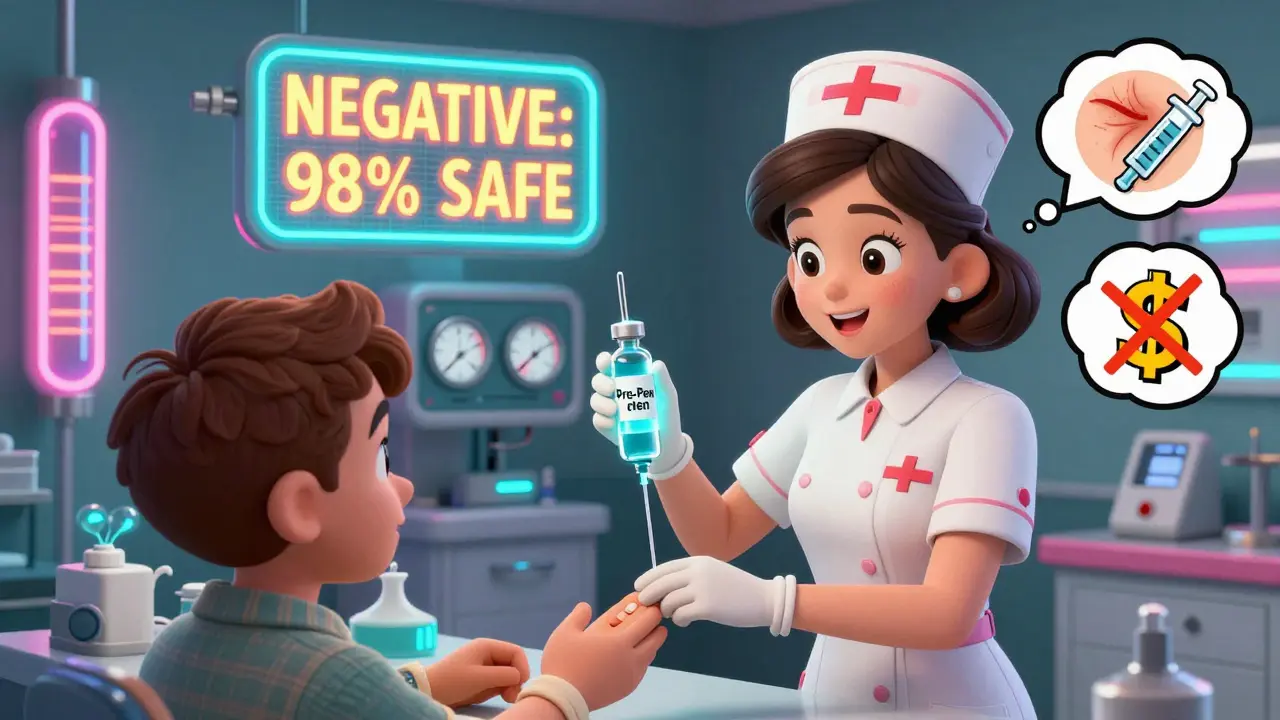
- First, a tiny drop of penicillin reagent (called Pre-Pen or PPL) is placed on your skin and gently pricked. This checks for immediate IgE-mediated reactions.
- If that’s negative, a small amount is injected just under the skin (intradermal test).
- If both tests are negative, you’re given a small oral dose of amoxicillin-usually 250 mg-and watched for an hour.
The whole process takes about an hour. It’s safe. It’s simple. And if all steps are negative, your risk of a future allergic reaction drops to the same level as someone who never claimed to be allergic.
The test isn’t perfect. Skin testing alone misses about 30% of true allergies. That’s why the oral challenge is required. Together, the two-step process has a 98% negative predictive value-meaning if you pass, you’re almost certainly safe.
Who Should Get Tested?
Not everyone needs testing. The CDC and IDSA recommend it for people with a history of penicillin allergy-but only if the reaction wasn’t life-threatening.
Low-risk history: A rash that appeared more than 72 hours after taking penicillin, a family history of allergy, or vague symptoms like headache or nausea. These patients can often skip skin testing and go straight to an oral challenge.
Moderate-risk history: Hives, swelling, or itching within 1-6 hours of taking the drug. These patients need skin testing followed by a challenge.
High-risk history: Anaphylaxis, low blood pressure, trouble breathing, or a reaction within the last 10 years. These patients should be referred to an allergist.
Never test: If you had Stevens-Johnson syndrome, toxic epidermal necrolysis, DRESS, or any severe delayed reaction involving organs or blood cells. These are not IgE allergies-they’re T-cell mediated. Avoiding penicillin is the only safe option.
Who Can Perform the Test?
Traditionally, only allergists did these tests. But that’s changing. In 2022, 47% of penicillin allergy assessments in U.S. academic hospitals were done by pharmacists or nurses-not allergists. Training programs are expanding fast. Nurses can now safely administer the skin test and monitor the oral challenge. Pharmacists can review patient histories and flag candidates for testing.
At hospitals with strong antibiotic stewardship programs, the process is built into routine care. Before surgery, before a UTI treatment, before a pneumonia diagnosis-pharmacists now ask: “Do you have a penicillin allergy? When was it? What happened?”
The New Kit Coming Soon
Right now, the only FDA-approved skin test reagent in the U.S. is Pre-Pen, which tests for the major penicillin determinant. But it doesn’t cover minor ones. That’s why some people with negative Pre-Pen tests still react.
A new, all-in-one test kit is under FDA review. It includes Pre-Pen, minor determinants, and amoxicillin. In a 2022 study of 455 patients, this kit showed a 98% negative predictive value-meaning it might eliminate the need for the oral challenge entirely. If approved, it could become the new standard.

What Happens After Testing?
If you pass the test, your allergy label gets removed. Not just noted-deleted from your electronic medical record. Nurses or pharmacists document: “Patient tolerated amoxicillin challenge. Penicillin allergy removed.”
This isn’t just paperwork. It changes your care forever. Next time you’re sick, your doctor can prescribe amoxicillin instead of something riskier. You’ll get better faster. You’ll pay less. And you’ll help reduce the spread of drug-resistant bacteria.
Why This Matters Everywhere
This isn’t just a U.S. issue. In the UK, Canada, Australia-anywhere antibiotics are used-mislabeling causes the same problems. A 2023 CDC update even included penicillin testing in sexual health guidelines, noting that 97% of patients with a penicillin allergy history can safely receive penicillin for syphilis after testing.
By 2027, the CDC predicts 85% of U.S. hospitals will have formal penicillin allergy testing programs. That could prevent 50,000-70,000 cases of C. difficile each year. That’s tens of thousands of lives saved. And billions in healthcare costs avoided.
What You Can Do
If you’ve been told you’re allergic to penicillin:
- Ask your doctor: “Was this tested? Or was it just assumed?”
- Think back: Did you have a rash? When? How long after taking it? Did you ever take penicillin again?
- If it was years ago and you’ve never had a reaction since, ask about testing.
Don’t assume the label is correct. Don’t accept a riskier drug just because it’s “safer.” You might be safer on penicillin.
Can I outgrow a penicillin allergy?
Yes. Most people who had a penicillin allergy as a child or young adult lose the sensitivity over time. Studies show that 50% of people lose their allergy within five years, and 80% lose it within 10 years. That’s why testing is so important-even if you were labeled allergic decades ago.
Is penicillin skin testing painful?
It’s not painful. The skin prick feels like a light scratch. The intradermal test feels like a tiny pinch, similar to a TB test. Most people say it’s less uncomfortable than a blood draw. The oral challenge involves swallowing a pill and waiting. No needles, no IVs.
Can I get tested if I’m pregnant?
Yes. Penicillin is the first-line treatment for syphilis during pregnancy, and it’s one of the safest antibiotics for both mother and baby. If you have a penicillin allergy label, testing is strongly recommended. A negative test means you can get the right treatment without risking complications.
What if I had a reaction as a child but never tried penicillin again?
That’s exactly the kind of situation where testing helps. Many childhood rashes-especially after viral infections-are mistaken for drug allergies. If you never had a true allergic reaction, you’re likely safe. Testing clears the label and opens up better treatment options for future infections.
Does insurance cover penicillin allergy testing?
Most insurance plans cover it, especially if done in a hospital or clinic setting. Since the test reduces long-term costs (fewer hospital stays, fewer bad reactions), many insurers encourage it. Ask your provider or pharmacist-coverage is becoming standard.
Joey Pearson
March 8, 2026 AT 09:13amber carrillo
March 8, 2026 AT 22:31Roland Silber
March 9, 2026 AT 07:01Patrick Jackson
March 10, 2026 AT 10:35Susan Purney Mark
March 11, 2026 AT 06:09Ian Kiplagat
March 12, 2026 AT 02:02Amina Aminkhuslen
March 12, 2026 AT 09:51Tim Hnatko
March 13, 2026 AT 03:29