
Penicillin Allergy: Is It Real? How to Get Tested and Stay Safe
 May, 5 2026
You might have a label in your medical chart that says you are allergic to Penicillin, which is a widely used antibiotic class discovered by Alexander Fleming in 1928. If so, you probably avoid it. You likely tell every doctor, dentist, and nurse about it. But here is the shocking truth: up to 90% of people who think they are allergic to penicillin actually aren't. This massive mislabeling creates real dangers for your health and drives up costs for everyone.
Why does this matter? Because penicillin and its cousins, called beta-lactam antibiotics, are often the best, safest, and cheapest drugs for treating infections. When doctors can’t use them, they have to reach for broader-spectrum alternatives like vancomycin or clindamycin. These backup drugs cost more, cause more side effects, and contribute to the rise of superbugs like MRSA and C. difficile. Getting your allergy status checked isn’t just about comfort; it’s a critical step in personal safety and public health.
The Big Misunderstanding: Side Effects vs. True Allergies
The biggest reason so many people carry this incorrect label is confusion. A lot of patients mistake common side effects for an allergic reaction. If you took amoxicillin years ago and got a stomach ache, a headache, or mild nausea, that is not an allergy. That is intolerance. Your body didn’t mount an immune defense against the drug; it just didn’t like having it in your system.
A true penicillin allergy involves your immune system attacking the drug. According to the CDC, only about 1% of the general population has a verified, true penicillin allergy. The other 9% who report being allergic usually had a rash from a viral infection (like chickenpox) that happened to coincide with taking the antibiotic, or they experienced one of those non-allergic side effects mentioned above. Distinguishing between these two scenarios is the first step toward safer treatment.
Recognizing the Signs: Immediate vs. Delayed Reactions
If you did have a genuine reaction, timing tells the story. Doctors categorize these into immediate and delayed types, and knowing the difference helps determine how risky it is for you to try the drug again.
- Immediate Reactions: These happen within an hour of taking the drug. They are usually IgE-mediated, meaning your body releases histamine quickly. Symptoms include hives, swelling of the lips, tongue, or throat (angioedema), wheezing, trouble breathing, dizziness, or a drop in blood pressure. In severe cases, this leads to anaphylaxis, a life-threatening emergency requiring immediate epinephrine.
- Delayed Reactions: These appear hours to days later. The most common is a maculopapular rash-a flat, red area of skin with small raised bumps-that shows up 72 to 96 hours after exposure. While uncomfortable, these rashes are rarely dangerous. However, rare but serious delayed reactions include Stevens-Johnson Syndrome (SJS), Toxic Epidermal Necrolysis (TEN), and DRESS syndrome, which affect the skin and internal organs.
Here is a hopeful fact: if you had an immediate IgE-mediated allergy, there is an 80% chance you will lose that sensitivity after 10 years without exposure. For most delayed rashes, the risk drops significantly after just one or two years. Time heals many drug allergies.
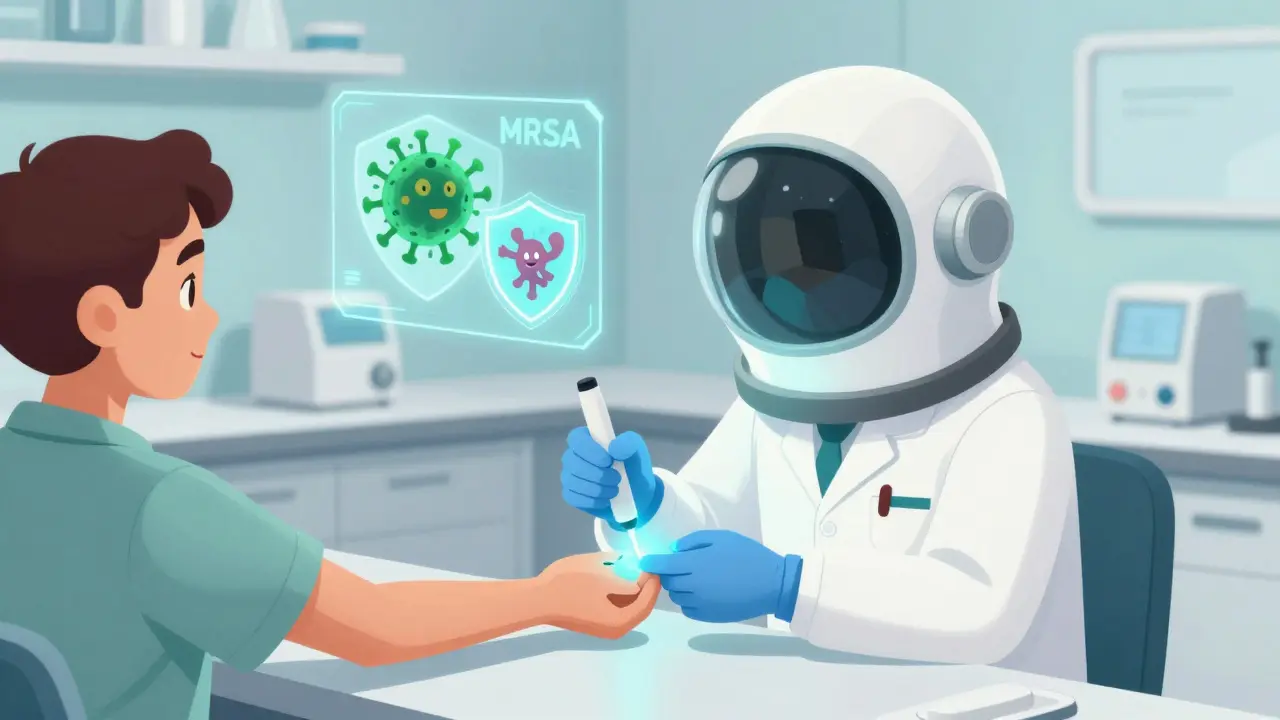
Risk Stratification: Are You Low, Moderate, or High Risk?
Not all reported allergies are treated equally. Medical guidelines now split patients into three risk categories to decide what happens next. This stratification helps doctors avoid unnecessary tests for low-risk patients while protecting high-risk ones.
| Risk Level | History of Reaction | Action Required |
|---|---|---|
| Low Risk | Side effects (nausea, diarrhea), remote childhood rash (>5-10 years ago), or unknown history. | Direct oral challenge with amoxicillin under observation. No skin test needed. |
| Moderate Risk | Hives, itching, or mild swelling within the last 5 years. | Allergy skin testing followed by an oral challenge if negative. |
| High Risk | Anaphylaxis within 10 years, severe skin reactions (SJS/TEN), or organ damage (liver/kidney). | Avoid penicillin and beta-lactams. Refer to specialist. Do not test in standard clinics. |
If you fall into the low-risk category-which includes about 60% of labeled patients-you can often skip the needle-prick skin test entirely. You simply take a dose of amoxicillin in a clinic and wait an hour. If nothing happens, you’re clear. For moderate-risk patients, the process is slightly more involved but still highly effective at clearing the label.
The Testing Process: Skin Tests and Oral Challenges
When testing is required, it follows a strict protocol designed for maximum safety. The goal is to prove you *can* tolerate the drug before prescribing it for a serious infection.
- Skin Testing: An allergist applies major and minor determinants of penicillin to your skin via prick or patch. They look for wheals or redness. If the skin test is negative, it means your immune system doesn’t recognize the drug as a threat right now.
- Oral Challenge: Even with a negative skin test, you don’t go home immediately. You take a supervised oral dose of amoxicillin (usually 250 mg). You are observed for at least an hour. This step confirms that swallowing the drug won’t trigger a reaction.
If both steps are negative, your risk of anaphylaxis drops to near zero-essentially the same as someone who never reported an allergy. The American Academy of Allergy, Asthma & Immunology (AAAAI) states that this combination of tests is the gold standard. Once you pass, the "allergy" label should be removed from your chart permanently.

Why De-labeling Matters for Your Health
You might wonder, "If I’m fine on other antibiotics, why bother?" The answer lies in the quality of care. Penicillin and cephalosporins (like cefazolin) are first-line treatments for everything from strep throat to surgical site infections. When you are forced to use alternatives like vancomycin, you face higher risks.
Studies show that patients with penicillin allergy labels have a 50% higher rate of MRSA infections and a 35% higher rate of C. difficile infections compared to those without the label. Why? Because alternative antibiotics disrupt your gut microbiome more aggressively. Furthermore, hospital stays are often longer, and costs are higher. By getting tested and de-labeled, you protect yourself from these complications and help slow the spread of antibiotic resistance in the community.
What To Do Next: Action Steps for Patients
If you carry this label, don’t just accept it as fate. Take control of your medical narrative.
- Review Your History: Think back. Was it a rash? Did you have a fever at the time? Was it a stomach bug? Write down what happened and when.
- Talk to Your Doctor: Ask if you qualify for testing. Many hospitals now have automatic alerts to flag patients for de-labeling programs.
- Update Your Records: If you pass the test, ensure the result is documented clearly. Tell your primary care provider, dentist, and pharmacist. Wear a medical alert bracelet only if you have a confirmed, high-risk allergy.
- Know the Emergency Signs: If you ever do react to a beta-lactam, seek help immediately. Call 911 if you experience throat swelling, difficulty breathing, or widespread hives.
Getting tested is a simple, safe procedure that opens the door to better, cheaper, and more effective healthcare. Don’t let a outdated label limit your options.
Is penicillin skin testing painful?
Skin testing involves tiny pricks on your forearm, similar to checking for latex or food allergies. Most people describe it as a mild pinch or tickle. It is generally much less uncomfortable than the IV lines used for alternative antibiotics.
Can I develop a penicillin allergy if I wasn't allergic before?
Yes, it is possible to develop an allergy at any time, though it is rare. If you have been taking penicillin safely for years and suddenly develop hives or swelling, stop the medication and see a doctor immediately. Future doses may require caution or avoidance.
Are cephalosporins safe if I am allergic to penicillin?
Are cephalosporins safe if I am allergic to penicillin?
For most patients, yes. The cross-reactivity between penicillin and third- or fourth-generation cephalosporins is extremely low. First-generation cephaloscross-reactivity is slightly higher but still manageable for low-risk patients. Always consult your allergist, but many penicillin-allergic patients can safely take cephalosporins.
How long does the entire testing process take?
The appointment typically lasts 2 to 4 hours. This includes the skin test reading time (usually 15-20 minutes) and the observation period after the oral challenge (at least 1 hour). You can usually return to normal activities afterward if no reaction occurs.
Does insurance cover penicillin allergy testing?
Coverage varies by insurer and plan. Many Medicare and private insurance plans cover allergy testing if deemed medically necessary, especially if it affects surgical prophylaxis or chronic infection management. Check with your provider beforehand to understand potential out-of-pocket costs.