
Orange Book Database: FDA's Approved Drug Products With Therapeutic Equivalence Evaluations
 Jan, 17 2026
The Orange Book isn’t a book you’ll find on a pharmacy shelf. It’s a living, digital database maintained by the U.S. Food and Drug Administration (FDA) that tells you exactly which drugs are approved for sale in the United States-and which generic versions can legally replace them. If you’ve ever wondered why your pharmacist handed you a different pill than what your doctor wrote on the prescription, the Orange Book is why.
What the Orange Book Actually Is
Officially named Approved Drug Products With Therapeutic Equivalence Evaluations, the Orange Book has been around since 1979. It started as a printed guide, but in 2005, the FDA moved it online. Today, it’s updated every single day. That means if a new generic drug gets approved or a patent expires at midnight, the database reflects it by 9 a.m. the next morning. It only covers small-molecule drugs-think pills, injections, creams-that are chemically identical to brand-name versions. It doesn’t include biologics like insulin or cancer treatments. Those are tracked in a separate database called the Purple Book. The Orange Book is all about generics: who can make them, when they can enter the market, and whether they’re safe to swap for the brand.Why It Matters: The Hatch-Waxman Act
The Orange Book exists because of a law passed in 1984 called the Hatch-Waxman Act. Before this law, brand-name drug companies held a monopoly for years-even after their patents expired-because generic makers had to run full clinical trials to prove their version worked. That cost millions and took years. Hatch-Waxman changed that. It let generic companies prove their drug was the same as the brand without repeating every test. All they had to show was that their version delivered the same amount of active ingredient into the bloodstream at the same rate. But here’s the catch: generic manufacturers had to respect existing patents. That’s where the Orange Book comes in. It lists every patent tied to a brand-name drug: the number, when it expires, and what it protects (like a specific use or dosage). Generic companies must review this list before filing their application. If a patent is still active, they can either wait, challenge it in court, or certify that the patent is invalid or won’t be infringed. This system created a legal roadmap. It gave brand companies enough time to recoup R&D costs while opening the door for cheaper generics as soon as patents expired.What’s Inside the Database
The Orange Book isn’t just a list of drugs. It’s packed with structured data that’s used by pharmacists, lawyers, researchers, and even patients.- Drug Listings: Each entry includes the brand name, generic name, dosage form (tablet, capsule, etc.), strength, route (oral, injection), and the application number (NDA for brand, ANDA for generic).
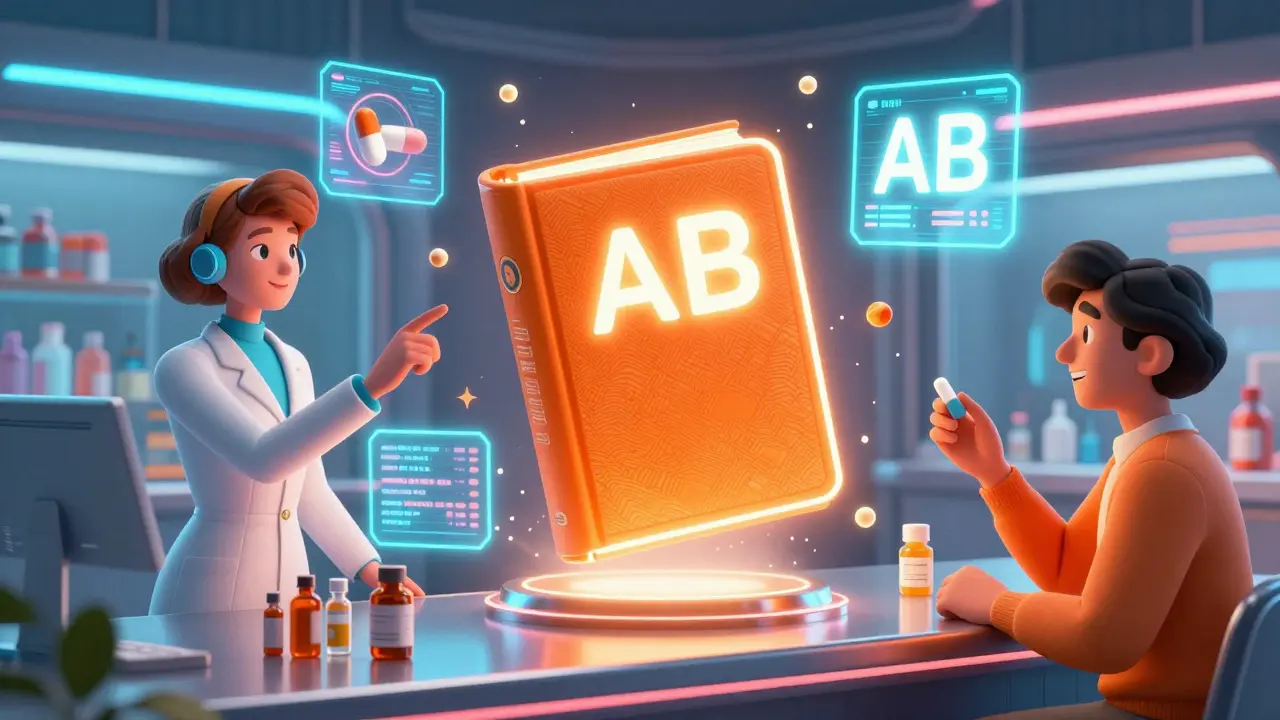
- Therapeutic Equivalence Ratings: These are the letters you’ll see next to each drug-like AB, BX, or AO. An AB rating means the generic is bioequivalent to the brand and can be substituted without a doctor’s approval. BX means it’s not interchangeable-maybe because the delivery system is different, like a patch versus a pill. AO means it’s approved but hasn’t been rated yet.
- Patent Information: Every patent linked to the drug is listed with its number, expiration date, and a patent use code (A, B, C, etc.). These codes tell you which medical condition the patent covers. For example, a patent might cover using a drug for depression but not for anxiety.
- Exclusivity Periods: Beyond patents, the FDA grants periods of market protection. A New Chemical Entity (NCE) gets five years of exclusivity. Orphan drugs get seven. Pediatric studies can add six months. These aren’t patents-they’re legal barriers that even generic companies can’t bypass, no matter how hard they try.
How Real People Use It
You might think this is just for lawyers and big pharma. But it’s used every day by people you know. Pharmacists check the Orange Book before substituting a brand drug with a generic. One hospital pharmacist posted on Reddit: “When a doctor writes ‘Eliquis’ and I see it’s AB-rated, I swap it. If it’s BX, I call the doctor. That’s my job.” Generic drug companies have teams that monitor the database daily. “We start our morning with the Orange Book,” said a patent attorney at a major generics firm. “If a patent expired last night, we file our ANDA by noon.” Even patients are starting to use it. The FDA reports over 1.2 million unique visitors to the site each month-up from 400,000 in 2018. People search for their medications to see if a cheaper version is available. One user wrote in feedback: “I looked up my blood pressure med and found a generic with an AB rating. I showed my doctor and saved $120 a month.”The Problems: Evergreening and Delays
The system works well-but it’s not perfect. Critics say brand-name companies abuse it. One common tactic is “evergreening.” That’s when a company makes a tiny change-like switching from a tablet to a capsule-and files a new patent. The Orange Book lists it, and suddenly, generic entry is delayed by another five years. Harvard professor Aaron Kesselheim told Congress in 2021 that this practice “has become a playbook for delaying competition.” Another issue: delays in updating the database. If a patent dispute ends in court, it can take weeks-or even months-for the FDA to reflect the outcome. During that time, generic companies might be stuck waiting, even if the patent is no longer enforceable. Also, the patent use codes can be confusing. A single drug might have five different codes. One might cover heart failure, another depression, another migraines. Generic companies have to certify against each one. If they miss one, they risk a lawsuit.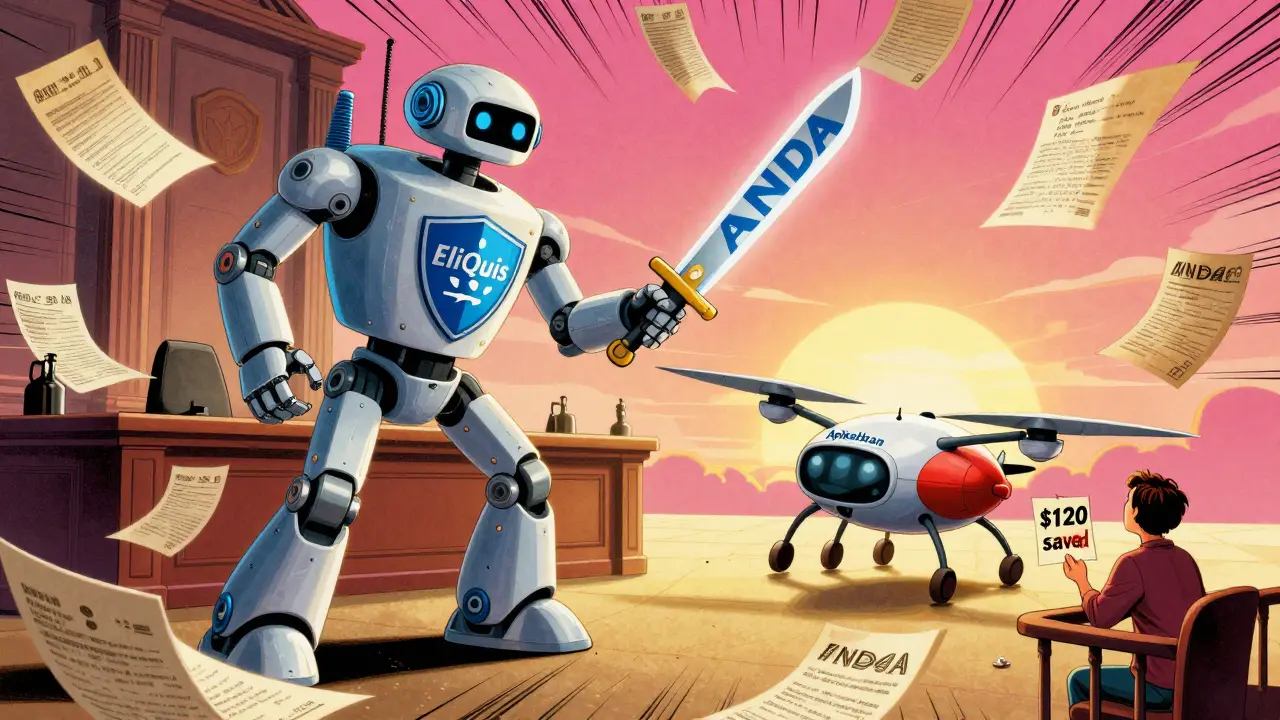
What’s Changing in 2024 and Beyond
The FDA is trying to fix these problems. In January 2024, they proposed new rules requiring more detailed patent descriptions. Companies can no longer list vague patents like “method of manufacturing.” They must specify exactly what the patent protects. They’re also speeding up updates. The Electronic Orange Book now has a public API that developers can use to pull data directly. It’s already handling over 2 million queries a day. A full release is planned for late 2024. The goal? To make the system faster, clearer, and harder to game. The Congressional Budget Office estimates these changes could save the U.S. healthcare system $125 billion between 2024 and 2034.How to Use It Yourself
You don’t need a law degree to use the Orange Book. Go to accessdata.fda.gov/scripts/cder/ob/. Search by brand name, generic name, or application number. You’ll see:- Therapeutic equivalence rating
- Patent expiration dates
- Exclusivity end dates
- List of approved generic manufacturers
The Bigger Picture
The Orange Book is one of the most powerful tools in American healthcare. It’s responsible for 90% of all prescriptions being filled with generics-drugs that cost 80% less than brand names. Between 1984 and 2022, it helped bring 11,200 generic drugs to market. Those drugs saved $1.68 trillion in healthcare spending. It’s not just about cost. It’s about access. Without the Orange Book, many patients wouldn’t be able to afford their medications. And without the balance it strikes between innovation and competition, we’d either have no generics or no new drugs. It’s not perfect. But it’s the best system we have-and it’s getting better.What drugs are included in the Orange Book?
The Orange Book includes only small-molecule drugs that have received full FDA approval. These are typically pills, injections, or topical medications with generic versions. It does not include biologics (like insulin or monoclonal antibodies), compounded drugs, unapproved drugs, or over-the-counter products without an NDA or ANDA.
What does an AB rating mean?
An AB rating means the generic drug is therapeutically equivalent to the brand-name drug. It has the same active ingredient, strength, dosage form, and route of administration, and it performs the same way in the body. Pharmacists can substitute an AB-rated generic without needing a new prescription from the doctor.
How often is the Orange Book updated?
The Electronic Orange Book is updated daily. New drug approvals, patent listings, exclusivity changes, and therapeutic equivalence ratings are added as soon as they’re finalized by the FDA. This replaced the old monthly Cumulative Supplements in 2005.
Can I find biologics in the Orange Book?
No. Biologics-such as vaccines, blood products, and gene therapies-are listed in a separate FDA database called the Purple Book. The Orange Book is only for small-molecule drugs.
Why are some drugs marked as BX?
A BX rating means the FDA has determined the drug is not interchangeable with the brand. This usually happens when the delivery system affects how the drug works-like a transdermal patch versus a tablet, or a controlled-release capsule. Even if the active ingredient is the same, the body may absorb it differently, so substitution isn’t allowed without a doctor’s approval.
How does the Orange Book affect drug prices?
The Orange Book directly enables generic competition. Once a patent expires and a generic is approved with an AB rating, multiple manufacturers can enter the market. This drives prices down-often by 80% or more. In 2023, generics accounted for 90% of prescriptions but only 23% of total drug spending in the U.S., largely thanks to the transparency the Orange Book provides.
Stacey Marsengill
January 18, 2026 AT 14:04So let me get this straight-we’re trusting a government database to decide if my blood pressure pill is ‘the same’ as the expensive one? I’ve seen generics that made me feel like I was swallowing sand. This ‘AB rating’ is just corporate magic with a fancy acronym.
Nishant Sonuley
January 18, 2026 AT 14:49Look, I get it-the Orange Book sounds like a dry, bureaucratic nightmare, but honestly? It’s one of the few things in pharma that actually works. I work in rural India, where people pay out of pocket for everything. When a kid’s asthma inhaler drops from $200 to $15 because the Orange Book cleared a generic? That’s not policy-that’s life-saving transparency. Yeah, the patent codes are a mess, and yeah, evergreening sucks-but without this system, most of the world wouldn’t even have access to basic meds. Stop complaining about the tool and fix the people abusing it.
Tyler Myers
January 20, 2026 AT 05:05They say the Orange Book is transparent, but you know what they don’t tell you? Big Pharma pays consultants to game the patent use codes. That ‘C’ code for ‘treatment of migraines’? It was added three weeks after the original patent expired-on a drug that’s never been used for migraines. The FDA doesn’t audit this stuff. They just accept what the pharma giants submit. This isn’t regulation-it’s a rigged game with a pretty website.
Emma #########
January 21, 2026 AT 16:03I just looked up my antidepressant. Found an AB-rated generic. Saved $140/month. I didn’t know this existed. Thank you for explaining it so clearly. I’m going to share this with my support group.
Robert Cassidy
January 22, 2026 AT 12:06Let me guess-the same people who scream ‘free market!’ when it comes to crypto are now crying because generics can’t be blocked forever? Wake up. The FDA is a puppet of Big Pharma. The Orange Book isn’t a tool for patients-it’s a legal shield for monopolies. If you really cared about access, you’d be calling for price controls, not patting yourself on the back for a database that lets corporations delay competition with a new patent code.
Max Sinclair
January 23, 2026 AT 13:12Stacey and Tyler-your points are valid, but let’s not throw the baby out with the bathwater. The Orange Book isn’t perfect, but it’s the best system we’ve got for balancing innovation and affordability. The real problem isn’t the database-it’s the loopholes in enforcement. The FDA’s 2024 updates are a step in the right direction. Maybe instead of assuming corruption, we push for better audits and public oversight? I’ve talked to FDA staff-they’re tired of being the punchline too.
Ryan Otto
January 24, 2026 AT 04:16It’s amusing how Americans treat this as a triumph of efficiency. In reality, the Orange Book is a monument to regulatory capture. The patent use codes are deliberately opaque to deter small generic firms from challenging them. Only firms with legal teams of 20+ can navigate it. The so-called ‘transparency’ is performative-designed to look open while remaining inaccessible to anyone without a J.D. and a six-figure budget. This isn’t democratization. It’s gatekeeping with a .gov domain.
Andrew McLarren
January 25, 2026 AT 06:59While the preceding comments offer compelling perspectives, it is imperative to acknowledge that the Orange Book, despite its imperfections, constitutes a critical instrument in the regulatory architecture of pharmaceutical competition. The statistical impact-$1.68 trillion in savings since 1984-is not incidental, but rather the direct consequence of a meticulously structured, evidence-based framework. To dismiss its utility on the basis of isolated abuses is to conflate systemic failure with structural inadequacy. The proposed 2024 reforms, particularly the enhanced patent disclosure requirements, represent a necessary and proportionate refinement-not a condemnation.