
Milk Thistle and Liver-Metabolized Drugs: What You Need to Know About Enzyme Interactions
 Dec, 25 2025
Milk Thistle Drug Interaction Checker
Check Your Medication
Enter the name of your prescription medication to see if it may interact with milk thistle. We analyze liver enzyme pathways to determine potential risks.
People take milk thistle for their liver. It’s one of the most popular herbal supplements out there-especially for those with fatty liver, hepatitis, or just wanting to "detox" after a night out. But here’s the part no one talks about: milk thistle doesn’t just protect your liver. It can change how your body handles prescription drugs. And that’s where things get risky.
How Milk Thistle Actually Works in Your Liver
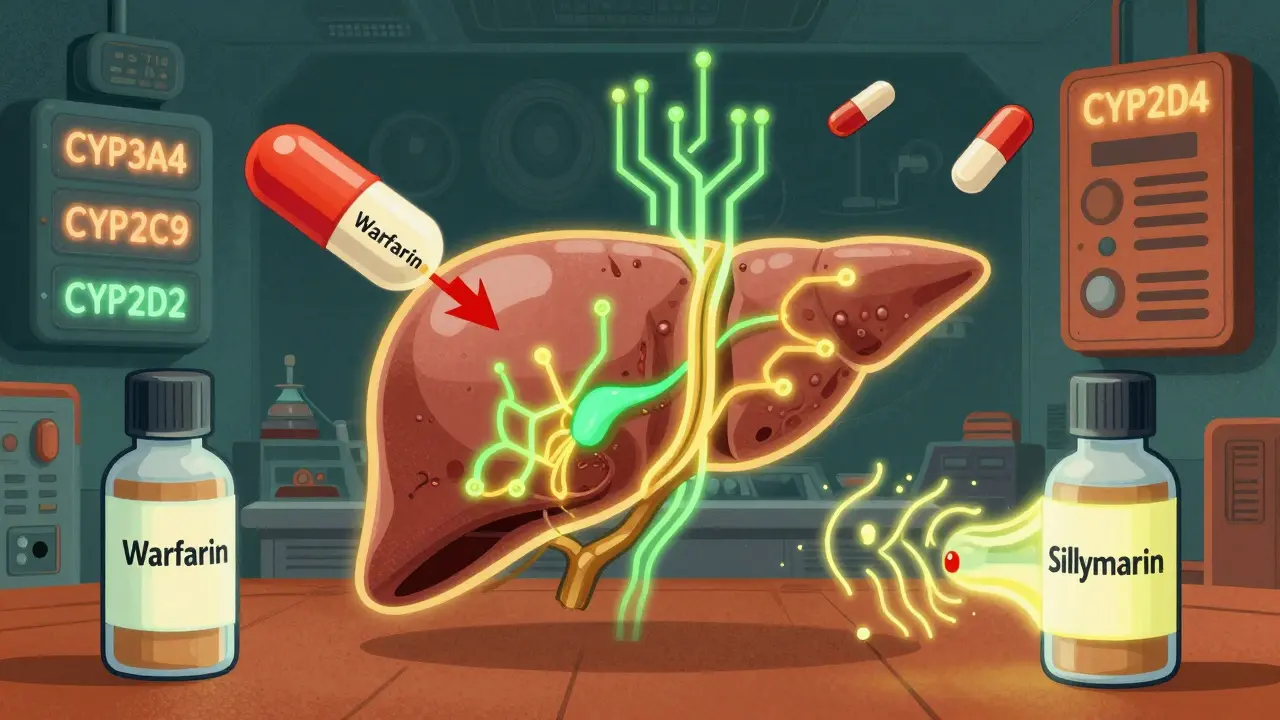
Milk thistle’s power comes from silymarin, a mix of compounds like silybin, silychristin, and silydianin. These aren’t just antioxidants. They interact directly with your liver’s drug-processing system-the cytochrome P450 enzymes. These enzymes, especially CYP3A4, CYP2C9, and CYP2D6, break down over half of all prescription medications. Think blood thinners, seizure meds, statins, antidepressants, even some cancer drugs.Here’s the twist: milk thistle doesn’t always do the same thing. Sometimes it slows down these enzymes. Other times, it speeds them up. And it depends on how long you’ve been taking it.
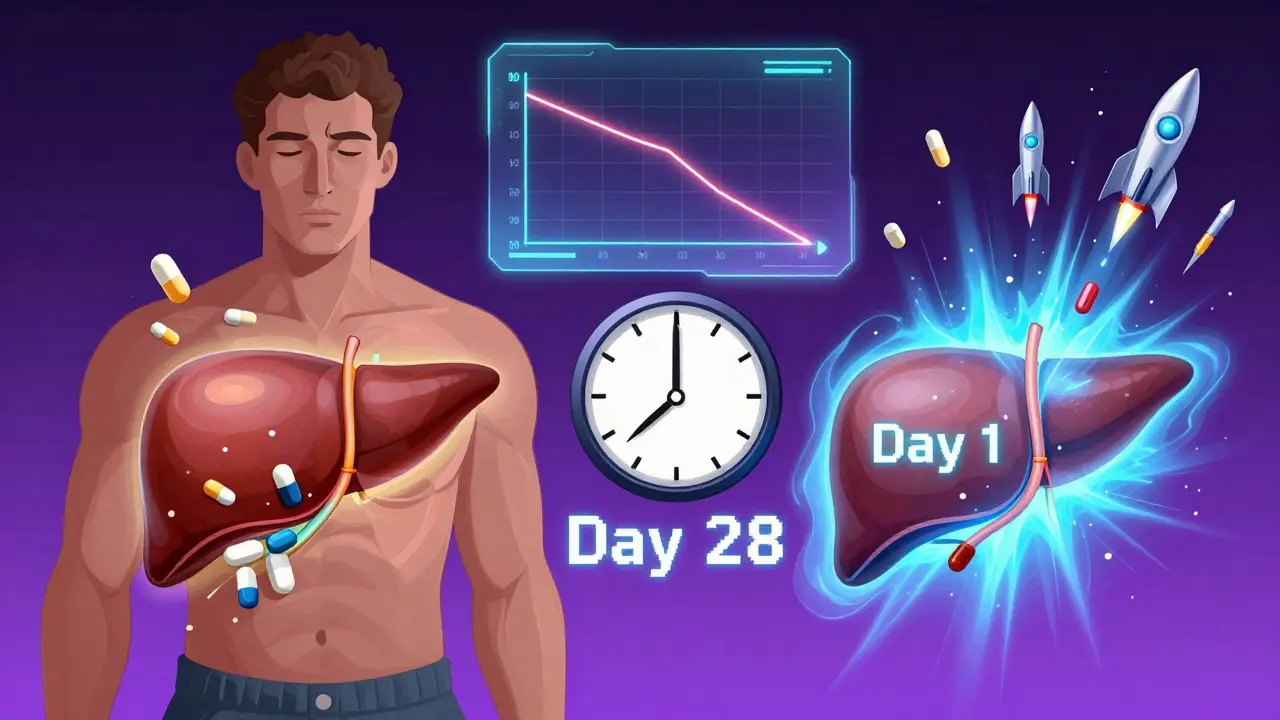
A 2020 study found that when people first start taking milk thistle, CYP2C9 activity drops by almost 20%. That means drugs processed by this enzyme stick around longer in your body. But after 28 days? The enzyme activity actually increases by over 12%. So you might start with higher drug levels, then suddenly have lower ones. No warning. No notice. Just a shift in how your body handles your meds.
Which Drugs Are at Risk?
Not all drugs are affected the same. Some are much more sensitive to even small changes in liver enzyme activity. These are called "narrow therapeutic index" drugs. A tiny change in blood level can mean the difference between working and causing harm.- Warfarin (Coumadin): This blood thinner is the most documented case. People on warfarin who started milk thistle saw their INR levels spike-sometimes dangerously high. One Reddit thread had 43 users reporting INR changes. Some needed their warfarin dose cut by 20-35%.
- Phenytoin (Dilantin): Used for seizures. If milk thistle inhibits CYP2C9, phenytoin builds up. That can lead to dizziness, confusion, even coma.
- Statins (like atorvastatin): Metabolized by CYP3A4. Early studies showed no effect, but newer data suggests possible interaction. One doctor survey found 37% of patients asked about this exact combo.
- Immunosuppressants (tacrolimus, cyclosporine): Used after transplants. Even a small increase in these drugs can cause kidney damage. The FDA has received reports of possible interactions.
- Some antidepressants and antipsychotics: Especially those processed by CYP2D6. Changes here can cause sedation, heart rhythm issues, or reduced effectiveness.
On the flip side, drugs like sofosbuvir/velpatasvir (for hepatitis C) show no meaningful interaction in clinical trials. That’s good news for some, but it’s not a blanket rule.
The Evidence Is Messy-Here’s Why
You’ll see conflicting reports. One study says milk thistle has no effect. Another says it’s a major risk. Why?First, the supplement market is wild. Only 32% of milk thistle products on the market actually contain what’s listed on the label. A bottle labeled "420 mg silymarin" might have 180 mg-or 600 mg. You’re guessing your dose.
Second, people metabolize it differently. Your genes determine how fast your CYP enzymes work. Two people taking the same dose can have completely different outcomes. One might have no issue. The other could end up in the ER.
Third, most studies are short. Two weeks. Four weeks. But people take milk thistle for months or years. Long-term effects? Still unknown.
And then there’s the source. German researchers in the 1960s first studied milk thistle for liver protection. Today, the global market is worth nearly $200 million. That’s a lot of money pushing a product with unclear safety data.
What the Experts Disagree On
Dr. Joseph Pizzorno, a big name in natural medicine, says the risk is overblown. He points to only 12 case reports in 40 years. He argues that if milk thistle were truly dangerous, we’d see way more problems.But Dr. David Bernstein, a top hepatologist, says: "Until we have consistent, standardized data, we can’t assume it’s safe." He’s not saying it’s dangerous. He’s saying we don’t know enough to give it a clean bill of health-especially for people on multiple drugs.
The European Medicines Agency says no clinically relevant interactions are expected. The U.S. NIH’s LiverTox database says it’s "possibly interacting" with CYP2C9 substrates. The FDA doesn’t require supplement labels to warn about drug interactions. So you’re left guessing.
What You Should Do (Practical Advice)
If you’re taking milk thistle-or thinking about it-here’s what actually works:- Don’t start it without telling your doctor. Especially if you’re on warfarin, phenytoin, statins, or immunosuppressants.
- Get your blood tested before and after. If you’re on warfarin, check your INR before starting milk thistle. Then check it again at day 7 and day 14. If it jumps more than 15%, stop it.
- Use standardized extracts. Look for products that say "70-80% silymarin." Avoid vague labels like "milk thistle extract" or "herbal blend."
- Watch for symptoms. Unusual bruising, dizziness, confusion, extreme fatigue, or irregular heartbeat could signal a drug interaction. Don’t wait for lab results.
- Wait 48 hours before testing drug levels. If your doctor needs to check your medication level, stop milk thistle for two days first. Otherwise, you’ll get a false reading.
And if you’re not on any of these drugs? You’re probably fine. But that doesn’t mean you’re off the hook. Many people take milk thistle long-term for fatty liver. And if you ever start a new medication-antibiotics, painkillers, even over-the-counter ones-stop the milk thistle for a week. See how you feel.
The Bigger Problem: No One’s Monitoring This
Doctors rarely ask about supplements. Patients rarely volunteer the info. In a 2023 JAMA survey, only 28% of physicians felt confident talking about milk thistle interactions-even though 64% of their patients asked about it.Meanwhile, supplement companies aren’t required to test for interactions. They don’t have to label risks. You’re essentially taking a gamble with your meds.
That’s why the most responsible thing you can do is treat milk thistle like a drug-not a vitamin. It has active compounds. It has effects. It has risks. And right now, we’re flying blind.
What’s Next?
Researchers are working on better versions of silymarin-like silybin bound to phosphatidylcholine-to improve absorption and reduce enzyme interference. Early trials look promising. But those aren’t on shelves yet.In the meantime, the safest approach is simple: know your meds. Know your supplements. And don’t assume natural means safe.
Can milk thistle cause liver damage?
In rare cases, yes. While milk thistle is generally safe and used to protect the liver, some studies report elevated liver enzymes in certain individuals. This doesn’t mean it’s toxic-it may be an immune reaction or an interaction with another substance. If you notice yellowing skin, dark urine, or abdominal pain after starting milk thistle, stop it and see a doctor.
Is milk thistle safe with statins?
The evidence is mixed. Most clinical trials show no major interaction with statins like atorvastatin. But because both are processed by CYP3A4, there’s a theoretical risk. If you’re taking a statin and start milk thistle, watch for muscle pain, weakness, or dark urine-signs of rare but serious muscle damage. Get a liver enzyme test after 2 weeks.
How long does it take for milk thistle to affect drug metabolism?
Inhibition can happen within 24 to 48 hours. Induction (speeding up metabolism) usually takes 7 to 10 days of daily use. That’s why interactions can appear suddenly-even if you’ve been taking milk thistle for weeks without issue.
Can I take milk thistle if I’ve had a liver transplant?
Most transplant centers advise against it. Immunosuppressants like cyclosporine and tacrolimus have very narrow safety windows. Even a small change in their levels can lead to rejection or toxicity. The risk isn’t worth it unless under strict medical supervision with frequent blood tests.
Are all milk thistle supplements the same?
No. Only about one in three products meet their labeled silymarin content. Look for brands that specify "70-80% standardized silymarin" and are third-party tested (USP, NSF, or ConsumerLab verified). Avoid blends with other herbs-you don’t know what else is in there.
Jeanette Jeffrey
December 26, 2025 AT 15:47Oh wow, so milk thistle is basically a silent saboteur in your liver? I've been taking it for my 'detox' after weekend binges and now I'm wondering if I've been slowly turning my warfarin into a time bomb. No wonder my INR spiked last month and my doctor looked at me like I'd stolen his coffee. Thanks for the wake-up call, I'm done with this 'natural' crap.
Shreyash Gupta
December 28, 2025 AT 01:23lol uhhhh... i think you're overreacting 😅 i took milk thistle for 2 years with statins and nothing happened. maybe your body is just extra drama? 🤷♂️
Ellie Stretshberry
December 29, 2025 AT 14:55i just started milk thistle last week and i’m already nervous 😅 i didn’t know it could mess with my meds. my doc never mentioned it. i’m gonna stop it for now and ask next time i see her. thanks for the heads up!
Zina Constantin
December 29, 2025 AT 21:02Let me tell you something-I’m from India, and we’ve used milk thistle for generations. But here’s the thing: it’s not magic. It’s medicine. And if you’re on blood thinners or transplant meds? You don’t play with fire. Respect the science, not the Instagram influencers selling 'liver cleanses.' Your life is worth more than a trendy supplement.
Dan Alatepe
December 31, 2025 AT 13:20MY GOD. I’ve been taking this stuff for 3 years with my antidepressants. I thought the brain fog was just stress. Now I’m realizing I’ve been slowly turning my brain into a glitchy laptop. I’m going cold turkey tomorrow. Someone get me a therapist and a new liver. I’m emotionally devastated.
Angela Spagnolo
December 31, 2025 AT 14:10...i just read this and i’m shaking. i’ve been taking milk thistle with my blood pressure med... and i never thought to ask... what if... what if... oh my gosh. i’m calling my doctor right now. thank you for writing this. seriously. thank you.
Jay Ara
January 1, 2026 AT 01:09man i took milk thistle for fatty liver last year and nothing happened. but then again i didn’t take any heavy meds. maybe it’s fine for some people. just don’t mix it with warfarin or transplant drugs. common sense people.
Kuldipsinh Rathod
January 1, 2026 AT 05:46so if i take milk thistle for 3 weeks and then start a new antibiotic, should i wait 2 weeks before starting the antibiotic? or just skip the milk thistle? confused but wanna be safe.
SHAKTI BHARDWAJ
January 2, 2026 AT 12:13OMG YOU’RE ALL PANICKING OVER A HERB?? I’VE BEEN TAKING THIS SINCE I WAS 16 AND MY LIVER IS STILL WORKING!! YOU PEOPLE ARE TOO SCARED TO LIVE!! THIS IS WHY AMERICA IS FALLING APART!!
david jackson
January 2, 2026 AT 19:02Okay, so let me get this straight: a plant extract that’s been used for 2,000 years is suddenly a dangerous drug-interaction monster because modern pharmacology can’t standardize the damn thing? The real problem isn’t milk thistle-it’s that we treat supplements like candy and drugs like sacred texts. We’ve got a regulatory vacuum here. The FDA doesn’t regulate supplements like drugs, so companies sell whatever they want, label it vaguely, and we’re left guessing if we’re taking a placebo or a time bomb. And then we blame the herb? No. We blame the system that lets this happen. And until we fix that, we’re all just playing Russian roulette with our liver enzymes.
jesse chen
January 3, 2026 AT 20:19I’m so glad someone finally wrote this. I’ve been on cyclosporine since my transplant, and my nurse practitioner asked me about supplements once, but I didn’t think milk thistle counted. Now I’m terrified. I’m stopping it today. Thank you for being so clear. I’m sharing this with my whole family.
Joanne Smith
January 5, 2026 AT 06:28Oh sweetie, you didn’t just read an article-you read a horror story written by a pharmacologist who’s seen too many ER visits. And yes, it’s terrifying. But here’s the real tea: the supplement industry doesn’t care if you live or die. They care if you click 'add to cart.' So don’t trust the label. Don’t trust your friend’s cousin’s detox tea. Get a USP-certified bottle, tell your doctor, and then maybe-just maybe-you’ll live to see your next birthday. 💅
Prasanthi Kontemukkala
January 6, 2026 AT 02:53thank you for sharing this. i’ve been recommending milk thistle to my clients with fatty liver, but now i’m going to pause and update my advice. education matters. let’s keep the conversation going gently, with care. we all want to heal.