
Long-term safety studies: comparing generics and brands over time
 Mar, 27 2026
Key Takeaways
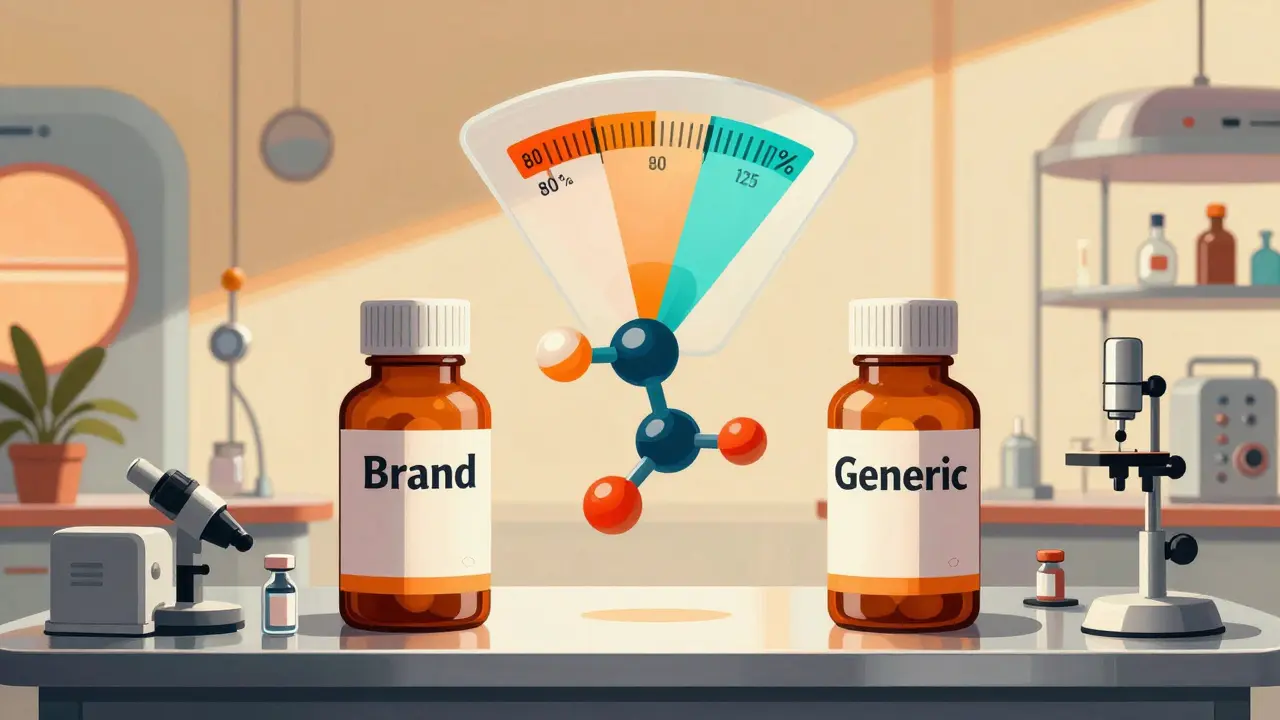
- Bioequivalence standards require generic drugs to perform within an 80-125% range compared to brand versions, ensuring similar absorption rates.
- Large-scale studies, including an Austrian analysis, often show generics are safe and sometimes associated with better survival rates in chronic conditions.
- Narrow Therapeutic Index drugs like warfarin and levothyroxine require closer monitoring, as small differences can lead to clinical changes.
- Manufacturing origin matters, with some data suggesting quality variances between regions affect adverse event reporting.
- Patient variability exists; while most tolerate switches well, some experience symptoms that resolve upon switching formulations.
When you pick up a prescription at the pharmacy, you've likely noticed the box is cheaper and labeled differently than the original product you expected. This is the shift from Brand Name Medications to their more affordable counterparts. For decades, the conversation has been dominated by cost savings. However, a more nuanced question persists in medical corridors and living rooms alike: does this substitution compromise long-term safety?
The debate isn't new, but the data landscape has evolved significantly since the Hatch-Waxman Act of 1984 established the pathway for generic approval in the United States. Today, we have over thirty years of pharmacovigilance data to examine. We aren't just asking if a drug works for one week anymore; we are asking how these medications affect your health over ten or twenty years. Here is what the evidence tells us about the true relationship between generic formulations and brand names when viewed through a long-term lens.
The Science Behind Equivalence Standards
To understand the safety conversation, you first need to know the bar regulators set. The U.S. Food and Drug Administration (FDA) mandates a specific test called bioequivalence before a generic version hits the market. This doesn't mean the generic must be 100% identical atom-for-atom; it means the way the body absorbs it must be practically the same.
Technically, the area under the curve (AUC) and maximum concentration (Cmax) of the generic drug must fall within 80% to 125% of the brand-name reference values. When researchers analyzed over 2,000 submission studies documented in the Orange Book, they found the average difference in absorption was roughly 3.5%. In plain language, this means for the vast majority of common medications-painkillers, antibiotics, or cholesterol pills-the amount of medicine getting into your bloodstream is nearly indistinguishable from the original brand. Regulatory bodies rely on the assumption that this tight margin guarantees therapeutic equivalence in the clinic.
Contradictory Outcomes in Real-World Studies
Despite strict lab standards, applying these rules to millions of patients over years introduces complexity. One landmark investigation published in Scientific Reports in 2020 looked at nearly the entire insured population of Austria. Researchers tracked individuals taking medications for metabolic illnesses between 2007 and 2012. Surprisingly, they found that those using Generic Medications had lower mortality rates compared to brand users for specific heart medicines.
The data was stark: for antihypertensive drugs, generic users experienced about 30 deaths per 1,000 patient-years versus 54 deaths for brand users. Cumulative five-year survival favored generics at 85.9% against 77.8% for the brand. While some critics argued this might reflect "healthy user bias"-where wealthier patients who can afford brands might stay sicker and try anything else-it suggests that for broad populations, generics are not harmful and may even offer benefits.
However, not every dataset paints this rosy picture. Contrasting this macro view, smaller case studies from 2013 documented patients experiencing clinical deterioration when switching from brand to generic. In specific instances involving antibiotics like ciprofloxacin and levofloxacin, patients reported persistent infections that only cleared after switching back to the branded formulation. While these represent individual outliers, they highlight that bioequivalence limits allow for some variation that might trigger issues in sensitive individuals.

The Risk Factor of Narrow Therapeutic Index
If a patient is taking standard blood pressure medication, a 5% swing in absorption rarely matters. But imagine a medication where the difference between a healing dose and a toxic dose is razor-thin. These are classified as drugs with a Narrow Therapeutic Index (NTI). Common examples include warfarin (a blood thinner), levothyroxine (thyroid replacement), and several anti-seizure medications.
For NTI drugs, experts argue the standard 80-125% bioequivalence window is too wide. Dr. Aaron Kesselheim of Harvard Medical School noted that while most generics work fine, critical failures occur precisely in these categories. A 2017 study on levothyroxine generics revealed that patients on generic versions were 12.3% more likely to experience fluctuations in thyroid-stimulating hormone levels compared to those on the brand Synthroid. It wasn't that the drug stopped working entirely, but the stability of the dose required constant adjustments, increasing the burden on the doctor-patient relationship.
This distinction is vital for patients managing chronic conditions. If you take a medication for a seizure disorder or a blood clotting condition, simply accepting any "therapeutically equivalent" substitute might carry hidden risks of instability. Many neurologists now recommend sticking to one specific manufacturer for these high-stakes prescriptions to minimize the chance of unexpected reactions.
Manufacturing Quality and Geography
Beyond chemical composition, where a pill is made plays a role in its long-term safety profile. A rigorous analysis by Ohio State University researchers examined the FDA's Adverse Event Reporting System (FAERS). They found a concerning trend regarding the geographic origin of manufacturing.
Generic drugs manufactured in certain overseas facilities showed higher rates of severe adverse events compared to those produced domestically in the United States. Specifically, mature generic drugs produced in India were linked to a 54% higher rate of serious hospitalization events compared to US-made equivalents. This wasn't necessarily about the chemical formula, but rather the "Authorized Generic" factor. An authorized generic is essentially the exact brand-name formula sold under a generic label by the same company. Comparisons suggest many issues stem not from the generic status itself, but from the specific factory producing it. When an authorized generic is compared directly to a traditional generic, the safety gap narrows, pointing toward quality control inconsistencies rather than the generic model failing.
| Metric | Brand Name | Traditional Generic | Authorized Generic |
|---|---|---|---|
| Bioequivalence Requirement | Reference Standard | 80-125% Range | Same Formula (Brand) |
| Cost Savings | High | Low to Moderate | None |
| Adverse Event Rate (Reported) | Baseline | Variance by Manufacturer | Lowest |
| Manufacturer Consistency | Single Entity | Multiple Competitors | Same as Brand |

What Patients Are Actually Experiencing
Data tables tell one story, but patient forums often tell another. On community platforms like Reddit and PatientsLikeMe, discussions reveal a spectrum of experiences. One detailed thread highlighted a patient whose seizure frequency spiked from once a month to ten times a month after a pharmacist switched them to a generic lamotrigine. Upon returning to the brand name Lamictal, seizures returned to baseline. Stories like this fuel anxiety, yet they remain statistically rare compared to the success stories.
An analysis of 3,842 patient reports on hypertension medications suggests a more positive reality. Approximately 78% of users reported identical effectiveness between their brand and generic versions. Only about 12.6% noted decreased effectiveness, while another 9% felt the generic worked better. The disparity lies in perception and the severity of symptoms. Mild side effects often get overlooked, whereas a sudden spike in pain or dizziness triggers a report. Additionally, the volume of generic prescriptions vastly outnumbers brands in the US, accounting for over 90% of fills in recent years. Consequently, raw numbers in safety databases (like FAERS) naturally contain more generic reports simply because far more people are taking them.
Regulatory Gaps and Future Monitoring
While the FDA maintains robust pre-approval testing, post-marketing surveillance faces hurdles. Critics argue current systems are reactive rather than proactive. Most adverse event reporting relies on doctors or patients voluntarily filling out forms. This misses "silent" safety issues-subtle shifts in disease management that don't trigger an emergency room visit but prevent full recovery over years.
Recent guidance issued in January 2022 focuses heavily on "complex generics." These include inhalers, transdermal patches, and injectables where the delivery mechanism affects safety as much as the drug itself. Unlike simple tablets, making a generic inhaler truly equivalent is mechanically difficult. For these products, clinical trials are increasingly required rather than just blood tests. As the pharmaceutical industry evolves, the definition of "generic" is expanding beyond chemistry into device engineering.
Are generic drugs always cheaper than brand name drugs?
Yes, typically generic drugs cost significantly less because manufacturers do not need to repeat the initial costly clinical trials for safety and efficacy, though prices vary based on competition and supply chains.
Can I switch between different generic brands safely?
For most standard medications, yes. However, for narrow therapeutic index drugs like epilepsy or thyroid medications, staying with one manufacturer is recommended to maintain consistent dosing levels.
What does 'bioequivalence' actually mean?
Bioequivalence means the generic drug delivers the same amount of active ingredient into your bloodstream at a similar speed as the brand-name reference, usually within an 80-125% range.
Do generics expire faster than brand name drugs?
No, the FDA requires stability testing to ensure generic drugs have a shelf life and longevity at least equivalent to the brand-name version during storage.
Should I worry about where my generic medication is manufactured?
While FDA regulations apply globally, some studies suggest checking the manufacturer's history. Authorized generics (made by the brand company) often have the highest consistency profiles.
In navigating your medication choices, the safest path often involves informed communication with your prescriber. If you notice a change in how you feel after a refill, ask your pharmacist which specific manufacturer supplied the bottle. Requesting "dispense as written" for specific manufacturers can eliminate the variable of frequent switching. While the overwhelming consensus supports generic safety, acknowledging the nuances ensures your long-term treatment remains stable and effective.
Tony Yorke
March 29, 2026 AT 13:00people need to stop fearing the label change when the chemical formula remains identical within reason
Monique Ball
March 30, 2026 AT 16:15manufacturing location impacts safety more than people realize regarding generic medication choices. i remember reading that factory consistency matters significantly for therapeutic equivalence results. many patients report subtle differences when switching between different generic suppliers constantly. the study mentioned authorized generics being safer than traditional ones which makes total sense. my sister had thyroid issues when they changed the levothyroxine manufacturer unexpectedly during winter. she ended up feeling shaky and her heart rate went up without warning signs beforehand. eventually her doctor put us back on the brand name version for stability reasons mainly. it was costly but peace of mind is worth every extra dollar spent on health care expenses. we should advocate for stricter oversight on imported pharmaceutical products definitely. regulations exist for a reason yet loopholes allow inconsistent quality to slip through occasionally. long term studies show survival rates are similar but individual variability causes real problems sometimes. trusting the system requires understanding these hidden risk factors fully first though. hopefully insurance companies will cover brand names for sensitive conditions soon enough for everyone. we need to prioritize patient well-being over mere cost savings strategies in the long run. sticking with one manufacturer minimizes the biological fluctuations we see in narrow index drugs. communication between pharmacist and doctor is the ultimate solution for preventing adverse events here :)
tyler lamarre
March 31, 2026 AT 07:37sure lets trust the 80-125% math while ignoring that 25% difference feels huge in a hospital bed. typical corporate logic works wonders for everyone until it doesn't work for you.
Rohan Kumar
April 2, 2026 AT 05:13they always claim bioequivalence but who monitors the foreign plants actually making these pills 🤔. sounds like big pharma wants us cheap but sickly for the profit margin 📉💊. just follow the data blindly without questioning the source material origins. i bet the authorized generic is just a marketing trick to hide the same factory issues 😒.
Eva Maes
April 2, 2026 AT 11:57The discrepancy in absorption rates is often glossed over by policy makers who prioritize budget cuts over clinical precision. While statistics paint a rosy picture for aggregates, individual physiology interacts with excipients in unpredictable ways. Variance in pill coatings can alter release kinetics significantly beyond simple active ingredient concentration metrics. It is crucial to acknowledge that regulatory thresholds were designed for population averages rather than vulnerable outliers. Many practitioners overlook the nuanced impact of non-active ingredients on gut microbiome interactions over decades of use. We must demand higher resolution monitoring tools than current passive reporting systems provide to truly understand safety profiles. Generic competition drives prices down but creates fragmentation in supply chains that complicates tracing adverse events accurately. Consistency of formulation remains the gold standard for chronic disease management regardless of cost benefits offered by discount versions.
Rachael Hammond
April 3, 2026 AT 15:11i totally get what u said about the supply chain issues and how hard it is to trace things sometimes. its scary to think about taking meds from diffrent factories all the time wihout knowing the quality. maybe we shoudl just tell our pharmacists what maker we want if possibel! thank u for sharing this info it makes me feel smarter about my heath care choices!
Debra Brigman
April 5, 2026 AT 10:35In the grand tapestry of existence, the choice of medication represents a microcosm of larger societal structures involving trust and efficiency. We stand at the precipice of understanding where economic pragmatism meets biological integrity in the human condition. Each pill swallowed is a silent contract between the patient and the invisible hands of industry production. To dismiss variance is to ignore the poetic complexity of individual bodily rhythms clashing with industrial homogeneity. Perhaps true wisdom lies in accepting that perfection is elusive yet pursuit thereof defines our humanity in the face of synthetic interventions.
Philip Wynkoop
April 6, 2026 AT 13:56i think everyone just needs to calm down and look at the actual numbers instead of fearing the worst case scenario 👍. the vast majority of swaps work perfectly fine for normal people without any issues whatsoever 😊. finding balance is key in these medical discussions we have online. staying informed helps reduce anxiety about what happens at the pharmacy counter today.
Tommy Nguyen
April 8, 2026 AT 07:29generics save lives by making treatment accessible to millions who otherwise cant afford brand options. positive outlook suggests most people live longer healthier lives with proper medication adherence regardless of the label.
Jeannette Kwiatkowski Kwiatkowski
April 8, 2026 AT 23:48It is frankly ridiculous that basic chemistry education seems lost on the general populace regarding bioavailability thresholds. These amateurs complain about minor variances that fall squarely within acceptable statistical deviation margins for pharmacology. True expertise recognizes that the bulk of the population functions optimally under current regulatory frameworks established decades ago. Complaining about cost versus efficacy without understanding the underlying mechanisms is just noise distracting from real medical progress. People should focus on their lifestyle choices instead of nitpicking pill composition details that scientists have already validated repeatedly.
Jordan Marx
April 9, 2026 AT 12:47We need to operationalize the concept of therapeutic interchangeability across broader healthcare delivery networks effectively. Clinical pathways must integrate manufacturer identifiers into electronic health record workflows to prevent random substitutions inadvertently. Quality assurance protocols require continuous feedback loops from primary care providers observing patient outcomes longitudinally. Interdisciplinary collaboration between pharmacology specialists and regulatory agencies ensures consistent standardization of dosing forms utilized daily. Ultimately patient safety relies on systematic data aggregation rather than anecdotal reporting alone.
Richard Kubíček
April 10, 2026 AT 13:50Understanding the nuances requires patience and open dialogue between patients and providers alike. Sometimes the simplest path forward involves requesting specific dispensing instructions directly from your physician. Trust is built when everyone shares responsibility for maintaining stable medication regimens over time. Collaboration yields better results than conflict does regarding health maintenance strategies generally. We move forward together towards better health outcomes for everyone involved in this process.
Austin Oguche
April 11, 2026 AT 13:21Geographic variation in manufacturing quality is indeed a significant factor that often gets overlooked in casual discussions. Cultural perspectives on medicine influence how strictly nations adhere to international compliance standards consistently. Open dialogue helps bridge gaps between regional practices and global patient expectations for safety. Respectful engagement allows us to learn from diverse regulatory approaches observed worldwide currently. Professional courtesy remains essential when discussing sensitive topics involving national industrial capabilities openly.
Sarah Klingenberg
April 11, 2026 AT 15:01Ive been on generics for years without any major troubles personally. Most folks adapt pretty quickly even if they dont notice anything happening differently. Just keep communicating with your team if something feels off later on :).
Devon Riley
April 13, 2026 AT 04:16Its great to hear that perspective shared openly here without fear of judgment 👏. Everyone deserves support navigating their specific health journey with confidence and knowledge 💪. Listening to personal experiences validates concerns while keeping safety priorities central always ❤️. Together we create a stronger community focused on wellness and understanding each others needs deeply 🤝.