
How to Update Your Allergy List Across All Healthcare Providers
 Dec, 24 2025
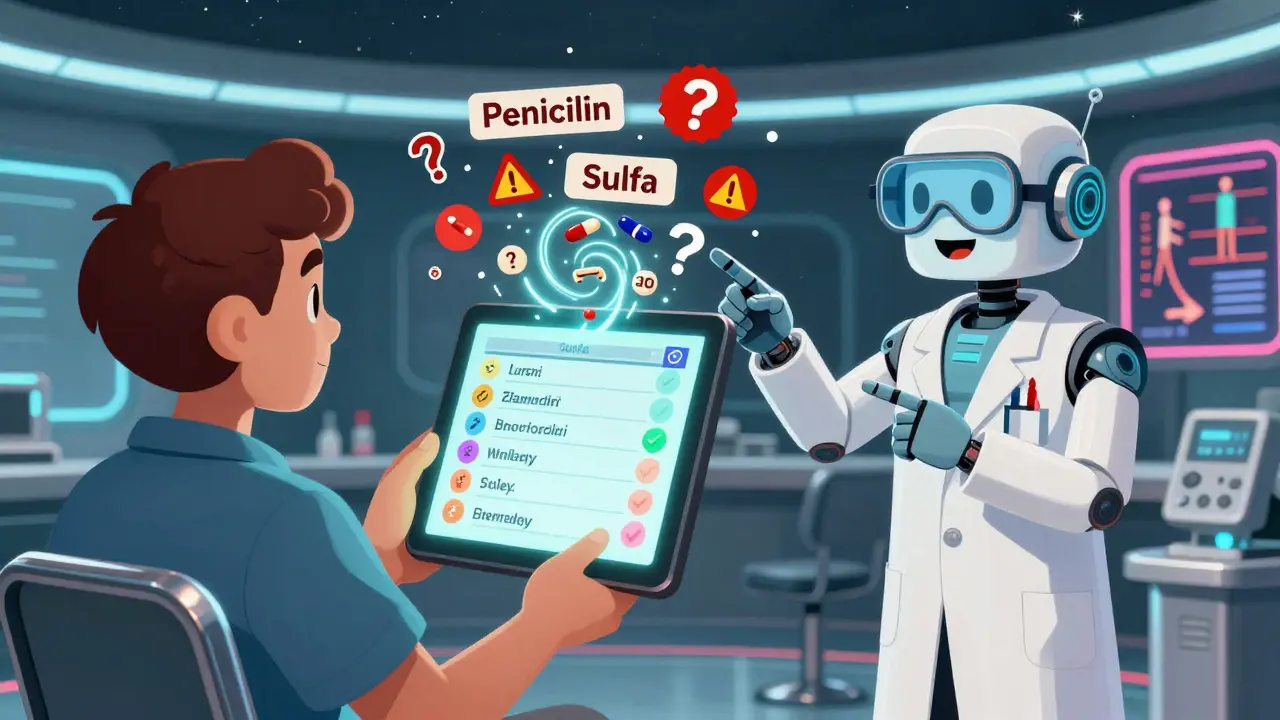
Every time you visit a new doctor, hospital, or pharmacy, your allergy list should be accurate - because one wrong entry could put your life at risk. In the UK and across the US, nearly one in five patients have outdated or incorrect allergy information in their medical records. That’s not just a paperwork issue. It’s a safety crisis. A mislabeled penicillin allergy leads to more expensive antibiotics, longer hospital stays, and in severe cases, avoidable deaths. If you’ve ever been told you’re allergic to a drug but never had a proper test, or if you’ve seen different providers over the years and aren’t sure what’s actually on file, this guide is for you.
Why Your Allergy List Might Be Wrong
Many people think they’re allergic to a drug because they had a rash after taking it years ago. Or maybe a doctor wrote "penicillin allergy" in their chart during a quick ER visit - and it stuck. The problem? Most of these labels are wrong. Studies show that up to 90% of people who believe they’re allergic to penicillin aren’t. The same goes for sulfa drugs, NSAIDs, and even some antibiotics. Without proper testing, those labels stay on your record forever - and every provider you see sees them as fact. Worse, different providers use different systems. Your GP might use one electronic health record (EHR), your hospital another, and your specialist a third. Even if they can share records, many systems just copy and paste old entries without checking if they’re still true. That’s why 7-13% of allergy lists have errors when compared to actual patient history. You might have had a reaction as a child, outgrown it, or been misdiagnosed. But your records don’t know that.What Your Allergy List Should Include
A proper allergy entry isn’t just a drug name. It needs details. Modern standards (like the UK’s NHS Digital guidelines and USCDI v3) require four key pieces of information:- Drug or substance - e.g., Amoxicillin, not just "antibiotic"
- Reaction - e.g., "hives, 2 hours after dose," not "bad reaction"
- Severity - mild, moderate, severe, anaphylactic
- Verification status - patient-reported, provider-verified, or confirmed by challenge test
How to Update Your Allergy List - Step by Step
You don’t need to wait for your doctor to fix it. You can take control. Here’s how:- Collect all your records - Request copies of your medical records from every provider you’ve seen in the last 5 years. This includes your GP, specialists, hospitals, and even urgent care centres. In the UK, you can do this through the NHS App or by submitting a Subject Access Request (SAR). In the US, use patient portals or submit a request under HIPAA.
- Compare them side by side - Make a simple spreadsheet. List each drug and the reaction noted. Are there contradictions? Is one provider saying "no known allergies" while another says "severe penicillin reaction"? Highlight the differences.
- Identify what’s likely wrong - If you’ve never had a formal allergy test but have a "penicillin allergy" on file, it’s probably outdated. The same goes for any reaction that happened more than 10 years ago, was mild (like a rash), or didn’t involve breathing trouble or swelling.
- Book an allergy consultation - Ask your GP to refer you to an allergy specialist. For penicillin, a simple skin test or oral challenge (done under supervision) can confirm whether you’re still allergic. These tests are safe, quick, and often covered by insurance or the NHS. In the US, the American Academy of Allergy, Asthma & Immunology (AAAAI) recommends testing for all patients with a history of penicillin allergy - even if it’s decades old.
- Update every provider - Once you have a confirmed result, get it in writing. Bring the report to every provider you see. Ask them to update your record. If they use a patient portal, log in and update it yourself - but follow up to make sure it stuck. Don’t assume they’ll do it.
What to Do If Your Provider Won’t Update the Record
Sometimes, staff don’t know how to change allergy entries - or they’re afraid to override someone else’s note. If this happens:- Ask to speak with the medical records department. They’re trained to handle this.
- Request a formal amendment to your record. Under UK data protection law and US HIPAA, you have the right to correct inaccurate health information.
- Bring your test results and a signed letter from your allergist. This gives them legal and clinical backing to make the change.
- If they still refuse, escalate to the practice manager or hospital patient advocate.
How Technology Is Helping (And Where It’s Falling Short)
Some hospitals now use smart systems that automatically flag possible errors. For example, if your record says you’re allergic to penicillin but you’ve been prescribed it 3 times without reaction, the system might suggest a review. These tools use AI to scan notes, lab results, and medication history - and they’re getting better. Mass General Brigham’s system catches 97% of discrepancies. But these tools only work if your data is structured. If your allergy is written as a free-text note like "had a rash once," the system ignores it. The biggest gap? Food and environmental allergies. Most systems still treat them as afterthoughts. If you’re allergic to peanuts, shellfish, or pollen, make sure those are clearly documented too. They matter just as much.
What You Can Do Today
You don’t need to wait for your next appointment. Start now:- Check your NHS App or patient portal. Do you see your allergy list? Is it detailed?
- If you’ve ever had a reaction you’re unsure about, write down the drug, date, symptoms, and severity.
- Call your GP and ask: "Can you check if my allergy list is up to date? I’d like to confirm what’s recorded."
- If you’ve never been tested for a suspected drug allergy, ask if a challenge test is right for you.
Why This Matters More Than You Think
Inaccurate allergy lists cost the NHS and US healthcare systems over £1 billion a year in unnecessary antibiotics, longer hospital stays, and avoidable complications. But beyond the money, it’s about safety. A single wrong drug can trigger anaphylaxis - and if your record says you’re allergic to something you’re not, you might be given a less effective, more toxic alternative. That’s not just a risk - it’s a failure of the system. You’re not just a patient. You’re the only person who knows your body. If you’ve outgrown an allergy, or were misdiagnosed, it’s your right - and your responsibility - to make sure the record reflects the truth. Update your list. Ask questions. Push for clarity. It’s not bureaucracy. It’s survival.Can I update my allergy list myself through my patient portal?
Yes - but only if your provider allows it. Most NHS and US patient portals let you add or edit allergy information, but it doesn’t automatically change your official record. You must submit the update, then wait for your provider to review and verify it. Always follow up to confirm the change was accepted. Never assume it’s done.
Do I need to be tested to remove an allergy from my record?
For drug allergies like penicillin, yes - a formal test is the only way to safely remove it. Skin tests and oral challenges are accurate, low-risk, and often done in one visit. For non-drug allergies like nuts or pollen, a detailed history and specialist evaluation are usually enough. But if you’re unsure, don’t guess. Get it checked.
What if I have allergies to multiple drugs? Should I get tested for all of them?
No - only test for the ones you’re most likely to need again. For example, if you’re allergic to penicillin but have never needed sulfa drugs, you don’t need to test for those unless you’re prescribed one. Focus on the drugs you’re most likely to be given - antibiotics, painkillers, and anaesthetics. Your allergist can help you prioritize.
Can my allergy list be shared between hospitals and GPs?
In the UK, the NHS Spine and Summary Care Record allow basic sharing of allergy information. In the US, systems like Epic and Cerner can share via Care Everywhere. But sharing doesn’t mean accuracy. If one provider has an outdated label, it will appear in all connected systems. That’s why you still need to verify and update the list yourself - even if records are "shared."
Are food allergies included in the same list as drug allergies?
Yes - but they’re often poorly documented. Many systems still treat food allergies as notes, not structured entries. Make sure your food allergies are clearly listed with the exact allergen (e.g., "peanuts," not "nuts") and reaction (e.g., "swelling, difficulty breathing"). Always carry an epinephrine auto-injector if you have a severe food allergy, and ensure every provider has your updated list.
How often should I review my allergy list?
At least once a year - and every time you see a new provider. Allergies can change. You might outgrow a childhood allergy, or develop a new one after a reaction you thought was just a virus. Don’t wait for a crisis. Make allergy review part of your annual health check.
Amy Lesleighter (Wales)
December 26, 2025 AT 10:34my doc just put 'penicillin allergy' in my chart 12 years ago after i got a rash from amoxicillin as a kid. never tested. just assumed it stuck. turns out i can take it fine. why do they not just ask if you actually had a reaction or just heard someone say you are? so lazy.
Nikki Brown
December 28, 2025 AT 05:29It's absolutely criminal how healthcare systems still rely on handwritten notes from 1998. If you can't even get a standardized allergy entry across systems, you're not just negligent-you're endangering lives. And no, 'I think I'm allergic' is not a medical diagnosis. Stop being so casual with your health.
roger dalomba
December 29, 2025 AT 22:41Wow. A whole article about updating your allergies. Next up: How to breathe. Groundbreaking stuff.
Peter sullen
December 31, 2025 AT 03:20It is imperative that patients, as primary stakeholders in their own health outcomes, engage in proactive, systematic, and documented reconciliation of their allergy profiles across all interoperable electronic health record platforms-especially in light of the documented prevalence of misclassification and the consequential fiscal and clinical liabilities incurred by healthcare institutions.
Sophia Daniels
December 31, 2025 AT 09:04Ugh. I had a rash from penicillin when I was 7. Now I'm 38. Guess what? I still get treated like a walking hazard every time I walk into a hospital. They act like I'm carrying a bomb. Meanwhile, I’ve taken it 3 times since I was 18 and didn’t die. This isn’t caution. This is fearmongering dressed up as medicine.
Steven Destiny
January 1, 2026 AT 01:11Stop waiting for doctors to fix this. Go to your portal RIGHT NOW. Click 'edit allergies.' Type it in. Then call your clinic and say, 'I updated it. Confirm it stuck.' If they don't, escalate. This isn't optional. Your life depends on it. Do it today.
Erwin Asilom
January 1, 2026 AT 09:30I appreciate how thorough this guide is. The step-by-step approach-especially comparing records side-by-side-is exactly what most people skip. I’ve seen too many patients assume their records are synced. They’re not. Always verify. Always follow up. It’s a small effort with massive consequences.
Sumler Luu
January 2, 2026 AT 13:54I’m glad this is getting attention. But I wonder-what about people who don’t have access to portals or can’t afford allergy testing? This feels like advice for the privileged. We need systemic change, not just individual hustle.
Fabio Raphael
January 3, 2026 AT 05:24I used to think my sulfa allergy was real until I had to take it for a UTI and nothing happened. Turns out, my doctor just copied it from my mom’s chart. I had no idea. I’m so glad I finally got tested. It changed everything. Don’t assume. Ask. Get checked.
sakshi nagpal
January 4, 2026 AT 04:04As someone from India, I can say this problem is global. My sister’s record said she was allergic to aspirin because she got a stomach ache once. No test. Just assumed. She’s now on dangerous alternatives for her arthritis. This needs to be taught in schools, not just left to patients to figure out.
Sandeep Jain
January 5, 2026 AT 17:22man i had a rash from ibuprofen back in 2015 and now every doc thinks im allergic to all painkillers. i just want tylenol but they give me opioids like im some kind of addict. why cant they just ask me what happened instead of just reading the note?