
How to Safely Dispose of Chemotherapy Medications at Home
 Dec, 21 2025
Why Chemotherapy Medications Can’t Be Tossed Like Regular Pills
Most people know not to flush old pills down the toilet. But when it comes to chemotherapy drugs, the rules are completely different - and far more serious. These aren’t just strong medications. They’re cytotoxic, meaning they’re designed to kill rapidly dividing cells. That’s how they target cancer. But they don’t know the difference between cancer cells and your child’s skin, your partner’s hair follicles, or the bacteria in your septic system.
Every pill, liquid, or patch you handle at home can leave behind dangerous residue for days. The American Cancer Society says active chemotherapy compounds can stay in urine, sweat, and vomit for up to 72 hours after treatment. That means if you don’t dispose of them right, you’re putting everyone in your household - and the environment - at risk.
What Happens If You Dispose of Chemotherapy Drugs Wrong?
Flushing? Never. Throwing pills in the trash with your coffee grounds? Dangerous. Crushing tablets to make them easier to swallow? Deadly.
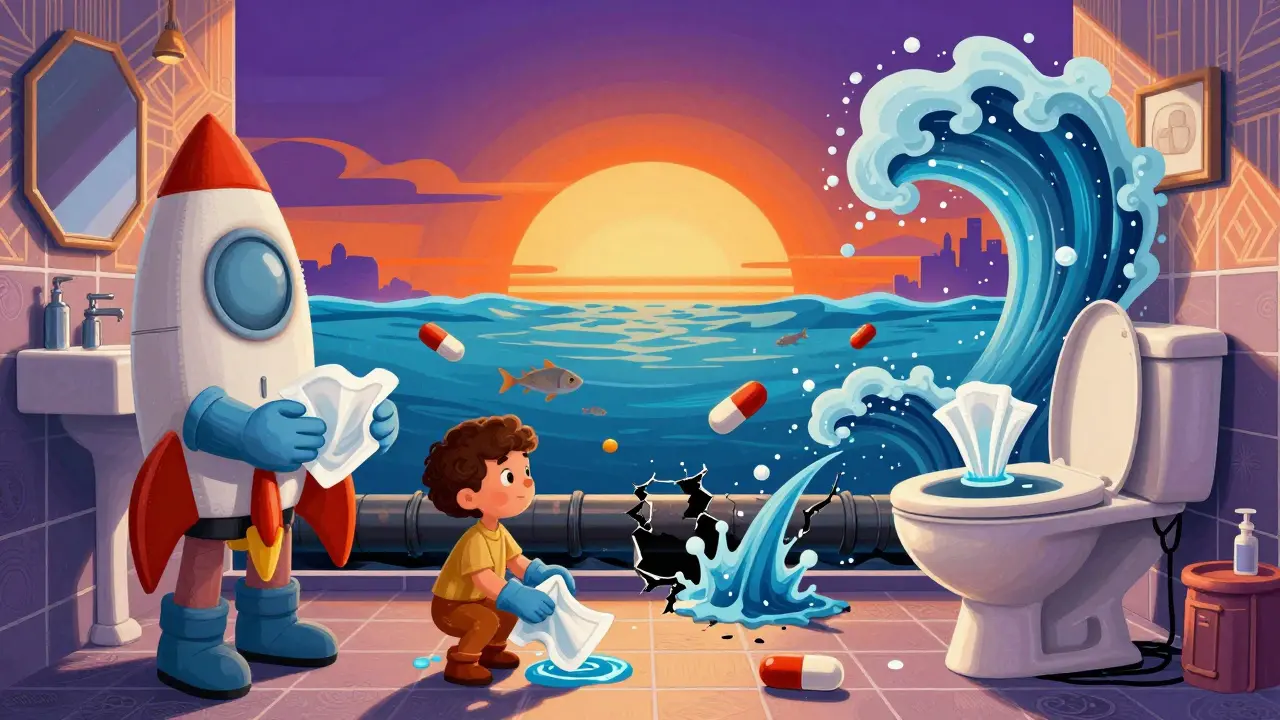
The FDA allows certain opioids and painkillers to be flushed because they’re highly addictive and pose immediate danger if found by children or pets. But chemotherapy drugs? Not even close. Flushing them sends toxins straight into waterways. The EPA found detectable levels of cyclophosphamide - a common chemo drug - in two-thirds of U.S. water sources. That’s not a fluke. It’s the result of decades of improper disposal.
And it’s not just the environment. A 2022 report from Stericycle showed that 41% of patients who take chemo at home dispose of it incorrectly - compared to 29% for regular meds. That’s a huge gap. People think, “It’s just a pill,” or “I’ll wrap it in paper.” But chemo doesn’t work like that. Even tiny amounts of exposure can cause skin rashes, nausea, or long-term reproductive harm.
What You Need Before You Start
You won’t find chemo disposal supplies at your local pharmacy. Your oncology team should give you everything you need - but if they don’t, ask. Here’s what you’re guaranteed to need:
- Disposable nitrile gloves (at least 0.07mm thick - regular latex won’t cut it)
- Two leak-proof plastic bags (minimum 1.5 mil thickness - check the label)
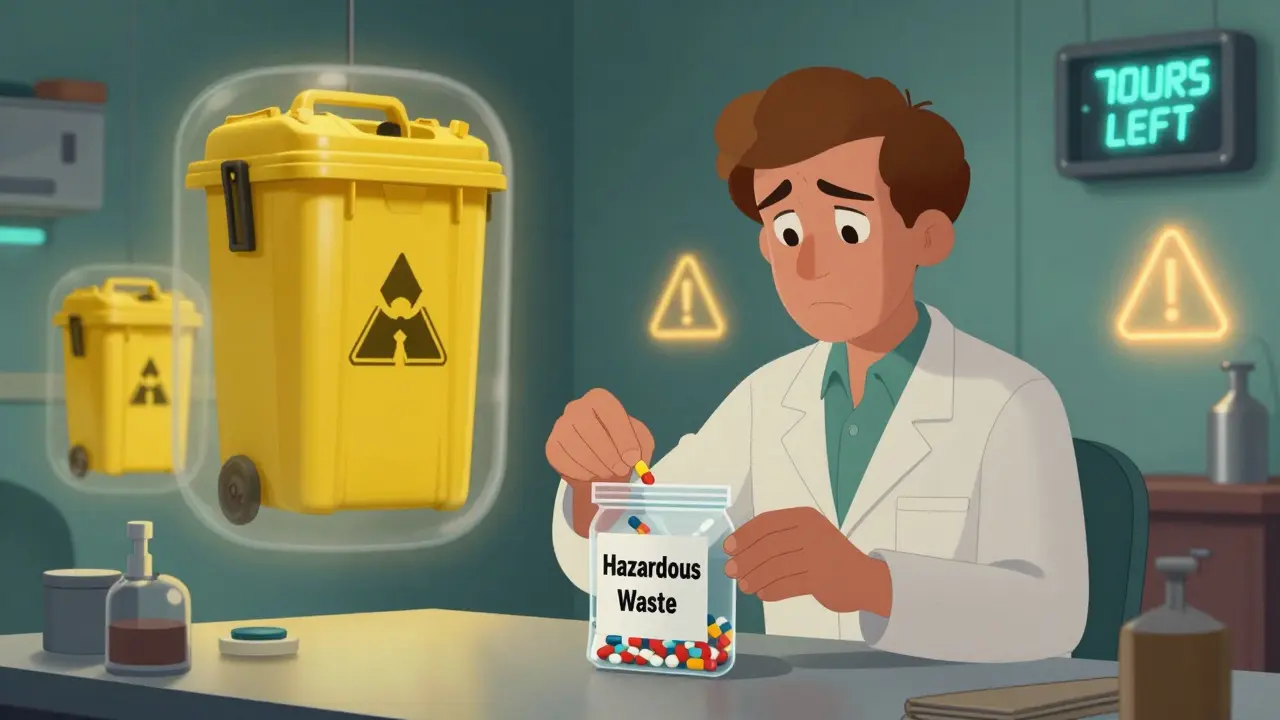
- A sealed yellow hazardous waste container (often provided by your clinic)
- Dedicated cleaning wipes and cloths (never use kitchen towels or sponges)
Some clinics send these materials with your first prescription. Others charge a small monthly fee - around $15.75 on average - for replacements. Don’t skip this. Using old grocery bags or reused containers increases your risk of exposure by more than 90%.
How to Dispose of Different Types of Chemo Medications
Not all chemo drugs are the same. How you handle them depends on the form.
Oral Pills and Capsules
Never crush, split, or dissolve them. Even a small amount of dust can be hazardous. Put the entire pill - unopened or used - directly into the inner plastic bag. Seal it tightly with a zip-tie or by heat-sealing if you have the tool. Then place it inside a second identical bag. Seal that one too. Label it clearly: “Hazardous Chemotherapy Waste.”
Transdermal Patches
These stick to your skin and release medication slowly. After removal, fold the patch so the sticky sides touch each other. This traps any remaining drug inside. Place it in the inner bag, then the outer bag. Never throw a patch in the trash without folding it. It’s like leaving a live wire exposed.
Liquid Chemo (Oral or IV)
For liquid meds, pour them into an absorbent material first - like cat litter, coffee grounds, or specialized absorbent pads. Don’t pour them down the sink. Don’t mix them with water. Just soak them up. Then put the soaked material into the inner bag, seal, then double-bag.
IV Bags and Tubing
Even empty IV bags and tubing can hold traces of chemo. Place them directly into the yellow hazardous container if your clinic provided one. If not, double-bag them the same way as pills. Never reuse or rinse them out.
What About Bodily Waste? Urine, Vomit, Feces?
Yes - your body is still excreting chemo for up to three days after your last dose. That means:
- Flush the toilet twice after each use
- Wear gloves when cleaning up vomit or diarrhea
- Use separate towels and wash them alone in hot water
- Wipe down the toilet seat and handle after every use
Don’t assume your regular cleaning routine is enough. Use disposable wipes labeled for hazardous material cleanup. Keep a small kit near the bathroom - gloves, wipes, and a sealed bag - so you’re always ready.
What You Should Never Do
- Never flush chemo drugs - even if the bottle says “flush if no take-back program.” That warning only applies to non-hazardous meds.
- Never use Deterra® or similar drug deactivation systems - they’re not approved for chemotherapy.
- Never mix chemo waste with regular trash - even if it’s in a sealed bag.
- Never give unused chemo to someone else - even if they have cancer. Dosing is precise and dangerous if wrong.
- Never reuse gloves, bags, or containers - even if they look clean.
Where Can You Take It? Mail-Back, Kiosks, and Community Events
Some options exist - but they’re limited.
MedDrop kiosks, run by Stericycle, are in 47 states and accept certain chemo drugs. But only about 63% of chemotherapy medications are eligible. Check their website or call ahead. You can’t just walk in with a bag of pills and expect it to be accepted.
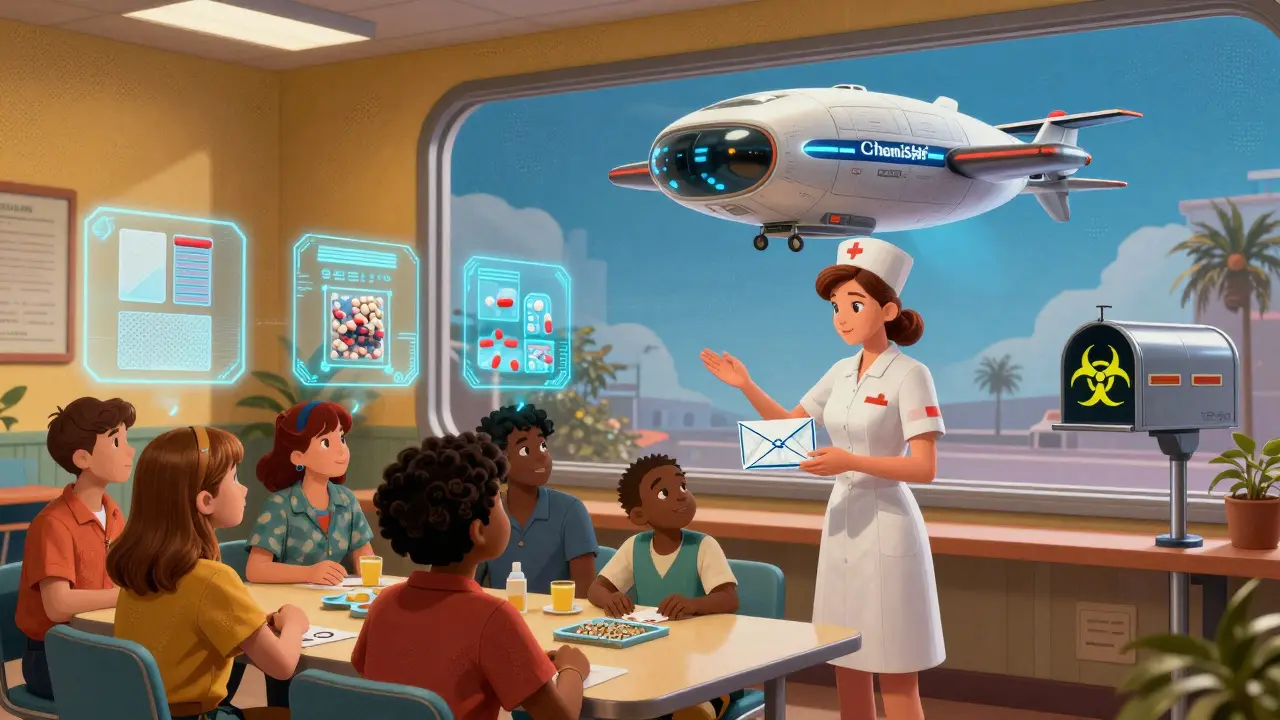
Mail-back programs exist, but only 28% of U.S. pharmacies offer them for chemo. If your clinic doesn’t provide one, ask if they can send you a pre-paid envelope. Some oncology centers do.
Community take-back events? Rare. Only 12% of these events accept chemotherapy waste because of strict DEA and EPA rules. Law enforcement must be present, and handling requires special training. Don’t count on it.
What If You Have a Spill?
Spills happen. A dropped pill. A leaky bag. A splash of liquid.
Here’s what to do immediately:
- Put on gloves, a mask, and a gown if you have one.
- Use disposable paper towels or wipes to soak up the spill. Don’t sweep or vacuum.
- Place all contaminated materials into the inner bag, then the outer bag.
- Wash the area with soap and water - not just a quick wipe.
- Label the bag: “Spill Cleanup - Hazardous Waste.”
Don’t try to clean it with your regular cleaning supplies. Use only what your clinic gave you. Afterward, wash your hands thoroughly and shower if you think skin contact happened.
How Long Do You Keep Taking Precautions?
For 48 to 72 hours after your last dose, treat everything as hazardous. That includes:
- Used tissues
- Used pads or diapers
- Contaminated clothing
- Even your toothbrush if you’ve been vomiting
After three days, you can return to normal disposal - but only if your oncologist says it’s safe. Some drugs stay active longer. Always check with your care team before relaxing precautions.
Why Most People Get It Wrong - And How to Avoid It
A 2022 survey by CancerCare found that 68% of patients needed multiple training sessions just to get disposal right. That’s not because they’re careless. It’s because the instructions are confusing, scattered, or not given clearly.
Memorial Sloan Kettering scores a 9.2 out of 10 for clear disposal instructions. The national average? 6.8. That gap kills.
Here’s how to protect yourself:
- Ask your nurse to demonstrate disposal step-by-step - then do it back to them.
- Request written instructions in your language.
- Take a photo of the disposal bag setup so you can refer to it later.
- Keep a checklist taped to your fridge or bathroom mirror.
The Bigger Picture: Why This Matters Beyond Your Home
Home chemotherapy use has grown nearly 30% since 2019. More people are getting treated in their living rooms than ever before. But the systems to handle the waste haven’t kept up.
Only 19 states have specific laws for chemo disposal. The rest? A patchwork of confusion. The Cancer Drug Disposal Act of 2021 is still in committee - meaning no federal rules exist yet.
But change is coming. The EPA has allocated $4.7 million to research better disposal methods. New technologies like ChemiSafe are in final testing. Companies are racing to build safer, simpler solutions.
Right now, the safest system is the one you follow at home - carefully, consistently, and without shortcuts.
Nader Bsyouni
December 21, 2025 AT 22:56Julie Chavassieux
December 22, 2025 AT 04:00Herman Rousseau
December 23, 2025 AT 11:38Vikrant Sura
December 24, 2025 AT 03:19Candy Cotton
December 25, 2025 AT 04:45Jeremy Hendriks
December 26, 2025 AT 10:03Ajay Brahmandam
December 27, 2025 AT 22:28jenny guachamboza
December 27, 2025 AT 23:39Tarun Sharma
December 28, 2025 AT 16:33