
How to Read Storage Instructions on Medication Labels
 Mar, 15 2026
When you pick up a new prescription or grab an over-the-counter pill from the shelf, you probably scan the label for the name, dosage, and when to take it. But there’s another part of that label you might be skipping - and it could be making your medicine less effective, or even unsafe. Storage instructions aren’t just fine print. They’re critical. Ignoring them can mean your medication loses its power, breaks down into harmful chemicals, or becomes useless when you need it most.
Where to Find Storage Info on the Label
You won’t find storage details at the top with the drug name. Look lower down. On prescription bottles, check for a section labeled "Storage Instructions," "How Supplied," or "Storage and Handling." For OTC medicines like painkillers or cold remedies, it’s usually tucked under "Other Information," right after the list of active ingredients and warnings. The FDA requires this section on all U.S. labels, so if it’s missing, something’s wrong.
Don’t assume all labels are the same. Some will say "store at room temperature," while others get specific: "keep between 68°F and 77°F." That’s not random. It’s based on real science. The U.S. Pharmacopeia defines "controlled room temperature" as 20°C to 25°C (68°F to 77°F). If your medicine needs refrigeration, it’ll say "refrigerate between 36°F and 46°F" - that’s 2°C to 8°C. If it says "protect from light" or "keep in a dry place," don’t ignore it. Humidity and sunlight can wreck some drugs faster than you think.
What Common Storage Terms Mean
Here’s what those phrases actually tell you:
- Store at room temperature - Keep it in a cabinet, not the bathroom or near a window. A closet or bedroom shelf works best.
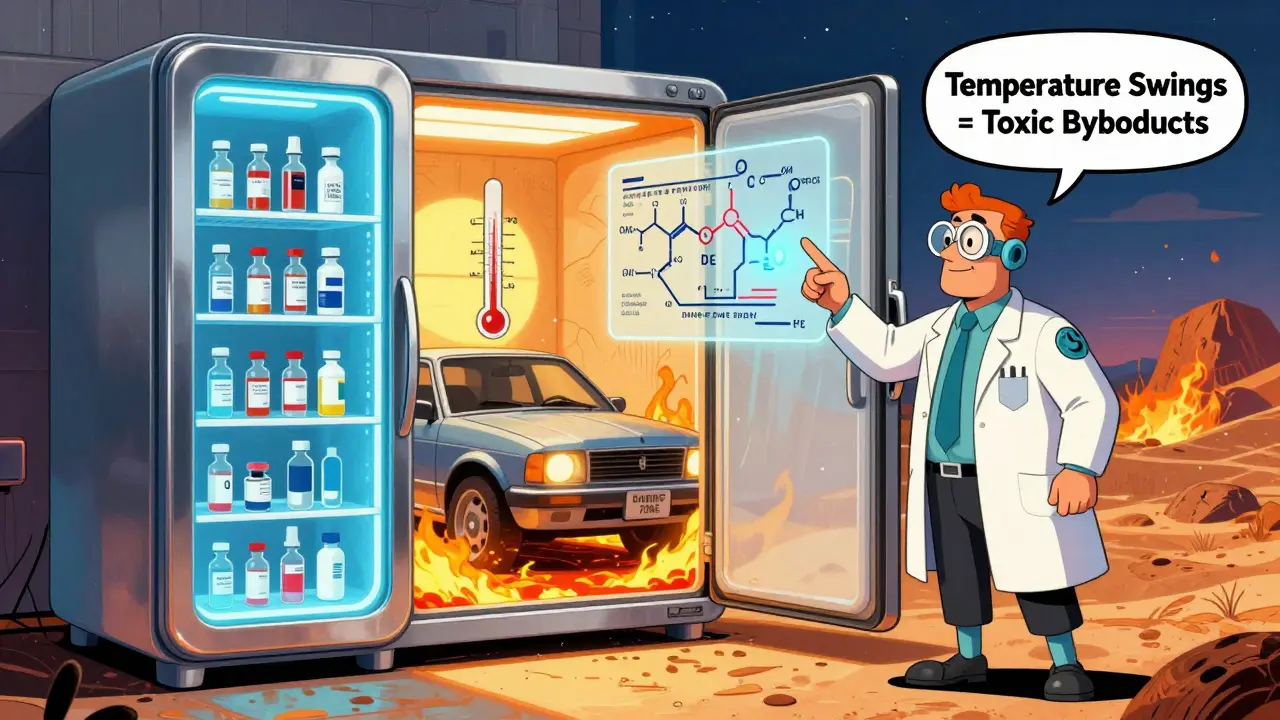
- Refrigerate - Put it in the main fridge, not the door. The door gets warm every time you open it. Temperature swings like that can ruin insulin, liquid antibiotics, or some eye drops.
- Protect from light - That means keep it in its original bottle, which is usually dark. Don’t transfer it to a clear container. Sunlight breaks down certain chemicals.
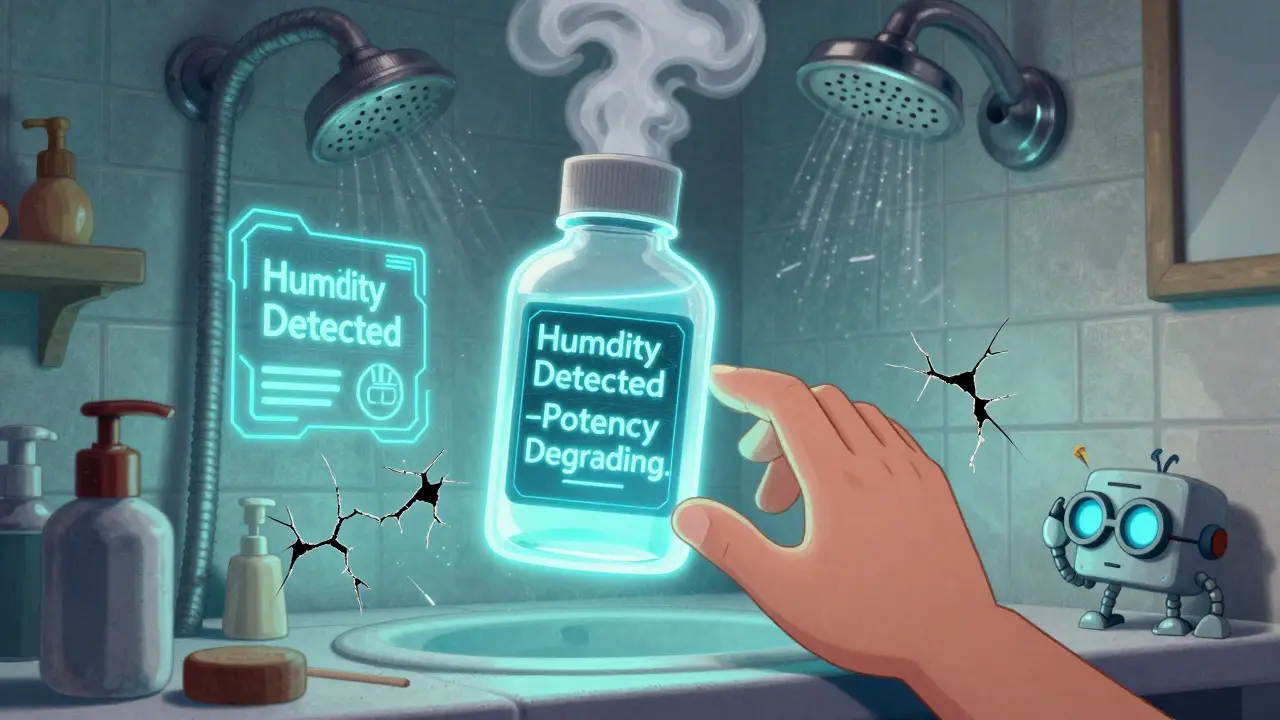
- Avoid humidity - Bathrooms are the worst place for medicine. Steam from showers turns the air into a moisture trap. Pills can absorb water and crumble. Liquid medicines can grow mold.
- Do not freeze - Just because it’s cold doesn’t mean it’s better. Freezing can destroy the structure of some liquids and injectables. Insulin, for example, becomes useless if frozen.
Some medications have extra rules. Liquid antibiotics often need refrigeration after you open them - even if the bottle says "room temperature" before opening. Once opened, they might only last 10 to 14 days. If you don’t finish them, throw them out. Don’t save them for next time.
What Happens If You Ignore the Instructions
You might think, "It still looks fine. Why does it matter?" But medicine isn’t like milk - you can’t always tell when it’s gone bad. Here’s what can go wrong:
- Loss of potency - Your painkiller might not work. Your antibiotic might not kill the infection. That’s not just inconvenient - it’s dangerous.
- Toxic breakdown - Acetaminophen (the active ingredient in Tylenol) can form harmful byproducts if stored too hot or too long. These aren’t always visible.
- Physical changes - Tablets can crumble. Liquids can change color or cloud up. Insulin can clump. These are red flags.
The FDA reports that storage-related errors contributed to 1.2% of all medication errors reported between 2020 and 2022. That might sound small, but experts say it’s likely way underreported. Most people don’t realize their medicine is faulty until they take it and nothing happens.
Real-world examples are everywhere. A 2023 survey by Express Scripts found 68% of people occasionally store meds in bad places. 42% keep them in the bathroom. 27% leave them in the car. On a 90°F day, a parked car can hit 140°F inside - hotter than an oven. Nitroglycerin tablets, used for heart attacks, can lose effectiveness in that heat. Liquid antibiotics left in a hot car? They’re trash.
Where to Store Medicines for Best Results
Forget the medicine cabinet above the sink. That’s a humidity and temperature nightmare. Instead:
- Use a locked cabinet in a cool, dry room - like a bedroom or hallway closet.
- Keep it away from windows, radiators, or appliances that generate heat.
- If you need refrigeration, store it on a shelf inside the fridge, not on the door.
- Use airtight containers if humidity is high in your home.
- Keep all meds out of reach of kids and pets - even if they’re stored properly.
For people with multiple medications that need different conditions - some refrigerated, some room temperature - use separate containers. A small insulated box with a temperature indicator can help. Pharmacists at Nationwide Children’s Hospital recommend labeling each container clearly. Don’t mix them all in one drawer.
Special Cases: Travel, Seniors, and Kids
Traveling? Pack temperature-sensitive meds in an insulated bag with a cold pack. Don’t check them in luggage - baggage holds can get too hot or too cold. Carry them in your carry-on. The FDA advises this for insulin, biologics, and liquid antibiotics.
Seniors living in homes without air conditioning or heating might struggle. If your home gets too hot in summer or too cold in winter, talk to your pharmacist. Ask if there’s a more stable version of your medicine. Medicare’s 2023 safety guide says pharmacists can sometimes switch you to a different formulation that doesn’t need refrigeration.
For children’s meds, don’t assume adult storage rules apply. Children’s liquid ibuprofen might need refrigeration after opening, while the adult version doesn’t. Always check the label - even if you’ve used it before. Formulations change.
What to Do When You’re Not Sure
Confused by the label? Unclear if it needs to be cold? Not sure if it’s still good? Don’t guess. Call your pharmacist. They see this every day. They can tell you if your medicine is safe based on how you’ve been storing it. Dr. Sarah Thompson, a pharmacist at Nationwide Children’s Hospital, says: "If you’re ever unsure about proper storage, ask your pharmacist for specific guidance based on your home environment."
Also, don’t rely on memory. Write down the storage rules on a sticky note and put it on your medicine cabinet. Or take a photo of the label and save it on your phone. Many people forget what "controlled room temperature" means. But they remember "keep it cool and dry."
Why This Matters More Than You Think
Proper storage isn’t about being neat. It’s about safety. The 2022 National Medication Safety Survey found that patients who followed storage instructions had 18.7% better adherence to their medication schedule. Why? Because when meds work as they should, people trust them. They take them on time. They don’t panic when symptoms return.
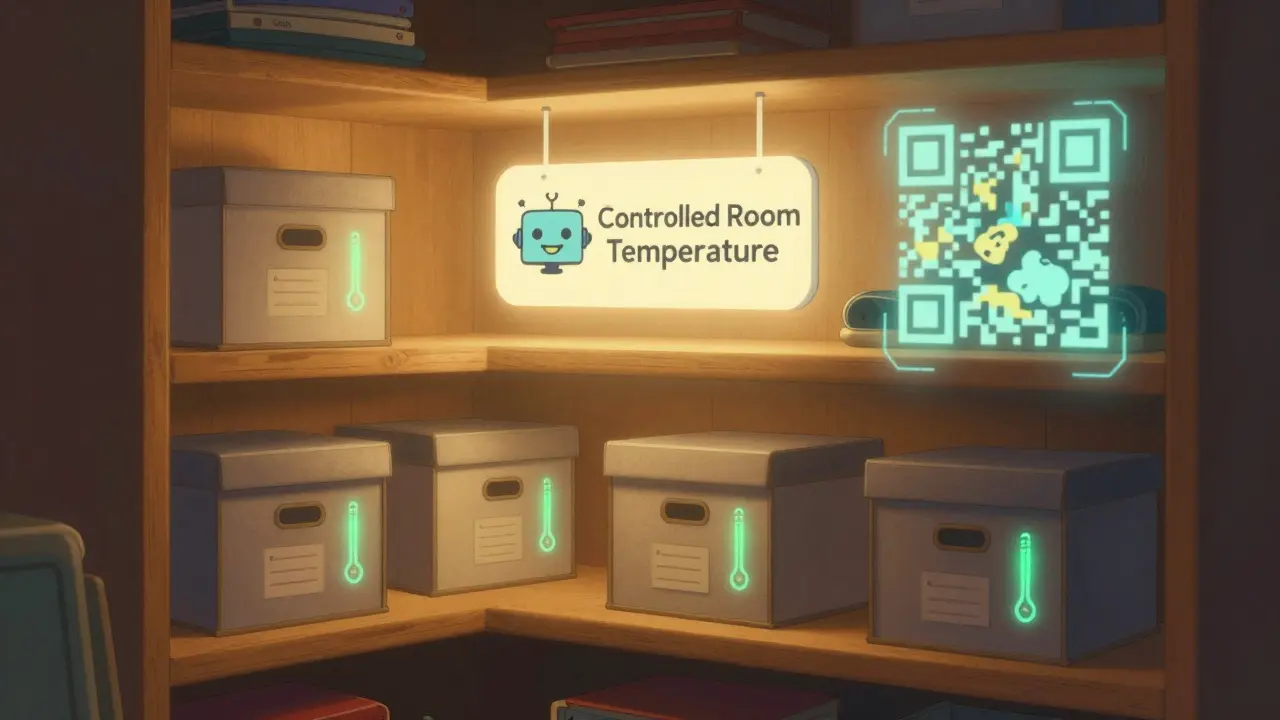
And the future is getting smarter. By 2024, major pharmacies like CVS and Walgreens are testing QR codes on labels that link to real-time storage advice based on your location and season. In five years, experts predict most high-risk medications will have built-in temperature sensors. You’ll know instantly if your insulin got too hot.
Right now, you have all the power you need: the label. Read it. Understand it. Follow it. Your medicine’s effectiveness - and maybe your life - depends on it.
Can I store my medication in the bathroom?
No. Bathrooms are too humid and often too warm. Steam from showers can make pills degrade faster, cause liquids to spoil, and encourage mold growth. Store medicines in a dry, cool place like a bedroom closet or kitchen cabinet away from the sink or stove.
What if my medicine says "refrigerate" but I forgot to put it in the fridge?
Check the label for how long it can stay out. Most refrigerated medicines can handle a few hours at room temperature - but not days. If it’s been out longer than the label allows, or if it looks discolored, cloudy, or smells odd, throw it away. When in doubt, call your pharmacist. Never risk taking a compromised medicine.
Do all liquid medicines need to be refrigerated?
No. Only some do - especially antibiotics, insulin, and certain pediatric formulations. Always read the label. Unopened liquids may be fine at room temperature, but once opened, many require refrigeration and have short shelf lives - often just 10 to 14 days. Never assume; always check.
Can I store my medicine in the car?
Never. Car interiors can reach 140°F (60°C) on a hot day - hotter than an oven. Heat destroys medications like nitroglycerin, insulin, and epinephrine. Even in winter, freezing temperatures can ruin liquids. Always carry medicines with you, not in the glove box or trunk.
How do I know if my medicine has gone bad?
Look for changes: pills that crumble, liquids that change color or smell strange, tablets with unusual spots or cracks. If you’re unsure, don’t take it. Throw it away and get a new prescription. Safety is more important than saving a few dollars.
SNEHA GUPTA
March 16, 2026 AT 11:10Storage isn't about being neat. It's about survival.
Gaurav Kumar
March 17, 2026 AT 04:19David Robinson
March 18, 2026 AT 13:26Jeremy Van Veelen
March 20, 2026 AT 01:45I once left my insulin in a hot car for three hours. Three hours. I thought, 'It’s fine, it’s just a little warm.'
Two days later, I went into DKA. Not a joke. Not a scare. A hospital stay. A $12,000 bill. And a new level of terror every time I open that vial.
This isn’t advice. It’s a lifeline.
Laura Gabel
March 21, 2026 AT 08:08jerome Reverdy
March 21, 2026 AT 14:43And if you’re unsure? Ask your pharmacist. They’re not paid to sell you stuff. They’re paid to keep you alive.
Andrew Mamone
March 22, 2026 AT 12:53MALYN RICABLANCA
March 23, 2026 AT 22:37gemeika hernandez
March 25, 2026 AT 10:26Nicole Blain
March 25, 2026 AT 13:46Kathy Underhill
March 26, 2026 AT 05:08Medicines aren’t static objects. They’re dynamic molecules. Heat, light, moisture - they’re not just inconveniences. They’re chemical reactions waiting to happen.
Respect the chemistry. It’s not magic. It’s science.
Andrew Muchmore
March 26, 2026 AT 13:03Paul Ratliff
March 27, 2026 AT 18:59