
How to Participate in Patient Registries for Drug Safety
 Jan, 5 2026
If you're taking a medication with serious side effects-like clozapine for schizophrenia, natalizumab for multiple sclerosis, or any drug with a black box warning-you might be asked to join a patient registry. It’s not optional in some cases. And even if it is, signing up can help protect you and others like you. These aren’t research studies you sign up for out of curiosity. They’re safety nets built into the system to catch rare, dangerous reactions that clinical trials just can’t see.
Why Patient Registries Exist
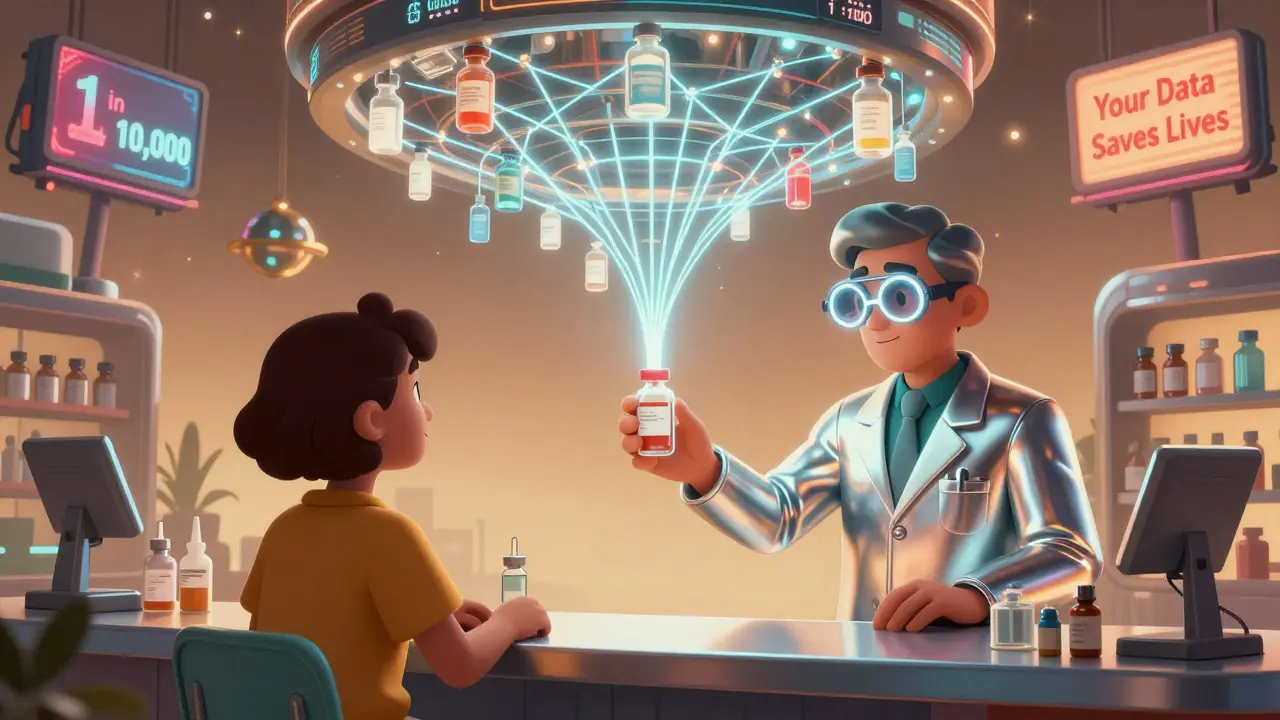
Clinical trials test drugs on a few thousand people over months or a couple of years. But millions take these drugs over decades. That’s where problems show up. A side effect that happens in 1 in 10,000 people won’t show up in a trial of 5,000. But if 100,000 people take the drug, that’s 10 cases. Without a system to track them, those cases go unnoticed-until someone dies. That’s why registries exist. They collect real-world data on who’s taking what drug, what side effects happen, and how people are doing over time. The FDA and EMA now require them for many high-risk medications. In the U.S., 47 drugs have mandatory registries as of 2023. These aren’t suggestions. They’re part of the rules for selling the drug.Types of Registries You Might Encounter
Not all registries are the same. There are four main types:- Disease registries track everyone with a specific condition-like cystic fibrosis or lupus-no matter what drug they’re on.
- Product registries track everyone taking a specific drug, regardless of diagnosis. This is the most common type for safety monitoring.
- Exposure registries track people exposed to a drug or chemical, even if it wasn’t prescribed-like accidental exposure during pregnancy.
- Health services registries track patients who get a certain procedure, like a joint replacement, to monitor complications.
How to Find Out If You’re Supposed to Join
Your doctor or pharmacist should tell you if your medication requires a registry. But don’t assume they will. Some doctors forget. Some patients don’t ask. Here’s how to check yourself:- Go to Drugs@FDA on the FDA website. Search your drug. If there’s a registry requirement, it’ll say “REMS” (Risk Evaluation and Mitigation Strategy) and list the registry name.
- Check the European Medicines Agency (EMA) product information if you’re in the EU. Look for “Post-Authorization Safety Study” or “Registry” in the summary.
- Search ClinicalTrials.gov and filter for “safety monitoring” or “post-marketing.”
- Reach out to patient advocacy groups like the National Organization for Rare Disorders (NORD). They run a registry program connecting patients with 147 disease-specific registries.
What Happens When You Join
Enrolling usually takes 15 to 20 minutes. You’ll give basic info: name, date of birth, diagnosis, current medications, and contact details. You’ll sign a consent form-sometimes long, sometimes confusing. But you’re not giving up your rights. You can opt out at any time. After enrollment, you’ll be contacted regularly. Some registries just send an annual survey. Others ask for updates every 3 or 6 months. Some link directly to your electronic health record (EHR), so your doctor’s office automatically shares lab results, hospital visits, or new prescriptions. You might be asked to report side effects. Not just the big ones-like liver damage or suicidal thoughts-but also things like unexplained fatigue, rashes, or changes in mood. Even if you think it’s “not serious,” report it. That’s how patterns are found. Some registries give you access to a patient portal where you can track your own data: when you last had a blood test, what dose you’re on, or whether your symptoms have improved. One patient in the Hunter Syndrome Registry said it helped her have better conversations with her doctor. “I could say, ‘Look, my movement got worse after the dose increase,’ and we adjusted it together.”Why Some People Don’t Join-And Why They Should
The biggest reason people avoid registries? Privacy fears. A 2022 survey found 41% of people didn’t join because they worried their data would be misused. But here’s the truth: regulated registries follow strict rules. In the U.S., they must meet 21 CFR Part 11 standards for electronic records. In Europe, they follow GDPR. Your name isn’t shared with drug companies. Researchers get coded data-no identifiers. Another reason? Time. People think it’s a burden. But most registries are low-effort. If it’s just a yearly survey, it takes 8 minutes. If it’s tied to your EHR, you don’t do anything. The hardest part is remembering to respond to emails or texts. And then there’s the myth: “I’m fine, so why bother?” But you’re not just helping yourself. You’re helping the next person who takes the same drug. In 2019, the FDA approved Elaprase for children under six because the registry showed safety data from 87 kids. Without that registry, those kids might still be denied the drug.What If You’re Asked to Join-But Don’t Want To?
If the registry is mandatory, you can’t get the drug without enrolling. That’s the law. If you refuse, your doctor can’t prescribe it. You’ll need to find an alternative treatment-or go without. If it’s voluntary, you can say no. But ask yourself: what’s the risk? If the drug has known serious side effects, skipping the registry means you’re flying blind. You won’t get alerts if new safety warnings come out. You won’t be contacted if your lab results show a red flag. You’re giving up a layer of protection. Some registries offer incentives: free lab tests, transportation help to appointments, or access to support groups. The FDA found that when patients clearly understood how their data was used, participation jumped by 32.5%.
What You Can Expect Over Time
Most people stay enrolled for about 2.7 years on average. But many drop out after the first year. Why? Because life gets busy. The reminders stop coming. The survey link gets buried in spam. Good registries fight this. They send automated text reminders. They email newsletters with updates on new safety findings. Some even offer phone calls from a nurse. One registry reduced dropout rates by 18.7% by offering free rides to check-ups. The data you provide isn’t just stored. It’s analyzed. If 10 people on the same drug develop the same rare reaction, regulators get notified. The drug label gets updated. Warnings get added. Prescribing guidelines change. That’s how drug safety improves.The Future: More Automation, More Control
By 2025, the FDA plans to automatically enroll 83% of patients on high-risk drugs through EHR integration. You’ll get a notification: “You’re now in the registry for your medication. You can opt out here.” New tools like the FDA’s MyStudies app let you report side effects directly from your phone. You can upload photos of rashes, log symptoms daily, or answer quick questions while waiting at the pharmacy. And for the first time, patients are gaining control. Platforms like MyDataCan let you choose which registries can access your data. You can say yes to one, no to another. You can delete your data anytime. This isn’t science fiction. It’s happening now.Final Thoughts: It’s Not Just Compliance-It’s Care
Joining a patient registry isn’t about helping big pharma or the FDA. It’s about helping people like you. It’s about making sure the next person who takes your drug doesn’t suffer a side effect that could’ve been prevented. If you’re on a medication with a known risk, and you’re asked to join a registry-do it. It takes minutes. It might save your life. Or someone else’s. You don’t need to be a doctor. You don’t need to understand statistics. You just need to care enough to show up.Do I have to join a patient registry if my doctor asks me to?
If the registry is mandatory-for drugs like clozapine or natalizumab-then yes. You won’t be able to get the prescription without enrolling. It’s a legal requirement tied to the drug’s approval. If the registry is voluntary, you can decline, but you’ll miss out on safety alerts and updates that could protect your health.
Is my personal information safe in a patient registry?
Yes. Registries regulated by the FDA or EMA must follow strict privacy rules. Your name, address, and other identifiers are removed before data is shared with researchers. Only coded data is used. In the U.S., they must comply with 21 CFR Part 11. In Europe, they follow GDPR. Your data won’t be sold to advertisers or shared with insurance companies without your explicit consent.
How often will I be contacted if I join a registry?
It depends on the registry. Some ask for updates once a year. Others require quarterly check-ins. Registries tied to your electronic health record may not contact you at all-your doctor’s office sends data automatically. You’ll usually get emails, texts, or letters asking you to confirm your details or report any new symptoms.
Can I leave a registry after I join?
Yes. You can withdraw at any time. The registry will stop collecting new data about you. However, any information already collected may still be used in aggregated research unless you specifically request deletion. Most registries will honor a deletion request, but check their privacy policy for details.
What if I don’t know if my drug requires a registry?
Check [email protected] or the EMA’s product information page for your medication. Look for “REMS” or “Post-Authorization Safety Study.” You can also ask your pharmacist or call the drug manufacturer’s patient support line. If you’re unsure, it’s safer to assume you might need to join-and ask your doctor.
Will joining a registry affect my insurance or employment?
No. Registries are designed to protect your privacy. Your data is coded and anonymized. Insurance companies and employers don’t have access to registry records. The information is only used for drug safety monitoring and research. In the U.S., the Health Insurance Portability and Accountability Act (HIPAA) also protects your health information from being used against you.
Do I need special equipment or tech skills to join?
No. Most registries work by email, phone, or mail. Some offer online portals, but you don’t need to be tech-savvy. If you can check your email or answer a phone call, you can participate. For those who need help, many registries offer free support lines or can mail paper forms. New tools like the FDA’s MyStudies app are designed to be simple-even for older adults.
Ryan Barr
January 6, 2026 AT 05:45Registries are just surveillance with a nice label.
Melanie Clark
January 7, 2026 AT 13:17So let me get this straight-you’re telling me if I take clozapine I have to give the government my medical history forever and they’ll track me like a criminal but I can’t even ask who’s using my data? I’ve seen what happens when they ‘anonymize’ things. Remember the 2017 Anthem breach? That was ‘coded’ too. This isn’t safety, it’s data harvesting dressed up as care. And don’t even get me started on how they’ll sell it to insurers later under ‘research partnerships.’
Mukesh Pareek
January 7, 2026 AT 23:44The pharmacovigilance architecture under REMS is non-negotiable for risk mitigation in high-therapeutic-index biologics. Absent longitudinal real-world evidence generation, the benefit-risk calculus becomes statistically untenable. Your anecdotal privacy concerns are empirically irrelevant when weighed against population-level adverse event detection thresholds.
Jeane Hendrix
January 9, 2026 AT 08:26Just joined the natalizumab registry last month-turns out my doctor forgot to tell me, so I had to call the pharmacy myself. It took 12 minutes and I got a free blood test coupon. The portal lets me see my own lab trends over time, which is actually kinda cool. I didn’t realize my WBC had been creeping down until I checked it there. Now I know when to push back on my neurologist. Also, they sent me a little emoji sticker pack for completing the first survey 😊
Rachel Wermager
January 9, 2026 AT 10:06If you’re not enrolled in a REMS-compliant product registry for clozapine, you’re not just being negligent-you’re violating FDA 21 CFR 314.70(b)(2)(iii). The requirement exists because agranulocytosis has a 0.3% incidence rate post-marketing. Clinical trials don’t capture that. You think you’re being private? You’re just delaying the inevitable when your neutrophils crash and they have to scramble to find your data retroactively.
Leonard Shit
January 9, 2026 AT 15:07My grandma’s on clozapine. She doesn’t have a smartphone. The registry sent her a paper form. She filled it out with a pencil. They called her every three months. She said the nurse sounded like she actually cared. I cried. I didn’t even know that stuff existed. So yeah, I’m signed up. Even if it’s boring. Even if it’s weird. Someone’s watching out for people like her. And that’s worth a few emails.
Kelly Beck
January 9, 2026 AT 20:55Y’all are overthinking this so much 😭 I joined the Hunter Syndrome registry last year and it’s been the BEST thing for my kid. We get alerts when new research drops, they send us free lab kits, and last month they connected us with another parent who had the same exact side effect. We’re not just data points-we’re a community. And if you think it’s a burden, just think of it as a free health coach who never charges you. 🌟❤️ You’re not giving up privacy, you’re gaining a safety net. And honestly? If your drug has a black box warning, you already have something to lose. Don’t skip the net.
Molly McLane
January 10, 2026 AT 09:38I work in public health and I’ve seen registries save lives. One patient in our epilepsy registry had a seizure pattern no one could explain-until 17 other patients showed the same thing after switching pharmacies. Turned out the generic had a different filler. The FDA changed the labeling. That’s real impact. It’s not about trust-it’s about systems. If you’re on a high-risk med, this isn’t bureaucracy. It’s backup.
Katie Schoen
January 11, 2026 AT 11:35Okay but like… why are we pretending this isn’t a giant data grab? I get the safety angle. But the fact that 3 drug companies co-sponsor the registry I’m in? And they get aggregated data? And they use it to tweak marketing? And I can’t even opt out of that part? It’s not just ‘coded.’ It’s corporate research with a side of paternalism. I’m in because I have to be. But don’t act like it’s a gift.
Beth Templeton
January 12, 2026 AT 22:49Join the registry. It’s mandatory. End of story.
Tiffany Adjei - Opong
January 14, 2026 AT 03:19So let me get this straight-you’re saying we should trust the same FDA that approved opioids for 20 years and then acted shocked when people overdosed? And now you want us to hand over our medical history because they’re ‘regulated’? Please. The system failed us before. It’ll fail us again. Registries aren’t safety nets-they’re liability shields for Big Pharma. You’re not helping anyone by signing up. You’re just making it harder to sue them later when something goes wrong.
Brian Anaz
January 15, 2026 AT 03:09Why are we letting foreigners and bureaucrats control our medicine? This is America. If I want to take clozapine, I should be able to. No forms. No tracking. No government apps. You want safety? Take responsibility for yourself. Not some database in D.C.
Indra Triawan
January 15, 2026 AT 17:39Is this not just another way to commodify suffering? We are not data points. We are beings who breathe, who fear, who dream of being whole. The registry asks for our bodies, our pain, our silence-and calls it care. But who is the real beneficiary? The patient? Or the algorithm that calculates risk and profits from it? Perhaps we must ask not whether to join… but whether the system deserves our truth.