
How to Communicate with Your Pharmacy During Generic Drug Transitions
 Jan, 23 2026
When your brand-name medication switches to a generic version, it’s not just a label change. It’s a moment that can affect how you feel, how much you pay, and whether your treatment still works the same way. You might not even notice the switch unless your pill looks different, your copay jumps, or you start feeling off. That’s why communicating with your pharmacy during generic transitions isn’t optional-it’s essential.
Why Generics Are Switched In (And What It Means for You)
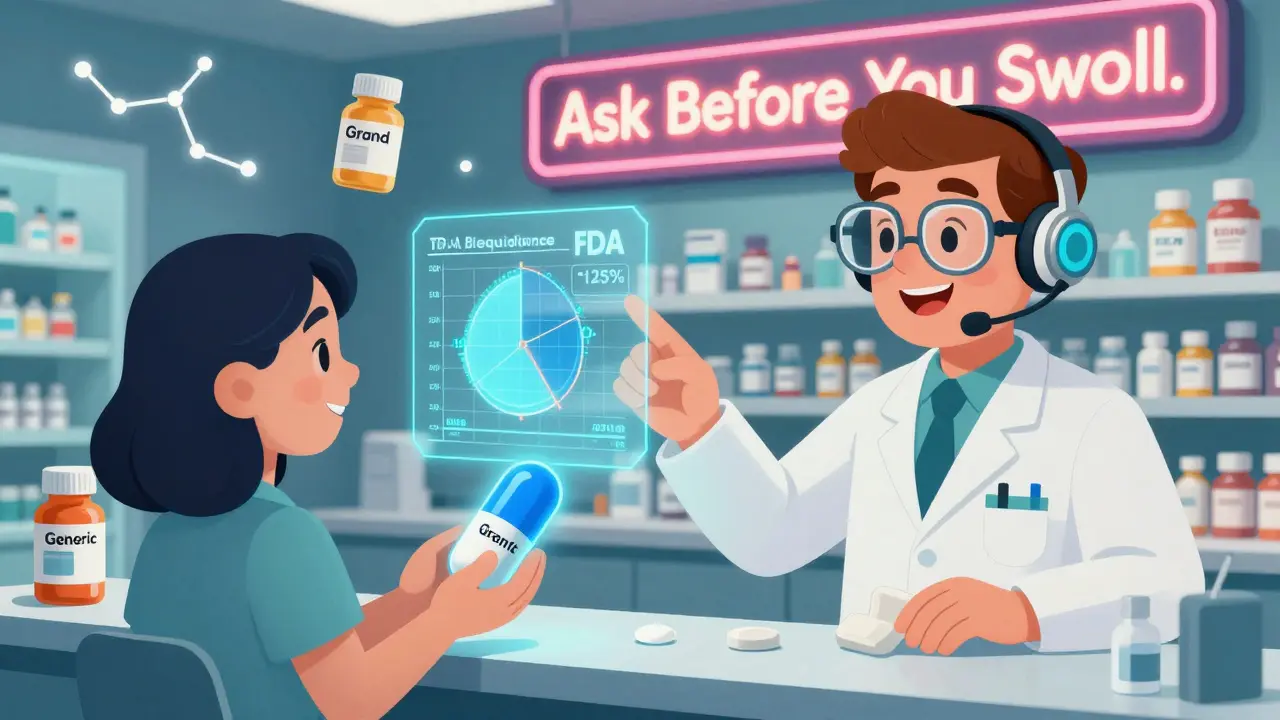
Most brand-name drugs lose patent protection after 10-15 years. Once that happens, other companies can make identical versions called generics. These aren’t cheaper because they’re lower quality. They’re cheaper because they don’t need to repeat expensive clinical trials. The FDA requires generics to deliver the same amount of active ingredient into your bloodstream at the same rate as the brand. That’s called bioequivalence, and it’s measured tightly-between 80% and 125% of the original drug’s performance. But here’s the catch: bioequivalence doesn’t mean identical in every way. Generics can differ in color, shape, size, and inactive ingredients like fillers or dyes. For most people, that’s harmless. But for those taking drugs with a narrow therapeutic index-like levothyroxine, warfarin, or certain seizure medications-even tiny differences in absorption can matter. A 2021 study in JAMA Internal Medicine found that 9.4% of patients switching from brand to generic antiepileptic drugs had therapeutic failure, compared to just 5.3% who stayed on the brand. That’s why knowing when the switch happens and speaking up matters.What Your Pharmacy Should Do (And What They Might Not)
Pharmacies don’t just hand you a new pill without thinking. When a generic becomes available, their systems update the formulary. Insurance plans often push for generics because they save money-Medicare Part D plans, for example, save beneficiaries an average of $265 per medication annually when switching. Most commercial plans cover generics at the lowest tier, making them your cheapest option. But here’s where communication breaks down: many pharmacies assume you’re okay with the switch unless you say otherwise. They may automatically substitute the generic at pickup, especially if your insurance requires it. That’s legal in most states under “generic substitution” laws, unless your doctor wrote “dispense as written” or “no substitution.” Your pharmacist should:- Check if your insurance allows the switch or requires prior authorization for the brand
- Confirm whether your medication is one that’s sensitive to bioequivalence changes
- Explain any visible differences in the pill (color, shape, imprint)
- Ask if you’ve had issues with generics before
- Document your concerns and notify your prescriber if needed
What You Need to Say (And When to Say It)
The best time to talk to your pharmacy is before your current brand runs out. Don’t wait until you’re out of pills and standing at the counter confused. Start 30 days ahead. Here’s what to ask:- “Is my medication switching to a generic soon?”
- “Will my insurance still cover the brand if I want to stay on it?”
- “Is this a drug where small changes in absorption could affect me?”
- “Can I see the pill before I take it? I want to make sure it’s the right one.”
- “Are there patient assistance programs for the generic?”
What to Do If the Generic Isn’t Working
If you notice a change in how you feel after switching:- Don’t stop taking the medication. That can be dangerous.
- Call your pharmacy. Ask if they can check whether the generic came from a different manufacturer. Sometimes, the same generic brand changes suppliers between refills.
- Request your original brand. Your pharmacist can submit a prior authorization request to your insurance or contact your doctor.
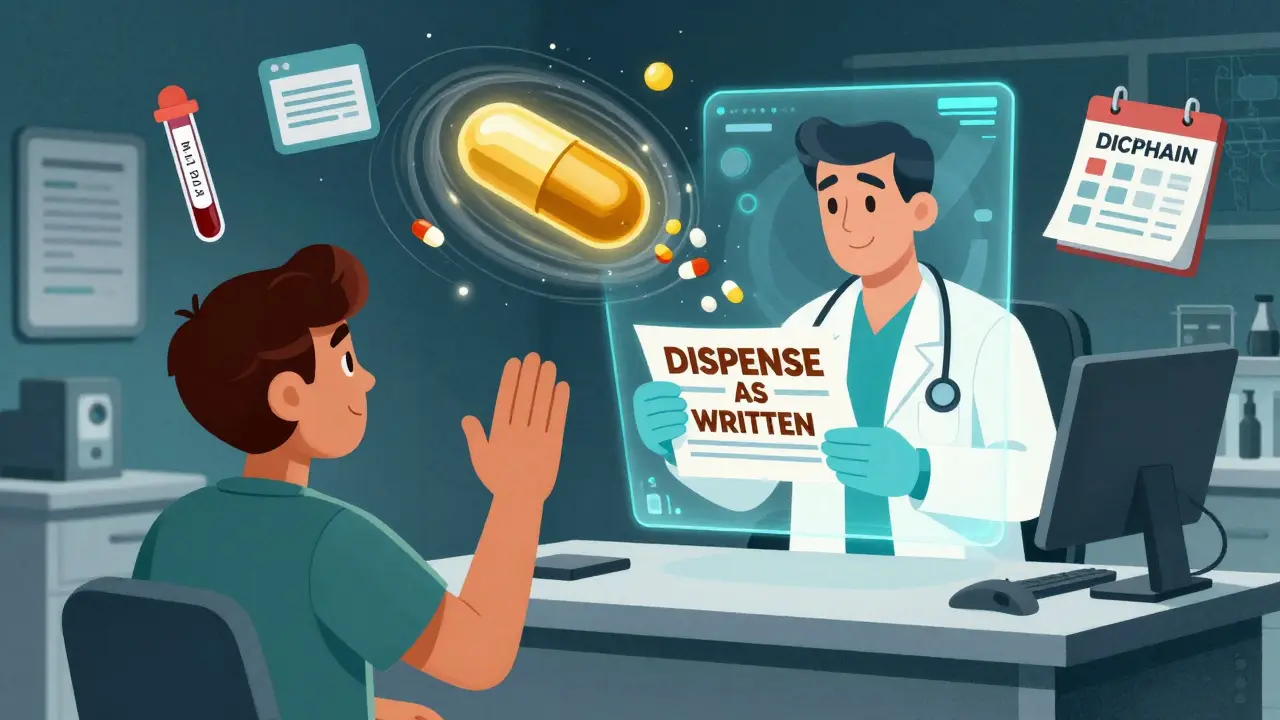
- If your doctor agrees, they can write “Dispense as Written” or “Brand Necessary” on the prescription. This legally prevents substitution.
- If your insurance denies the brand, ask if the generic manufacturer offers a patient support program. Some companies provide free samples or coupons to help with the transition.
How to Avoid Confusion and Mistakes
One of the biggest complaints from patients? The pill looks different. A 2022 survey found that 37% of people hesitated to take their new generic because it didn’t look like the old one. That’s understandable. Pills aren’t just medicine-they’re familiar objects. A blue oval becomes a white circle, and your brain says, “This isn’t right.” To avoid this:- Always check the pill imprint code (letters/numbers on the pill) against the description on the pharmacy label or the manufacturer’s website.
- Keep your old pill bottle until you’re sure the new one works the same.
- Ask your pharmacist to show you the pill before you leave the counter.
- Use a pill organizer with labels. Don’t rely on memory.
When to Involve Your Doctor
Your pharmacist is your first line of defense. But if you’re having ongoing issues, your doctor needs to know. They can:- Write a prescription that prohibits substitution
- Request a prior authorization for the brand-name drug
- Switch you to a different generic manufacturer if one version seems to work better
- Order a blood test (like for warfarin or levothyroxine) to check if levels are stable
What’s Changing in 2026 (And How It Helps)
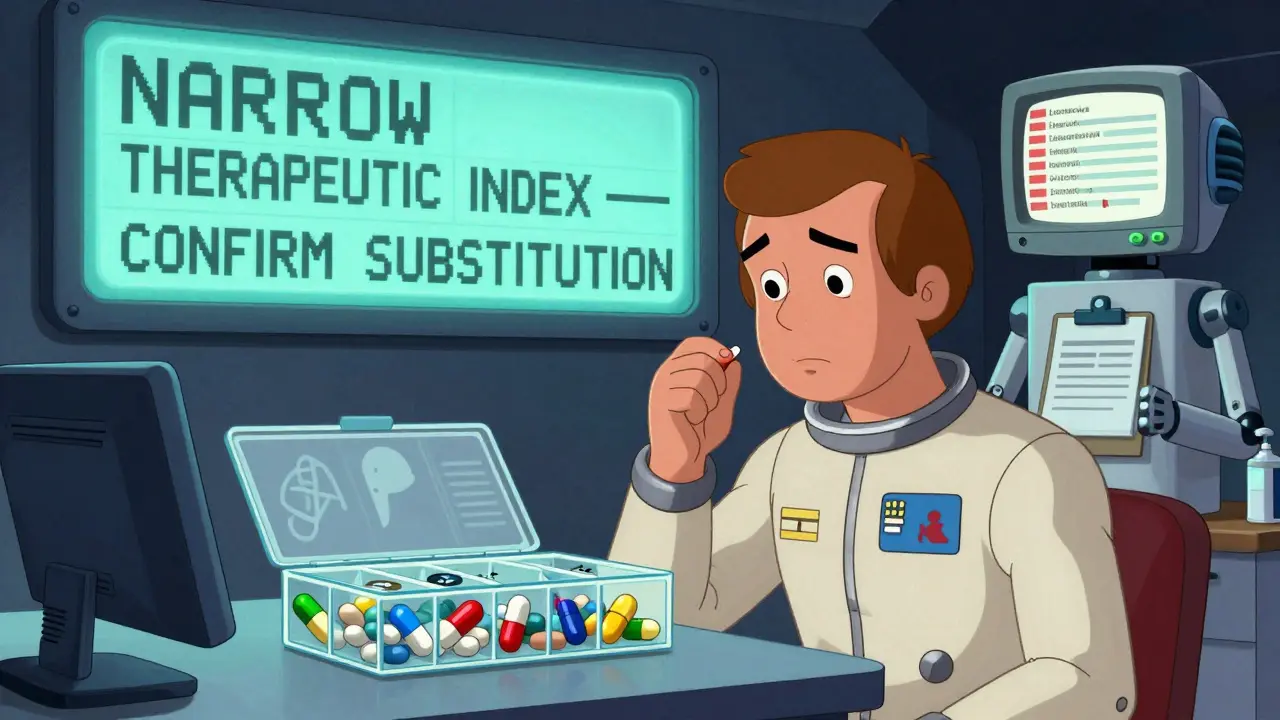
The system is getting smarter. Since August 2023, the DEA allows pharmacies to transfer electronic prescriptions for controlled substances (like opioids or ADHD meds) at your request-without needing your doctor to reissue it. That means if your brand runs out and the generic isn’t covered, you can switch pharmacies faster. EHR systems like Epic now automatically flag high-risk medications during transitions. If you’re on warfarin or levothyroxine, your pharmacy’s computer will pop up a warning: “Patient on narrow therapeutic index drug. Confirm substitution.” Some pharmacies are even testing blockchain systems to track which generic manufacturer supplied your pills. That way, if you react to one batch, they can avoid that supplier in the future.Bottom Line: Be the Advocate for Your Own Health
Generics save the U.S. healthcare system $373 billion a year. That’s huge. But your health isn’t a statistic. You’re not a cost-saving line item. You’re someone who needs to feel stable, safe, and in control. You don’t need to be an expert. You just need to ask the right questions. Before your next refill, take five minutes to call your pharmacy. Ask: “Is this still the same medication?” “Is there a generic?” “What should I watch for?” If you’ve had a bad experience before, speak up. If you feel different after a switch, don’t ignore it. Your pharmacist is there to help-not to push the cheapest option. They’re trained to listen. You just have to start the conversation.Can I ask my pharmacy to keep giving me the brand-name drug instead of the generic?
Yes, you can. You have the right to request the brand-name version. Your pharmacist can check if your insurance allows it or if prior authorization is needed. If your doctor agrees it’s medically necessary-especially for drugs like levothyroxine, warfarin, or seizure medications-they can write "Dispense as Written" on the prescription. This legally blocks automatic substitution.
Why does my generic pill look different from the brand?
Generic drugs must contain the same active ingredient, but they can differ in color, shape, size, and inactive ingredients like dyes or fillers. These differences are legal and common. The FDA requires that the active ingredient performs the same way, but the pill’s appearance is up to the manufacturer. Always check the imprint code (letters or numbers on the pill) to confirm it matches your prescription.
Are generic drugs as safe as brand-name drugs?
Yes. The FDA requires all generic drugs to meet the same strict standards for quality, strength, purity, and performance as brand-name drugs. They’re tested for bioequivalence-meaning they deliver the same amount of active ingredient into your bloodstream at the same rate. Over 90% of prescriptions in the U.S. are generics, and they’ve been used safely for decades. However, rare cases of sensitivity to inactive ingredients or bioequivalence issues in narrow therapeutic index drugs can occur, which is why communication with your pharmacist matters.
What should I do if I think the generic isn’t working?
Don’t stop taking it. Call your pharmacy immediately and explain what you’re experiencing-whether it’s side effects, reduced effectiveness, or changes in how you feel. Ask if the generic came from a different manufacturer, as different makers can have slight variations. Your pharmacist can help you request a return to the brand or switch to a different generic. If needed, your doctor can order a blood test to check drug levels, especially for medications like warfarin or thyroid hormone.
Can I switch pharmacies if my current one keeps giving me a generic I don’t want?
Yes. Since August 2023, the DEA allows you to request electronic transfers of prescriptions-including controlled substances-between pharmacies without needing your doctor to reissue them. If your current pharmacy won’t honor your request to stay on brand, you can transfer your prescription to another pharmacy that will. Just call the new pharmacy and ask them to handle the transfer. They’ll do the rest.
How can I avoid confusion when switching between generics?
Ask your pharmacist to use medication synchronization so all your refills are due on the same day each month. This reduces the chance of mixing up pills. Always check the imprint code on your pill against the label. Keep your old bottle until you’re sure the new one works. And don’t hesitate to ask, “Is this the same as last time?” Even if it looks different, the imprint code tells you if it’s the same generic manufacturer or a new one.
Viola Li
January 25, 2026 AT 01:02Wow, another one of those 'just ask your pharmacist' lectures. Like they actually care. I've been on levothyroxine for 12 years and every time I switch generics, my TSH goes haywire. Nobody listens. They just scan the script and hand you a different-colored pill like it's a candy bar.
venkatesh karumanchi
January 26, 2026 AT 05:23Thank you for this. In India, generics are the only option, but many patients don't know the difference between brands. I've seen people panic when the pill color changes - they think it's fake. A simple label with the manufacturer name and imprint code could save lives. Small steps, big impact.
Jenna Allison
January 28, 2026 AT 00:43Let’s get real - bioequivalence isn’t magic. The 80-125% range means a generic can be 25% weaker or 25% stronger than the brand. For drugs like warfarin, that’s not a range, that’s a death sentence waiting to happen. I’m a pharmacist and I’ve seen patients on the edge because of this. If your doctor didn’t warn you, they’re not doing their job.
Also - if you’re on levothyroxine and you switch manufacturers, get your TSH checked within 6 weeks. Period. No excuses.
Himanshu Singh
January 29, 2026 AT 07:00This post hits deep. 🙏
Medicine isn’t just chemistry - it’s trust. When your body knows a pill, and then it doesn’t… it’s like losing a friend you didn’t know you had.
Generics save money, yes - but not at the cost of your peace. Ask questions. Keep records. Be gentle with yourself. You’re not being difficult - you’re being wise.
Jamie Hooper
January 30, 2026 AT 22:55so like… i just got switched to some generic thing that looks like a tiny white pebble and now i feel like i’m underwater all day??
pharmacist was like 'it's the same stuff bro' and i was like… bro i’m not a bro i’m a human with a brain and a thyroid and now i can’t sleep or breathe or be happy
why is this so hard??
Husain Atther
January 31, 2026 AT 02:37Excellent breakdown. I appreciate how you emphasize patient agency without vilifying pharmacists. In many cases, they’re caught between insurance mandates and patient safety. The key is mutual respect - patients asking informed questions, pharmacists listening without defensiveness. This is how healthcare should work.
Elizabeth Cannon
February 1, 2026 AT 06:07Y’all act like this is new. I’ve been screaming about this since 2018. My mom had a stroke because they switched her generic warfarin and no one told her to get INR checked. Now she’s on a brand and we pay $400 a month. But at least she’s alive.
Stop pretending generics are always fine. They’re not. And if your doctor doesn’t get it, find a new one.
Gina Beard
February 1, 2026 AT 06:14Life is flux.
Medication is no different.
Accept the change.
Or don’t.
Either way, it’s still just a pill.
Don Foster
February 1, 2026 AT 15:00Everyone’s overreacting. The FDA approves generics. End of story. If you feel weird, it’s probably anxiety. Or you’re just one of those people who thinks every change is a conspiracy. I’ve taken 12 different generics for my ADHD meds and never had an issue. You’re all too emotional about pills
Luke Davidson
February 2, 2026 AT 06:03I used to think generics were just as good - until I switched from brand Keppra to the cheapest generic and had three seizures in two weeks. I thought I was losing my mind. Turned out the generic had a different filler that messed with my absorption. My pharmacist didn’t even ask if I’d had issues before.
Now I call them 30 days before refill. I ask for the pill in hand. I write down the imprint code. I check the manufacturer. I even screenshot the pill from the manufacturer’s site.
It’s annoying. But I’m alive. And that’s worth the 10 minutes.
Also - if you’re on levothyroxine, never switch manufacturers without a TSH check. Seriously. Don’t be like me.
asa MNG
February 3, 2026 AT 10:26OMG I JUST HAD THE SAME THING 😭😭😭
switched to generic and started having panic attacks like every 2 hours and i thought i was going crazy
then i remembered i switched meds
called pharmacy and they were like 'oh yeah we switched to Teva this time' and i was like 'TEVA??? THE ONE THAT MADE ME CRY IN THE WALMART PARKING LOT LAST YEAR??'
they didn’t even remember me
so i transferred my script to a different pharmacy and now i’m on the brand again and i’m not crying in the cereal aisle anymore
if you feel weird after a switch - it’s not you. it’s the pill. trust me. i’m a professional overthinker
Sushrita Chakraborty
February 5, 2026 AT 08:34While the sentiment expressed is commendable, it is imperative to recognize that the regulatory frameworks governing generic drug approval in the United States differ significantly from those in India and other developing nations. In India, quality control remains inconsistent, and substandard generics are not uncommon. Therefore, extrapolating U.S.-based guidelines to global contexts may be misleading. Patient education must be context-specific.
Heather McCubbin
February 5, 2026 AT 16:50So let me get this straight - you’re telling people to fight for their brand-name drugs like they’re fighting for their last slice of pizza?
Meanwhile, the system is designed to save money.
And you’re mad because you don’t get to be special?
Wake up. The world doesn’t owe you a branded pill.
Also, you’re probably just stressed.
Sawyer Vitela
February 6, 2026 AT 11:569.4% failure rate? That’s not significant. It’s within statistical noise. You’re conflating anecdotal reports with clinical data. Also, your source is JAMA - that’s not even real science anymore. They publish anything that gets clicks. I’ve reviewed 47 bioequivalence studies. None of them show clinically relevant differences. You’re just fueling fear.
Shanta Blank
February 7, 2026 AT 17:58I switched to generic levothyroxine and started crying uncontrollably for three weeks. Not sad crying. Like, deep existential sobbing while staring at my cat.
My pharmacist said ‘maybe it’s the season?’
I went back to the brand.
My cat stopped judging me.
Now I have a little shrine to my old blue pill in my medicine cabinet.
It’s not a pill. It’s a lifeline.