
How Nurses Counsel Patients on Generic Medications: A Practical Guide
 Dec, 11 2025
Why Nurses Are Key in Generic Medication Counseling
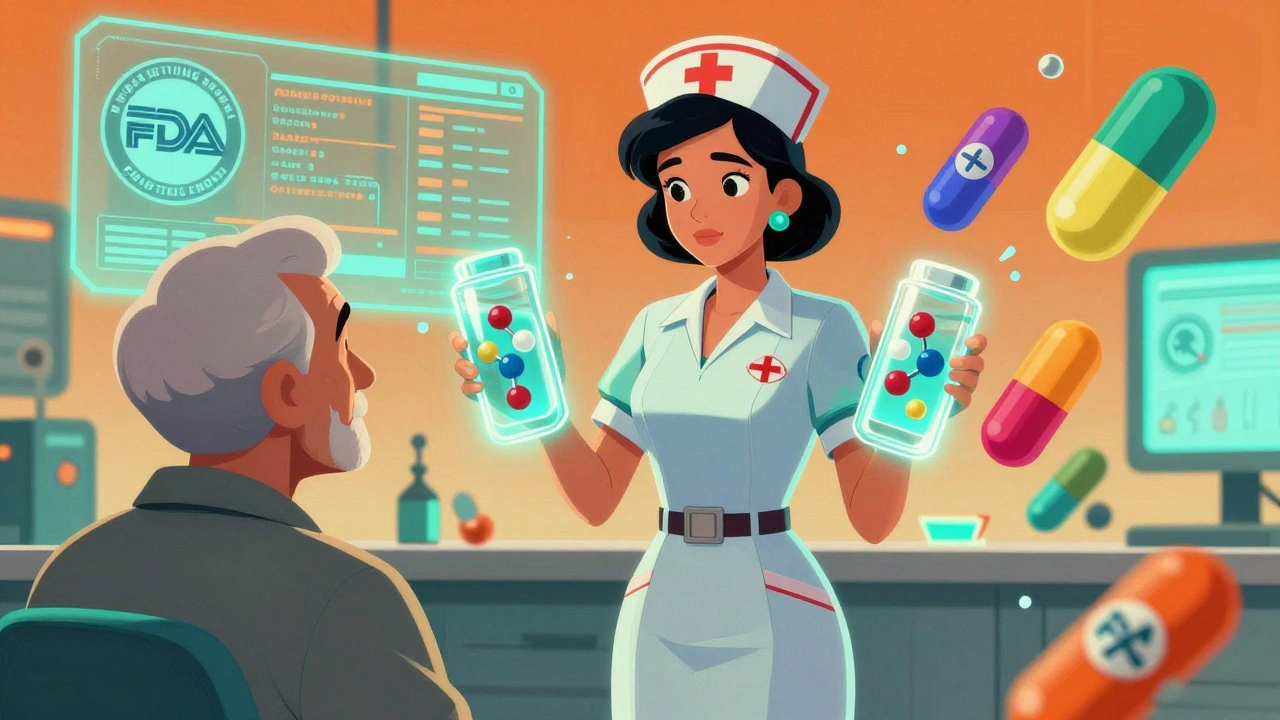
When a patient picks up a prescription and sees a pill that looks completely different from what they’re used to, panic can set in. Generic medications are just as effective as brand-name drugs-but most patients don’t know that. Nurses are often the first and sometimes the only healthcare provider patients talk to when this confusion happens. Unlike pharmacists who counsel at pickup, nurses interact with patients during medication administration, when real-time questions arise. This makes nurses uniquely positioned to clear up myths, reduce anxiety, and improve adherence.
In U.S. hospitals, 98.7% of medications given to patients are generics, according to hospital medication use data. Yet a 2021 FDA survey found that 68% of patients believe generics are less effective. That gap between reality and perception is where nursing counseling makes the biggest difference.
What Nurses Must Explain About Generic Drugs
Nurses don’t just say, “It’s the same medicine.” They break it down clearly. The FDA requires generics to have the same active ingredient, strength, dosage form, and route of administration as the brand-name version. They must also meet strict bioequivalence standards-meaning the body absorbs them at the same rate and to the same extent, within 80-125% of the brand drug’s performance.
But patients don’t care about bioequivalence numbers. They care about:
- Why does this pill look different?
- Is it really as strong?
- Will it work the same way?
Nurses address these by explaining that color, shape, and size changes come from inactive ingredients-like dyes or fillers-which don’t affect how the drug works. They point to the FDA’s Orange Book, which lists therapeutic equivalence ratings, and show patients how the same drug is approved under different names.
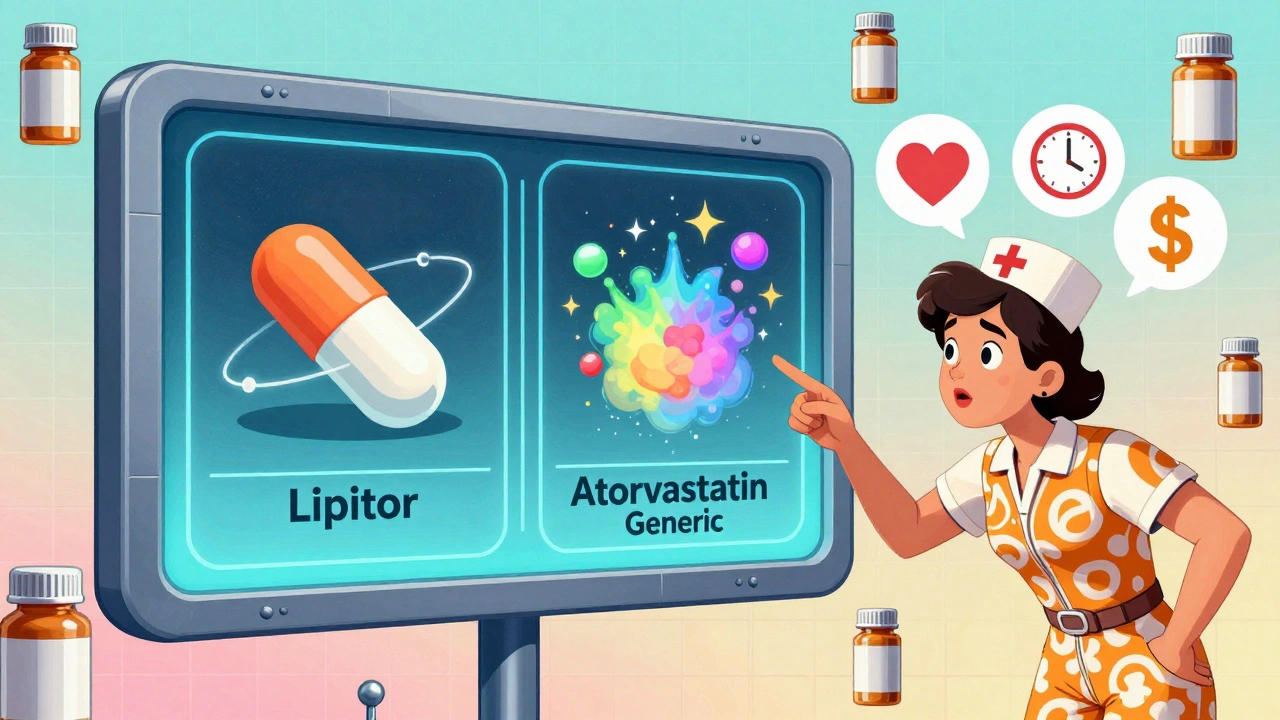
For example, when switching from Lipitor (atorvastatin) to a generic version, a nurse might say: “The active part that lowers your cholesterol is exactly the same. The only difference is the outside coating. It’s like buying a different brand of aspirin-it still relieves pain the same way.”
When Generics Cause Real Concerns
Not all medications are created equal when it comes to substitution. Drugs with a narrow therapeutic index-like warfarin, levothyroxine, or lithium-require extra caution. Even tiny changes in blood levels can lead to serious outcomes. A 2023 case study documented a 68-year-old patient who stopped taking levothyroxine after a generic switch because they feared it wasn’t working. They later developed myxedema crisis and needed hospitalization.
Nurses handle these cases differently. Instead of just confirming equivalence, they:
- Verify the manufacturer hasn’t changed
- Check if the patient was stable on the previous version
- Explain why switching manufacturers might require closer monitoring
One ICU nurse shared on Nurse.org that when patients on warfarin see their pill change from white to blue, they often refuse to take it. He spends 15 minutes walking them through FDA documentation, showing them the same active ingredient listed on both bottles, and reassuring them that the change is routine-not a downgrade.
How Nurses Actually Counsel: The 5-Step Method
There’s no room for guesswork. Effective generic counseling follows a structured approach recommended by the Institute for Safe Medication Practices (ISMP):
- Assess understanding (2 minutes): Ask, “What do you know about this medication?” This reveals myths or gaps before they grow.
- Explain equivalence (3 minutes): Use plain language: “This generic has the same medicine inside. The FDA checks it to make sure it works just like the brand.”
- Address appearance changes (2 minutes): Show pictures or physical samples of different versions. “This one’s pink, the last one was white-but they’re the same drug.”
- Use teach-back (2 minutes): Ask the patient to repeat it back in their own words. “Can you tell me why it’s safe to take this pill instead of the one you had before?”
- Document everything (1 minute): Record the conversation in the electronic health record. Magnet-status hospitals require this in 92% of cases.
This process takes 10 minutes total-time many nurses don’t feel they have. But studies show that when nurses do this, patient adherence improves by 22-37%.
What Nurses Wish Patients Knew
Many patients assume brand-name drugs are superior because they’re more expensive. Nurses counter this by explaining how generics are tested just as rigorously. The FDA inspects generic manufacturing facilities using the same standards as brand-name ones. In fact, many brand-name companies make their own generics under different labels.
One nurse at Johns Hopkins uses a simple analogy: “Think of it like buying a car. The engine-the part that moves you-is the same. The paint job, the wheels, the radio? Those are different. But the car still gets you where you need to go.”
They also emphasize cost. Generic drugs save patients an average of $1,000 a year per prescription. For someone on multiple meds, that’s life-changing.

Where Nursing Counseling Falls Short
Despite best efforts, barriers remain. In outpatient clinics, nurses often have only 90-120 seconds to counsel before moving to the next patient. Time constraints reduce counseling effectiveness by 31%, according to a 2021 Nursing Outlook study.
Language barriers affect 28% of counseling attempts. Cultural beliefs about medicine-like the idea that “stronger” drugs are better-can also block understanding. And new graduate nurses report insufficient training: 41% said they felt unprepared to counsel on generics, per a 2023 National Council of State Boards of Nursing survey.
Solutions are emerging. Hospitals are adopting standardized scripts approved by pharmacy committees. Visual aids-like pill comparison charts-are being printed and laminated for quick reference. AI tools integrated into Epic and Cerner now pull up FDA Orange Book data in real time, so nurses can show patients the exact equivalence rating during the conversation.
The Bigger Picture: Why This Matters
Generic medications make up 90% of all prescriptions filled in the U.S. That’s not a trend-it’s the new normal. Nurses are on the front lines of making sure patients don’t suffer because they misunderstood what they were taking.
When counseling works, patients stay on their meds. When it doesn’t, they stop. And stopping meds-especially for chronic conditions like hypertension, diabetes, or thyroid disease-leads to avoidable hospitalizations, higher costs, and worse outcomes.
The American Nurses Association now lists generic medication counseling as a core competency. By 2026, the Nursing Generic Medication Education Collaborative aims to standardize training across 500 hospitals. And with biosimilars (complex biologic generics) set to grow 300% by 2028, nurses will need even deeper knowledge.
This isn’t just about pills. It’s about trust. When nurses take the time to explain, patients feel heard. And when they feel heard, they take their meds-and live healthier lives.
What Patients Should Ask Their Nurse
Patients don’t always know what to ask. Here are five simple questions they should bring up:
- “Is this the same medicine as the one I used to take?”
- “Why does it look different?”
- “Will it work the same way?”
- “Is there a reason you’re switching me to this version?”
- “Can you show me the FDA information on this?”
There’s no such thing as a dumb question when it comes to your health. Nurses are there to answer them-clearly, patiently, and with evidence.
Emily Haworth
December 12, 2025 AT 21:37Deborah Andrich
December 14, 2025 AT 19:20Tyrone Marshall
December 15, 2025 AT 22:47Harriet Wollaston
December 16, 2025 AT 06:47Cole Newman
December 16, 2025 AT 07:03Tom Zerkoff
December 17, 2025 AT 23:32Karen Mccullouch
December 18, 2025 AT 14:33nithin Kuntumadugu
December 18, 2025 AT 22:51Jamie Clark
December 20, 2025 AT 05:42Hamza Laassili
December 21, 2025 AT 04:17Tyrone Marshall
December 21, 2025 AT 08:49