
Green Tea Extract and Medication Interactions to Watch
 Dec, 6 2025
Green tea is often seen as a healthy drink-calm, natural, full of antioxidants. But when it comes in concentrated form as a supplement, it can quietly mess with your medications in ways most people never expect. If you're taking pills for high blood pressure, cholesterol, cancer, or even ADHD, your daily green tea extract capsule might be reducing their effectiveness-or making side effects worse. This isn’t speculation. It’s documented in clinical studies, hospital reports, and drug safety databases.
How Green Tea Extract Interferes with Your Pills
Green tea extract isn’t just brewed tea in a pill. A single capsule can contain 250 to 500 mg of EGCG (epigallocatechin gallate), the main active compound. That’s five to ten times more than what you’d get from drinking two cups of tea. And it’s not just EGCG. These supplements also pack in concentrated caffeine-sometimes 100 mg or more per serving, equivalent to a strong cup of coffee.
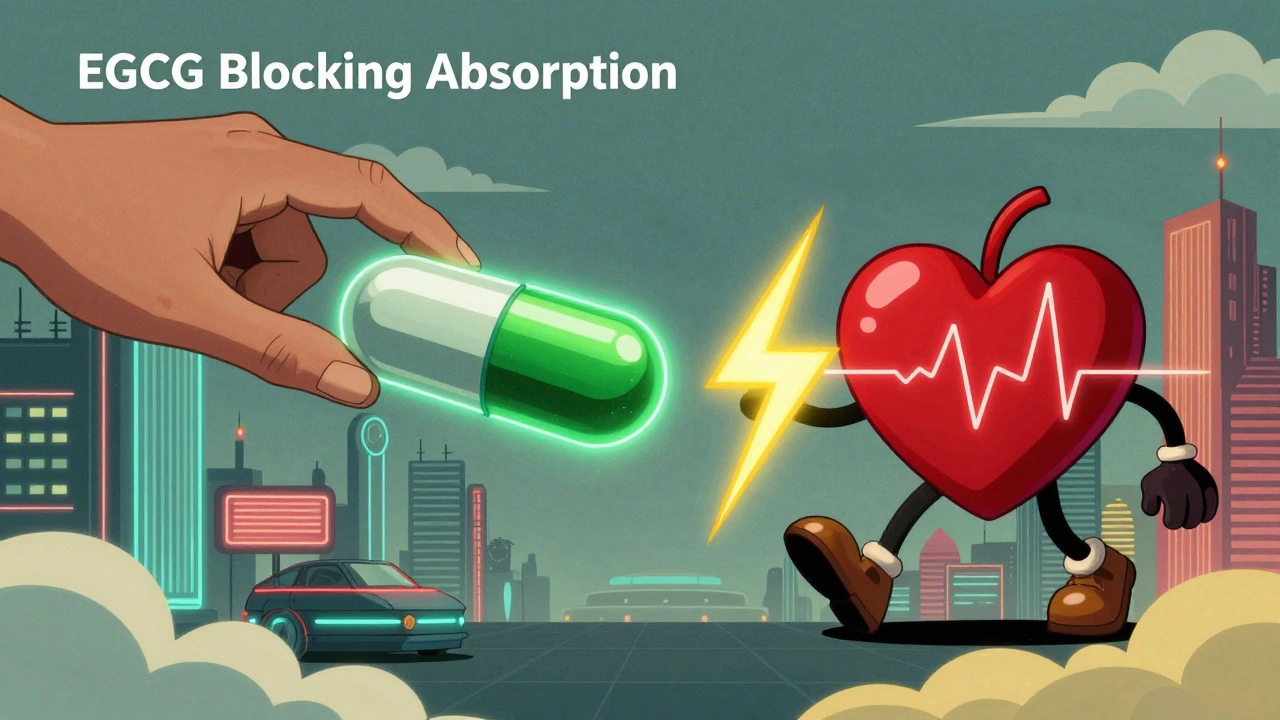
Here’s the problem: EGCG blocks the body’s ability to absorb certain drugs. It interferes with proteins in your gut called transporters-P-glycoprotein and OATPs-that help move medications into your bloodstream. Meanwhile, the caffeine acts like a stimulant, amplifying effects of drugs that already speed up your heart or nervous system. Together, they create a double-edged risk: some drugs don’t work as well, while others become dangerously strong.
Drugs That Don’t Work as Well With Green Tea Extract
Some medications rely on precise absorption to stay effective. Green tea extract can cut their levels in your blood by a third or more. This isn’t a minor drop-it can mean treatment failure.
- Nadolol (Corgard): A beta-blocker for high blood pressure and heart rhythm. Green tea extract reduces its absorption by 83%, according to a 2010 clinical study. Patients reported dizziness and racing heart because their dose wasn’t working.
- Atorvastatin (Lipitor) and Rosuvastatin (Crestor): These cholesterol-lowering drugs saw absorption drop by 30-40% when taken with green tea extract. That means your LDL stays high, even if you’re taking your pill daily.
- Imatinib (Gleevec): Used for leukemia and other cancers. Green tea extract cuts its blood levels by 30-40%. In one trial, patients who took both had higher relapse rates.
- Lisinopril: An ACE inhibitor for blood pressure and heart failure. One study showed a 25% drop in absorption when taken with green tea.
- Bortezomib (Velcade): A chemotherapy drug for multiple myeloma. EGCG binds directly to the drug, making it 50% less effective. Cancer centers like MD Anderson now warn patients to stop green tea supplements entirely during treatment.
These aren’t rare cases. In a 2022 review, Cleveland Clinic found that 18% of unexplained changes in blood test results among patients on these drugs were linked to green tea extract use. Many patients didn’t even realize they were taking it-thinking "green tea" meant just the beverage.
Drugs That Become Too Strong
Some medications get dangerously potent when mixed with green tea extract. The caffeine and EGCG can slow down how quickly your liver breaks them down, causing toxic buildup.
- 5-Fluorouracil: A chemotherapy drug. Green tea extract can raise its blood levels by 35-40%, increasing the risk of severe mouth sores, low blood counts, and even life-threatening infections.
- Beta-agonists (albuterol, salbutamol): Used for asthma. Green tea’s caffeine can push heart rate up by 20-30 beats per minute when combined with these inhalers. One case study described a patient with asthma going into cardiac arrhythmia after taking both.
- Pentobarbital (Nembutal): A sedative. Green tea extract reduced its calming effect by up to 40%, leading to poor sleep and increased anxiety in patients.
- Stimulant ADHD meds (Adderall, Ritalin): A common Reddit thread from October 2023 had over 140 users reporting heart palpitations, jitteriness, and high blood pressure after combining green tea extract with their ADHD medication.
Why Supplements Are Riskier Than Tea
Drinking two cups of green tea a day? That’s generally safe for most people. But supplements? That’s where things get dangerous.
Brewed tea has about 50-100 mg of EGCG per 8-ounce cup. A single green tea extract capsule? 250-800 mg. That’s not just stronger-it’s pharmacologically active in a way your body isn’t used to.
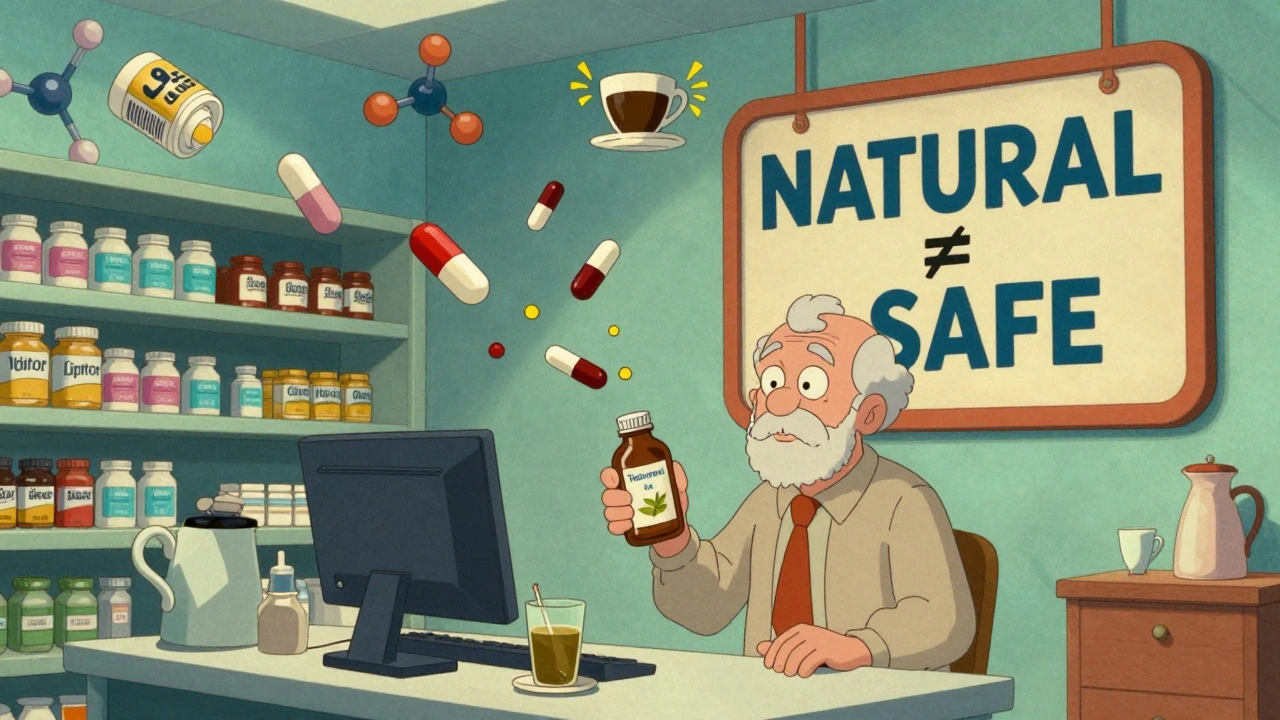
And here’s the kicker: most supplement labels don’t warn you. A 2021 FDA survey found only 12% of green tea extract products mention drug interactions, even though the agency says they should. Many people assume "natural" means "safe," and never think to ask their doctor.
What You Should Do
If you’re taking any prescription medication, here’s what you need to do right now:
- Check your supplement bottle. Look for "green tea extract," "EGCG," or "camellia sinensis." If it’s there, stop taking it until you talk to your doctor.
- Don’t assume your doctor knows. Most don’t ask about supplements unless you bring it up. Write down everything you take-even "natural" ones.
- If you must take green tea extract, wait at least 4 hours after your medication. Studies show this cuts interaction risk by 60%. But even that’s not foolproof.
- Avoid it entirely if you’re on bortezomib, warfarin, or chemotherapy. The risks here aren’t worth it. The National Comprehensive Cancer Network says to stop completely.
- Switch to brewed tea if you want the benefits. Two cups a day is unlikely to cause problems for most people on standard meds.
Who’s Most at Risk?
Not everyone needs to panic. But if you fall into any of these groups, you’re in a higher-risk category:
- You take more than three prescription medications daily
- You’re over 65 (polypharmacy is common, and liver function slows with age)
- You have cancer, heart disease, or are on blood thinners
- You’re taking ADHD, asthma, or psychiatric medications
- You buy supplements online or from a health food store without checking the label
A 2022 American Heart Association study found that 22% of heart failure patients were taking green tea extract-without telling their cardiologist. That’s a dangerous gap.
The Bigger Picture
The green tea extract market is booming-over $2 billion globally in 2022-and growing fast. But regulation hasn’t kept up. Under U.S. law (DSHEA), supplement makers don’t need to prove safety before selling. The FDA only steps in after people get hurt.
In 2022, the FDA issued 17 warning letters to green tea supplement brands for failing to warn about drug interactions. By early 2023, only 29% of those companies had fixed their labels.
Meanwhile, Europe updated its herbal interaction database in January 2023 to include new risks with dabigatran (Pradaxa), a blood thinner. The science is evolving. So should your caution.
The bottom line: Green tea extract isn’t harmless. It’s a powerful biochemical agent. And like any powerful substance, it can interfere with other drugs in ways that are hard to predict-unless you know what to look for.
Can I still drink green tea if I’m on medication?
Yes, drinking 1-2 cups of brewed green tea per day is generally safe for most people on medication. The EGCG and caffeine levels are low enough that they rarely cause problems. But if you’re on bortezomib, warfarin, or chemotherapy, even brewed tea should be discussed with your doctor. Avoid drinking it right before or after taking pills-wait at least 2 hours.
Is green tea extract better than drinking tea for health?
Not necessarily. Most of the benefits linked to green tea-like improved heart health and antioxidant support-come from drinking it regularly over time. High-dose extracts haven’t proven to be more effective in long-term studies. In fact, they carry higher risks of liver damage and drug interactions. The "more is better" mindset doesn’t apply here.
What should I tell my pharmacist about green tea extract?
Tell them you’re taking green tea extract supplements, how much you take daily, and what time of day you take it. Pharmacists can check for interactions with all your prescriptions using tools like Natural Medicines Comprehensive Database. Many will flag the risk before you even leave the pharmacy.
Are there any supplements that are safer alternatives?
If you want antioxidant support without the interaction risk, consider vitamin C, vitamin E, or curcumin (turmeric extract)-but only after checking with your doctor. Even "safe" supplements can interact. The safest approach is to get antioxidants from whole foods: berries, spinach, nuts, and dark chocolate.
How do I know if green tea extract is affecting my meds?
Watch for sudden changes: your blood pressure or cholesterol levels rising despite taking your pills, unexplained heart palpitations, increased anxiety, or feeling like your medication isn’t working like it used to. If you started green tea extract around the same time as these changes, that’s a red flag. Talk to your doctor and get blood tests done to check drug levels.
Wesley Phillips
December 8, 2025 AT 09:24So let me get this straight - you’re telling me my ‘natural health hack’ is basically a silent drug saboteur? 🤯 I’ve been popping these capsules like they were gummy vitamins. Guess I’m officially a walking clinical trial.
Ryan Sullivan
December 9, 2025 AT 12:24The pharmacokinetic interference of EGCG with P-gp and OATP transporters is well-documented in peer-reviewed literature - particularly in the Journal of Clinical Pharmacology, 2015. The 83% reduction in nadolol bioavailability isn’t anecdotal; it’s statistically significant (p < 0.001). If you’re on beta-blockers and consuming concentrated green tea extract, you’re not just risking subtherapeutic dosing - you’re courting arrhythmia. This isn’t wellness culture. This is pharmacology.
Sam Mathew Cheriyan
December 10, 2025 AT 08:21lol imagine trusting a big pharma blog over your own body. Green tea has been around for 4000 years. They just want you scared so you buy their overpriced meds. Also, the FDA is corrupt. They banned turmeric last year. Trust no one.
Oliver Damon
December 10, 2025 AT 16:18There’s a real gap here between scientific evidence and public awareness. The data is clear - EGCG alters drug metabolism via CYP450 inhibition and transporter modulation. But patients aren’t being screened. Pharmacists aren’t asking. And supplement labels? Barely legible. We need mandatory interaction warnings on every bottle, not just when someone ends up in the ER. This is a systemic failure, not an individual mistake.
Nicholas Heer
December 10, 2025 AT 18:59they dont want you to know this. the tea industry is owned by the same people who make your blood pressure pills. why do you think they let these supplements fly under the radar? its all about control. the chinese have known about this for centuries - thats why they never drink it with medicine. they brew it weak and only after meals. the west? dumb as bricks.
Desmond Khoo
December 11, 2025 AT 07:50Bro I just stopped my green tea extract after reading this. 😅 switched to brewed tea and now I feel way calmer. No more heart racing at 3am. Also, I told my mom to ditch hers - she’s on Lipitor and didn’t even know she was taking it. Thanks for the wake-up call 🙏
Ted Rosenwasser
December 12, 2025 AT 03:26Let’s be real - if you’re taking bortezomib or warfarin and still using green tea extract, you’re not ‘health-conscious.’ You’re a walking biohazard. The fact that this isn’t on every supplement label like ‘DANGER: MAY CAUSE DEATH’ is a regulatory failure of epic proportions. This isn’t about ‘natural’ vs ‘synthetic.’ It’s about dose, context, and ignorance. And ignorance kills.
Kyle Oksten
December 12, 2025 AT 17:29There’s a deeper issue here: we treat supplements like food, but they’re pharmacologically active compounds. We don’t prescribe aspirin without knowing what else you’re taking - so why do we treat EGCG any differently? The problem isn’t green tea. It’s the cultural delusion that ‘natural’ = safe. That mindset is what gets people hospitalized. Respect the chemistry. Ask your doctor. Don’t assume. This isn’t fearmongering - it’s basic pharmacology.