
Global Biosimilar Markets: Europe vs United States - How Regulatory Paths Shape Adoption and Cost Savings
 Jan, 1 2026
When you hear the word biosimilar, you might think it’s just another generic drug. But that’s not true. Biosimilars aren’t copies like the pills you pick up for high blood pressure or cholesterol. They’re complex, living medicines made from living cells - think of them as identical twins to expensive biologic drugs, not carbon copies. And how they’re approved, priced, and used in Europe versus the United States tells a story of two very different healthcare systems, each learning from the other.
Europe Was First - And It Stayed Ahead
Europe didn’t just get into biosimilars early - it built the playbook. The European Medicines Agency (EMA) approved the world’s first biosimilar, Omnitrope (a version of human growth hormone), in 2006. That was nearly a decade before the U.S. saw its first, Zarxio, in 2015. Why does that matter? Because by the time the U.S. started, Europe had already trained doctors, convinced payers, and gotten patients comfortable with these drugs.
By 2024, Europe’s biosimilar market hit $13.16 billion in revenue, according to Precedence Research. Germany, France, and the UK led the charge. Hospitals there use bulk purchasing - called tenders - to pick the cheapest option. If a biosimilar is 25% cheaper and just as safe, it wins. That’s not just policy; it’s culture. Doctors trust biosimilars because they’ve used them for years. Patients don’t blink when their rheumatoid arthritis treatment switches from Humira to a biosimilar. In some countries, biosimilars now hold over 80% of the market for certain autoimmune drugs.
The EMA didn’t need 10 clinical trials to approve each one. They used a “totality of evidence” approach: deep lab analysis, animal studies, and a few targeted human trials. If the data showed no meaningful difference in safety or effectiveness, the drug got the green light. It was efficient. It worked. And it created a pipeline. Over 100 biosimilars have been approved in Europe since 2006.
The U.S. Started Late - And Got Stuck
The U.S. passed the Biologics Price Competition and Innovation Act (BPCIA) in 2009, giving the FDA the power to approve biosimilars. But nothing happened for years. Why? Because the system was rigged.
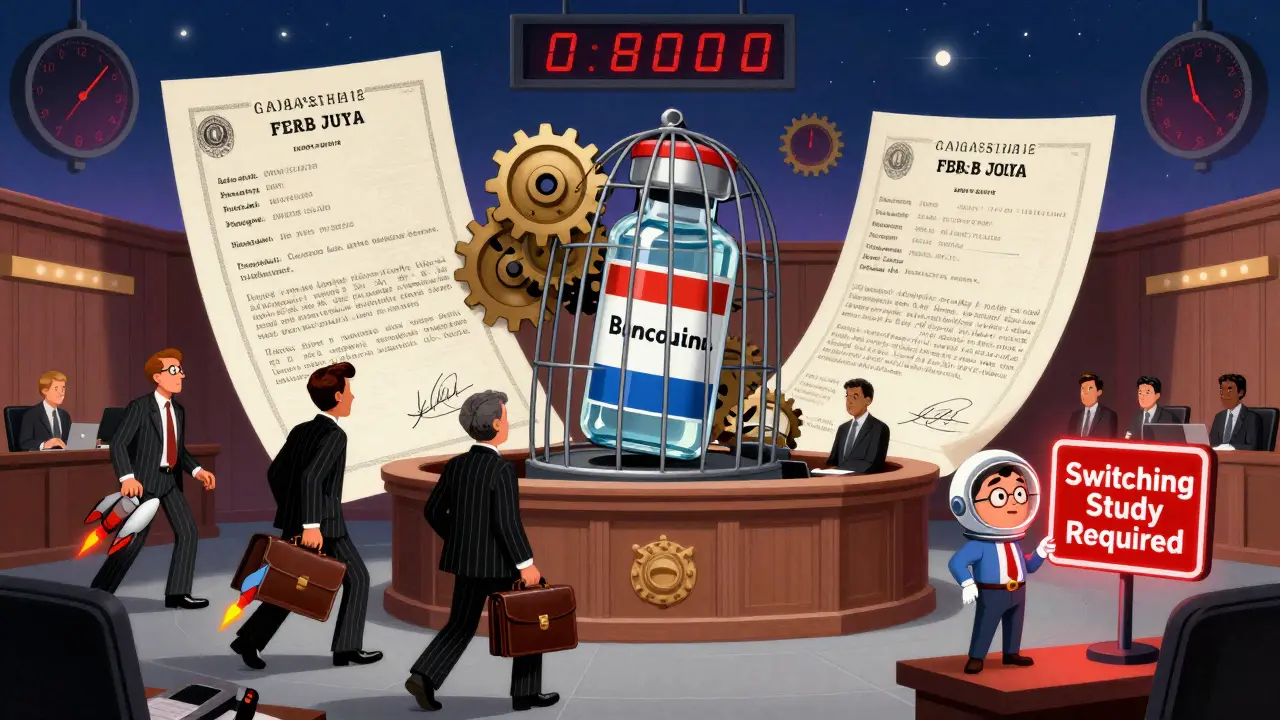
Big pharma companies held onto patents like treasure. They filed dozens of overlapping patents - what experts call “patent thickets” - just to delay competition. When a biosimilar maker tried to enter the market, they were sued. Legal battles dragged on for years. Even when the FDA approved a biosimilar, it couldn’t be sold because of court injunctions.
And then there was interchangeability. The FDA required biosimilars to prove they could be switched back and forth with the original drug without risk - a requirement called a “switching study.” But no one had ever done one. It was a catch-22. No one wanted to pay for the study unless they knew it would sell. No one would buy it unless it was interchangeable. So, for years, only a handful of biosimilars made it to market.
By 2024, the U.S. had approved only about 20 biosimilars - compared to over 100 in Europe. And only six of those Humira biosimilars were even on the market, despite 14 being approved. The rest were stuck in legal limbo.
2024 Changed Everything in the U.S.
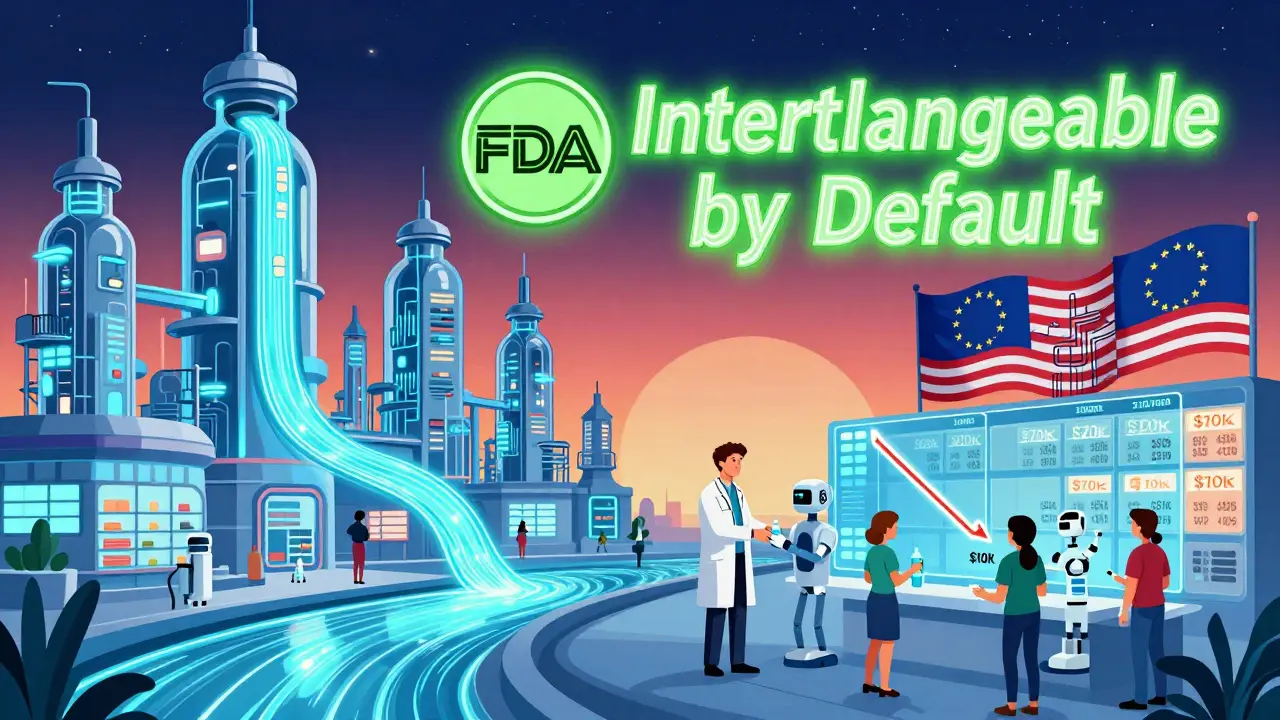
Then came June 2024. The FDA dropped the requirement for switching studies to get interchangeable status. That wasn’t a tweak - it was a revolution. Suddenly, biosimilar makers didn’t need to run expensive, time-consuming trials just to be considered equivalent. The rule change aligned the U.S. with Europe’s model: if a drug is biosimilar, it’s interchangeable by default unless proven otherwise.
It’s like removing a speed bump from a highway. In 2024, the U.S. biosimilar market hit $10.9 billion, up from $7.1 billion in 2020. Projections now show it could hit $30 billion by 2033. Why? Because the biggest biologics are finally coming off patent. Humira, which cost over $70,000 per patient annually, now has 14 biosimilars approved. More are coming for drugs like Enbrel, Remicade, and insulin.
The Inflation Reduction Act of 2022 also helped. It closed the Medicare Part D coverage gap - meaning seniors no longer hit a “donut hole” where they pay full price for drugs. That made biosimilars even more attractive to payers. Hospitals and insurers now have real financial reasons to switch.
Who’s Winning? Europe Still Leads - But the U.S. Is Catching Fast
Right now, Europe still has the bigger market. But the U.S. is growing faster. Europe’s market is projected to grow at 17.34% annually through 2034. The U.S. is expected to grow at 18.5%. That’s not a small difference - it means the U.S. could overtake Europe in total market size by 2027, according to Grand View Research.
Europe’s strength? Experience. It has a mature supply chain. Germany alone is a biosimilar manufacturing hub, with companies like Sandoz and Fresenius Kabi producing drugs for the whole continent. The regulatory system is clear: EMA approves, then each country sets price and reimbursement. It’s decentralized, but predictable.
The U.S. advantage? Scale. The U.S. spends more on biologics than any other country. When Humira’s patent expired, the potential savings were $20 billion a year. That’s a massive incentive for manufacturers and payers. The U.S. also has more private insurers and pharmacy benefit managers (PBMs) who are now pushing for biosimilars because they cut costs.
Therapeutic areas differ too. Europe leads in autoimmune diseases - drugs for arthritis, Crohn’s, psoriasis. The U.S. started with supportive care: drugs like filgrastim that help cancer patients recover from chemo. But now, the U.S. is moving into the same complex areas as Europe. Oncology and immunology are the new frontiers.
Manufacturing and Innovation Are Global
Don’t think of biosimilars as just European or American. The supply chain is global. Sandoz (Swiss, owned by Novartis) and Amgen (U.S.) make biosimilars sold in both markets. Samsung Bioepis (South Korea) has plants in the U.S. and Europe. Pfizer and Merck are now major players in the U.S. market.
Manufacturing these drugs is hard. They’re made from living cells - not chemicals. A tiny change in temperature, pH, or cell line can alter the final product. That’s why biosimilars cost more to make than generics. But as technology improves, costs are falling. Companies are building new facilities in the U.S. and Europe to meet demand.
What’s Next? More Biosimilars, Lower Prices, Better Access
The next wave of biosimilars will target the most expensive biologics: insulin, monoclonal antibodies for cancer, and treatments for rare diseases. The global biosimilars market is expected to hit over $175 billion by 2034. That’s a lot of money saved for patients, hospitals, and governments.
Europe’s lesson? Start early, be clear, and trust the science. The U.S. is learning it now. The FDA’s 2024 rule change proves it. Doctors are getting better at explaining biosimilars to patients. Pharmacists are stocking them. Insurers are covering them.
It’s not about one region beating the other. It’s about two systems evolving. Europe showed the world it’s possible. The U.S. is proving it can scale. Together, they’re driving down the cost of life-saving drugs - not by cutting corners, but by cutting out the middleman: unnecessary patents, legal delays, and outdated regulations.
Biosimilars aren’t the future. They’re the present. And whether you’re in London, Berlin, New York, or Chicago, you’ll be using them - and saving money - before you know it.
Dusty Weeks
January 2, 2026 AT 09:14Sally Denham-Vaughan
January 2, 2026 AT 14:40Richard Thomas
January 2, 2026 AT 14:53Liam George
January 3, 2026 AT 01:00Matthew Hekmatniaz
January 3, 2026 AT 08:27Austin Mac-Anabraba
January 4, 2026 AT 02:05Paul Ong
January 5, 2026 AT 21:13Bryan Anderson
January 7, 2026 AT 16:29LIZETH DE PACHECO
January 8, 2026 AT 22:33Todd Nickel
January 10, 2026 AT 01:35Andy Heinlein
January 10, 2026 AT 13:59Ann Romine
January 10, 2026 AT 19:48sharad vyas
January 11, 2026 AT 23:13Bill Medley
January 13, 2026 AT 18:15