
Generic Drug Prices in the US vs Europe: Why Americans Pay Less for Off-Patent Medications
 Dec, 9 2025
Most people assume the United States pays the most for everything medical - and they’re right about brand-name drugs. But when it comes to generic drug prices, the story flips. Americans often pay less for the same generic pills than people in Germany, France, or the UK. How is that possible? And why does it happen?
US Generic Drugs Are Cheaper - Here’s Why
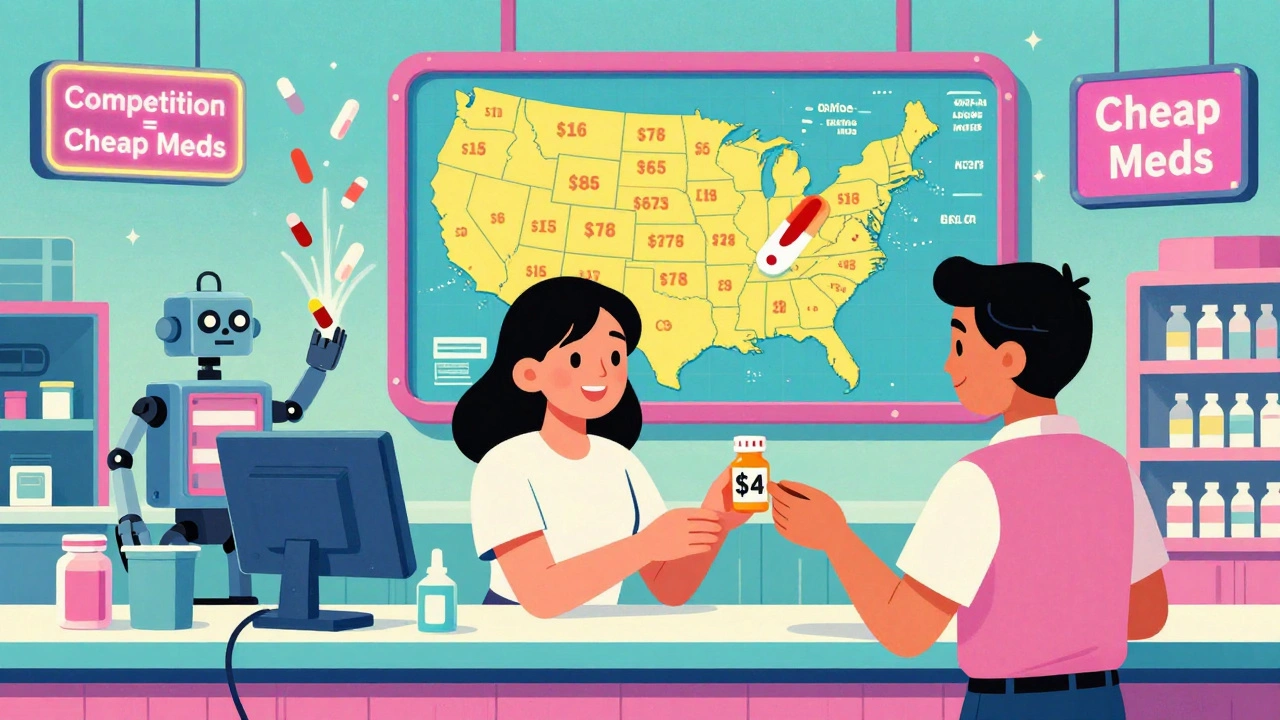
In the US, 90% of all prescriptions filled are for generic drugs. That’s not just common - it’s the norm. And because there are so many of them, competition is fierce. Dozens of companies make the same generic version of a drug like lisinopril, metformin, or atorvastatin. They fight for market share by undercutting each other’s prices. Some even sell at a loss just to get volume. That’s why you can walk into Walmart or CVS and pay $4 for a 30-day supply of a generic blood pressure pill.
It’s not magic. It’s market dynamics. Pharmacy Benefit Managers (PBMs), which negotiate drug prices for insurers, push for the lowest possible cost. They don’t care if the manufacturer makes a tiny profit - they want the cheapest option. And with hundreds of generic makers competing, the price keeps dropping. In 2022, the US Department of Health and Human Services found that Americans paid, on average, 33% less for generics than people in 33 other OECD countries.
Europe’s System Is Built to Keep Prices Higher
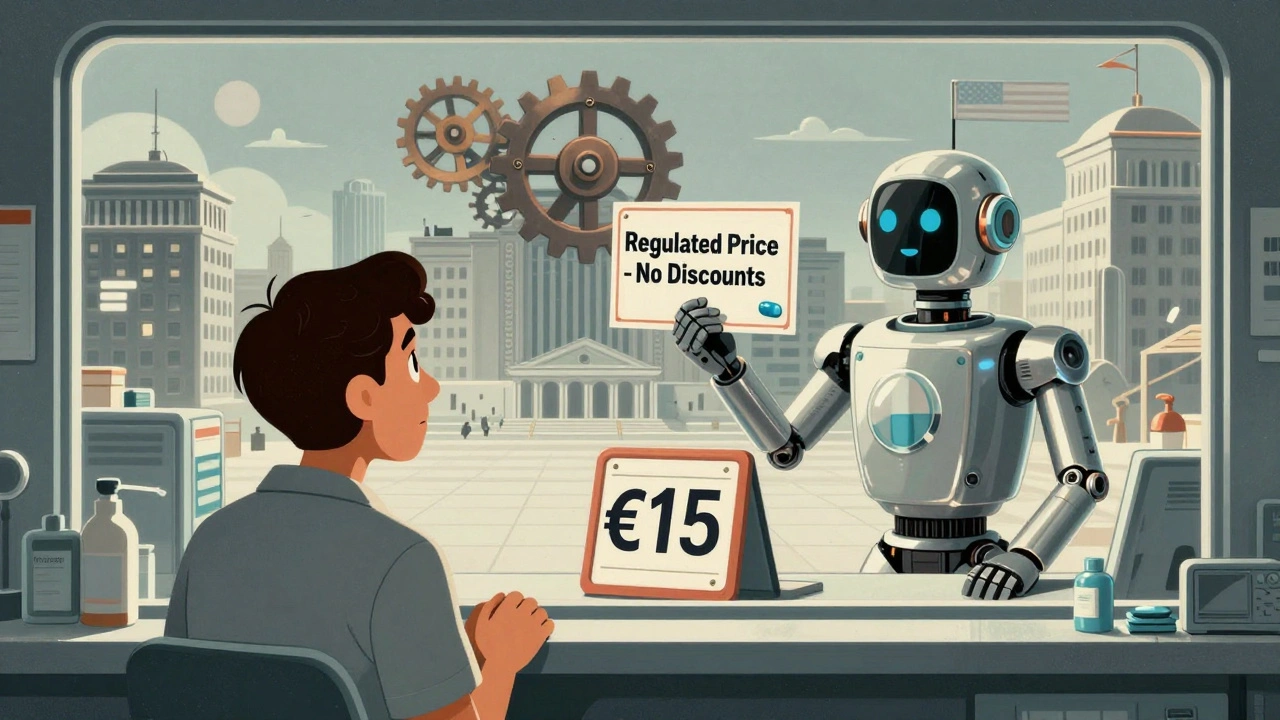
European countries don’t have the same pressure to drive prices down. Only about 41% of prescriptions in Europe are for unbranded generics. Why? Because the system doesn’t encourage it. Many European governments set prices through centralized negotiations. A single agency - like Germany’s G-BA or France’s HAS - decides what a drug should cost based on its perceived value, not how many companies make it.
These agencies often use “reference pricing.” That means they look at what other countries pay and set their own price close to the lowest. But here’s the catch: they don’t always include the discounts and rebates that happen behind the scenes. In the US, PBMs get 35-40% off list prices from brand-name makers, but those rebates aren’t passed to consumers. In Europe, the system is simpler - the price you see is usually the price you pay. And since there’s less competition among generic manufacturers, there’s no race to the bottom.
Some European countries even restrict pharmacist substitution. In France, a pharmacist can’t swap a brand-name drug for a generic unless the doctor says it’s okay. In Germany, substitution is allowed - but many patients still get the brand because it’s what they’re used to. Less substitution means less pressure on generic makers to slash prices.
Why the US Pays More for Brand-Name Drugs
While generics are cheaper in the US, brand-name drugs are dramatically more expensive. For example, Medicare negotiated a price of $204 for the generic version of Jardiance. In other countries, the same drug costs around $52. For Stelara, a biologic used for autoimmune conditions, Medicare paid $4,490 - 60% more than the international average.
This isn’t an accident. The US doesn’t regulate brand-name drug prices. Companies set their own prices, and insurers, PBMs, and patients pay whatever they’re told. That’s why the US spends 4.2 times more on non-generic drugs than most other developed nations, according to a 2024 RAND study.
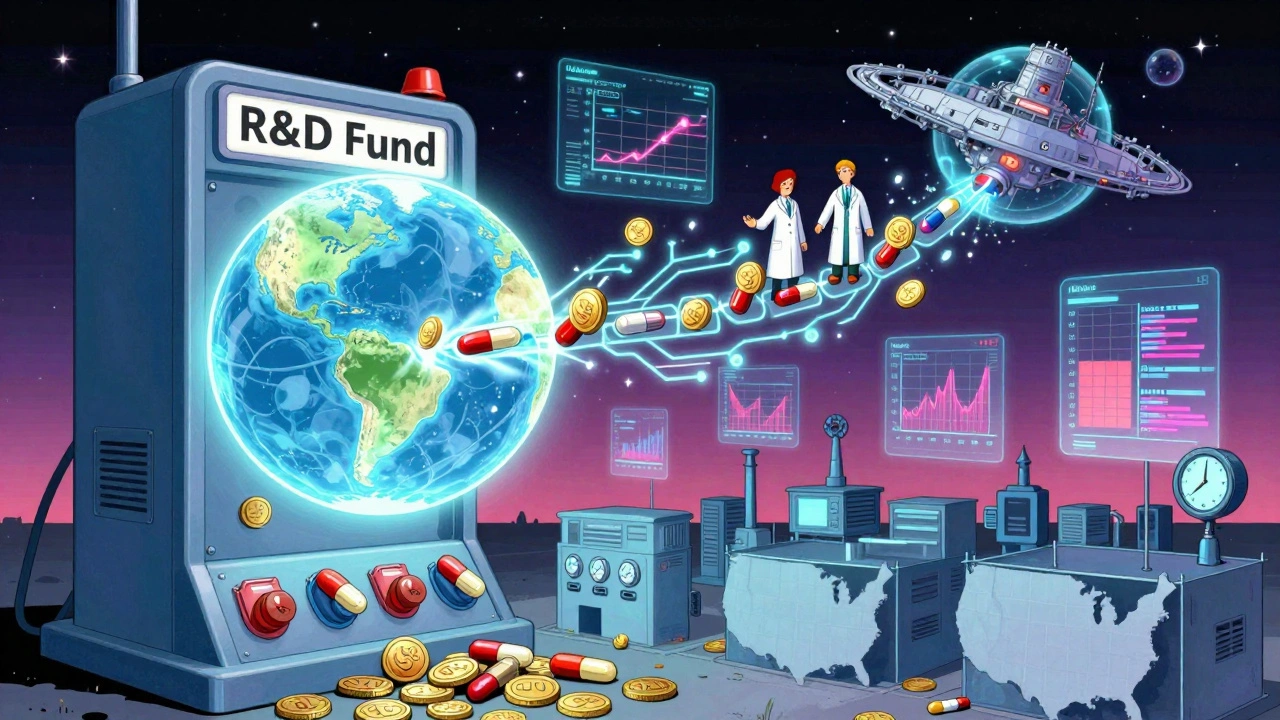
But here’s the twist: that high spending funds global innovation. About two-thirds of all new drug research is paid for by US consumers. When a company develops a new cancer drug, it needs to recoup billions in R&D costs. In Europe, governments negotiate prices so low that companies can’t recover those costs. So the US ends up subsidizing the rest of the world.
What Happens When Generic Prices Go Too Low?
There’s a dark side to ultra-low generic prices. When a drug’s price drops below the cost of manufacturing, companies stop making it. That’s happened with antibiotics, thyroid meds, and even some heart medications. In 2023, a shortage of generic doxycycline hit the US hard - prices jumped 1,000% overnight because only one company was left making it.
Dana Goldman, a health economist at USC, put it simply: “Prices go too low, all the suppliers exit the market, and then someone got a monopoly and raised the prices.” That’s not a flaw in the system - it’s how it works. The US generic market is a high-volume, low-margin game. When margins vanish, companies leave. And when they leave, supply tightens. That’s why you sometimes hear about shortages of common generics - it’s not a glitch. It’s the system.
Patients Feel the Difference
Real people notice this gap. Americans traveling to Europe often report shock at how much more they’re asked to pay for the same generic pill. One Reddit user wrote: “I paid €15 for a month’s supply of generic lisinopril in Germany that costs me $4 at Walmart.”
On the flip side, European patients visiting the US are stunned by the cost of brand-name drugs. A 2024 survey by the European Patients’ Forum found that 78% of Europeans thought US drug prices for patented medicines were “unjustifiably high.”
For Americans on Medicare Part D, generic drugs often cost $0-$10 a month. In many European countries, patients pay fixed co-pays - say, €5 for any prescription, whether it’s a $3 generic or a $5,000 brand-name drug. So while Europeans don’t pay more for generics, they don’t get the same price breaks either.
Policy Changes Are Starting to Shift the Balance
The Inflation Reduction Act gave Medicare the power to negotiate prices for 10 high-cost brand-name drugs. In 2024, Medicare’s negotiated prices were still higher than in other countries - but lower than what they used to be. For example, the price of Jardiance dropped from $1,200 to $204. That’s a 83% cut. That’s huge.
But this only affects a small slice of drugs. And it doesn’t touch generics. So the US generic advantage stays intact. Meanwhile, the European Commission is watching closely. If US brand-name prices keep falling, will European countries feel pressure to raise their own prices to keep companies investing in innovation?
Some experts warn that if the US adopts “most favored nation” pricing - meaning it pays the lowest price any country pays - it could force drugmakers to raise prices elsewhere to make up the loss. That could mean higher generic prices in Europe down the line.
What This Means for You
If you’re in the US, you’re benefiting from a system that’s brutal, competitive, and surprisingly effective for generics. You pay less for the pills you take every day. But you also pay more for the breakthrough drugs that come next.
If you’re in Europe, you pay more for generics but less for brand-name drugs. Your system is designed to be fairer, but it doesn’t reward innovation the same way. And if US prices keep falling, your costs might rise.
There’s no perfect system. The US model drives down generic prices through chaos and competition. The European model keeps prices stable through control and negotiation. One keeps innovation alive. The other keeps out-of-pocket costs predictable.
For now, if you need a generic pill, the US still wins on price. But that could change - especially if policy shifts force manufacturers to balance global pricing for the first time.
Andrea DeWinter
December 11, 2025 AT 02:27Been taking generic metformin for 8 years and never paid more than $5 at Walmart. I know people in Germany who pay 20 euros for the same thing. It’s wild how the US system just crushes prices through sheer competition. No magic, just supply and demand working like it should.
Steve Sullivan
December 13, 2025 AT 01:17bro the us is basically a drug price warzone and we win the generic round 😎💸 but then we get wrecked on brand names like we're paying for the moon. honestly i think we're funding the whole world's pharma R&D while getting our blood pressure pills for free. it's insane but kinda genius?? 🤯
precious amzy
December 14, 2025 AT 05:51One must interrogate the underlying epistemological assumptions of market-driven pharmaceutical pricing. The very notion that 'competition' produces 'better' outcomes is a neoliberal myth, predicated upon the false dichotomy of efficiency versus equity. The US system does not 'win'-it externalizes cost onto vulnerable populations through supply chain fragility, as evidenced by the doxycycline shortages. One cannot celebrate commodification as virtue when human health is reduced to a fungible commodity.
Tejas Bubane
December 15, 2025 AT 22:43US generics cheap? yeah right. try getting a 30 day supply of levothyroxine without a prescription in india. we pay 10 rupees for it. you think walmart's $4 is cheap? try 50 cents. the whole system is rigged for profit, not people. america thinks it's smart but it's just delusional.
Ajit Kumar Singh
December 17, 2025 AT 20:59India makes 70% of the world's generic drugs and we sell them to the US for pennies. Why? Because the US buys in bulk and pays fast. Europe? They haggle for years. We make less profit per pill but sell 100x more. So yes, Americans get cheap pills because we're flooding the market. But when the US starts controlling prices? We'll stop exporting. And then where will you go? 🤔
Maria Elisha
December 19, 2025 AT 14:08i just checked my CVS receipt. $4 for lisinopril. i live in a rural town. no insurance. this is literally the only reason i don't hate america. but yeah, the brand name stuff? total scam. like why is my insulin $1000 if the generic is $4? someone's making bank.
Angela R. Cartes
December 20, 2025 AT 21:33It’s fascinating how the US manages to be both the most capitalist and the most hypocritical nation on earth. We celebrate low generic prices as proof of free-market superiority… while simultaneously paying 10x more for life-saving brand drugs than any other country. It’s not a system-it’s a paradox wrapped in a corporate lobbying scheme. 🤡
Andrea Beilstein
December 22, 2025 AT 00:25The real story isn’t about price-it’s about access. In the US, you get cheap generics because the system is designed for volume, not sustainability. In Europe, you get stable pricing because they value predictability over volatility. But what about the people who can’t afford even $4? Or the ones who need a drug that’s been discontinued because margins vanished? We’re not comparing systems-we’re comparing collateral damage.
Lisa Whitesel
December 22, 2025 AT 16:48People act like cheap generics are a win. They’re not. They’re a warning. When you drive prices to zero, you don’t get savings-you get shortages. You get monopolies. You get patients who can’t get their meds because the last factory shut down. This isn’t capitalism. It’s a slow-motion collapse disguised as a bargain.
Larry Lieberman
December 23, 2025 AT 23:21Wait so if the US pays less for generics but more for brands… does that mean we’re indirectly subsidizing global innovation? Like… we’re the drug R&D ATM? 😵💫 so if we start capping brand prices… do generics get more expensive? Do we all just end up paying the same everywhere? This feels like a game of Jenga and I’m holding the bottom block.