
Fluoroquinolones and NSAIDs: What You Need to Know About Tendon Rupture Risk
 Jan, 27 2026
Tendon Rupture Risk Calculator
Assess Your Risk
This tool estimates your risk of tendon rupture based on key factors from medical research.
Based on your selections, your risk appears to be low. However, always monitor for tendon pain and seek medical attention if you experience any new pain or swelling in your tendons.
When you take an antibiotic like ciprofloxacin or levofloxacin for a stubborn infection, you probably don’t think about your tendons. But for some people, these common drugs can cause serious, sometimes permanent damage - especially when combined with other medications. The biggest red flag? Fluoroquinolones and tendon rupture.
Fluoroquinolones Aren’t All the Same
Not every fluoroquinolone carries the same risk. The class includes drugs like ciprofloxacin, levofloxacin, moxifloxacin, and ofloxacin. But research shows their danger levels vary widely. A 2022 Japanese study in BMJ Open found that third-generation fluoroquinolones like moxifloxacin showed no increased risk of Achilles tendon rupture. Meanwhile, levofloxacin was linked to a 120% higher risk of Achilles rupture and a 16% higher risk of rotator cuff tears. Ciprofloxacin? In multiple studies, it didn’t show a significant spike in rupture rates.Why the difference? It’s not just about the drug name - it’s about chemistry and how each compound interacts with tendon tissue. Fluoroquinolones interfere with collagen production, trigger inflammation in tendon cells, and activate enzymes (MMP-2 and MMP-9) that break down the structural proteins holding tendons together. The Achilles tendon is hit hardest - 90% of cases involve it. And it can happen fast: half of all tendon problems show up within the first week, and 85% occur within the first month. Some people feel pain even before they finish their prescription.
NSAIDs Don’t Raise the Risk - But They Mask It
Here’s something you won’t find in most warning labels: NSAIDs like ibuprofen or naproxen don’t increase the chance of tendon rupture when taken with fluoroquinolones. That’s a myth. The real danger comes from corticosteroids - pills like prednisone or injections into joints. The FDA has a black-box warning against using steroids with fluoroquinolones because the combo can tear tendons apart.So why do people think NSAIDs are the problem? Because they’re often taken together. Someone gets a urinary tract infection, starts ciprofloxacin, and then takes ibuprofen for a headache or muscle ache. When their Achilles starts hurting, they pop another ibuprofen to numb the pain - and keep going. That’s the trap. NSAIDs don’t cause the damage, but they hide the warning signs. By the time the pain disappears, the tendon might already be on the verge of snapping.
Who’s Most at Risk?
Not everyone who takes a fluoroquinolone will suffer tendon damage. But certain groups are far more vulnerable:- People over 60 - their tendons naturally weaken with age, and the risk jumps 3.8 times higher.
- Those with kidney problems - fluoroquinolones build up in the body if kidneys can’t clear them.
- Organ transplant patients - often on steroids and antibiotics at the same time.
- Athletes or people who do heavy lifting - extra stress on tendons adds to the strain.
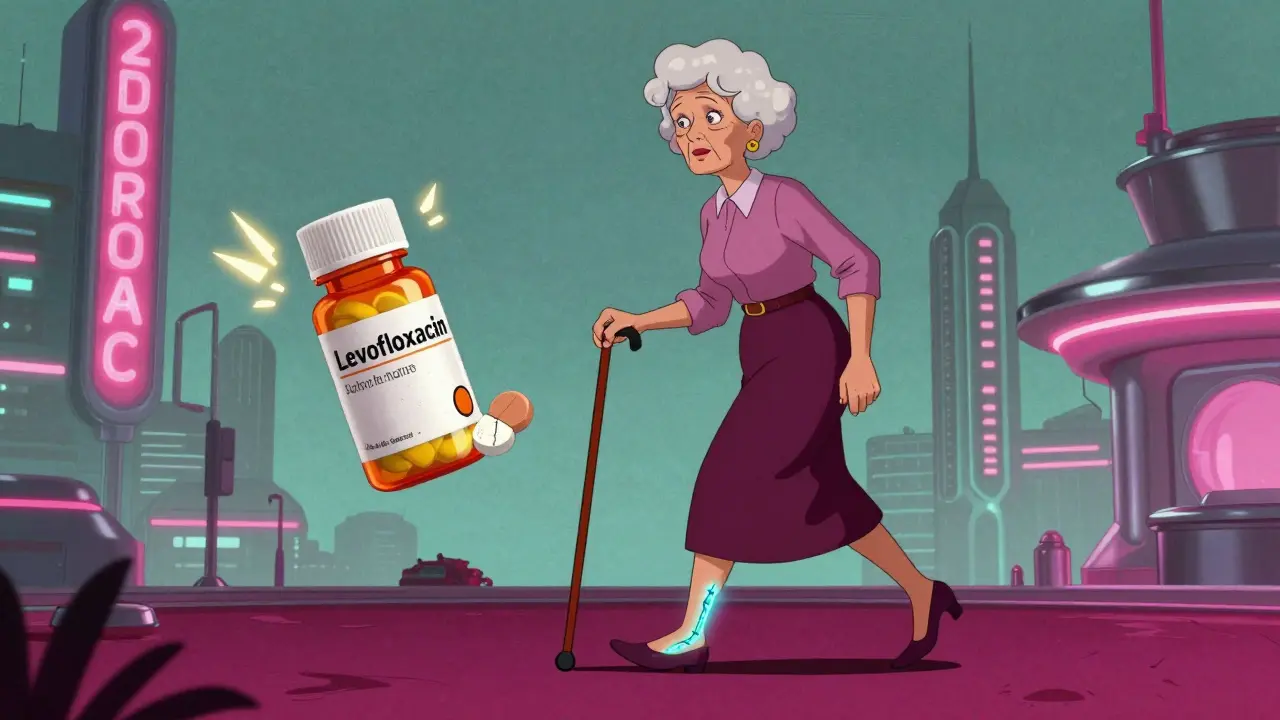
One study found that 50% of ruptures happened on both sides - meaning if one Achilles hurts, the other is likely in danger too. And it’s not just athletes. A 72-year-old woman on levofloxacin for a bladder infection reported heel pain on day three. She kept walking, took ibuprofen, and by day 11, she couldn’t stand on her toes. Surgery was needed. Recovery took nine months.

What to Do If You Feel Pain
If you’re on a fluoroquinolone and feel any new pain, stiffness, or swelling in your tendons - especially in your heels, shoulders, or wrists - stop the drug immediately. Don’t wait. Don’t try to “push through it.” Don’t rely on NSAIDs to make the pain go away. Call your doctor. Get the affected area immobilized. An ultrasound or MRI can check for early signs of tearing before it becomes a full rupture.Once symptoms appear, corticosteroids are a hard no. Even topical creams or joint injections can make things worse. Physical therapy can help later, but only after the tendon has stabilized. In severe cases, surgery is required. Recovery isn’t quick - it often takes six to twelve months, and many people never fully regain their previous strength or mobility.
Alternatives Exist - Ask for Them
Fluoroquinolones were once go-to drugs for urinary tract infections, sinus infections, and pneumonia. But today, guidelines from the FDA and the European Medicines Agency say they should only be used when no other option works. For uncomplicated UTIs, nitrofurantoin or fosfomycin are safer. For sinus infections, amoxicillin-clavulanate often does the job. For pneumonia, newer antibiotics like lefamulin are now available with far fewer side effects.Don’t assume your doctor knows the latest safety data. A 2021 survey found only 32% of patients recalled being warned about tendon risks when prescribed fluoroquinolones. If you’re over 60, have kidney issues, or are on any steroid, ask: “Is there a safer antibiotic I can take instead?”

The Bigger Picture
Despite the risks, fluoroquinolones aren’t going away. They’re still lifesavers for serious infections like anthrax or multidrug-resistant tuberculosis. But their use has dropped sharply since the FDA’s 2016 safety alert - prescriptions fell 21% in the U.S. between 2016 and 2019. The global market for these drugs is growing at just 1.3% per year, far slower than other antibiotics.Researchers are now working on next-generation versions designed to avoid tendon damage. Two candidates, JNJ-Q2 and modified delafloxacin compounds, are in early trials and show promise. Until then, the message is clear: fluoroquinolones are powerful, but they’re not harmless. And the idea that NSAIDs make them more dangerous? That’s a distraction. The real threat is ignoring early tendon pain - and not knowing which fluoroquinolone you’re taking.
What You Can Do Today
- Check your prescription bottle. If it says ciprofloxacin, levofloxacin, or ofloxacin, know the risks.
- If you’re over 60 or have kidney disease, ask your doctor if an alternative exists.
- Never ignore tendon pain - stop the antibiotic and call your provider.
- Don’t use NSAIDs to mask pain while staying on the drug - that’s how ruptures happen.
- Keep track of your symptoms. Write down when the pain started, where it is, and how bad it gets.
Fluoroquinolones saved lives. But they’ve also shattered tendons - sometimes permanently. The key isn’t avoiding them entirely. It’s using them wisely, knowing which ones are riskiest, and listening to your body before it’s too late.
James Dwyer
January 28, 2026 AT 19:01Been on cipro for a UTI last year and noticed my heel hurting on day 4. Thought it was just my shoes. Didn’t connect the dots until I read this. Stopped the med, saw a doc, and got lucky - no rupture. But I’ll never ignore tendon pain again. Thanks for laying this out so clearly.
jonathan soba
January 28, 2026 AT 22:55Let’s be real - the FDA’s black-box warning on steroids + fluoroquinolones has been around since 2008. The fact that people still conflate NSAIDs with increased rupture risk speaks to how poorly medical education is communicated. The real issue isn’t the drug interaction - it’s the lack of patient literacy. If you’re taking levofloxacin and have a pulse, you should be monitoring your tendons like a hawk. Period.
matthew martin
January 29, 2026 AT 00:16Man, this post hit different. I’m a 58-year-old weekend warrior who got prescribed levofloxacin for a sinus infection last winter. Day 5, my right Achilles felt like it was wrapped in concrete. Took ibuprofen, kept hiking. By day 9, I couldn’t toe-raise. MRI showed partial tear. Surgery avoided, but rehab took 8 months. I didn’t know moxifloxacin was safer - my doc just grabbed the cheapest script. I wish I’d asked. Now I carry a printed list of alternatives in my wallet. If you’re over 50 and on antibiotics? Don’t be shy. Ask for nitrofurantoin. Ask for fosfomycin. Ask for anything but levofloxacin unless it’s life-or-death. Your tendons will thank you.
Chris Urdilas
January 30, 2026 AT 02:01So let me get this straight - NSAIDs don’t cause tendon ruptures, but they’re the reason people don’t notice they’re happening? That’s like using duct tape to hold a broken window in place while the whole house collapses. Brilliant. I’m now convinced that modern medicine is just a game of hide-and-seek with side effects. And we’re all blindfolded.
Jeffrey Carroll
January 31, 2026 AT 01:15Thank you for compiling this information with such precision. The distinction between fluoroquinolone generations is critical and often overlooked in clinical practice. I would urge healthcare providers to incorporate this data into their prescribing algorithms, particularly for elderly and renally impaired patients. The evidence is robust, and the consequences of inaction are severe.
Phil Davis
January 31, 2026 AT 15:51Of course NSAIDs are the scapegoat. Because blaming a $2 bottle of ibuprofen is easier than admitting your $200 antibiotic might be wrecking someone’s mobility. Meanwhile, the real villain - corticosteroids - gets a free pass because it’s ‘standard of care.’ Classic medical misdirection.
Irebami Soyinka
February 1, 2026 AT 02:29Y’all in the West really think you’re the only ones with antibiotic problems? In Nigeria, we use cipro like candy - for coughs, fevers, even hangovers. No labs, no follow-up. Tendon ruptures? We call them ‘walking dead’ cases. And guess what? No one warns you. No FDA. No MRI. You just stop walking. This post? It’s a luxury. We need education - not just data.
Mel MJPS
February 2, 2026 AT 10:37I’m so glad someone finally said this. My mom was on cipro for a UTI and kept complaining about her shoulder. We thought it was arthritis. She didn’t stop the meds until she couldn’t lift her coffee cup. Turned out it was a partial rotator cuff tear. She’s fine now, but it took months. I’m sharing this with everyone I know who’s on antibiotics. You’re not being dramatic if your tendon hurts. You’re being smart.
Katie Mccreary
February 3, 2026 AT 19:26So… NSAIDs are the villain? Lmao. I’ve been taking ibuprofen with cipro for years. Nothing happened. Maybe you’re just weak.
Kevin Kennett
February 4, 2026 AT 02:05That comment from Katie? That’s exactly why people die from this. You think you’re immune because you haven’t broken a tendon yet? Congrats. You’re just lucky. Or you’re young. Or you haven’t been prescribed the right drug yet. This isn’t about toughness - it’s about biology. And if you’re over 60, your tendons aren’t 25 anymore. Stop being a dumbass and listen to the science. I’ve seen three people in my family get their Achilles snap from this combo. One needed a graft. Don’t be the next one.
Jess Bevis
February 4, 2026 AT 23:43Levofloxacin = Achilles killer. Cipro = low risk. Moxi = safe. Remember that. Share it. Save a tendon.
Rose Palmer
February 5, 2026 AT 11:38This is an exemplary summary of current clinical evidence regarding fluoroquinolone-associated tendonopathy. The distinction between drug classes, the role of concomitant corticosteroid use, and the imperative for early intervention are all critically addressed. I recommend this be distributed to all primary care providers and pharmacy staff as a clinical reference. Patient safety hinges on accurate, accessible information - and this post delivers it with clarity and authority.
Howard Esakov
February 6, 2026 AT 20:22Wow. I’m shocked - shocked! - that a layperson actually read the BMJ Open study and understood the difference between generation-specific fluoroquinolones. Most people think ‘antibiotic’ = ‘magic bullet.’ But you? You’re one of the 3% who read the footnotes. Kudos. Now go tell your doctor to stop prescribing levofloxacin like it’s Advil. 🤓