
FDA Safety Alerts: How Generic Drug Warnings Work and What to Watch For
 May, 10 2026
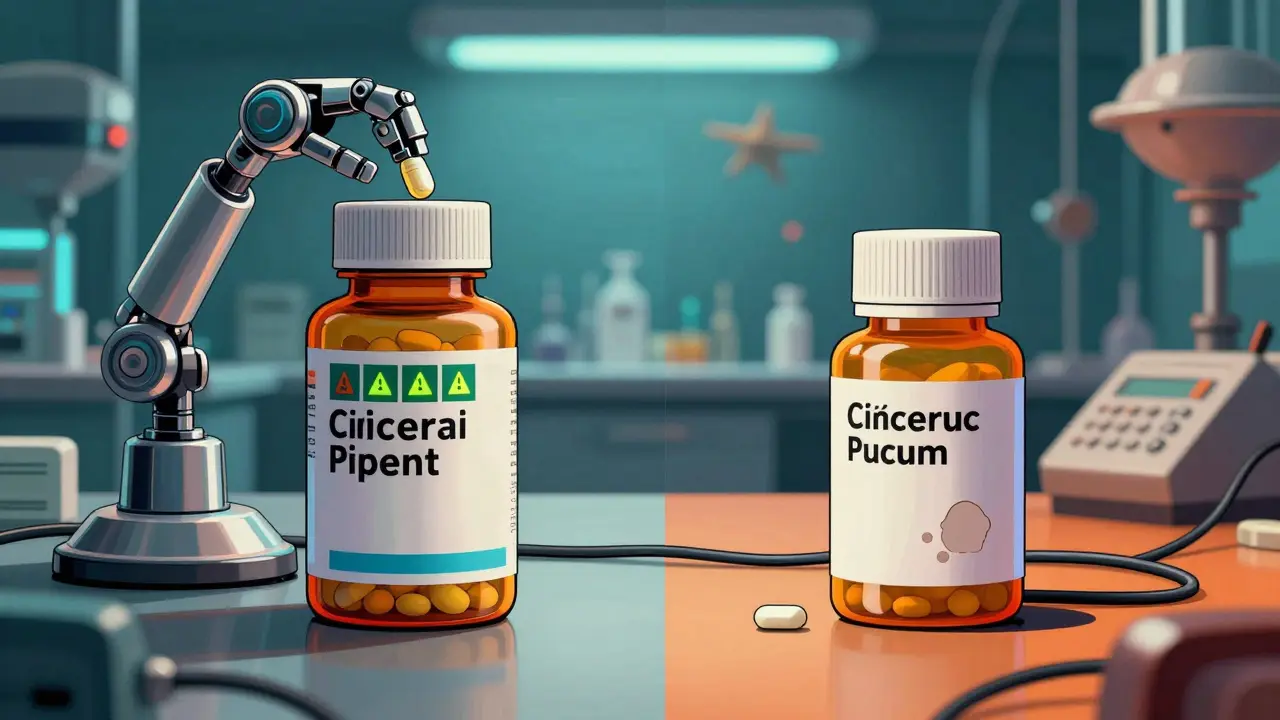
FDA safety alerts are the primary way patients and doctors learn about new risks with medications. But when it comes to generic drugs, the system works differently than you might expect. If you take a generic version of a prescription, you may wonder if the safety warnings on your bottle are as up-to-date as those on the brand-name version. The short answer is complicated. While generic drugs must be therapeutically equivalent to their brand-name counterparts, the rules governing how safety information is updated create a unique gap in patient communication.
The Core Problem: Who Updates the Label?
When a new risk is discovered for a medication, someone has to update the warning label so that doctors and patients know about it. For brand-name drugs, this process is relatively straightforward. Manufacturers can use what’s known as the Changes-Being-Effected (CBE) supplement process. This allows them to add new safety warnings to their labels without waiting for prior approval from the U.S. Food and Drug Administration (FDA). They just have to notify the FDA within 30 days. Generic drug manufacturers, however, operate under different rules established by the Hatch-Waxman Act of 1984. Under this law, generic makers are required to copy the labeling of the reference listed drug (the original brand-name product) almost exactly. Historically, they could not independently update safety warnings. If a new side effect emerged, only the brand-name manufacturer could update the label using the CBE process. The generic companies then had to follow suit, but often after a delay. This creates a significant lag in safety communication for patients taking generics, which represent the vast majority of prescriptions filled in the United States today.How Generic Drugs Are Approved and Monitored
To understand why the labeling rules are so strict, you need to understand how generics are approved. The FDA’s Office of Generic Drugs, part of the Center for Drug Evaluation and Research (CDER), ensures that every generic drug meets rigorous standards. A generic must contain the same active ingredient, strength, dosage form, and route of administration as the brand-name drug. It must also demonstrate bioequivalence, meaning it performs identically in the human body. However, generics can differ in inactive ingredients, known as excipients. These include colors, flavors, preservatives, and binders. While these differences usually don’t affect efficacy, they can impact safety in rare cases. For example, a patient allergic to a specific dye used in a generic tablet might experience a reaction, even though the active drug is safe. The FDA monitors these issues through postmarketing surveillance systems like the FDA Adverse Event Reporting System (FAERS). Staff members, such as Dr. Xin Fu, who leads Excipient Safety Assessment at the FDA, review data to ensure that differences in excipients do not compromise patient safety under the proposed context of use.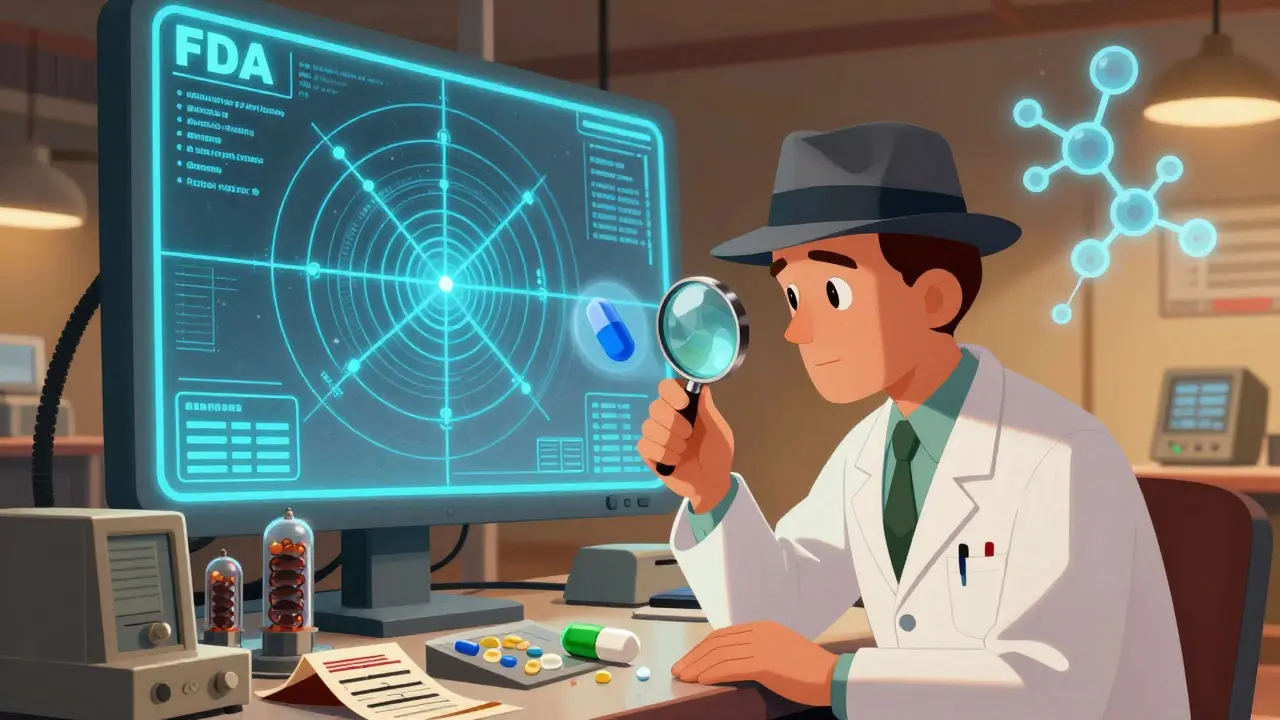
The Debate Over Expanding CBE Rights to Generics
The current system has sparked intense debate. In 2013, the FDA proposed allowing generic manufacturers to use the CBE process, just like brand-name companies. This would enable generics to update their own labels quickly when new safety information emerges. Consumer health organizations strongly support this change. A coalition of 27 groups argued in 2022 that requiring all prescription drugs to carry up-to-date warnings is essential for patient safety. They point out that many insurance plans mandate the use of generics due to cost savings, leaving patients dependent on a system that may provide outdated safety information. On the other side, the Generic Pharmaceutical Association (GPhA) opposes the change. David Gaugh, Senior Vice President for Sciences and Regulatory Affairs at GPhA, argues that the proposal contradicts the goals of the Hatch-Waxman Act. He warns that giving generic makers the power to unilaterally change labels could drive competitors out of the market and increase liability risks. Generic manufacturers fear being sued for adding warnings that later turn out to be unnecessary or incorrect. Currently, brand-name companies face frequent lawsuits for failing to add warnings quickly enough, creating a complex legal landscape that generics want to avoid.| Feature | Brand-Name Drugs | Generic Drugs |
|---|---|---|
| Label Ownership | Manufacturer controls label content | Must mirror Reference Listed Drug (RLD) |
| CBE Supplement Use | Allowed (update without prior FDA approval) | Historically prohibited (must wait for RLD update) |
| Inactive Ingredients | Can vary between brands | Can differ from RLD, except for ophthalmic/otic products |
| Liability Risk | High risk of failure-to-warn lawsuits | Lower risk, but increasing if CBE rights expand |
| Regulatory Framework | Federal Food, Drug, and Cosmetic Act | Hatch-Waxman Act of 1984 |
Complex Generics and Special Monitoring
Not all generics are created equal. Some fall into the category of "complex generic drug products." These include medications with difficult formulations, such as transdermal patches, extended-release injectables, or inhalers. Because their delivery mechanisms are intricate, ensuring equivalence to the brand-name drug is more challenging. The FDA applies specialized safety monitoring approaches to these products. For instance, when the first generic version of Rexulti was launched, the FDA conducted proactive pharmacovigilance screening to check for any quality or safety signals related to its appearance and orientation compared to the brand. No issues were detected in the first year, but this level of scrutiny highlights the extra care taken with complex generics.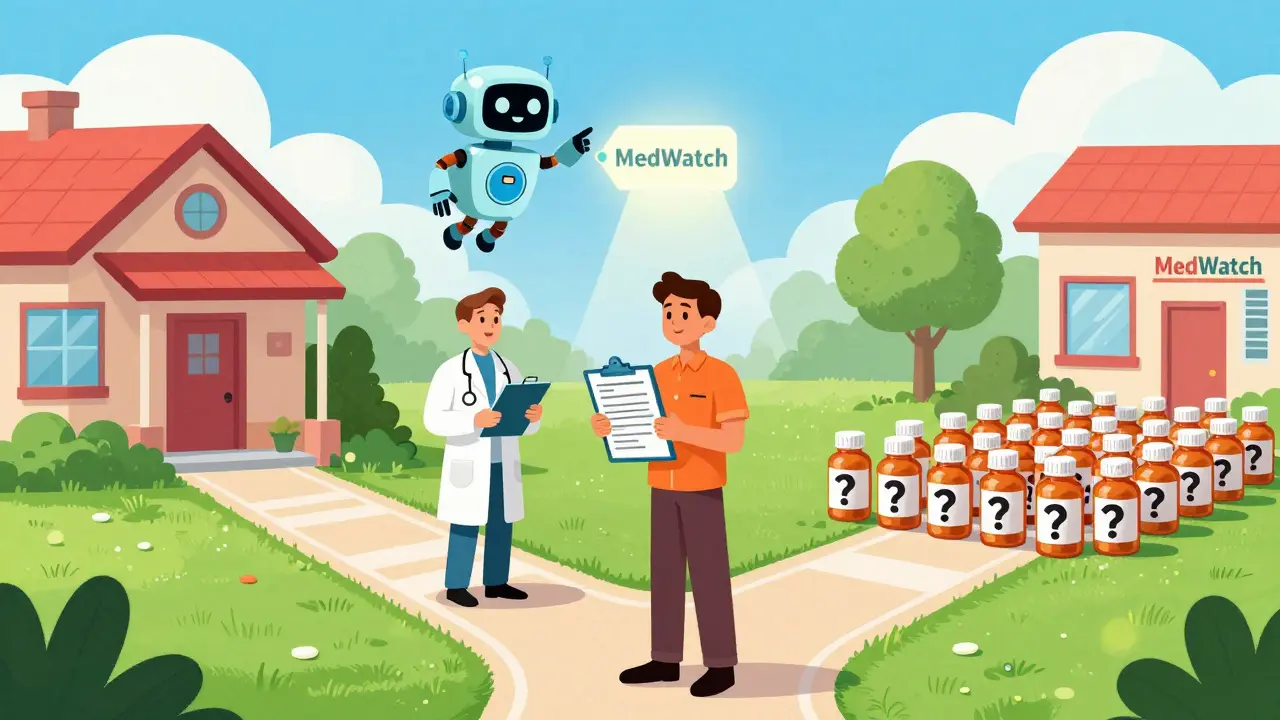
How Patients Can Stay Safe
As a patient, you don’t need to become a regulatory expert to stay safe. However, understanding how FDA safety alerts work can help you make informed decisions. The primary channel for these alerts is the MedWatch program, established in 1993. You can report adverse events directly through MedWatch, or you can check the FDA’s Drug Safety and Availability page for official statements. Recent examples include the September 2024 alert regarding the voluntary withdrawal of Oxbryta due to safety concerns. If you switch from a brand-name drug to a generic, pay attention to any changes in how you feel. While the active ingredient is the same, differences in excipients can occasionally cause reactions. Keep an eye on the expiration date and packaging, as these can also vary. Most importantly, maintain open communication with your pharmacist and doctor. They are your best resource for interpreting FDA alerts and determining if a specific generic is right for you.What the Future Holds for Generic Safety Communications
The FDA continues to refine its approach to generic drug safety. As of 2026, the 2013 proposal to extend CBE rights to generics remains under consideration, with no final rule published yet. Industry observers anticipate continued evolution as the market for complex generics grows. The tension between ensuring rapid safety updates and maintaining market competition will likely persist. For now, the system relies on a combination of brand-name leadership in labeling and robust FDA monitoring of generics. Until regulations change, patients should remain vigilant and rely on trusted sources like the FDA website and healthcare professionals for the latest safety information.Are generic drugs as safe as brand-name drugs?
Yes, generic drugs must meet the same high standards for quality, strength, purity, and stability as brand-name drugs. They contain the same active ingredient and perform identically in the body. However, they may differ in inactive ingredients (excipients), which can rarely cause different reactions in sensitive individuals.
Why can't generic manufacturers update their own safety labels?
Under the Hatch-Waxman Act of 1984, generic manufacturers are required to copy the labeling of the reference brand-name drug. This prevents discrepancies between different versions of the same drug. Only the brand-name manufacturer can currently use the Changes-Being-Effected (CBE) process to update warnings without prior FDA approval.
What is the MedWatch program?
MedWatch is the FDA's safety information and adverse event reporting program. It allows patients, consumers, and healthcare professionals to report problems with drugs, medical devices, and other regulated products. It is also the primary channel through which the FDA publishes safety alerts and communications.
What are complex generic drug products?
Complex generics are medications with difficult formulations or delivery methods, such as transdermal patches, inhalers, or extended-release injections. Ensuring they are equivalent to brand-name drugs requires specialized testing and monitoring because small differences in manufacturing can significantly impact performance.
Will generic manufacturers soon be allowed to update safety labels?
The FDA proposed allowing this in 2013, but as of 2026, no final rule has been published. The issue remains debated between consumer advocacy groups, who want faster safety updates, and generic manufacturers, who cite legal and competitive concerns. Patients should monitor FDA announcements for future changes.
Kevin S
May 10, 2026 AT 18:26Wow this is super helpful info for sure! 🌟 I always just take the generic because it is cheaper but now i know to watch out for the labels. Thanks for sharing this with us all here today! 💊
Brian Lee
May 10, 2026 AT 20:32It is very intersting how the rules are so diffrent for generics and brand names. The Hatch-Waxman act seems to create a big gap in safety info for patients. We should hope that the FDA makes a final rule soon to fix this issue for everyone.
Jake Williams
May 11, 2026 AT 11:23Another example of American bureaucracy failing the people who actually pay for their meds. Why do we need a special 'process' just to warn someone they might be allergic to a dye? It’s ridiculous that generic makers can’t update their own labels without waiting for the brand name company to stumble through its red tape. Typical Washington inefficiency protecting corporate interests over patient safety. 🇺🇸
Nilesh Mandani
May 12, 2026 AT 15:07The philosophical tension here is between market competition and public health ethics. On one hand, you have the Hatch-Waxman act which was designed to lower costs by allowing generics to exist without duplicating expensive trials. On the other hand, you have the moral imperative to keep patients informed about risks as quickly as possible. It is not a simple binary choice but rather a complex balance of legal liability versus immediate safety communication. The current system forces a delay that feels unnecessary in an age of instant digital data transfer.
Guy Birtwhistle
May 13, 2026 AT 08:21Look, let's be real here. If you are taking a med, you deserve to know if there is a new risk. The fact that generic companies are hiding behind 'liability fears' while brand names get to use the CBE process is just plain unfair. We need boundaries set where patient safety comes first, not lawyer protection. Stop making excuses and update the labels.
Kenny Pines
May 15, 2026 AT 07:57I mean, yeah, the system is kinda broken lol 😅 But hey, at least we have MedWatch right? So we can report stuff ourselves. That’s pretty cool I guess. Just don’t forget to check your expiration dates too! 📅
Liz and Nick
May 15, 2026 AT 17:33this is such a mess why cant they just fix it already. its stupid that we have to worry about dyes when we are trying to get better. i am so tired of reading about how complicated everything is. just give us safe pills please.
Brian Fibelkorn
May 15, 2026 AT 21:07The regulatory framework surrounding bioequivalence and excipient variance creates a significant liability shield for generic manufacturers that is fundamentally unethical from a consumer protection standpoint. The reliance on the Reference Listed Drug (RLD) for labeling updates introduces a systemic latency in adverse event communication that compromises the duty of care owed to the patient population. This structural flaw necessitates immediate legislative intervention to align generic labeling protocols with the dynamic nature of pharmacovigilance data streams.
David Rangkhal
May 16, 2026 AT 02:01Great points everyone! 👍 Let’s keep the discussion respectful though. We all want safer meds. Maybe we can agree that more transparency is good for all sides involved. Peace and love! ✨