
FDA Safety Alerts Explained: Generic Drug Risks, Labeling Gaps, and What You Need to Know
 May, 10 2026
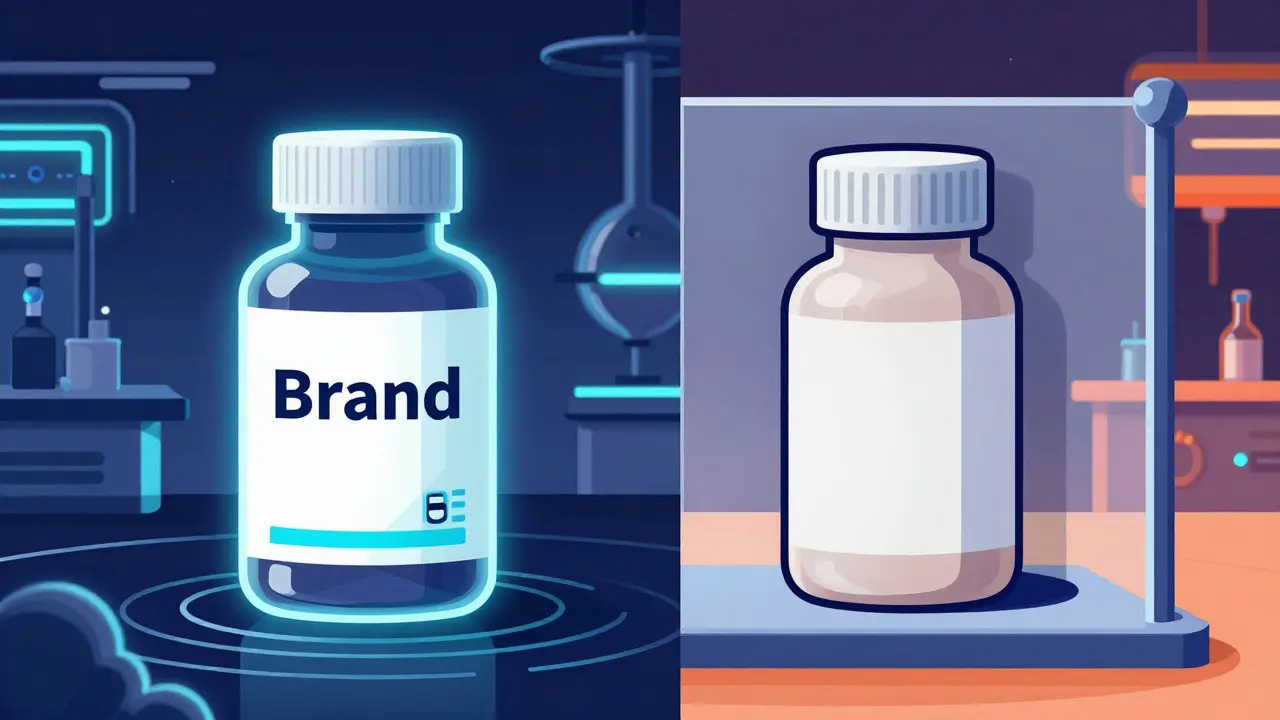
Have you ever wondered why your prescription looks different from the one in the commercials? Most of us take generic drugs, which are medications with the same active ingredients as brand-name drugs but sold at a lower price without giving it a second thought. They save the healthcare system billions of dollars every year. But when it comes to safety alerts, things get complicated. If a new risk is discovered for a brand-name drug, the manufacturer can update the label quickly. For generics, that process is often stuck in regulatory limbo. This gap leaves patients and doctors in the dark about potential dangers.
The U.S. Food and Drug Administration (FDA) has a system for catching these issues, but it’s not perfect. Understanding how FDA safety alerts work-and where they fail-is crucial for anyone managing chronic conditions or taking daily medications. Let’s break down the mechanics of this system, the legal hurdles involved, and what you can do to stay safe.
How Generic Drugs Are Approved and Monitored
To understand the safety alert problem, we first need to look at how generics enter the market. The foundation of this system is the Hatch-Waxman Act, passed in 1984. This law created a pathway for generic manufacturers to prove their drugs are equivalent to brand-name versions without repeating expensive clinical trials. To get approval, a generic must match the brand-name drug (known as the Reference Listed Drug) in active ingredient, dosage form, strength, route of administration, and intended use.
The Office of Generic Drugs within the FDA’s Center for Drug Evaluation and Research (CDER) oversees this process. They ensure that generics meet high standards for quality, purity, and stability. However, generics are allowed to differ in inactive ingredients-like colors, flavors, or preservatives-as long as they don’t affect the drug’s performance. For complex products like eye drops or injectables, these rules are stricter. Yet, once approved, the safety monitoring doesn’t stop. The FDA uses postmarketing surveillance to track adverse events after a drug hits the shelves.
| Feature | Brand-Name Drugs | Generic Drugs |
|---|---|---|
| Active Ingredients | Original formulation | Identical to brand-name |
| Inactive Ingredients | Proprietary mix | Can differ (colors, fillers) |
| Label Updates | Can update independently (CBE-0) | Must follow brand-name label |
| Clinical Trials | Required for initial approval | Bioequivalence studies only |
The Labeling Gap: Why Safety Alerts Lag for Generics
Here is where the system gets tricky. When new safety information emerges-say, a rare side effect discovered years after launch-the brand-name manufacturer can use a process called Changes-Being-Effected (CBE-0). This allows them to update the warning label immediately without waiting for FDA approval, provided they notify the agency within 30 days. Generic manufacturers, however, cannot do this. Under current regulations, they must wait for the brand-name label to change before they can update their own. This creates a dangerous lag time.
In 2013, the FDA proposed allowing generic makers to use the CBE-0 process too. The goal was simple: ensure all patients get up-to-date safety warnings, regardless of whether they take a brand or generic version. Consumer health groups strongly supported this move. They argued that since many insurance plans require patients to take generics, those patients deserve the same level of transparent risk information. But the proposal faced fierce opposition from the Generic Pharmaceutical Association (GPhA).
GPhA argues that forcing generic companies to manage independent safety labels contradicts the intent of the Hatch-Waxman Act. They worry it would increase liability risks and drive smaller competitors out of the market. Currently, if a generic company unilaterally changes a label, they could face lawsuits for misbranding. This legal uncertainty keeps the status quo intact, leaving a gap in the safety net for millions of patients.
How the FDA Tracks Adverse Events
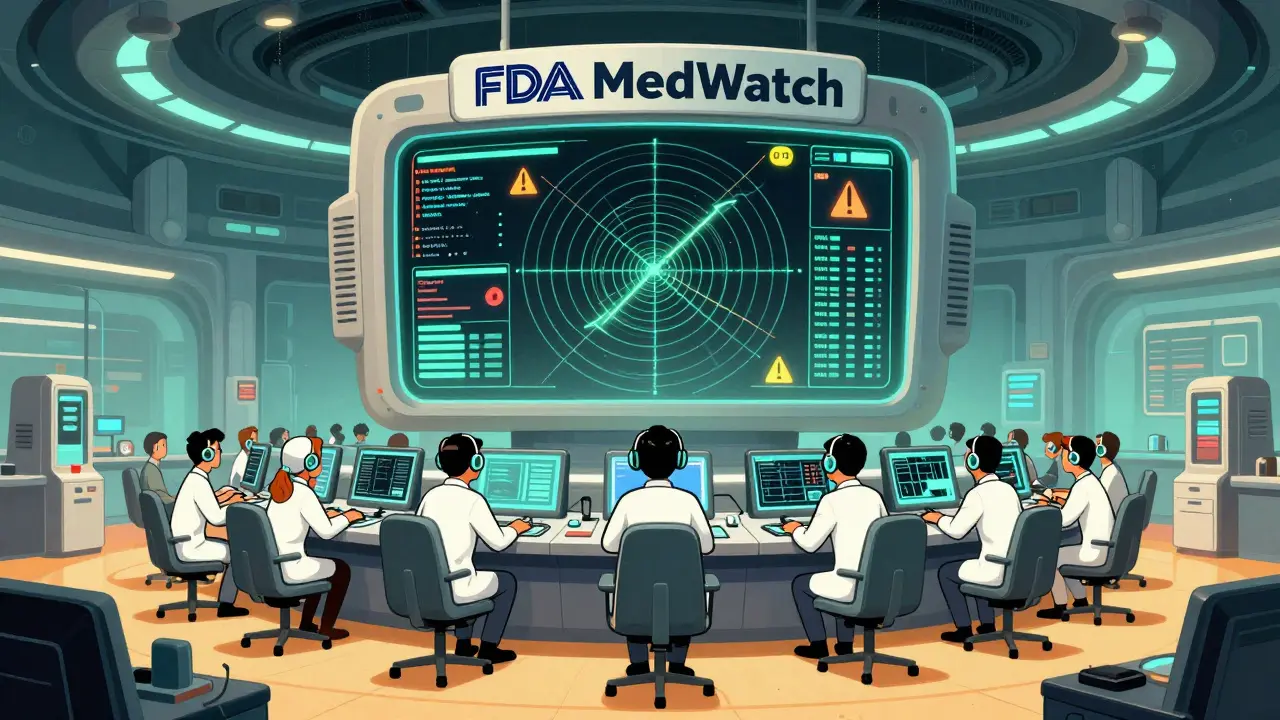
Even with labeling limitations, the FDA actively monitors drug safety through its MedWatch program, established in 1993. MedWatch is the federal safety surveillance and adverse event reporting program. It collects reports from healthcare professionals, consumers, and manufacturers. If you experience a serious side effect, you can file a report directly through the FDA website. These reports feed into the FDA Adverse Event Reporting System (FAERS), a massive database used to detect safety signals.
The FDA’s Office of Generic Drugs conducts proactive pharmacovigilance screening. For example, when the first generic version of Rexulti launched, staff monitored FAERS data monthly for the first year. In that case, no new safety signals were detected. But for other drugs, especially complex generics like transdermal patches or extended-release injectables, the monitoring is more intense. Dr. Xin Fu, who leads excipient safety assessment at the FDA, notes that differences in inactive ingredients can sometimes alter a drug’s safety profile depending on how it’s used. This is why the FDA pays close attention to “complex generic drug products” that have unique delivery mechanisms.
If a significant risk is identified, the FDA issues public safety alerts. These might include Drug Safety Communications, boxed warnings, or even market withdrawals. A recent example is the September 2024 alert regarding Oxbryta, which was voluntarily withdrawn due to safety concerns. While this was a brand-name drug, such alerts serve as a reminder that safety monitoring is continuous and critical for all medications.
What Patients and Doctors Should Do
So, how do you navigate this landscape? First, never assume a generic is completely identical to the brand in every way. While the active ingredient is the same, inactive components can cause reactions in sensitive individuals. If you experience unexpected side effects, talk to your doctor. Don’t just stop taking the medication abruptly, as this can be dangerous. Instead, ask if switching to a different generic manufacturer or the brand-name version is an option.
Second, keep an eye on the FDA’s Drug Safety and Availability page. This resource lists new warnings, label changes, and shortages. Subscribe to updates if possible. Third, consider filing a MedWatch report if you suspect a side effect. Your report could help identify a pattern that protects others. Healthcare providers also play a key role here. Doctors should regularly review their patients’ medications against the latest FDA communications, especially for high-risk drugs.
Insurance companies often push for generics to cut costs, which is understandable given the financial pressure on the healthcare system. But cost savings shouldn’t come at the expense of safety transparency. Advocacy groups continue to push for regulatory changes that allow generic manufacturers to update labels faster. Until then, vigilance is your best defense.
The Future of Generic Drug Safety Regulation
The debate over generic labeling isn’t going away. As the market shifts toward more complex generics, the need for robust safety communication grows. The FDA continues to refine its approach, balancing the need for patient safety with the economic benefits of generic competition. Industry observers expect further evolution in how safety alerts are handled, potentially including digital tools that provide real-time updates to both doctors and patients.
For now, the responsibility falls on a shared model: regulators monitor, manufacturers comply, and patients stay informed. By understanding the limits of the current system, you can make better decisions about your health. Generic drugs are a vital part of modern medicine, offering affordability and accessibility. But awareness of their regulatory context ensures that affordability doesn’t compromise safety.
Can generic drugs have different side effects than brand-name drugs?
Yes, while the active ingredients are identical, generic drugs may contain different inactive ingredients (excipients) like fillers or dyes. These can cause allergic reactions or sensitivities in some people. Additionally, differences in manufacturing processes can rarely affect how the drug is absorbed, though the FDA strictly monitors bioequivalence to minimize this risk.
Why can't generic manufacturers update safety labels immediately?
Under current regulations derived from the Hatch-Waxman Act, generic manufacturers must follow the labeling of the brand-name reference drug. They cannot independently add new warnings using the CBE-0 process unless the brand-name label changes first. This is to maintain consistency, but it creates a delay in communicating new safety risks to patients taking generics.
How do I report a side effect from a generic drug?
You can report side effects through the FDA’s MedWatch program. Visit the FDA website and look for the MedWatch safety reporting portal. You can submit reports online, by mail, fax, or phone. Providing details about the drug, dosage, and nature of the reaction helps the FDA identify potential safety signals.
Are complex generic drugs safer or riskier than standard ones?
Complex generics, such as patches or injectables, require specialized monitoring because their delivery mechanisms are harder to replicate exactly. They aren’t inherently riskier, but any slight variation in formulation can impact efficacy or safety more significantly than with simple oral tablets. The FDA applies stricter scrutiny to these products during approval and postmarket surveillance.
Will the FDA allow generic makers to update labels soon?
As of 2026, the 2013 proposal to extend the CBE-0 process to generic manufacturers is still under consideration. There has been no final rule published yet due to ongoing debates between consumer advocacy groups, who want faster safety updates, and industry associations like GPhA, who cite legal and competitive concerns. Regulatory changes may emerge as the market for complex generics grows.