
Counterfeit Generics: How to Protect Yourself from Fake Medications
 Feb, 17 2026
Every year, millions of people rely on generic medications to manage chronic conditions like diabetes, high blood pressure, or depression. They’re cheaper, widely available, and legally approved - or at least, they should be. But what if the pill you just swallowed wasn’t made to help you? What if it had no active ingredient at all? Or worse - it contained something toxic? That’s not a horror movie plot. It’s happening right now, and counterfeit generics are a growing threat you can’t afford to ignore.
What Exactly Are Counterfeit Generics?
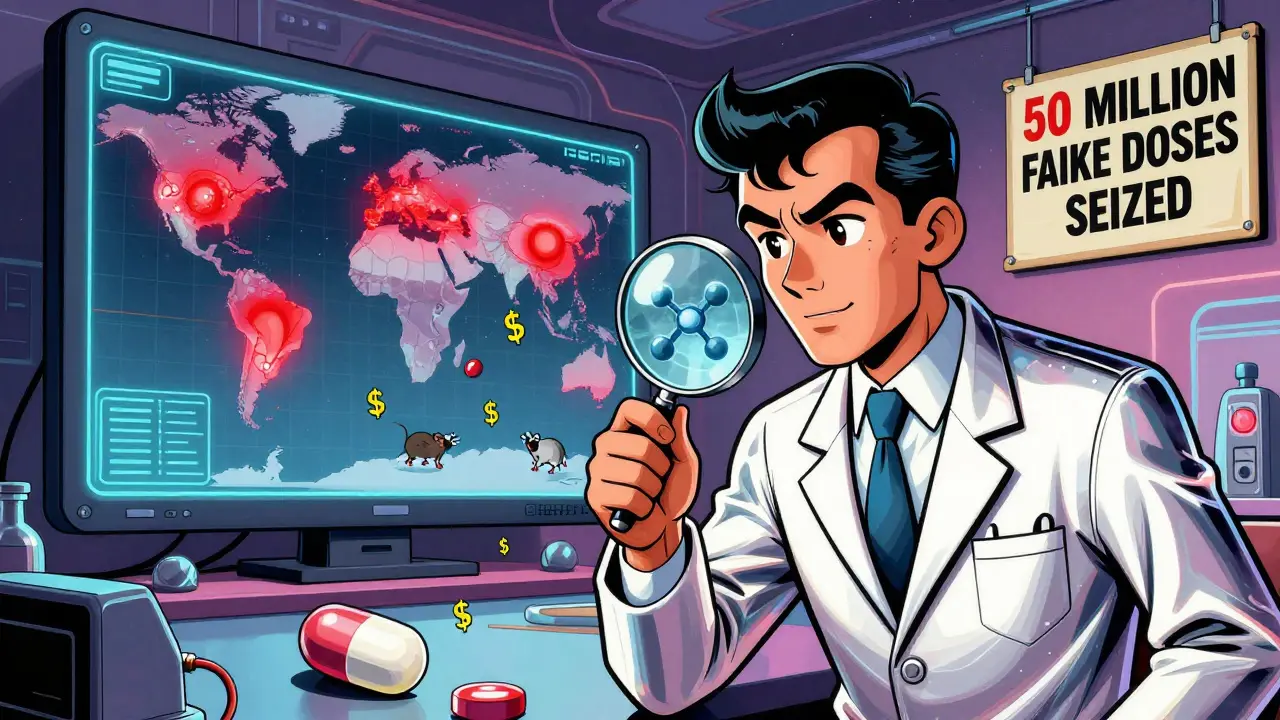
Generic drugs are supposed to be exact copies of brand-name medications. They contain the same active ingredient, in the same strength, and work the same way. But counterfeit generics? They’re fake. They look real. The packaging, the logo, even the color of the pill - all copied perfectly. But inside? You might find chalk, sugar, rat poison, or just plain nothing. Some contain only 10% of the needed medicine. Others have completely different chemicals that can cause liver damage, heart failure, or antibiotic resistance. The problem exploded after 2020. During the pandemic, demand for medications like antivirals, insulin, and weight-loss drugs skyrocketed. Criminals saw an opportunity. They didn’t just sell fake pills - they built entire online networks, fake websites, and even set up illegal labs in countries with weak oversight. According to Interpol’s 2025 operation, over 50 million doses of fake medicines were seized globally in just one sweep. That’s not a drop in the bucket - it’s a flood.Where Are These Fake Drugs Coming From?
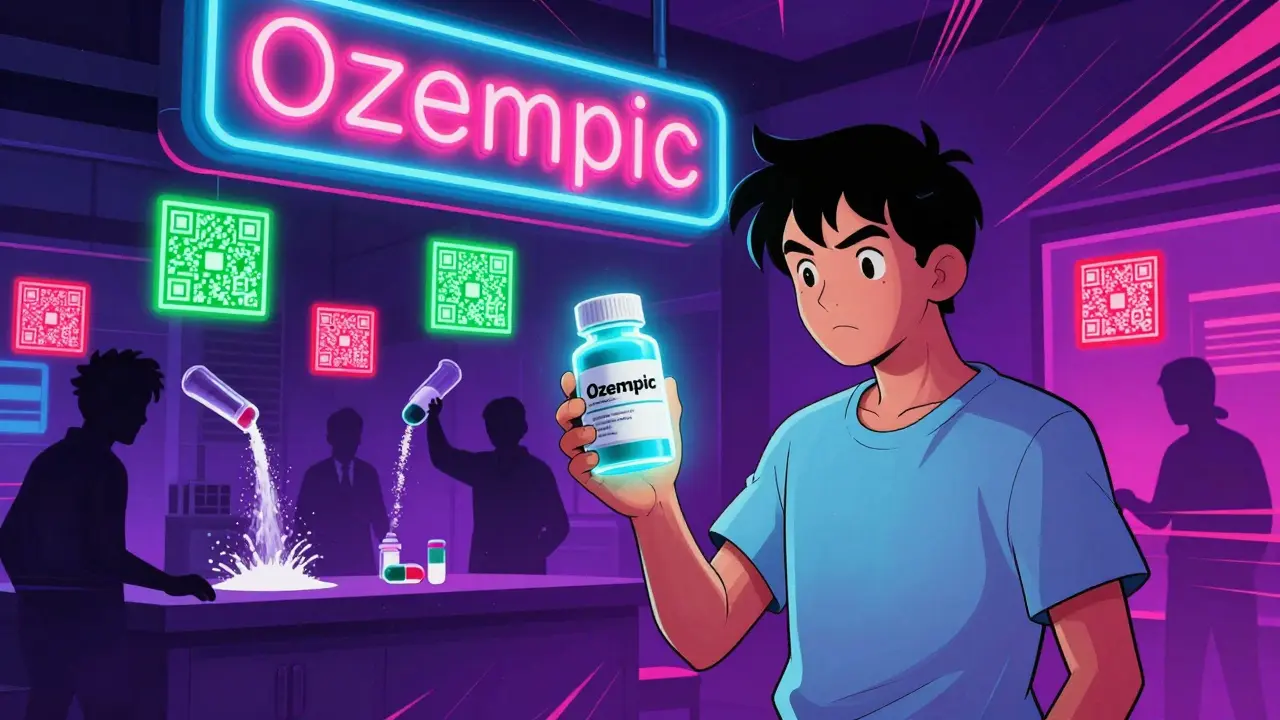
You’d think pharmacies and hospitals are safe. But they’re not. In 2025, an Iowa pharmacy was fined $25,000 for selling fake Ozempic. That’s not some shady back-alley shop - it was a licensed pharmacy. How? The drugs came through unregulated bulk shipments from overseas. The U.S. FDA found that between September 2023 and January 2025, nearly 2,500 shipments of semaglutide (the active ingredient in Ozempic) entered the country. Of those, almost 200 were approved despite being from illegal sources. Most counterfeit drugs come from Asia - especially India, China, and Bangladesh. These countries produce legitimate generics, but criminal networks exploit the system. They buy bulk active ingredients, package them in fake boxes, and ship them as if they’re from a real manufacturer. Some even use QR codes that scan as legitimate. The packaging is so good, you won’t notice anything wrong - until you stop getting results.How to Spot a Fake Generic
You don’t need a lab to check if your medicine is real. Here’s what to look for:- Check the packaging. Misspelled words? Blurry logos? Different font sizes? These are red flags. Even a tiny mistake like a misplaced period on the label can mean it’s fake.
- Compare the pill. Is it a different color, shape, or size than your last bottle? Does it smell odd? Does it crumble when you touch it? Authentic generics are consistent. Fake ones aren’t.
- Verify the NDC number. Every U.S. drug has a National Drug Code (NDC). You can look it up on the FDA’s website. If the number doesn’t match, walk away.
- Look for the VIPPS seal. Only buy from pharmacies with the Verified Internet Pharmacy Practice Sites (VIPPS) seal. That means they’re licensed and inspected. If the website doesn’t show it, don’t trust it.
- Use manufacturer verification tools. Novo Nordisk, the maker of Ozempic, has a free app called Verify Your Pen. In Q3 2025 alone, over 2 million people used it. Of those, 1.8% were flagged as fake. That’s 36,000 potentially dangerous pills stopped before they reached patients.
Why Fake Medications Are More Dangerous Than You Think
It’s not just about not working. Fake drugs can kill. In Nigeria, counterfeit malaria pills caused liver failure in over 200 people after a raid on an illegal lab in Kaduna in August 2025. In South Africa, police seized R2.2 million worth of fake insulin and antibiotics - some containing industrial solvents. One Reddit user, ‘MedSafety42’, posted in August 2025: “I took fake Ozempic for three months. My blood sugar didn’t drop. My doctor said I was ‘non-compliant.’ I wasn’t. I was being poisoned.” The real danger? Substandard antibiotics. If a fake antibiotic doesn’t contain enough of the active ingredient, it won’t kill the bacteria - it’ll just train them to resist treatment. The Review on Antimicrobial Resistance estimates that by 2050, 10 million people a year could die from infections that can’t be treated - partly because of fake meds.How to Buy Safely - Every Time
Here’s how to protect yourself:- Buy only from licensed pharmacies. If it’s online and doesn’t have a physical address you can verify, avoid it. WHO says 50% of online pharmacies hiding their location sell fake drugs.
- Never buy from social media. Instagram, Facebook, and TikTok ads for “miracle” weight-loss pills or “cheap” diabetes meds? They’re fake. Always go to the manufacturer’s official website or your local pharmacy.
- Ask your pharmacist. Pharmacists are trained to spot fakes. If you’re unsure, ask them to check the batch number or compare it to a previous refill.
- Use verification apps. Apps like TrueMed (4.7/5 stars on Google Play) let you scan packaging to confirm authenticity. They’ve helped over 1 million users avoid counterfeits.
- Report suspicious drugs. If something feels off, report it. The FDA’s MedWatch program took 12,450 reports in 2024. Your report could save someone’s life.
What’s Being Done - And What’s Not
Some progress is happening. The EU requires safety features on all prescription packaging since 2019. India now mandates QR codes on bulk drug containers. Blockchain tracking systems have cut counterfeiting by 22% in pilot countries. Pfizer has trained over 160 countries on how to spot fakes - and estimates 302 million doses have been blocked because of it. But the system is still broken. Only 32% of pharmacies in low-income countries have access to verification tools. Criminals are using AI to generate fake packaging that passes human inspection. The U.S. FDA’s own data shows that in 2025, nearly 200 illegal shipments of semaglutide slipped through inspections anyway. The truth? Regulation is playing catch-up. Criminals move faster than lawmakers. And while manufacturers fight back, patients are still the ones paying - with their health.What to Do If You Already Took a Fake
If you suspect you’ve taken a counterfeit drug:- Stop taking it immediately.
- Keep the packaging and any remaining pills.
- Contact your doctor - even if you feel fine. Some damage takes weeks to show up.
- Report it to the FDA through MedWatch or call Pfizer’s Anti-Counterfeiting Hotline at 1-800-593-5685.
Final Reality Check
You can’t afford to be careless. A fake pill might cost $5 online. But if it doesn’t work - or if it harms you - the real cost is your health, your time, and maybe your life. The good news? You have power. You can check, you can ask, you can report. You don’t need to be a scientist to protect yourself. Just be smart. Be skeptical. And never assume a cheap price means a good deal.How common are counterfeit generics?
Globally, at least 1 in 10 medicines in low- and middle-income countries are fake or substandard, according to the WHO. In some African regions, that number jumps to 70%. Even in the U.S., fake versions of popular drugs like Ozempic, Botox, and erectile dysfunction medications are being intercepted at borders and sold through unlicensed pharmacies. In 2024, over 6,400 incidents of counterfeit drugs were confirmed across 136 countries.
Can I trust online pharmacies?
Only if they’re verified. Look for the VIPPS seal - it means the pharmacy is licensed and inspected by the National Association of Boards of Pharmacy. Avoid any site that doesn’t require a prescription, doesn’t list a physical address, or offers drugs at prices far below market value. The WHO says 50% of online pharmacies hiding their location sell fake drugs.
Are all generics fake?
No. Legitimate generics are safe and effective. They’re required by law to meet the same standards as brand-name drugs - same active ingredient, same dosage, same effect. The problem is only with counterfeit versions that enter the market illegally. Stick to trusted pharmacies and verify packaging to avoid fakes.
What should I do if my medication doesn’t work?
Don’t assume you’re non-compliant. If your blood sugar, blood pressure, or pain isn’t improving - or if you feel worse - talk to your doctor. Ask them to check if your prescription could be counterfeit. Keep the packaging and report it. Many people have been misled into thinking their condition worsened, when in fact, they were taking a fake.
Can I get a refund if I bought a fake drug?
If you bought it from an unlicensed online pharmacy, getting a refund is unlikely. These sites often disappear after a sale. That’s why prevention matters more than recovery. Always buy from licensed pharmacies. If you report the fake to the FDA or local authorities, you help shut down the operation - which protects others.
Are counterfeit drugs only a problem in developing countries?
No. While the problem is worse in low-income countries, fake drugs are entering high-income nations too. In 2025, U.S. Customs seized counterfeit Ozempic, Botox, and erectile dysfunction drugs from Asia. Pharmacies in Iowa, Florida, and Texas have been caught selling fakes. Criminals target wealthier markets because people are willing to pay more - even for fake versions of expensive drugs.
How can I verify my medication without an app?
Check the packaging for spelling errors, mismatched fonts, or odd colors. Compare your pill to pictures on the manufacturer’s official website. Call the pharmacy and ask for the lot number - they should be able to confirm it’s legitimate. If the pharmacy hesitates or can’t provide details, walk out.
Is it illegal to buy drugs online without a prescription?
Yes. In the U.S. and EU, buying prescription medication without a valid prescription is illegal - and dangerous. It bypasses safety checks and opens the door to counterfeit drugs. Even if the site looks professional, if it doesn’t require a prescription, it’s not legitimate.
Linda Franchock
February 18, 2026 AT 01:25So let me get this straight - we’re trusting our lives to pills bought from Instagram ads, and somehow we’re surprised when people get sick? 😒 I took metformin from a ‘pharmacy’ that looked like a 2005 Geocities site. My blood sugar didn’t drop. My doctor called me non-compliant. Turns out? I was eating sugar pills with extra glitter. Glad I didn’t die. But honestly? This isn’t a public health crisis. It’s a capitalism crisis. We reward cheap over safe, and now we’re paying with our organs.
Prateek Nalwaya
February 19, 2026 AT 22:59Wow. This is wild. I work in pharma logistics in Bangalore, and let me tell you - the fake drug pipeline is like a Bollywood thriller with no script. We see these ‘generic’ shipments with perfect packaging, QR codes that scan, even batch numbers that match real ones. But the active ingredient? Sometimes it’s powdered chalk. Sometimes it’s laundry detergent. One time, we found a batch of ‘insulin’ that had traces of industrial coolant. No joke. The real tragedy? The people who need this stuff the most? They’re the ones who can’t afford to check. They just swallow what they’re given. And pray.
Agnes Miller
February 21, 2026 AT 07:12i just wanted to say i’ve been on lisinopril for 12 years. last year my bottle looked different. same name, same logo, but the pill was slightly lighter. i called my pharmacist. she checked the lot number. said it was legit. but i was paranoid. so i went to a different pharmacy. they confirmed - it was fake. i reported it. no one called me back. i still take it. because i have no choice. 🥲
Philip Blankenship
February 21, 2026 AT 19:59Man, I just read this whole thing and I’m sitting here thinking - how many of us have taken fake meds and just assumed we were ‘not responding’? I had this weird episode last year where my antidepressant stopped working. I thought I was relapsing. Turns out? My last refill was from a ‘discount pharmacy’ I found on Reddit. I didn’t even think to check. Now I’m terrified every time I fill a prescription. And honestly? I don’t even know who to trust anymore. The system’s broken. The regulators are asleep. And the criminals? They’re using AI to make labels that look better than the real ones. It’s not a conspiracy - it’s a corporate nightmare.
Kancharla Pavan
February 22, 2026 AT 23:23Let me be clear: this is the direct result of letting India and China ‘manufacture’ our medicine. We outsourced our health to nations with zero accountability. We got lazy. We wanted cheap. Now we’re paying with our lives. The FDA? They’re a joke. They approve shipments from factories that don’t even have running water. And then they wonder why people are dying? It’s not a coincidence. It’s negligence. And the fact that people still buy from ‘online pharmacies’ without a prescription? That’s not ignorance - it’s stupidity. You want to live? Stop being a sucker for a discount.
PRITAM BIJAPUR
February 23, 2026 AT 19:14There’s a quiet revolution happening - and it’s not in boardrooms. It’s in the hands of patients who refuse to be silent. 🌱 I scanned my Ozempic pen with TrueMed. It flagged as fake. I called the manufacturer. They sent me a free replacement. I reported it. And now? I’m helping others do the same. This isn’t about fear. It’s about agency. We have tools. We have knowledge. We have power. The system wants us to feel helpless. Don’t let it. One scan. One report. One voice. That’s how change starts. 💪🌍
Dennis Santarinala
February 24, 2026 AT 10:00Hey, I just want to say - I’m not a doctor, but I’ve been taking generics for years, and I’ve never had an issue. I get them from CVS. I check the packaging. I don’t buy online. I think the fear here is being amplified. Yeah, there are fakes. But most of us are fine. We’re not all getting poisoned. Let’s not panic. Let’s just be smart. Use the tools. Ask questions. Trust your pharmacist. It’s not rocket science. And honestly? I’m tired of people acting like every pill is a landmine. We’ve got better things to worry about.
Tony Shuman
February 25, 2026 AT 23:42Oh wow. So now we’re blaming the U.S. for fake drugs coming from overseas? Newsflash: the U.S. doesn’t make 90% of our medicine anymore. We gave it away. We let China and India take over. Now we’re mad when their standards don’t match ours? That’s not a conspiracy. That’s just reality. We wanted cheap. We got it. Now we’re crying because it’s not FDA-approved? Wake up. We outsourced our safety. And now we’re surprised when it backfires? Pathetic.
Carrie Schluckbier
February 26, 2026 AT 22:14Did you know the FDA has been quietly approving shipments from Chinese labs that were shut down for violating safety standards? I have screenshots. I have emails. I have whistleblower logs. This isn’t about counterfeit drugs. This is about a coordinated cover-up. The same people who regulate the FDA have ties to the manufacturers. They’re letting fakes in - on purpose. Why? To keep drug prices high. If real generics were safe, why would they need to block the real ones? The system is rigged. And you? You’re just the next victim.
Liam Earney
February 28, 2026 AT 03:43I just... I can’t... I’ve been taking my insulin for years. I’m 68. I’ve lost my husband to diabetes. I’ve watched my sister go blind because of bad meds. And now? I’m supposed to believe that the little blue pill I get from my local pharmacy - the one I’ve trusted for 15 years - might be poison? I called them. They said, ‘It’s fine.’ But I saw the lot number. It’s the same as the one in the article. I’m terrified. I don’t sleep anymore. I stare at the bottle. I wonder if this is the one that’ll kill me. I just... I just want to live.
guy greenfeld
February 28, 2026 AT 05:49It’s not about the pills. It’s about control. We’ve been conditioned to trust institutions - the FDA, the FDA, the FDA - but what if the institutions are the problem? What if the real threat isn’t the counterfeit drug, but the system that allows it to exist? We’ve commodified health. We’ve turned medicine into a product. And products can be faked. The real question isn’t ‘how do we spot a fake pill?’ - it’s ‘how do we stop treating human life like a market commodity?’
Adam Short
February 28, 2026 AT 06:12Let me be blunt - if you’re buying medicine online without a prescription, you’re not a patient. You’re a fool. And if you’re blaming the U.S. for fake drugs from India? You’re a traitor to your own country. We built the best pharmaceutical system in the world. We didn’t need to outsource. We chose to. Now we’re crying because we made bad decisions? Grow up. Stop being lazy. Go to your doctor. Pay for the real stuff. Or stop complaining when you get sick.
Sam Pearlman
February 28, 2026 AT 18:40Wait - so you’re saying that even legit pharmacies are selling fakes? Like, in Iowa? That’s wild. I thought pharmacies were supposed to be safe. I mean, I trust my CVS like I trust my grandma. But now? I’m gonna start checking every pill like it’s a bomb. I just bought a new prescription. I’m scanning it right now. If it’s fake? I’m taking a selfie with it and posting it. Let’s make this viral. Someone’s gotta do it.
Steph Carr
March 2, 2026 AT 00:25As someone who grew up in a family that ran a pharmacy in rural Ohio - I’ve seen this coming for decades. We used to get shipments from ‘approved’ distributors that turned out to be from unlicensed labs. We’d call it in. No one cared. Now? Everyone’s shocked. But we knew. We’ve been screaming into the void. The real tragedy? The people who die aren’t statistics. They’re my neighbors. My friends. My cousin. This isn’t about ‘global supply chains.’ It’s about who we choose to protect. And right now? We’re choosing the profit.
Brenda K. Wolfgram Moore
March 2, 2026 AT 23:42I just want to say - I’m not scared. I’m angry. I’ve been on the same generic for 8 years. I’ve never checked the packaging. I’ve never questioned it. And now I realize - I’ve been trusting a system that doesn’t care about me. I’m not blaming myself. I’m blaming the system. But I’m also changing. I’m using TrueMed. I’m calling my pharmacist. I’m reporting anything weird. Because if I don’t, who will? I’m not a hero. I’m just tired of being a victim.
Linda Franchock
March 3, 2026 AT 06:08Wow. So the FDA approved 200 illegal shipments of semaglutide? And we’re supposed to trust them? 😂 I’m not even surprised anymore. I just hope I’m not the next one to wake up with liver failure because I trusted a ‘generic’ from a pharmacy that didn’t even have a license. Maybe I should’ve just taken the sugar pills. At least they wouldn’t have poisoned me.