
Cost-Effectiveness Analysis for Generic Drugs: Measuring Real Value
 Apr, 26 2026
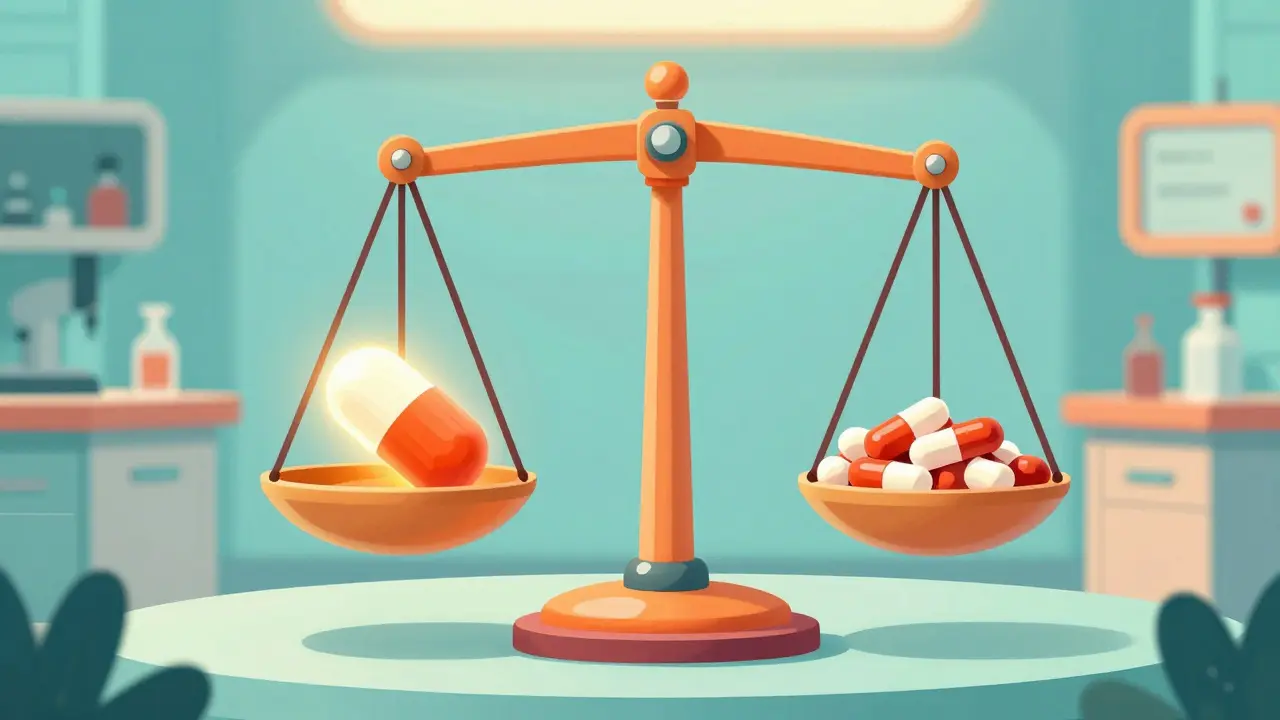
When a brand-name drug loses its patent, the medical world often cheers for the arrival of generics. But here is the real question: how do we actually prove that switching to a generic version is the smartest move for a healthcare system? It is not just about finding the cheapest pill on the shelf. True value is found through cost-effectiveness analysis is a systematic economic method used to compare the relative costs and outcomes (effects) of two or more courses of action. In the world of medicine, this means weighing the price of a drug against the actual health improvement it provides to the patient.
The Basics of Measuring Value in Generics
To understand if a generic drug is "worth it," economists don't just look at the price tag. They use a metric called the Incremental Cost-Effectiveness Ratio or ICER. Think of the ICER as a way to calculate the "extra cost per single unit of health gained." This unit is usually measured in Quality-Adjusted Life Years, known as QALYs. If a generic drug provides the same QALYs as a brand-name drug but costs significantly less, the value is clear.
The impact of generic entry is staggering. According to FDA data, the moment the first generic competitor hits the market, prices typically drop by an average of 39%. When the market gets more competitive-say, six or more companies offering the same drug-the price can plummet to more than 95% below the original brand price. This massive price gap is exactly what health economists track to determine the overall savings for a national health service or an insurance provider.
Beyond the Brand: The Hidden Cost of "High-Cost" Generics
You might assume that all generics are cheap, but that is a common misconception. Some generics remain surprisingly expensive, creating a gap where healthcare providers can save a fortune by switching to a different, equally effective therapeutic alternative. A study published in JAMA Network Open highlighted this exact issue. Researchers found that replacing high-cost generics with lower-cost therapeutic alternatives of equivalent clinical value could slash spending by nearly 90%.
The level of savings depends heavily on how "identical" the drugs are. When you switch between two identical drugs from different manufacturers, the price difference is usually small. However, when you move toward therapeutic substitution-switching to a different drug within the same class-the potential for savings explodes. In some cases, high-cost generics were found to be over 15 times more expensive than their therapeutic alternatives.
| Substitution Type | Price Comparison (vs. Alternative) | Savings Potential |
|---|---|---|
| Identical Drug (Diff. Manufacturer) | 1.4x higher | Low |
| Different Dosage Form (Same Drug) | 20.2x higher | High |
| Therapeutic Class (Diff. Drug) | 20.6x higher | Very High |
Why Some Analyses Get the Math Wrong
If the math seems simple, why is there so much debate? The problem is that many analysts ignore the future. A shocking 94% of published cost-effectiveness analyses fail to include assumptions about future generic prices. They treat the current brand price as a permanent fact, which biases the results against new pharmaceutical interventions. If a drug is expensive today but will be generic in three years, the long-term value is much higher than a snapshot of today's price suggests.
There is also the issue of "spread pricing." Pharmacy Benefit Managers, or PBMs, often act as middlemen. They might negotiate a low price with a pharmacy but charge the insurer a higher price, pocketing the difference. This distortion explains why some expensive generics stay on a formulary even when a cheaper, identical version exists. It's not a clinical decision; it's a financial one.
The R&D Dilemma: Marginal Cost vs. Real Cost
Economists like Dr. Steven Garber have pointed out a fundamental tension in how we measure generic value. Traditional CEA often looks at the "marginal cost"-basically, how much it costs to manufacture one more pill. But this ignores the billions spent on research and development (R&D). If we only value drugs based on their manufacturing cost, we remove the incentive for companies to innovate.
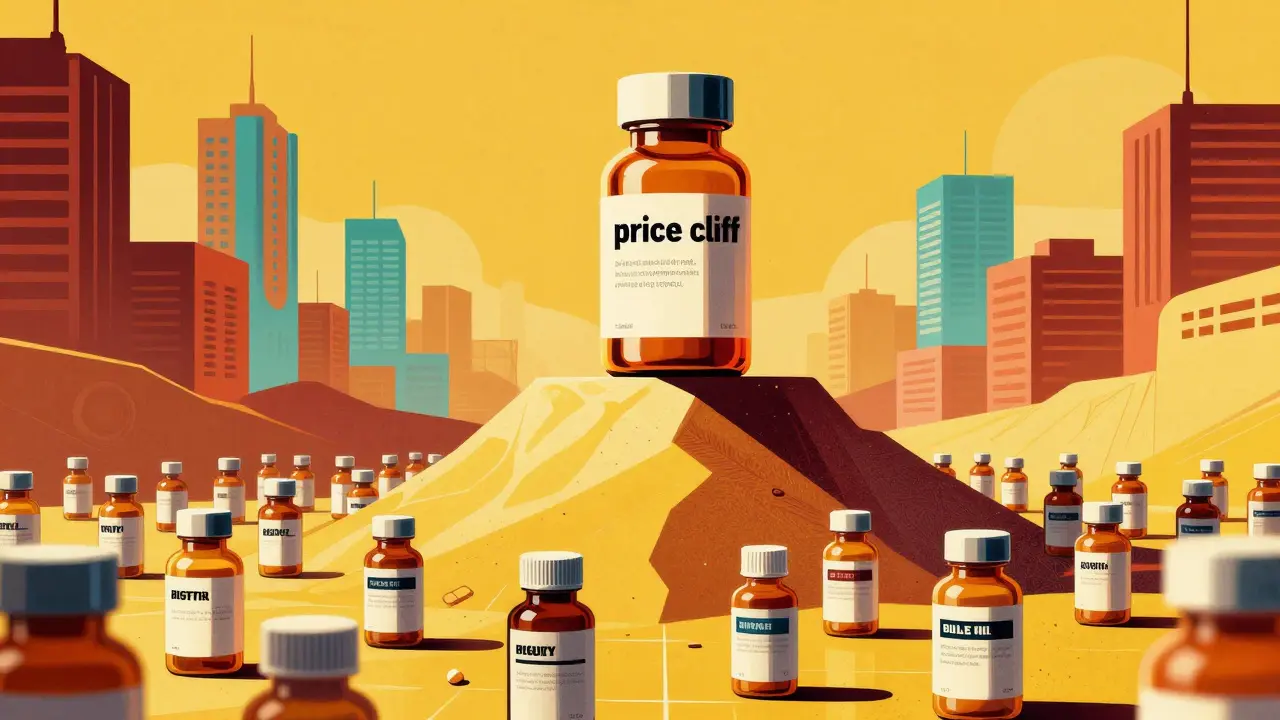
The "patent cliff" is where this all comes together. When a patent expires, the government-granted monopoly ends, and the market shifts from R&D-driven pricing to competition-driven pricing. To get a true picture of value, analysts must use a longitudinal approach, mapping out exactly when a patent expires and how quickly competitors will enter the market. Without this timeline, any value measurement is just a guess.

Practical Steps for Implementing CEA
For those tasked with making coverage decisions, the NIH suggests a framework that moves away from static snapshots. To actually measure the value of generics effectively, you need to follow these steps:
- Establish a baseline using reliable pricing metrics like the Federal Supply Schedule (FSS) or Average Wholesale Price (AWP).
- Conduct a therapeutic equivalence assessment to ensure that a cheaper alternative won't compromise patient outcomes.
- Model the patent expiration. Don't just use today's price; predict the price drop based on the expected number of generic competitors.
- Apply evolving decision rules. As more generics enter the market, the threshold for what is considered "cost-effective" should shift.
This isn't a quick task. Professionals in health technology assessment usually need 6 to 12 months of specialized training in health economics and patent law to do this correctly. The stakes are high: the FDA estimates that generic drugs saved the U.S. healthcare system roughly $1.7 trillion over a single decade ending in 2017.
What is the main goal of cost-effectiveness analysis for generics?
The main goal is to determine if substituting a brand-name drug with a generic, or choosing one generic over another, provides the best possible health outcome for the lowest cost. It ensures that healthcare budgets are spent on treatments that provide the most actual benefit per dollar.
How does the number of generic competitors affect the price?
Price drops significantly as competition increases. The first generic competitor usually triggers an average price drop of 39%. When four competitors enter, prices typically fall by 79%, and with six or more, prices can drop by more than 95% compared to the original brand price.
What is a QALY and why does it matter in CEA?
A Quality-Adjusted Life Year (QALY) is a measure that combines both the quantity (years lived) and the quality of those years. In CEA, it allows economists to compare drugs that treat completely different conditions by looking at how much "healthy life" is gained per dollar spent.
Why are some generics still expensive?
Some generics remain expensive due to limited competition or market distortions caused by Pharmacy Benefit Managers (PBMs) through "spread pricing." In other cases, a generic might be in a therapeutic class where no significantly cheaper alternative exists.
Does the drug industry influence these analyses?
Yes, there is evidence that cost-utility analyses funded by the pharmaceutical industry tend to report more favorable results than those conducted by independent researchers, which is why non-biased, third-party reviews are critical.
Moving Forward: The Future of Drug Pricing
As we move deeper into 2026, the "patent cliff" is becoming a recurring event rather than a rare occurrence. With hundreds of small-molecule drugs losing protection, the ability to model generic entry will be the difference between a solvent healthcare system and one that collapses under drug costs. The shift is moving toward "endogenous" pricing, where manufacturers set prices just below the cost-effectiveness threshold to ensure their drug is approved for use.
For patients and providers, the takeaway is simple: don't assume the first generic available is the only option. By focusing on therapeutic substitution and demanding transparent pricing, healthcare systems can move closer to a model where value is measured by patient health, not by the logo on the box.