
COPD Exacerbations: Common Triggers, Warning Signs, and What to Do in an Emergency
 Dec, 4 2025
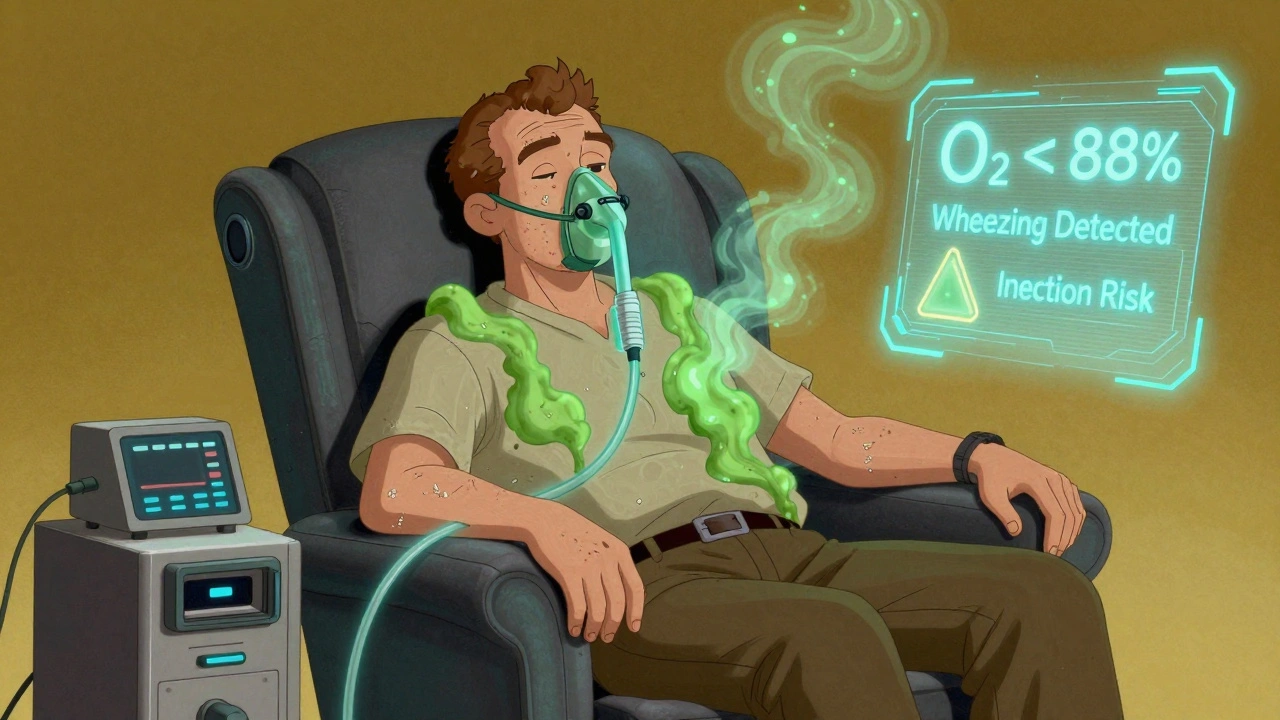
When your breathing gets worse than usual-when you can’t catch your breath even while sitting still, your cough turns violent, and your mucus turns thick and green-you’re not just having a bad day. You’re having a COPD exacerbation. And this isn’t something you can just rest through. Every year, over 10 million people in the U.S. end up in a doctor’s office or emergency room because of this sudden, dangerous spike in symptoms. For someone with COPD, an exacerbation isn’t a minor setback. It’s a full-blown respiratory crisis that can permanently damage your lungs, send you to the hospital, or worse.
What Exactly Is a COPD Exacerbation?
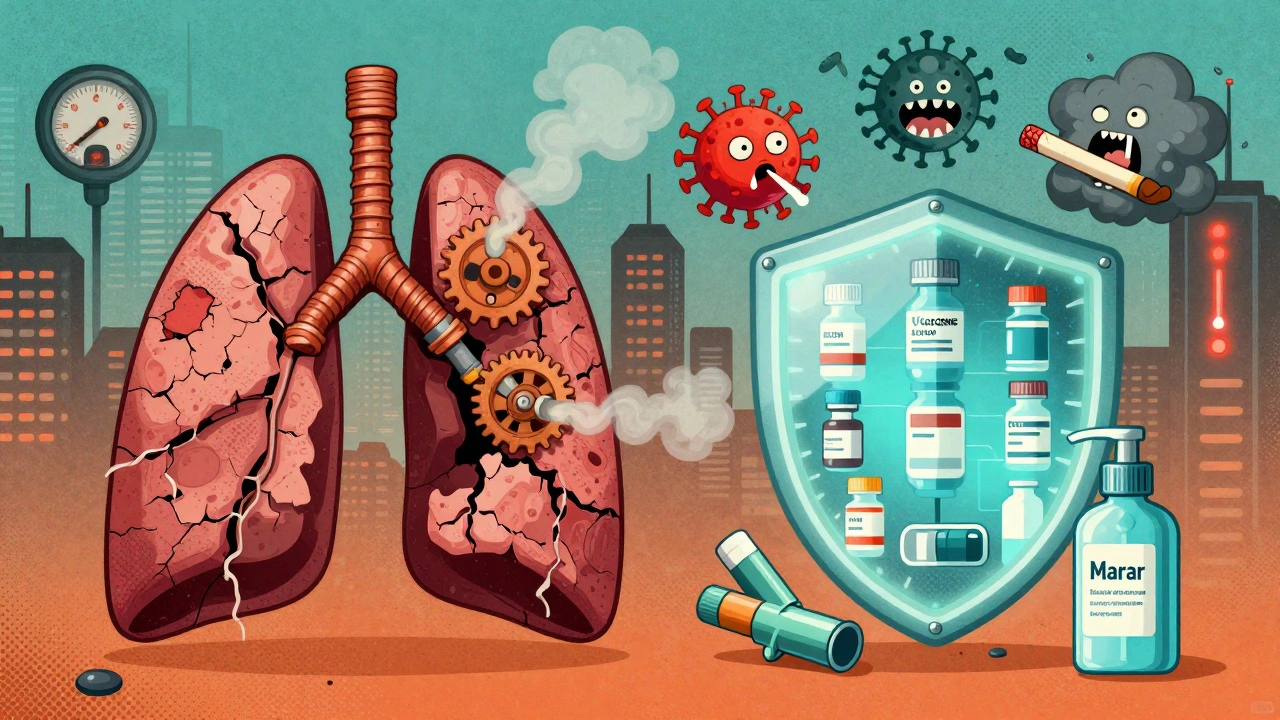
A COPD exacerbation, also called a flare-up or acute worsening, happens when your usual symptoms-like shortness of breath, coughing, and mucus production-suddenly get much worse. It’s not just feeling tired or having a stuffy nose. It’s when your airways swell, tighten, and fill with extra mucus, making it harder than ever to breathe. These flare-ups usually last between 7 to 14 days, but sometimes longer. And here’s the scary part: even after you feel better, your lung function often doesn’t fully recover. Each flare-up leaves behind some permanent damage.Think of your lungs like a pair of old, worn-out bellows. COPD has already weakened them. Now, a flare-up is like slamming them shut too hard-each time, they lose a little more ability to expand. That’s why the more flare-ups you have, the faster your breathing gets worse over time.
What Are the Warning Signs?
Knowing the difference between your normal COPD symptoms and a flare-up can save your life. Here’s what to watch for:- More coughing than usual, especially if it’s worse at night or when you lie down
- Changes in your mucus-more of it, thicker, or a new color like yellow, green, or even streaked with blood
- Shortness of breath that’s worse than your baseline, even during simple tasks like getting dressed
- Wheezing or a tight feeling in your chest that doesn’t go away with your usual inhaler
- Feeling more tired than normal, even after resting
- Difficulty sleeping because you can’t breathe
- Fever, chills, or body aches-signs your body is fighting an infection
- Lips or fingernails turning blue or gray
- Confusion, dizziness, or extreme weakness
If you notice two or more of these symptoms lasting more than two days, you’re likely having an exacerbation. And if you’re struggling to breathe even while sitting still, or your oxygen levels drop, this is an emergency. Don’t wait. Call 911 or go to the ER.
What Causes These Flare-Ups?
Most COPD flare-ups-about 75% of them-are triggered by infections. The rest come from environmental irritants.Infections are the #1 culprit:
- Viruses: Rhinovirus (common cold), flu, RSV, and even coronaviruses can spark a flare-up. During the pandemic, researchers found that while COVID-19 could trigger COPD flare-ups, people already on inhaled COPD meds often had less severe outcomes.
- Bacteria: Haemophilus influenzae, Streptococcus pneumoniae, and Moraxella catarrhalis are the most common bacterial offenders. Pseudomonas aeruginosa is more likely in people with advanced COPD or those on long-term oxygen therapy.
Environmental triggers:
- Smoke-cigarette, cigar, or even secondhand smoke
- Air pollution-smog, industrial fumes, or high ozone days
- Cold, dry air
- Strong smells-perfume, cleaning products, paint fumes
- Dust and allergens
Here’s something important: many people don’t realize that skipping their daily inhalers or not taking their prescribed medications can make flare-ups more likely. COPD meds aren’t just for comfort-they’re your shield.
Why Are Flare-Ups So Dangerous?
It’s not just about breathing harder. During a flare-up, your whole body goes into stress mode. Inflammation spikes-not just in your lungs, but throughout your bloodstream. Levels of markers like C-reactive protein (CRP) and fibrinogen rise sharply, which increases your risk of heart attack or stroke. That’s why COPD flare-ups aren’t just a lung problem-they’re a systemic health emergency.Each flare-up can permanently reduce your lung function. Studies show that even eight weeks after a flare-up, many patients still haven’t regained their pre-flare-up breathing capacity. Over time, that adds up. More flare-ups = faster decline = less independence.
And the numbers don’t lie. COPD was the fourth leading cause of death in the U.S. in 2019. Flare-ups are a major reason why.
What Should You Do During a Flare-Up?
If you suspect a flare-up, don’t wait. Act fast.- Use your rescue inhaler. If you have a short-acting bronchodilator like albuterol, use it as prescribed. If it doesn’t help after a few doses, move to the next step.
- Check your oxygen levels. If you have a pulse oximeter and your reading drops below 88%, that’s a red flag. Call your doctor or go to the ER.
- Start your action plan. If you’ve worked with your doctor to create a COPD Action Plan, follow it. This usually includes starting oral steroids (like prednisone) and/or antibiotics if your mucus has changed color or you have a fever.
- Call your doctor. Don’t wait for symptoms to get worse. Early treatment can keep you out of the hospital.
- Go to the ER if: You’re struggling to speak in full sentences, your lips or fingers are blue, you’re confused or drowsy, or your breathing doesn’t improve after using your inhaler.
Emergency treatment often includes:
- Supplemental oxygen to raise blood oxygen levels
- Oral or IV corticosteroids to reduce airway inflammation
- Antibiotics if there’s evidence of bacterial infection
- Non-invasive ventilation (like a BiPAP machine) if you’re not getting enough oxygen
- Hospitalization for close monitoring and IV meds
Many people think, “I’ll just tough it out.” But delaying treatment increases your chance of ending up in the ICU. Every hour counts.
How to Prevent Flare-Ups
The best way to avoid a flare-up is to stop them before they start.- Get vaccinated. Get your annual flu shot and pneumococcal vaccines (PCV15 or PCV20). These aren’t optional-they’re your first line of defense.
- Take your daily meds. Inhaled bronchodilators and steroids keep your airways open and reduce inflammation. Skipping them makes flare-ups more likely.
- Avoid triggers. Stay indoors on high-pollution days. Use air purifiers. Avoid smoke and strong chemicals. Wear a scarf over your nose and mouth in cold weather.
- Wash your hands. Frequent handwashing and using hand sanitizer can prevent the infections that trigger most flare-ups.
- Monitor your symptoms daily. Keep a simple log: How’s your breathing? Any change in mucus? Are you coughing more? This helps you catch early signs before they become emergencies.
- Don’t ignore early warning signs. If you feel “off” for more than two days, call your doctor. Don’t wait for a crisis.
What to Do After a Flare-Up
Even after you feel better, your body is still recovering. Follow up with your doctor within a week. Ask:- Did I need a change in my maintenance meds?
- Should I get tested for infections like pneumonia or flu?
- Do I need pulmonary rehab to rebuild my strength?
- Is my oxygen level stable now?
Many people go back to their old habits after a flare-up. Don’t. This is your wake-up call. Every flare-up is a reminder that your lungs are fragile-and your actions matter.
Final Thoughts
COPD flare-ups aren’t something you can ignore. They’re not just “bad days.” They’re serious medical events that can shorten your life and steal your independence. But you’re not powerless. By knowing the signs, acting fast, and sticking to your prevention plan, you can cut your risk of flare-ups in half. Your breathing is your lifeline. Protect it like one.How do I know if my COPD symptoms are a flare-up or just a normal bad day?
A flare-up means your symptoms have gotten significantly worse and lasted more than two days. Normal day-to-day variations might include mild tiredness or a little more coughing after activity. A flare-up includes new or worsening symptoms like thicker or colored mucus, increased shortness of breath at rest, fever, or wheezing that doesn’t improve with your rescue inhaler. If you’re unsure, it’s better to check with your doctor early.
Can I treat a COPD flare-up at home?
Mild flare-ups can sometimes be managed at home with your action plan-using rescue inhalers, starting oral steroids or antibiotics if prescribed, and resting. But if your breathing is severely worse, your oxygen level drops below 88%, or you feel confused or dizzy, you need emergency care. Home treatment alone isn’t enough for moderate to severe flare-ups.
Why do I need antibiotics if my COPD flare-up is caused by a virus?
Not all flare-ups are caused by viruses. In fact, about half of them are caused by bacteria, and many are caused by both. Doctors often prescribe antibiotics because it’s hard to tell the exact cause right away. If your mucus turns green or yellow, or you have a fever, bacteria are likely involved. Even if a virus started it, a bacterial infection can follow, making things worse. Antibiotics prevent that secondary infection.
Will I need to be hospitalized every time I have a flare-up?
No. Most mild to moderate flare-ups are treated in an outpatient setting. But if your oxygen levels are dangerously low, you’re not responding to treatment, or you have other health problems like heart disease, hospitalization may be needed. About 1 in 4 people with COPD will need hospital care for a flare-up each year. The goal is to prevent it from getting that bad.
Can COPD flare-ups be prevented completely?
Not completely-but they can be reduced by up to 50% with the right steps. Vaccinations, taking daily medications, avoiding smoke and pollution, washing hands, and having a clear action plan make a huge difference. People who follow their treatment plan closely have far fewer flare-ups and live longer, more active lives.
How long does it take to recover from a COPD flare-up?
Most people start feeling better in 7 to 14 days, but full recovery can take weeks or even months. Studies show that lung function often doesn’t return to pre-flare-up levels, even after eight weeks. That’s why preventing flare-ups is so important-each one leaves lasting damage.
Annie Grajewski
December 4, 2025 AT 22:15James Moore
December 6, 2025 AT 10:49Kylee Gregory
December 8, 2025 AT 04:13Laura Saye
December 9, 2025 AT 07:51luke newton
December 10, 2025 AT 22:15Lynette Myles
December 12, 2025 AT 00:15Ali Bradshaw
December 12, 2025 AT 21:50an mo
December 13, 2025 AT 23:24aditya dixit
December 14, 2025 AT 10:16Juliet Morgan
December 14, 2025 AT 21:20