
Clarithromycin and Calcium Channel Blockers: How This Drug Interaction Can Cause Dangerous Hypotension
 Jan, 9 2026
Calcium Channel Blocker Interaction Checker
This tool checks if your blood pressure medication interacts dangerously with clarithromycin.
Based on FDA guidelines and clinical evidence: FDA Drug Interaction Guidelines
Recommended Action
When you’re prescribed clarithromycin for a sinus infection or pneumonia, you probably don’t think about your blood pressure medication. But if you’re taking a calcium channel blocker like nifedipine or amlodipine, this combination can drop your blood pressure to dangerous levels-sometimes within just two days. It’s not rare. It’s not theoretical. And it’s preventable.
Why This Interaction Happens
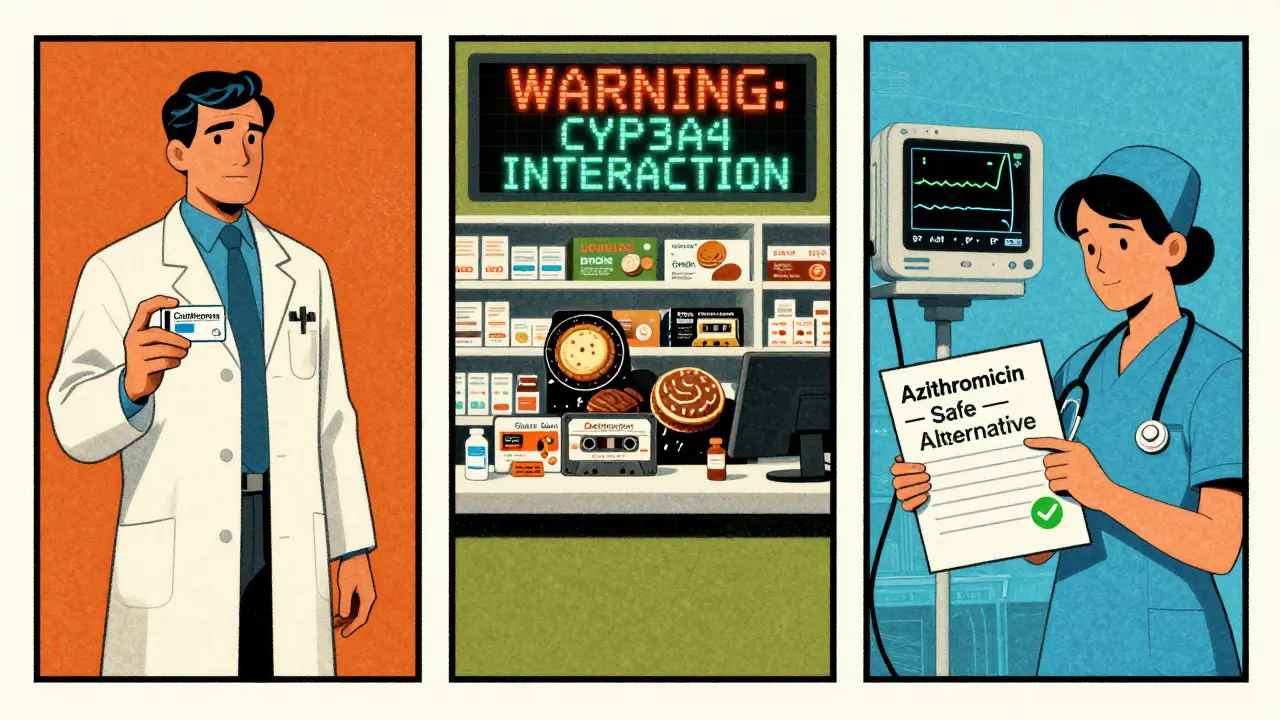
Clarithromycin doesn’t just kill bacteria. It also shuts down a key enzyme in your liver called CYP3A4. This enzyme is responsible for breaking down most calcium channel blockers, especially the dihydropyridine types like nifedipine, amlodipine, and felodipine. When clarithromycin blocks CYP3A4, these drugs don’t get cleared from your body the way they should. Instead, they build up-sometimes to two or three times their normal levels.That’s not just a minor increase. It’s enough to cause your blood vessels to relax too much, your heart to slow down, and your blood pressure to crash. In one documented case, a 76-year-old man’s systolic blood pressure dropped from 130 mm Hg to 70 mm Hg in under 48 hours after starting clarithromycin while on nifedipine. He ended up in the ICU.
Which Calcium Channel Blockers Are Most Dangerous?
Not all calcium channel blockers carry the same risk. The most dangerous are the dihydropyridines:- Nifedipine - Highest risk. Studies show patients on nifedipine plus clarithromycin are over five times more likely to be hospitalized for low blood pressure.
- Felodipine - Also high risk, similar to nifedipine.
- Amlodipine - Most commonly prescribed, so it shows up in the most cases. Risk is lower than nifedipine, but still significant.
- Nicardipine - Moderate risk.
Non-dihydropyridines like verapamil and diltiazem also interact, but their main danger is slowing your heart rate even more. Add a beta-blocker to the mix, and you’re stacking up three drugs that all lower heart rate and blood pressure. That’s a recipe for fainting, falls, or even heart failure.
The Evidence Is Clear-and Alarming
A landmark 2013 study in JAMA followed nearly 200,000 people. Those taking clarithromycin with a calcium channel blocker had a 0.44% chance of being hospitalized for acute kidney injury or severe hypotension. Those taking azithromycin instead? Just 0.22%. That means for every 455 people given clarithromycin instead of azithromycin, one extra person ended up in the hospital.For nifedipine users, the risk was even higher: 1 in 160 people were hospitalized. That’s not a fluke. It’s a pattern confirmed by the FDA, Health Canada, and the American Geriatrics Society. The FDA added a black box warning in 2011-the strongest possible alert-for this exact interaction.
Why Do Doctors Still Prescribe This Combo?
You’d think after 10 years of warnings, this would be rare. But it’s not. A 2016 study found that nearly 13% of clarithromycin prescriptions for people over 65 were given to those already on CYP3A4-substrate drugs like calcium channel blockers. Why? Because clarithromycin is cheap, widely known, and many prescribers still don’t realize how dangerous it is.Even worse, electronic health records often don’t flag it. A 2018 study found only 43% of EHR systems had alerts for this interaction. So unless the pharmacist or doctor manually checks, it slips through.

What Happens When You Take Them Together?
Symptoms usually appear within 24 to 72 hours:- Dizziness or lightheadedness
- Fainting or near-fainting episodes
- Extreme fatigue
- Confusion or blurred vision
- Low urine output (sign of kidney stress)
In one case, a 72-year-old woman on amlodipine and metoprolol developed a systolic blood pressure of 82 mm Hg and a heart rate of 48 beats per minute. She needed IV fluids and hospitalization. Her doctors didn’t connect the dots until it was too late.
The Safe Alternative: Azithromycin
Here’s the good news: there’s a simple fix. Azithromycin works just as well for most infections-and it doesn’t inhibit CYP3A4. It’s not a perfect drug (it can cause stomach upset or, rarely, heart rhythm issues), but it’s safe with calcium channel blockers.After the 2013 study, azithromycin use in patients on CCBs jumped from 52% to 68% within a few years. That’s progress. But it’s not enough. Many clinicians still default to clarithromycin because it’s what they’ve always used.
What You Should Do
If you’re on a calcium channel blocker and your doctor prescribes clarithromycin:- Ask: "Is there a different antibiotic I can take?"
- Specifically ask about azithromycin as an alternative.
- If clarithromycin is the only option, ask for blood pressure monitoring every 4-6 hours for the first 3 days.
- Watch for dizziness, fainting, or reduced urine output. If you feel unusually weak or lightheaded, stop the antibiotic and get checked immediately.
If you’re over 65, have kidney problems, or have heart failure, this interaction is even more dangerous. Your body clears drugs slower, so levels build up faster. Don’t assume your doctor knows your full medication list. Bring a list to every appointment.
What About Other Antibiotics?
Erythromycin is just as risky as clarithromycin-both are strong CYP3A4 inhibitors. Avoid it too.Other macrolides like fidaxomicin or newer drugs like lefamulin don’t interact the same way. But they’re not always available or covered by insurance.
For most common infections-sinusitis, bronchitis, strep throat-azithromycin is just as effective. And it’s safe.
The Bigger Picture
This isn’t just about one drug pair. It’s about how often we overlook simple, life-saving checks in medicine. Calcium channel blockers are among the most prescribed drugs in the world. Clarithromycin is one of the most common antibiotics. Millions of people take both. And every year, around 8,400 Americans are hospitalized and 320 die because of this interaction.It’s not an accident. It’s a systemic failure. But it’s fixable.
If you’re a patient: speak up. If you’re a caregiver: check the meds. If you’re a clinician: switch to azithromycin. It’s that simple.
Can clarithromycin cause low blood pressure even if I’ve been on calcium channel blockers for years?
Yes. The interaction doesn’t depend on how long you’ve been taking the calcium channel blocker. It happens because clarithromycin suddenly blocks the enzyme that breaks down the drug. Even if your blood pressure has been stable for years, adding clarithromycin can cause a rapid, dangerous drop within days.
Is amlodipine safer than nifedipine with clarithromycin?
Amlodipine has a lower risk than nifedipine, but it’s still dangerous. Clarithromycin can increase amlodipine levels by 60%, which is enough to cause hypotension, especially in older adults or those with kidney issues. Never assume it’s "safe enough." Azithromycin is still the better choice.
What should I do if I’ve already taken clarithromycin with my blood pressure pill?
Monitor your blood pressure closely for the next 72 hours. If your systolic pressure drops below 90 mm Hg, or you feel dizzy, faint, or unusually tired, stop taking clarithromycin and seek medical help immediately. Don’t wait for symptoms to get worse.
Can I take clarithromycin if I stop my calcium channel blocker for a few days?
No. Stopping your calcium channel blocker without medical supervision can cause rebound hypertension, heart attack, or stroke. Never stop a blood pressure medication on your own. The solution isn’t to stop one drug-it’s to switch to a safer antibiotic like azithromycin.
Are there any over-the-counter meds that make this worse?
Yes. Grapefruit juice is a strong CYP3A4 inhibitor too. If you’re on a calcium channel blocker, avoid grapefruit juice entirely-even without clarithromycin. Also avoid certain antifungals like ketoconazole and some HIV medications. Always check with your pharmacist before taking anything new.
Why don’t pharmacies always warn me about this?
Many pharmacy systems still don’t have alerts for this interaction. Even when they do, the warning might be buried or ignored. Pharmacists are overworked. Don’t rely on them to catch everything. If you’re on a calcium channel blocker, always ask your pharmacist: "Is this antibiotic safe with my blood pressure medicine?"
Mario Bros
January 11, 2026 AT 09:24Christine Milne
January 13, 2026 AT 07:57Bradford Beardall
January 14, 2026 AT 07:32McCarthy Halverson
January 14, 2026 AT 16:12Michael Marchio
January 16, 2026 AT 15:48Jake Kelly
January 17, 2026 AT 18:47Ashlee Montgomery
January 18, 2026 AT 15:55neeraj maor
January 18, 2026 AT 18:27Jake Nunez
January 19, 2026 AT 06:05Kunal Majumder
January 20, 2026 AT 03:18Aurora Memo
January 20, 2026 AT 10:56chandra tan
January 20, 2026 AT 11:57Dwayne Dickson
January 21, 2026 AT 19:44Ted Conerly
January 21, 2026 AT 22:30Faith Edwards
January 23, 2026 AT 01:58