
Cholinergic Urticaria: Heat-Induced Hives and How to Prevent Them
 Mar, 17 2026
When your skin breaks out in tiny, itchy bumps the moment you start sweating - whether from a workout, a hot shower, or even eating spicy food - it’s not just a bad reaction. It could be cholinergic urticaria, a real and often misunderstood condition that turns your body’s natural response to heat into a painful nuisance. Unlike allergies to pollen or peanuts, this isn’t triggered by an external substance. It’s your own body overheating that sets off the reaction. And for millions of people worldwide, it’s a daily struggle.
What Exactly Is Cholinergic Urticaria?
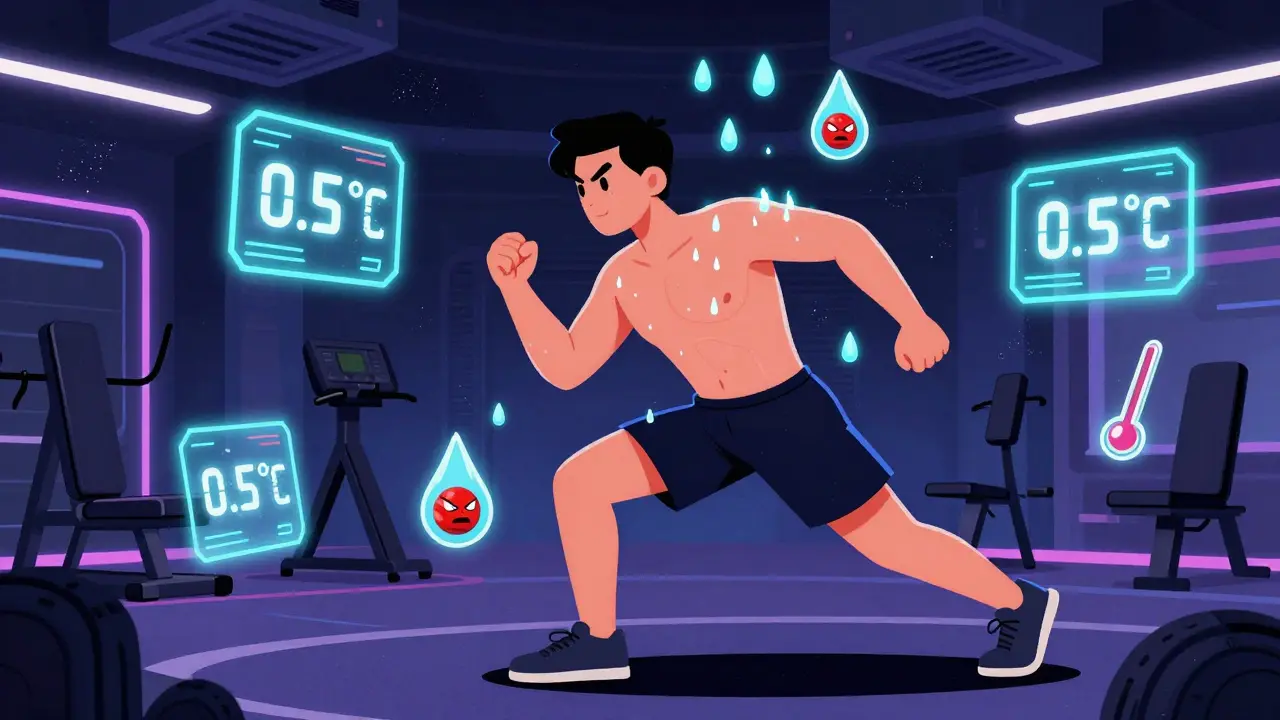
Cholinergic urticaria (CU), sometimes called heat hives or sweat hives, is a type of physical urticaria. That means it’s not caused by an allergen, but by a physical trigger - in this case, an increase in body temperature. When your core temperature rises just 0.5°C above normal (around 98.6°F), your body’s nerve fibers near sweat glands send out signals that mistakenly tell immune cells to release histamine. That’s what causes the red, itchy bumps.
The symptoms are unmistakable: clusters of 1-3 millimeter red dots surrounded by larger areas of redness, usually appearing on the chest, upper back, face, and arms. People describe them as feeling like hundreds of tiny needles under the skin. They show up fast - within 2 to 15 minutes of getting hot - and fade within 30 to 90 minutes once you cool down. Unlike other hives, they rarely appear on the palms or soles, and they don’t last for hours or days.
It typically starts in teens or early 20s. Studies show most people first notice it between ages 15 and 25. While it’s not rare - affecting 5-7% of all people who get hives - many never get diagnosed. Too often, it’s mistaken for exercise-induced anaphylaxis or even a skin infection.
Why Does Heat Trigger This?
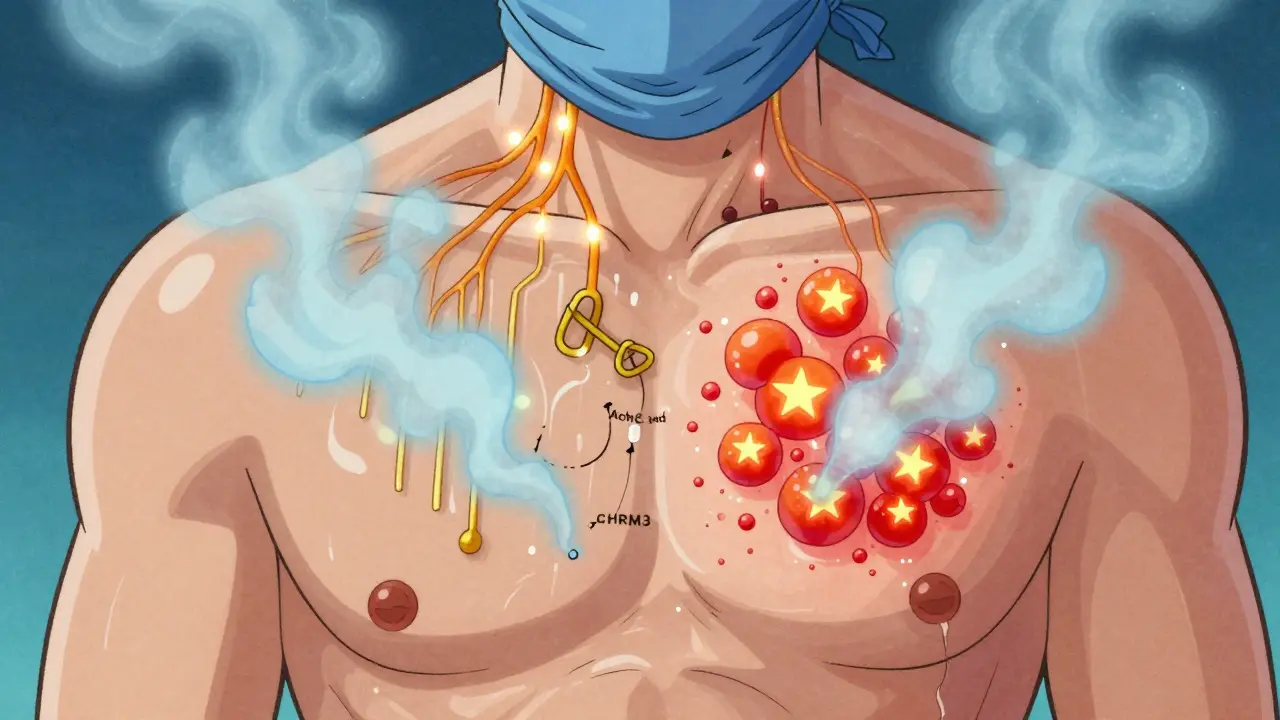
The science behind cholinergic urticaria is fascinating. It’s not about being allergic to sweat. It’s about how your nerves and immune system talk to each other. Research from the Journal of Investigative Dermatology found that people with CU have lower levels of two key proteins in their sweat glands: acetylcholinesterase (AchE) and the muscarinic receptor CHRM3. These normally help calm down nerve signals. When they’re missing, the signal goes unchecked.
That triggers a chain reaction: mast cells in the skin release histamine, and immune cells like T-cells rush in, attracted by chemical signals called CCL2, CCL5, and CCL17. This creates inflammation - and those telltale bumps. The condition is chronic for most. About 70% of people keep having symptoms for years. But here’s the good news: roughly 30% of cases resolve on their own within 7 to 10 years.
What Makes It Different From Other Hives?
Not all hives are the same. Knowing the difference matters because treatment and prevention vary.
- Cold urticaria: Happens when skin is exposed to cold air or water. Symptoms appear in minutes, but only on exposed areas like hands or face.
- Solar urticaria: Triggered by sunlight. Only affects skin hit by UV rays.
- Dermatographism: You get raised lines when you scratch or rub your skin. Very different pattern - linear, not clustered.
- Pressure urticaria: Takes 6-8 hours to show up after something tight presses into your skin, like a belt or backpack strap.
Cholinergic urticaria is unique because it’s tied to internal heat - not external cold, light, or pressure. It’s the only type that’s directly linked to sweating. That’s why even a hot bath, a spicy meal, or stress-induced sweating can set it off.
How Do You Know If You Have It?
Most people figure it out on their own: “Every time I work out, I break out.” But doctors use a simple test to confirm it: the passive warming test. You sit in a warm room or wear a heating blanket until your core temperature rises just 0.5°C. If you develop those classic bumps within 15 minutes, it’s CU. This test works in 94% of confirmed cases.
There’s no blood test or skin prick test for it. Diagnosis is based on symptoms and trigger patterns. If you’ve had repeated episodes of heat-triggered hives, especially with flushing and tingling, it’s likely CU. The American College of Allergy, Asthma, and Immunology says you should be evaluated if it’s happening regularly - especially if you’ve ever felt dizzy, short of breath, or had a rapid heartbeat during an episode.
What Triggers It - And What Doesn’t?
Heat is the main trigger, but it’s not always obvious. Here’s what actually sets it off:
- Exercise - especially cardio like running, cycling, or HIIT (reported as the #1 trigger by 9 in 10 patients)
- Hot showers or baths
- Spicy foods - capsaicin raises internal body temperature
- Emotional stress - anxiety or excitement can make you sweat
- Wearing heavy or non-breathable clothing
- Hot weather or poorly ventilated rooms
What doesn’t trigger it? Cold air, sunlight (unless it heats you up), direct contact with chemicals, or insect bites. If your hives appear after touching something, it’s probably not cholinergic urticaria.
How to Prevent Flare-Ups
There’s no cure - but you can take control. Prevention is all about managing body temperature before it spikes.
- Exercise smart: Work out in air-conditioned spaces. Use fans. Avoid high-intensity workouts in heat. Try swimming - water keeps you cool. Low-impact activities like yoga or weightlifting (with breaks) are often better tolerated.
- Wear the right clothes: Choose moisture-wicking fabrics like polyester or merino wool. Avoid cotton - it holds sweat and traps heat. Loose fits help air circulate.
- Cool down before and after: Splash your wrists or neck with cold water before exercise. Take a cool shower immediately after.
- Watch your diet: If spicy foods trigger you, cut back. Hot drinks like tea or coffee can also raise core temperature. Keep meals mild.
- Manage stress: Practice breathing exercises, meditation, or mindfulness. Stress-induced sweating is a real trigger.
- Monitor your threshold: Many people find their personal trigger point is around 38.1°C (100.6°F). Using a wearable thermometer can help you learn how much heat your body can handle before breaking out.
What Treatments Actually Work?
First-line treatment? Second-generation antihistamines. These are non-drowsy and work better than older ones.
- Cetirizine (Zyrtec): 10-20mg daily. Studies show 68% of patients see improvement.
- Loratadine (Claritin): 10mg daily. Less potent than cetirizine but still effective.
If those don’t help, doctors may increase the dose up to 4 times the normal amount. A 2023 study found 73% of patients responded to higher doses. Some combine antihistamines with H2 blockers like famotidine (Pepcid) - 20mg twice a day. This helped 57% of people who didn’t respond to antihistamines alone.
For severe cases, doctors may prescribe omalizumab (Xolair), a biologic shot originally for asthma and chronic hives. Approved for CU in Europe in 2023, it helped 78% of patients in trials. But it’s expensive - over $3,500 per month in the U.S. - and not covered by all insurance.
Emergency meds? If you’ve ever had trouble breathing, dizziness, or a fast heartbeat during an episode, you should carry an epinephrine auto-injector. About 8.7% of CU patients need this. Don’t wait until it’s too late.

Living With It - Real-Life Impact
It’s more than skin deep. People with CU report missing weddings, avoiding gyms, skipping vacations, and even turning down job interviews because they fear overheating. One Reddit user said they missed 14 weddings in three years. Another said they couldn’t wear a suit to work because the fabric trapped heat.
Medication side effects are a real problem. First-generation antihistamines like diphenhydramine (Benadryl) cause drowsiness - 58% of users in a 2022 survey said it hurt their work performance. That’s why switching to non-drowsy options is critical.
Support helps. Apps like the Urticaria Center’s tracker let you log temperature, activity, and symptoms. Users report 85% satisfaction. Online communities (like Reddit’s r/urticaria) offer practical tips - like using cooling towels or wearing a damp bandana during workouts.
What’s Next? Research and Hope
Scientists are making progress. Three new drugs are in clinical trials as of 2023: one targeting IL-4 receptors (dupilumab), another blocking CRTH2 receptors (fevipiprant), and a third a new mast cell stabilizer (PQ-12). These could offer better options than antihistamines.
Wearable tech is also stepping in. Companies like ThermaCare, working with the Mayo Clinic, are testing smart clothing that cools skin during exercise. Early tests show a 63% drop in flare-ups. By 2028, we may see clothing that monitors your core temperature and adjusts cooling in real time.
But there’s a looming concern: climate change. Rising global temperatures could increase CU cases by 15-25% in temperate regions by 2040. That means more people will need to learn how to manage heat-triggered hives.
Final Thoughts
Cholinergic urticaria isn’t dangerous for most - but it’s disruptive. You don’t have to live in fear of sweating. With the right tools - antihistamines, smart clothing, temperature awareness, and trigger avoidance - you can reclaim your life. It’s not about avoiding heat forever. It’s about learning how to move through it without letting it control you.
Can cholinergic urticaria go away on its own?
Yes, about 30% of people with cholinergic urticaria see their symptoms disappear completely within 7 to 10 years. It’s more likely to resolve in people who develop it in their teens or early 20s. But for most, it’s a chronic condition that requires ongoing management.
Is cholinergic urticaria an allergy?
No, it’s not an allergy. Allergies happen when your immune system reacts to a foreign substance like pollen or peanuts. Cholinergic urticaria is a physical reaction - your body overreacts to its own heat and sweat. It’s classified as a physical urticaria, not an allergic one.
Can spicy food cause cholinergic urticaria?
Yes. Spicy foods, especially those with capsaicin (like chili peppers), raise your internal body temperature and can trigger hives in people with CU. It’s not the spice itself - it’s the heat it generates inside you. If you notice bumps after eating hot food, it’s a common trigger.
Why do I get hives only on my chest and back?
That’s typical. Studies show 78% of CU cases appear on the chest, 65% on the face, and 62% on the upper back. These areas have more sweat glands and are more prone to heat buildup. The palms, soles, and mucous membranes rarely get affected because they have fewer eccrine sweat glands.
Are antihistamines the only treatment?
They’re the first line, but not the only option. If antihistamines don’t work, doctors may prescribe higher doses, add H2 blockers like famotidine, or use biologics like omalizumab. For severe cases with breathing issues, an epinephrine auto-injector may be needed. Lifestyle changes - like cooling strategies and trigger avoidance - are equally important.
Can I still exercise with cholinergic urticaria?
Absolutely - but you need to adjust how. Work out in cool environments, wear moisture-wicking clothes, take breaks to cool down, and avoid intense cardio in hot weather. Many people successfully stay active by switching to swimming, yoga, or strength training. The goal isn’t to stop moving - it’s to move smarter.
Is cholinergic urticaria getting more common?
Yes, likely. Research suggests rising global temperatures could increase CU cases by 15-25% in temperate regions by 2040. Warmer climates already have higher rates - 0.11% in Southeast Asia versus 0.03% in Scandinavia. As heat becomes more frequent, more people will experience this condition.
MALYN RICABLANCA
March 18, 2026 AT 01:40gemeika hernandez
March 19, 2026 AT 22:26Nicole Blain
March 21, 2026 AT 04:27Kathy Underhill
March 21, 2026 AT 09:50jerome Reverdy
March 21, 2026 AT 13:58Andrew Mamone
March 22, 2026 AT 12:34Emily Hager
March 23, 2026 AT 17:04Melissa Starks
March 23, 2026 AT 17:34Lauren Volpi
March 25, 2026 AT 17:33Kal Lambert
March 26, 2026 AT 02:22