
CBT-I vs Sleep Medications: Finding the Best Treatment for Insomnia
 Apr, 24 2026
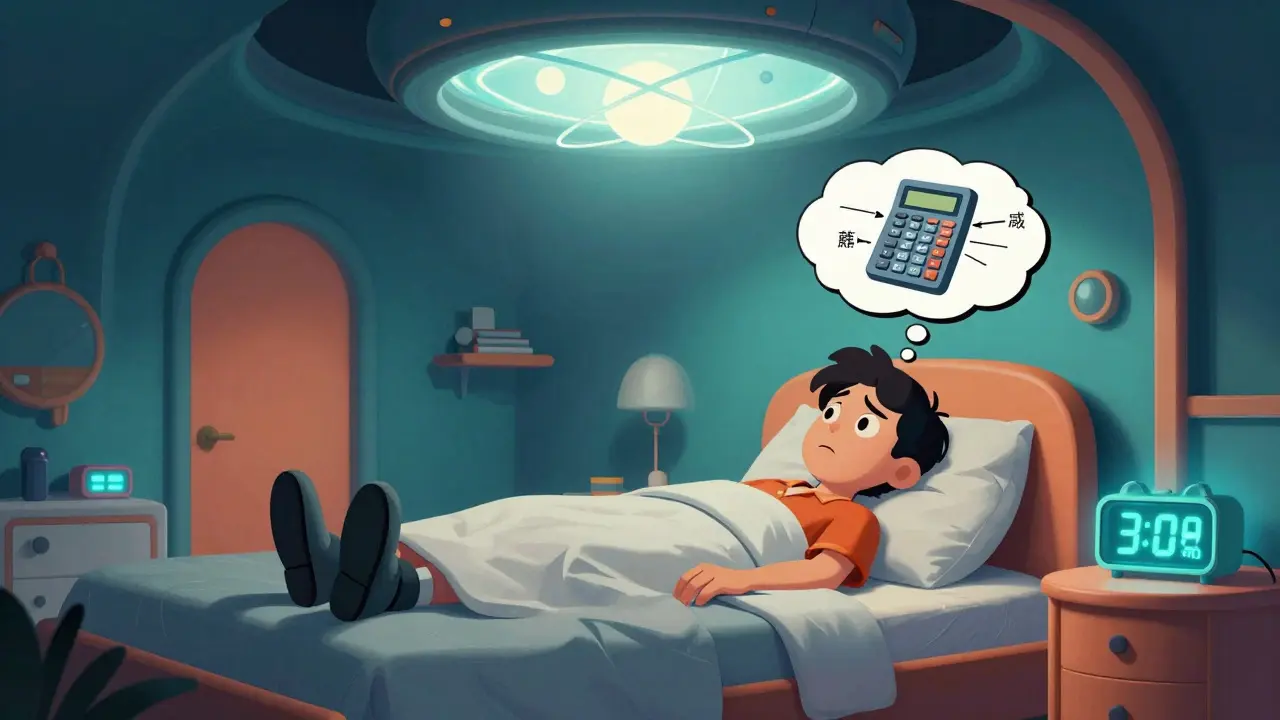
Imagine lying awake at 3:00 AM, staring at the ceiling and doing the mental math of how many hours of sleep you'll get if you drift off right now. For millions of people, this isn't just a bad night; it's a nightly ritual. When you're exhausted, the quickest fix seems to be a pill, but that often leads to a frustrating cycle where the medicine stops working or leaves you feeling like a zombie the next morning. The real question is: do you want a temporary chemical bridge to sleep, or do you want to rewire how your brain handles rest?
The Gold Standard: What is CBT-I?
When doctors talk about the first-line treatment for chronic sleep issues, they aren't talking about sedatives. They're talking about Cognitive Behavioral Therapy for Insomnia is a structured, evidence-based psychological treatment that targets the specific thoughts, feelings, and behaviors that keep you awake. Also known as CBT-I, this approach doesn't just mask the symptoms; it dismantles the mechanisms that maintain insomnia.
Unlike general talk therapy, Cognitive Behavioral Therapy for Insomnia is highly tactical. It usually happens over 6 to 8 weekly sessions. The goal is to break the "conditioned arousal" where your brain begins to associate the bed with frustration and wakefulness rather than sleep. If you've ever felt wide awake the moment your head hits the pillow but felt sleepy on the couch, you've experienced this phenomenon.
The Core Pillars of Sleep Retraining
CBT-I isn't one single technique; it's a toolkit of several different strategies. Each one attacks a different part of the sleep problem.
- Stimulus Control Therapy (SCT): This is all about associations. The rule is simple: the bed is for sleep and sex only. No scrolling on your phone, no working on a laptop, and no worrying. If you aren't asleep after about 20 minutes, you get out of bed. This stops your brain from learning that the bed is a place to be awake and anxious.
- Sleep Restriction Therapy (SRT): This sounds counterintuitive, but it's often the most effective part of the process. You limit your time in bed to match the actual amount of sleep you're getting. If you only sleep five hours despite lying in bed for eight, you restrict your window to five hours. This builds up a "sleep debt" that makes you fall asleep faster and stay asleep longer.
- Cognitive Restructuring: This targets the "sleep anxiety" that keeps your heart racing. It involves challenging catastrophic thoughts like, "If I don't get 8 hours tonight, I will fail my presentation tomorrow." By replacing these with more realistic perspectives, you lower your physiological arousal.
- Sleep Hygiene Education: This covers the basics-keeping the room cool, avoiding caffeine late in the day, and avoiding alcohol before bed, which might help you fall asleep but ruins the quality of your deep sleep.
Pills vs. Therapy: The Long-Term Trade-off
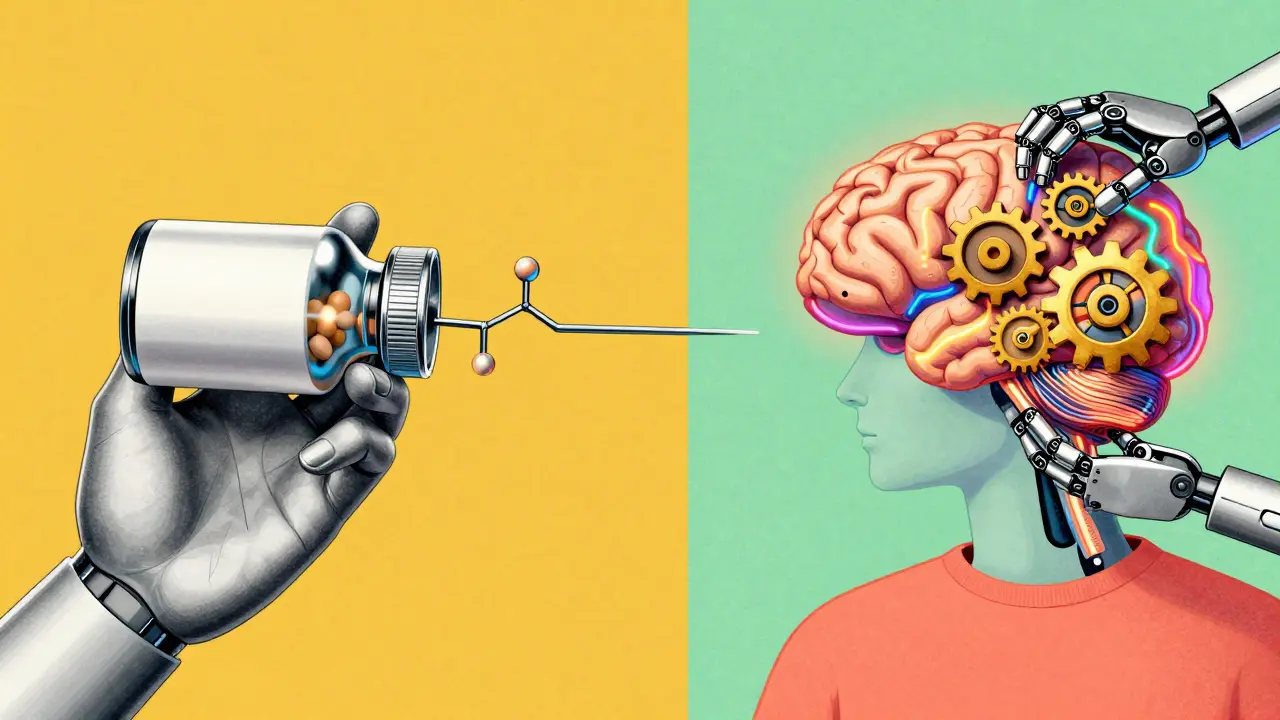
For many, the lure of medication is the speed of the result. A sedative can knock you out tonight. However, the data shows a stark difference in where you land six months later. While sedative-hypnotics like Zolpidem is a widely prescribed sedative-hypnotic medication used for the short-term treatment of insomnia, it comes with a significant catch: tolerance. About 42% of users find the drug less effective within just eight weeks.
| Feature | CBT-I | Sleep Medications |
|---|---|---|
| Onset of Action | Gradual (weeks) | Rapid (minutes/hours) |
| Long-term Efficacy | High (Maintained for years) | Lower (Tolerance develops) |
| Side Effects | Initial daytime sleepiness | Grogginess, dependency, memory issues |
| Target | Underlying cause/behavior | Symptom suppression |
| Maintenance Rate | ~68% at 12 months | ~32% at 12 months |
The most striking finding from recent research is that while both options might look similar during the first month, the therapy group continues to improve while the medication group often plateaus or regresses. In fact, some studies show a 62% greater reduction in insomnia severity for those who stick with the cognitive restructuring part of the therapy compared to those who don't.
The Middle Ground: Combination Therapy
Is it always an "either-or" choice? Not necessarily. For people with severe insomnia, a combination of CBT-I and short-term medication can be the most durable path. This approach uses medication to provide immediate relief and lower the anxiety around sleep, while CBT-I does the heavy lifting of fixing the biological and psychological clock. Data suggests that about 74% of people using this combined approach maintain significant improvement over six months, which is higher than using either method in isolation.
Digital CBT-I: Sleep Therapy in Your Pocket
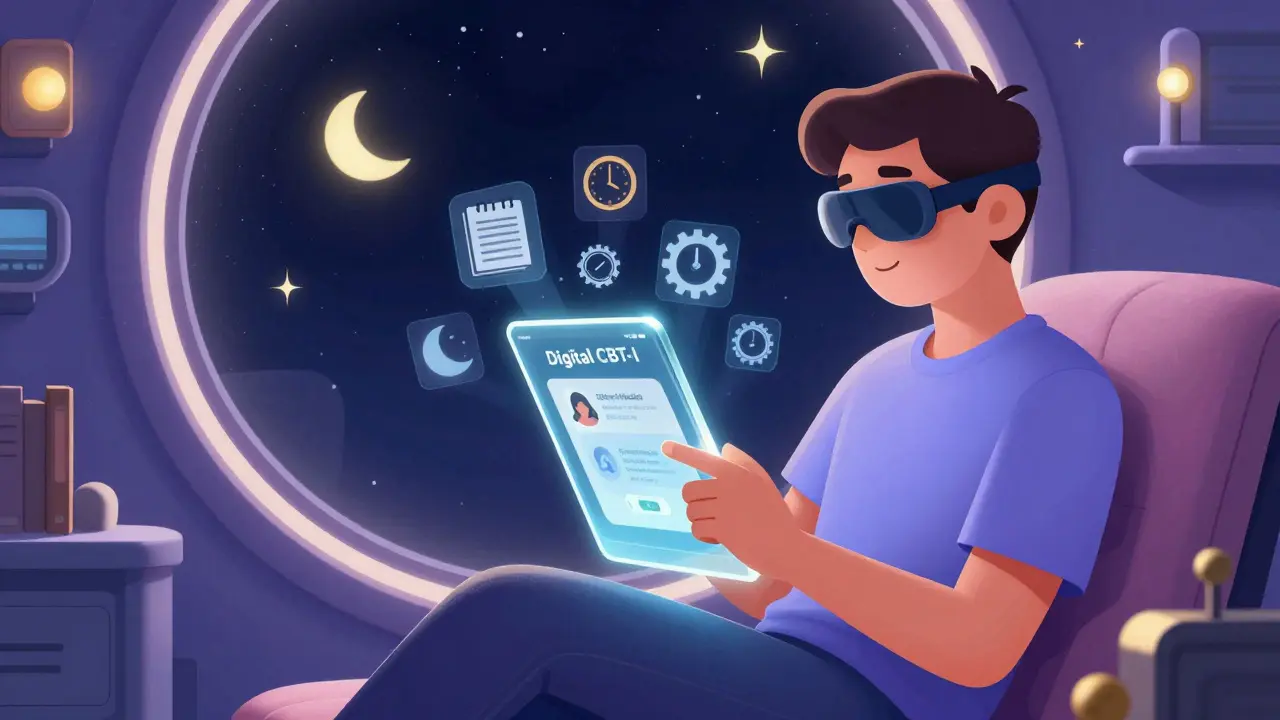
One of the biggest hurdles to this therapy has been access. Until recently, you had to find a specialized provider, and many insurance plans didn't cover it. This is where Digital CBT-I is a software-based delivery of Cognitive Behavioral Therapy for Insomnia via apps or web platforms. Examples include platforms like dCBT-I programs such as Sleepio or Somryst.
Digital versions are proving to be nearly as effective as in-person visits. They use algorithms to adjust your sleep window based on your daily sleep diary entries. For older adults, AI-tailored versions of these programs have actually improved treatment response by 37%, making it easier for those who aren't tech-savvy to get the help they need.
Practical Tips for Starting Your Journey
If you're deciding how to proceed, keep in mind that the first few weeks of CBT-I-specifically the sleep restriction phase-can be brutal. You will likely feel more tired before you feel better. This is a normal part of the process. To increase your chances of success:
- Keep a Sleep Diary: Track exactly when you get in bed and when you actually fall asleep. Without data, the therapy is just guessing.
- Commit to a Fixed Wake Time: Whether you slept two hours or ten, get up at the same time every single day, including weekends. This is the anchor for your circadian rhythm.
- Manage Your Environment: Ensure your bedroom is a sanctuary. Use blackout curtains and keep the temperature around 65°F (18°C).
- Be Patient with the "Hump": Most people report a significant jump in sleep efficiency after week three. Don't quit during the second week when the sleep restriction feels the hardest.
Will CBT-I work if I've had insomnia for decades?
Yes. In fact, long-term studies show that the reductions in insomnia severity can be maintained for 10 years or more after treatment. Because it targets the behaviors that maintain insomnia rather than just the initial cause, it's effective regardless of how long you've been struggling.
Is sleep restriction safe?
For most adults, it is safe, but it should be done under guidance. Most protocols ensure you don't restrict sleep to less than 5 hours per night. People with certain conditions, like bipolar disorder (which can trigger mania with sleep deprivation) or severe epilepsy, should only do this under strict medical supervision.
Can I take my sleep meds while doing CBT-I?
Many people do. Combination therapy can be very effective. However, you should discuss a "tapering" plan with your doctor. If you stay on high doses of sedatives, it can be harder to feel the natural effects of sleep restriction and stimulus control.
How long does it take to see results?
While some people feel a difference in the first week, most see a significant shift in sleep efficiency by the third or fourth session. The full course usually lasts 6-8 weeks to ensure the new habits are locked in.
What is the difference between sleep hygiene and CBT-I?
Sleep hygiene is a set of healthy habits (like avoiding caffeine). While helpful, sleep hygiene alone rarely cures chronic insomnia. CBT-I includes sleep hygiene but adds the powerful behavioral changes (like SRT and SCT) and cognitive tools needed to actually break the cycle of wakefulness.
Next Steps for Different Needs
If you're feeling overwhelmed by the options, here is a quick guide on where to start based on your situation:
- If you need immediate relief for a short-term crisis: Talk to your doctor about a short-term prescription of a sedative-hypnotic, but ask for a plan to transition to therapy to avoid dependency.
- If you have a busy schedule and can't visit a clinic: Look for an FDA-cleared digital CBT-I platform. These are often more affordable and fit into your daily routine.
- If you've tried everything and nothing works: Seek out a certified sleep specialist who can provide a full clinical evaluation and a tailored CBT-I program, possibly combining it with low-dose medication.
Carol Yang
April 26, 2026 AT 12:19this sounds like a total game changer for anyone who's just tired of the pill cycle
Vijay AGarwal
April 27, 2026 AT 18:13Absolutely revolutionary! I have seen people completely transform their lives by ditching the chemical crutches and embracing the grueling but glorious path of CBT-I! It is a mental marathon, but the finish line is a deep, natural sleep that feels like a miracle from the heavens!
Majestic Blue Band
April 29, 2026 AT 14:30It's funny how they push this 'gold standard' therapy when you have to wonder who is actually funding these studies and why they want us to 'rewire' our brains through software apps that probably just harvest our biological data for some shadowy corporate entity to sell back to us as targeted insurance premiums, and honestly, the idea that restricting sleep actually helps is just a way to make us more compliant and exhausted so we don't notice the systemic manipulation of our circadian rhythms by the very devices they tell us to use for therapy, which is just a loop of control designed to make us dependent on 'digital' solutions instead of actually addressing the environmental toxins they're pumping into our air that cause the insomnia in the first place.
Anand Mehra
May 1, 2026 AT 05:39pill is just a bandage logic is the cure
Gauri Parab
May 1, 2026 AT 06:53The simplistic presentation of this data is almost quaint. Any serious analyst would tell you that the 'maintenance rate' is a skewed metric that ignores the socioeconomic disparity of who can actually afford 8 weeks of specialized therapy. It's quite amusing that people believe a digital app can replicate the nuance of a clinical environment. Truly a middle-class fantasy of efficiency.
Nikita Shabanov
May 2, 2026 AT 15:57From a professional standpoint, the stimulus control aspect is the most critical part. Many people fail because they try to 'fight' the wakefulness while staying in bed, which only reinforces the anxiety. Getting out of bed is the only way to break that neural association.
Kristen O'Neal
May 3, 2026 AT 03:58I really appreciate the mention of combination therapy. It seems so much more compassionate to acknowledge that some of us need a bit of help to even get to the starting line of CBT-I. It's a great way to bridge the gap!
Nila Sawyer
May 3, 2026 AT 04:31Oh my gosh, this is just so inspiring!! 🌟 I can't believe how much of a difference a little bit of discipline and the right tools can make in our lives!! 🌈 Even if the first few weeks are a struggle, just imagine the feeling of finally waking up refreshed and ready to conquer the world!! Let's all support each other through the 'hump' and get our sleep back!! 💪✨💖
Brittney Prince
May 3, 2026 AT 11:43typical big pharma move, just swap a pill for an app and call it a cure. they probably just want to track our sleep patterns to see when we're most vulnerable to ads
suresh kumar
May 4, 2026 AT 19:36I bet the people doing sleep restriction are just dreaming about spicy food in their 5-hour windows lol. Imagine the sheer chaos of a brain that's been starved of shut-eye just trying to function at a desk job. It's a wild ride for the neurons!
sachin singh
May 6, 2026 AT 01:35It is heartening to see such a structured approach to a problem that often feels chaotic. The emphasis on the sleep diary is particularly impressive as it transforms a subjective struggle into objective data.