
Blood Thinner Bleeding: When to Seek Emergency Care
 Feb, 1 2026
Blood Thinner Bleeding Emergency Checker
Is this bleeding an emergency?
This tool helps you determine whether your bleeding symptoms require immediate emergency care or can be managed at home. Remember: Most bleeding on blood thinners isn't life-threatening, but certain signs require urgent medical attention.
When you're on a blood thinner, even a small cut can feel terrifying. You know the medicine is keeping you safe from clots-strokes, heart attacks, pulmonary embolisms-but now you're scared it might make you bleed too much. That fear is real. And it's why so many people end up in the emergency room over something that doesn't need to be an emergency. The truth? Most bleeding on blood thinners isn't life-threatening. But some signs? They are. Knowing the difference can save your life.
What Blood Thinners Actually Do
Blood thinners-also called anticoagulants-don't make your blood thin like water. They slow down the clotting process. Common ones include warfarin, apixaban (Eliquis), rivaroxaban (Xarelto), dabigatran (Pradaxa), and heparin. These drugs are prescribed for conditions like atrial fibrillation, deep vein thrombosis, or after a pulmonary embolism. Without them, your risk of stroke can be up to 70% higher.But every time your blood clots less easily, you bleed more easily. That’s the trade-off. About 3% of people on these meds have a major bleeding event each year. For most, it’s manageable. For a few, it’s deadly. The key isn’t avoiding all bleeding-it’s knowing when it’s dangerous.
When Bleeding Is a Medical Emergency
Not all bleeding needs an ER visit. But these signs do:- Vomiting blood or coughing up blood-bright red or dark, coffee-ground-looking material. This could mean bleeding in your stomach or lungs.
- Blood in your urine-pink, red, or brown color. It’s not normal, even if it only happens once.
- Black, tarry stools-this isn’t from eating beets. It means bleeding in your digestive tract, possibly from your stomach or intestines.
- Nosebleeds lasting longer than 30 minutes, even after firm pressure. If you’ve been pinching your nose for half an hour and it’s still flowing, get help.
- Severe bruising-especially if it shows up without injury, spreads quickly, or is swollen and painful. This can signal internal bleeding under the skin.
- Sudden, severe headache, confusion, vision changes, or weakness on one side of your body. These could mean bleeding in the brain. Even a minor head bump can lead to this. Don’t wait-go now.
- Sharp chest pain or trouble breathing-could be a sign of internal bleeding around the lungs or heart.
- Extreme dizziness, fainting, or feeling like you’re going to pass out. This means your body is losing too much blood too fast.
- Heavy menstrual bleeding-soaking through a pad or tampon every hour for more than two hours. That’s not normal, even for you.
These aren’t "maybe" situations. They’re red flags. If you’re on a blood thinner and you see any of these, call 999 or go to the nearest emergency department. Don’t wait. Don’t call your doctor first. Internal bleeding can turn fatal in under an hour.
What Counts as Minor Bleeding (And How to Handle It)
Most bleeding on blood thinners is annoying, not dangerous. Think nosebleeds that stop after 15 minutes, small cuts that take longer than usual to clot, or bleeding gums when you brush. These are common-about half of all ER visits by people on anticoagulants are for these types of issues.Here’s what to do:
- Apply firm, continuous pressure for at least 10 minutes. No peeking. Don’t check every 30 seconds. Press hard enough that it hurts a little. This is how you stop the bleed.
- Elevate the area-raise your arm, leg, or head above heart level if you can.
- For nosebleeds, pinch the soft part of your nose (not the bridge) and lean slightly forward. Spit out any blood, don’t swallow it.
- Don’t use hydrogen peroxide or alcohol on cuts. They irritate tissue and delay healing. Use clean water and a bandage.
- Wait 5-7 minutes for minor cuts to stop. If it’s still bleeding after 15 minutes of pressure, then it’s time to seek help.
Many people panic and stop their medication after a nosebleed or cut. That’s the worst thing you can do. Stopping your blood thinner-even for a day-can spike your risk of stroke by 300% in the first week. A study from the Michigan Anticoagulation Quality Improvement Initiative found that 68% of people who stopped their meds after minor bleeding had a clot within 30 days.
Why You Shouldn’t Stop Your Medication
It’s tempting. You bleed, you’re scared, so you skip a dose. Maybe two. Maybe more. But here’s what happens: your body starts forming clots again within 24-48 hours. And if you have atrial fibrillation, a history of clots, or a mechanical heart valve? That’s when disaster strikes.One Reddit user, u/ClotSurvivor, shared: "I stopped my blood thinner after a bad cut and had a PE two weeks later-don’t be like me." That’s not an isolated story. The American Journal of Managed Care found that patients who got proper education on managing minor bleeding reduced unnecessary ER visits by 37% and stayed on their meds 33% more often.
Instead of stopping your medication, call your doctor or anticoagulation clinic. Most clinics offer 24/7 phone lines for exactly this. They can tell you whether to keep taking your dose, adjust it, or come in for a blood test. You don’t need to go to the ER for every little bleed.
New Tools Are Changing the Game
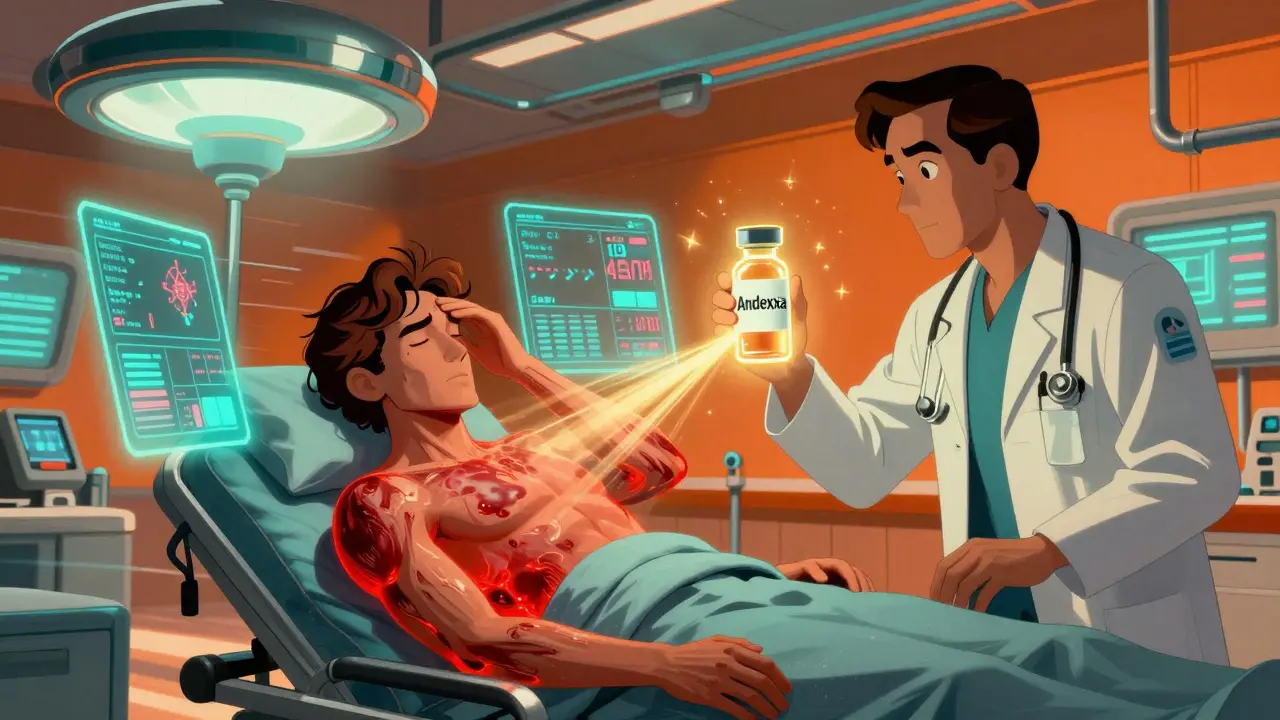
There’s good news on the horizon. In 2023, the FDA approved andexanet alfa (Andexxa), a reversal agent that can stop bleeding from apixaban and rivaroxaban in as little as 30 minutes-down from 3-4 hours. And by 2026, a universal reversal agent called ciraparantag could be available for all types of blood thinners.Emergency rooms are also getting better. Point-of-care blood tests that check clotting time in minutes are becoming standard. This means doctors can tell quickly whether you need a reversal drug-or if you’re fine just being monitored.
But these tools won’t help if you wait too long. The faster you get care for serious bleeding, the better your outcome. That’s why knowing the signs matters more than ever.
What to Do If You’re Unsure
If you’re not sure whether your bleeding is an emergency, ask yourself:- Can I stop it with 15 minutes of firm pressure?
- Am I dizzy, short of breath, or confused?
- Is the bleeding coming from inside my body (vomiting, stool, urine)?
- Did I hit my head recently-even if I feel fine?
If the answer to any of these is yes, go to the ER. If you’re still unsure, call NHS 111 or your anticoagulation clinic. They’ve heard it all. They know what’s urgent and what’s not.
And remember: bleeding on blood thinners isn’t your fault. It’s a side effect of a life-saving drug. The goal isn’t to never bleed. It’s to bleed safely-knowing when to act, when to wait, and when to call for help.
What to Bring to the ER
If you do go to the emergency department, make sure you have:- Your current medication list-including doses and times
- The name and contact info of your prescribing doctor or anticoagulation clinic
- Your most recent INR or blood test results (if on warfarin)
- A list of any recent injuries, falls, or surgeries
This saves time. It saves lives.
Can I still take aspirin or ibuprofen while on a blood thinner?
No, not without your doctor’s approval. Aspirin and ibuprofen can increase bleeding risk, especially in the stomach. Even occasional use can be dangerous. Stick to paracetamol (acetaminophen) for pain unless your doctor says otherwise.
How long should I apply pressure to a cut?
At least 10 minutes of continuous, firm pressure. Don’t check early. If it’s still bleeding after 15 minutes, go to the ER. Most minor cuts stop within 5-7 minutes with proper pressure, but on blood thinners, it can take longer.
Is it safe to exercise on blood thinners?
Yes, but avoid high-risk activities like contact sports, rock climbing, or skiing without protective gear. Low-impact exercise like walking, swimming, or cycling is encouraged. It helps circulation and reduces clot risk. Just be careful not to fall.
What should I do if I fall and hit my head?
Go to the ER-even if you feel fine. Bleeding in the brain can take hours or days to show symptoms. A CT scan can catch it early. Delaying care increases the risk of permanent damage or death.
Can I drink alcohol while on blood thinners?
Moderation is key. One drink a day is usually fine, but heavy drinking increases bleeding risk and can interfere with how your body processes the medication. Avoid binge drinking. If you’re on warfarin, alcohol can make your INR unpredictable.
How often should I get my blood tested?
If you’re on warfarin, you’ll need regular INR tests-usually every 2 to 6 weeks. If you’re on a DOAC like Eliquis or Xarelto, routine blood tests aren’t needed. But your doctor may still check kidney or liver function once or twice a year.
Do blood thinners affect dental work?
Usually not. Most routine dental procedures-cleanings, fillings, extractions-can be done safely without stopping your medication. Tell your dentist you’re on a blood thinner. They’ll take extra precautions. Never stop your meds for a dental visit without consulting your doctor.
Solomon Ahonsi
February 2, 2026 AT 11:36This post is basically a glorified pamphlet. I’ve been on Xarelto for 4 years and I’ve had 3 nosebleeds that lasted 20 minutes. I didn’t go to the ER. I held my nose. I lived. Stop scaring people into unnecessary hospital visits. You’re making anxiety a full-time job.
George Firican
February 2, 2026 AT 21:48There’s a profound irony in how we treat medical risk as a binary: either you’re bleeding to death or you’re fine. But human biology doesn’t operate on yes/no switches-it’s a gradient of thresholds, individual physiology, and context. The fear of bleeding isn’t irrational; it’s evolutionary. We’re wired to avoid loss of blood because, for most of our history, that meant death. What’s changed isn’t our biology, but our access to interventions that make minor bleeds survivable. The real challenge isn’t recognizing when to go to the ER-it’s reconciling the terror of internal bleeding with the quiet dignity of living with a controlled risk. We don’t need more lists. We need more nuance.
Matt W
February 3, 2026 AT 22:20I’m on Eliquis and I used to panic every time I got a cut. Then I learned the 10-minute pressure rule and it changed everything. I even stopped calling my doctor over every little bruise. You’re right-most of it’s not an emergency. Just breathe, press hard, and trust your body. Also, don’t stop your meds. I did that once after a bad nosebleed. Felt fine for 3 days. Then woke up with a stroke scare. Never again. Your doctor’s phone number is your new best friend.
Anthony Massirman
February 5, 2026 AT 08:41Don’t stop your meds. Period. End of story.
Brett MacDonald
February 5, 2026 AT 16:12so like… if i bleed out in the woods does that count as a ‘minor bleed’? just wonderin lol
Sandeep Kumar
February 5, 2026 AT 19:07USA medical advice again. In India we just take a betel leaf and press. No ER. No panic. No overmedicating. You people turn a paper cut into a Netflix documentary
Gary Mitts
February 5, 2026 AT 20:31Wow. So the solution to bleeding is… more bleeding? Genius. I’m sure the ER staff appreciate the 37% reduction in unnecessary visits. Not.
clarissa sulio
February 6, 2026 AT 00:33I’ve been on warfarin for 8 years and I’ve had 2 major bleeds. Both times I went to the ER. Both times they saved me. You can’t just ‘hold pressure’ when your stomach is bleeding internally. This post saved my life. Thank you.
Vatsal Srivastava
February 6, 2026 AT 07:27Why are we still using warfarin in 2024? DOACs exist. Also why are you telling people to call NHS 111 in a post that clearly targets Americans? This is amateur hour
Monica Slypig
February 8, 2026 AT 06:24you say dont stop meds but you also say go to er for nosebleed? so if i go to er and they tell me to stop for a day? what then? your advice is a loop. also why is everyone on xarelto? its overpriced. i use generic. you dont even mention cost. america
jay patel
February 9, 2026 AT 07:48Look I get it. You want people to feel safe. But let’s be real-half the people reading this are already terrified. They’re the ones who call their doctor at 2 a.m. because they sneezed too hard. You gave them a checklist. Great. But you didn’t give them peace. You gave them more things to obsess over. I’ve been on apixaban since 2020. I’ve had one tiny gum bleed. I didn’t go to the ER. I didn’t stop the pill. I brushed my teeth more gently. That’s it. The real hero here isn’t the ER or the reversal agents. It’s the quiet, boring discipline of showing up every day and taking your pill. Not panicking. Not googling. Not scrolling through Reddit for reassurance. Just taking the damn pill. And if you’re scared? Call your anticoag clinic. They’ve heard it all. They don’t judge. They just help. That’s the real medicine.