
Antibiotics and Birth Control Pills: What Actually Interacts and What Doesn’t
 Jan, 14 2026
For decades, women have been told to use backup contraception when taking antibiotics. You’ve probably heard it from a pharmacist, a friend, or even a doctor: antibiotics can make your birth control fail. But here’s the truth-most of the time, that’s not true. The real story is far more specific, and it’s been clear for years. Only a handful of antibiotics actually interfere with birth control pills. The rest? They’re safe to take together.
Why the Myth Keeps Going
The idea that antibiotics ruin birth control didn’t come out of nowhere. Back in the 1970s, a few women got pregnant while taking both antibiotics and the pill. At the time, researchers didn’t know why. Some blamed the antibiotics. Others pointed to missed pills or vomiting. But without solid data, the fear stuck. It spread through word of mouth, pharmacy warnings, and even old textbooks. Now, decades later, the science has caught up-but the myth hasn’t faded.Today, surveys show that over 60% of women still believe antibiotics reduce birth control effectiveness. On Reddit, Facebook groups, and health forums, questions about this topic flood in every week. Why? Because it’s easier to say "play it safe" than to explain the complex science behind liver enzymes and hormone metabolism. But playing it safe when it’s not needed can lead to unnecessary stress, extra costs for condoms or emergency contraception, and even less trust in medical advice.
The Only Antibiotics That Matter
Not all antibiotics are created equal when it comes to birth control. The vast majority-like amoxicillin, azithromycin, doxycycline, and ciprofloxacin-have been studied repeatedly. In every large clinical trial, they showed no effect on hormone levels in the blood. Your pill works just fine.But there are two exceptions. And they’re not what most people think.
The first is rifampin (also called rifampicin). This antibiotic is used to treat tuberculosis and some serious bacterial infections. It’s not common, but when it’s prescribed, it’s a big deal. Rifampin triggers your liver to break down hormones faster. Studies show it can drop estrogen levels by up to 50%. That’s enough to make birth control ineffective. The same goes for its cousin, rifabutin, used for certain types of mycobacterial infections.
The second is griseofulvin. Technically, it’s not an antibiotic-it’s an antifungal. But it’s often grouped with antibiotics because it’s used to treat fungal infections like ringworm or athlete’s foot. And like rifampin, it speeds up how fast your body clears hormones from the bloodstream.
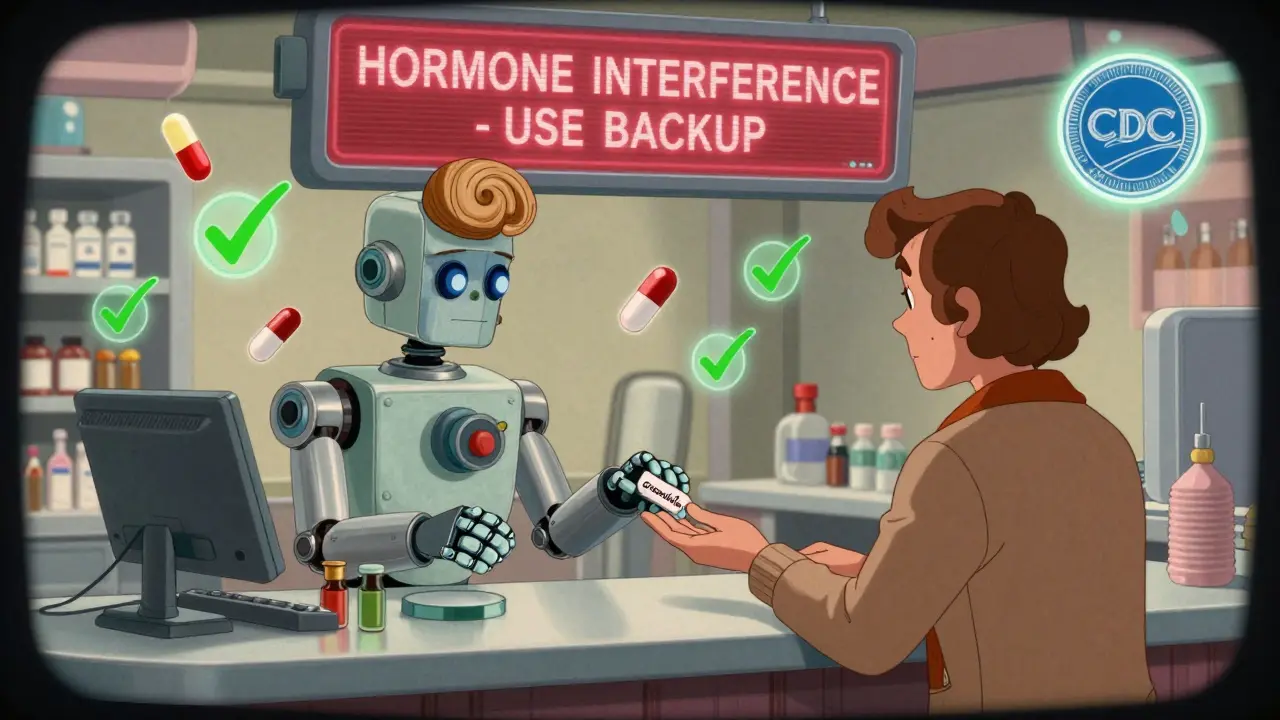
These two drugs are the only ones with strong, consistent evidence of reducing birth control effectiveness. The CDC, ACOG, and the FDA all agree on this. If you’re prescribed rifampin or griseofulvin, you need backup contraception-like condoms-for 28 days after finishing the course.
What About Common Antibiotics?
Let’s clear up the biggest confusion. If your doctor prescribes you amoxicillin for a sinus infection, azithromycin for strep throat, or doxycycline for acne, you don’t need to worry. None of these affect your pill.Here’s a short list of antibiotics that are safe with birth control:
- Amoxicillin
- Azithromycin (Zithromax)
- Ciprofloxacin (Cipro)
- Doxycycline
- Erythromycin
- Metronidazole (Flagyl)
- Clarithromycin (Biaxin)
- Nitrofurantoin
- Levofloxacin
- Penicillin
A 2011 review of 14 studies found no drop in estrogen levels in women taking these drugs. A 2020 CDC analysis of 35 trials confirmed the same: hormone levels stayed above the threshold needed for contraception. Even if you get diarrhea while on antibiotics-which can happen-your pill still works. The idea that gut bacteria help absorb estrogen? That theory was debunked years ago. Your body absorbs hormones through your bloodstream, not your gut lining.
What About Other Medications?
Antibiotics aren’t the only drugs that can interfere with birth control. You might be surprised to learn that some common prescriptions can too.For example:
- Lamotrigine (used for epilepsy and bipolar disorder) at doses over 300 mg/day can reduce estrogen levels.
- Topiramate (used for seizures and migraines) at doses above 200 mg/day has been shown to lower hormone concentrations.
- Effavirenz and nevirapine (HIV medications) interfere with hormonal birth control.
- St. John’s wort (an herbal supplement for depression) can cut estrogen levels by nearly 60%.
These are far more likely to cause problems than most antibiotics. If you’re on any of these, talk to your doctor about switching birth control methods-like an IUD or implant-that aren’t affected by liver enzyme changes.
What Should You Do?
Here’s the practical guide, straight from the CDC and ACOG:- If your doctor prescribes rifampin or rifabutin: Use condoms or another barrier method for 28 days after your last dose. This applies to the pill, patch, and vaginal ring.
- If your doctor prescribes griseofulvin: Use backup contraception for one month after finishing the course.
- If you’re prescribed any other antibiotic: Keep taking your birth control as normal. No backup needed.
- If you’re unsure: Ask your pharmacist or doctor to confirm whether the antibiotic is a rifamycin or griseofulvin. Don’t rely on the name sounding similar-rifaximin (Xifaxan) is not the same as rifampin and doesn’t interfere.
Some providers still recommend backup contraception out of caution-even for safe antibiotics. That’s their choice. But you don’t have to follow it unless you want to. If you’re comfortable with your birth control and you’re not taking rifampin or griseofulvin, you’re protected.
Why Do Pharmacists Still Say Otherwise?
You might walk into a pharmacy and be told, "Just use a condom while you’re on antibiotics." That’s common. In fact, a 2022 study found that 35% of pharmacists still advise backup contraception for all antibiotics-even though they know the science.Why? Two reasons. First, they’re trying to avoid liability. If someone gets pregnant, they don’t want to be blamed. Second, many pharmacists aren’t updated on the latest guidelines. Medical knowledge moves fast, and not everyone keeps up.
That doesn’t mean you should ignore them. But it does mean you should ask: "Is this antibiotic one of the ones that affects birth control?" If they say "yes," ask which one. If they can’t name it, they’re probably giving generic advice based on old habits.

What About Recent Changes?
In January 2023, the FDA updated the labeling on all hormonal birth control products. For the first time, they clearly state: "Rifampin, rifabutin, and griseofulvin may reduce effectiveness. Other antibiotics do not." That’s huge. It means manufacturers now have to be transparent about what actually matters.Also, in 2023, a survey of 500 board-certified OB/GYNs showed 98% agreed: only rifamycins need backup contraception. That’s near-universal consensus.
But the biggest change isn’t in the science-it’s in the public understanding. More women are learning the truth. Social media posts debunking the myth are growing. Doctors are starting to use visual aids during appointments to show the difference between rifampin and amoxicillin. And more patients are asking the right questions.
What If You’re Overweight?
There’s one group where birth control effectiveness is already lower: people with a BMI of 30 or higher. Studies show contraceptive failure rates are 2.5 times higher in this group, regardless of antibiotics. If you’re overweight and on the pill, talk to your doctor about whether a different method-like an IUD-might be more reliable. This isn’t about antibiotics. It’s about body weight and how hormones are processed.Final Takeaway
You don’t need to stress about every antibiotic. The only ones that matter are rifampin, rifabutin, and griseofulvin. Everything else? Safe. Your birth control still works. You don’t need extra condoms. You don’t need to panic. You just need to know which drugs to watch for.If you’re ever unsure, check the name of the antibiotic. If it ends in "-floxacin," "-cillin," or "-mycin" (except for rifamycins), you’re fine. If it’s rifampin or griseofulvin, use backup for 28 days. And if your pharmacist says otherwise, ask them to check the label. The science is clear. It’s time the advice caught up.