
Antibiotic Stewardship: How Proper Use Reduces Side Effects and Saves Lives
 Dec, 27 2025
Every year, at least 30% of antibiotics prescribed in U.S. doctor’s offices and emergency rooms aren’t needed. That’s not just wasted medicine-it’s a direct path to serious side effects, including life-threatening infections like Clostridioides difficile (C. diff). Antibiotic stewardship isn’t a buzzword. It’s the practical, evidence-based approach to using antibiotics only when they’re truly necessary-and using them the right way when they are.
What Antibiotic Stewardship Actually Means
Antibiotic stewardship is the deliberate effort to make sure the right antibiotic is given at the right dose, for the right bug, and for the right amount of time. It’s not about avoiding antibiotics altogether. It’s about avoiding the wrong ones, or using them too long, or too often. The Centers for Disease Control and Prevention (CDC) defines it as measuring and improving how antibiotics are prescribed and used. That means doctors and pharmacists work together to ask: Do we even need this? Is this the narrowest-spectrum drug that will work? Can we stop it in 5 days instead of 10? The goal? Protect patients from harm. Every unnecessary antibiotic disrupts the good bacteria in your gut. That’s when dangerous bacteria like C. diff take over-causing severe diarrhea, colitis, and sometimes death. In fact, inappropriate antibiotic use makes C. diff infection 7 to 10 times more likely. Stewardship programs have cut C. diff rates by 25-30% in hospitals that use them well.How Stewardship Programs Work in Real Hospitals
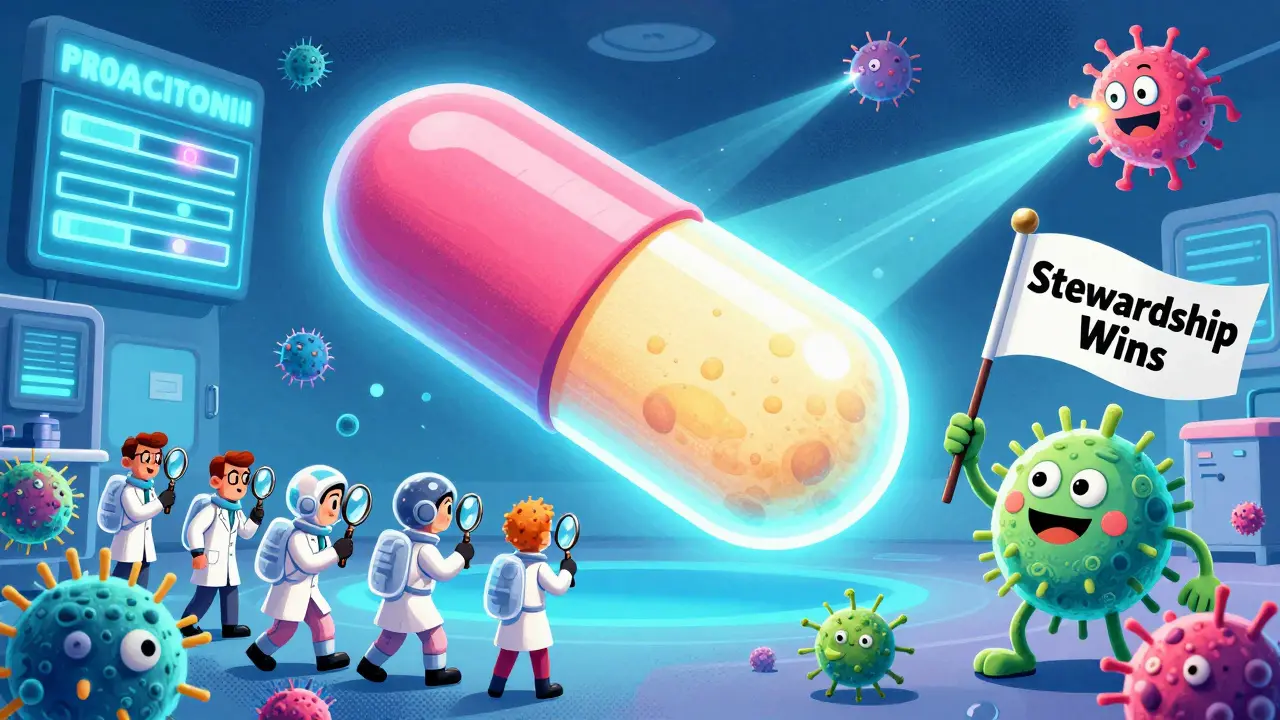
It’s not magic. It’s structure. Effective stewardship programs follow the CDC’s Core Elements: leadership support, expert staff, tracking, and feedback. In a typical hospital, a clinical pharmacist reviews every antibiotic order. They don’t just check for allergies-they ask if the drug matches the infection, if the dose is correct for the patient’s weight and kidney function, and if the duration makes sense. If a patient is on a broad-spectrum antibiotic for a suspected pneumonia but tests come back showing a mild bacterial strain, the pharmacist recommends switching to something more targeted. That reduces side effects and lowers the chance of resistance. Many hospitals also use procalcitonin tests. This blood marker rises with bacterial infections but stays low with viral ones. When doctors see low procalcitonin levels, they’re more likely to stop antibiotics early. Studies show this cuts antibiotic use by 1.6 to 3.5 days-without making patients sicker. Nebraska Medicine’s program, launched in 2004, reduced C. diff infections by 32% after implementing these practices. They also created remote support for smaller clinics, proving stewardship doesn’t need a big staff to work.Why Outpatient Settings Are the New Front Line
Most antibiotic overuse happens outside hospitals. In 2023, the CDC reported 47 million unnecessary antibiotic prescriptions were written each year in doctor’s offices and ERs. That’s mostly for colds, flu, and sore throats-things caused by viruses, not bacteria. Patients often expect antibiotics. They’ve been told for decades that antibiotics “fix” infections. But antibiotics don’t work on viruses. Giving them anyway doesn’t help the patient-it just increases their risk of diarrhea, yeast infections, allergic reactions, and future resistance. Stewardship in outpatient settings means better communication. Providers use tools like electronic alerts that pop up when a patient gets a prescription for strep throat without a test. They give patients printed materials explaining why an antibiotic isn’t needed. Some clinics now offer delayed prescriptions: “Take this if your fever doesn’t go down in 48 hours.” That gives the body time to fight off a virus naturally, without exposing it to drugs.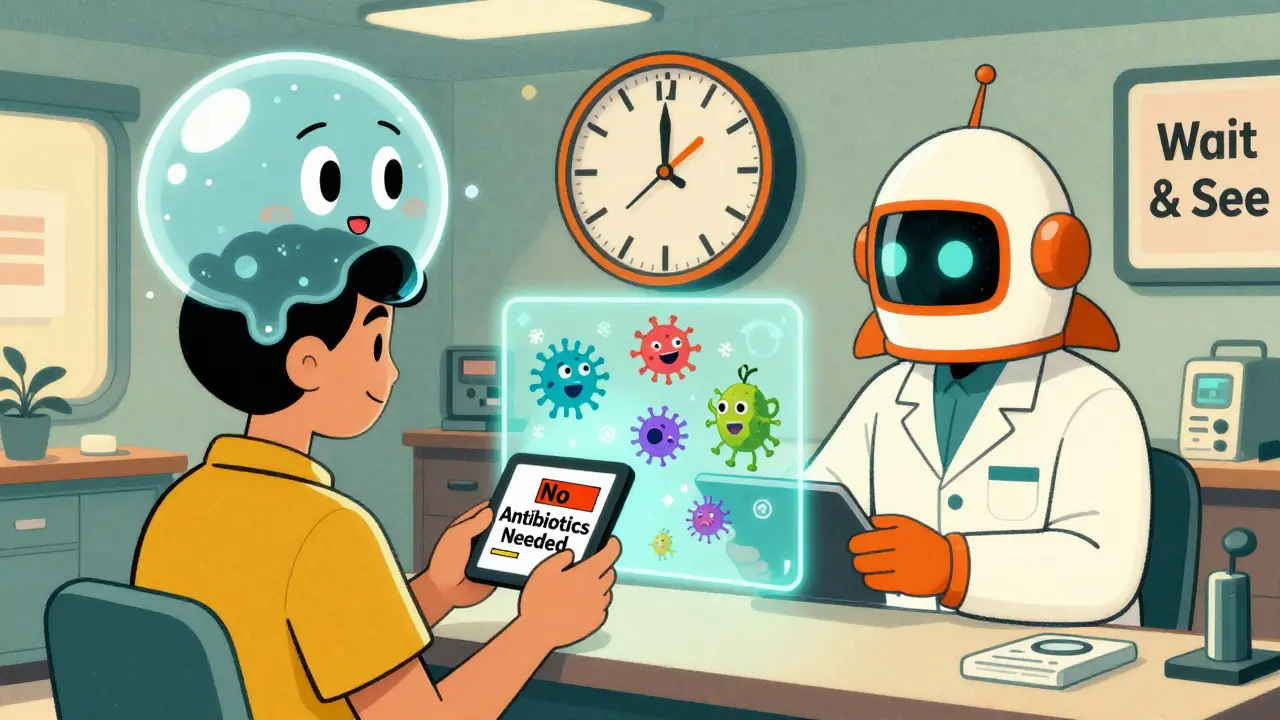
Side Effects You Don’t Hear About Enough
Most people know antibiotics can cause stomach upset. But the real dangers are hidden. - C. diff infection: Causes severe, recurring diarrhea. Can lead to sepsis. Kills about 15,000 Americans each year. - Allergic reactions: Rashes, swelling, anaphylaxis. Penicillin allergies are often misdiagnosed, leading to use of broader, riskier drugs. - Drug interactions: Antibiotics like fluoroquinolones can interfere with blood thinners, diabetes meds, and even heart rhythm drugs. - Long-term microbiome damage: Studies show some antibiotics alter gut bacteria for months-even years-increasing risks for obesity, asthma, and autoimmune diseases later in life. Stewardship directly reduces all of these. By cutting unnecessary prescriptions, hospitals and clinics reduce the total antibiotic exposure patients face. Less exposure = fewer side effects.Who Runs These Programs-and Why It Matters
You can’t just hand out guidelines and expect change. Stewardship needs leadership. The IDSA and SHEA guidelines say the best programs are led by infectious disease physicians and clinical pharmacists with specialized training. In most hospitals, you need at least 1.5 full-time staff: one ID physician (0.5 FTE) and one clinical pharmacist (1.0 FTE). That’s not cheap-it costs $40,000 to $60,000 per FTE annually. But the savings are bigger. A 2019 review of 28 U.S. hospitals found stewardship programs reduced adverse drug events by 21.5%. That means fewer ICU stays, fewer readmissions, and lower costs. The Joint Commission now requires all accredited hospitals to have stewardship programs. As of 2023, 88% of U.S. hospitals with over 200 beds have one. But only 48% of nursing homes do. That’s a gap. Older adults are the most vulnerable to antibiotic side effects. They’re also the most likely to get unnecessary prescriptions.Barriers to Better Use-and How to Overcome Them
Doctors don’t prescribe antibiotics carelessly. They’re under pressure. - Fear of missing something: In the ER or ICU, a patient is crashing. Doctors often give broad-spectrum antibiotics “just in case.” But that’s exactly what drives resistance and side effects. - Patient expectations: “Doctor, can you give me something for this cough?” Patients want a pill. They don’t want to wait. - Diagnostic uncertainty: Many infections look alike. A fever could be bacterial, viral, or even fungal. Without fast tests, doctors guess. Solutions are emerging. Rapid molecular tests now detect pathogens in hours, not days. One 2022 study showed pneumonia patients on these tests had antibiotics stopped 2.1 days earlier-with no worse outcomes. AI tools are being tested to analyze symptoms and lab results in real time and suggest the best antibiotic choice. But the biggest fix? Education. Not just for doctors-for patients too. When people understand that antibiotics aren’t a cure-all, they’re less likely to demand them.
The Bigger Picture: Why This Isn’t Just About You
Antibiotic resistance isn’t a future problem. It’s happening now. The CDC calls it an “urgent public health threat.” Every time you take an unnecessary antibiotic, you’re not just risking your own health-you’re helping superbugs survive and spread. By 2050, without action, antimicrobial resistance could cause 10 million deaths globally each year. That’s more than cancer. Antibiotic stewardship is one of the three pillars-along with infection control and patient safety-that the World Health Organization says can prevent this collapse. It’s not about being perfect. It’s about being smarter. Stopping an antibiotic early when it’s no longer needed. Choosing narrow-spectrum over broad-spectrum. Testing before treating. These aren’t radical ideas. They’re basic, proven, life-saving practices.What You Can Do
You don’t need to be a doctor to help. Here’s how:- Don’t pressure your provider for antibiotics. Ask: “Is this infection bacterial? Do we really need a drug?”
- Never take leftover antibiotics. They’re not safe for a new illness.
- Finish the full course if your provider says to-but only if it’s truly necessary.
- Ask about alternatives: rest, fluids, pain relievers, or watchful waiting.
- Get vaccinated. Flu shots and pneumococcal vaccines reduce the need for antibiotics.
What’s Next for Antibiotic Stewardship
The future is faster, smarter, and more connected. We’re moving toward real-time decision support: AI that flags inappropriate prescriptions as they’re written. Mobile apps that help patients track symptoms and know when to call back. Lab networks that share resistance patterns across regions. The global market for stewardship tools is projected to hit $1.8 billion by 2027. That’s because we’re finally seeing the cost of inaction. Not just in dollars-but in lives. The goal isn’t to eliminate antibiotics. It’s to preserve them. So they still work when we really need them-for a child with pneumonia, a cancer patient with a fever, or someone after surgery. Every antibiotic used wisely is one less side effect, one less infection, one more life saved.Are antibiotics always necessary for infections?
No. Many infections, like colds, flu, and most sore throats, are caused by viruses. Antibiotics don’t work on viruses. Using them in these cases doesn’t help the patient and increases the risk of side effects like C. diff infection, allergic reactions, and antibiotic resistance. Doctors now use tests like procalcitonin or rapid viral panels to determine if a bacterial infection is likely before prescribing.
Can antibiotic stewardship really reduce side effects?
Yes. Studies show hospital-based stewardship programs reduce adverse drug events by up to 21.5%. They cut C. diff infections by 25-30%, lower rates of allergic reactions, and reduce the chance of dangerous drug interactions. By avoiding unnecessary or overly broad antibiotics, patients are exposed to fewer risks. The CDC confirms that inappropriate antibiotic use is a leading cause of preventable harm in healthcare.
Why are pharmacists so important in antibiotic stewardship?
Pharmacists are trained in drug selection, dosing, interactions, and duration. In stewardship programs, they review every antibiotic order and recommend changes based on guidelines and patient data. For example, they might suggest switching from a broad-spectrum drug to a targeted one, or shortening a 10-day course to 5 days. Their input has been shown to improve outcomes and reduce side effects without increasing costs.
Is it safe to stop antibiotics early if I feel better?
It depends. In the past, patients were told to always finish the full course. But new evidence shows that for many infections, shorter courses are just as effective-and safer. If your doctor or pharmacist says it’s okay to stop early based on your symptoms and test results, then yes. But never decide on your own. Stopping too soon without guidance can allow surviving bacteria to become resistant. Always follow professional advice.
Why are nursing homes falling behind in antibiotic stewardship?
Many nursing homes lack the staff, funding, and expertise to run formal stewardship programs. Only 48% have them, compared to 88% of large hospitals. Older adults are especially vulnerable to antibiotic side effects, including C. diff and kidney damage. Without trained pharmacists and access to rapid diagnostics, providers often default to broad-spectrum antibiotics out of caution. Closing this gap is critical to protecting this high-risk population.
What are the biggest myths about antibiotics?
One myth is that antibiotics speed up recovery from colds or flu. They don’t. Another is that if you’ve taken an antibiotic before and it worked, it’s safe to use again. That’s dangerous-different infections need different drugs. Also, many believe that if you feel better, you’ve cured the infection. But symptoms can improve even if bacteria remain. That’s why professional guidance matters. Lastly, some think antibiotics are harmless. In reality, they can cause long-term gut damage and increase the risk of chronic conditions.
Janice Holmes
December 27, 2025 AT 19:50This isn't just stewardship-it's a full-on antibiotic revolution. We're talking about microbiome warfare, folks. Every time you pop a pill you didn't need, you're basically handing C. diff a golden ticket to your colon. And don't even get me started on fluoroquinolones-those things don't just kill bacteria, they annihilate your gut flora like a nuke in a petri dish. The CDC's data? Understated. The real horror show is the long-term epigenetic sabotage-autoimmune flares, metabolic chaos, even depression linked to dysbiosis. We're not prescribing antibiotics-we're playing Russian roulette with our microbiota. And the worst part? We've been conditioned to think it's normal.
Alex Lopez
December 28, 2025 AT 04:02While I appreciate the thoroughness of this post, I must respectfully note that the statistical framing-while compelling-often obscures clinical nuance. The 30% overprescription figure, though widely cited, conflates diagnostic uncertainty with negligence. In acute settings, particularly with elderly or immunocompromised patients, the cost of under-treatment vastly outweighs the statistical risk of over-treatment. Furthermore, the assertion that 'shorter courses are always safer' lacks robust longitudinal validation across all pathogen classes. A 5-day course of amoxicillin for otitis media may be appropriate-but not for endocarditis prophylaxis. Precision matters, not just reduction.
Gerald Tardif
December 29, 2025 AT 12:15I’ve seen this play out in the ER. A mom comes in with her 3-year-old who’s had a fever for 48 hours. She’s exhausted. She’s scared. She wants something-anything-to make it better. And the doctor? They’re tired too. So they write the script. Not because they’re careless. Because they’re human. But here’s the beautiful thing: when you give parents a printed handout that says, ‘This is viral. Here’s how to watch for danger signs. Here’s when to call back,’ they feel heard. They don’t need antibiotics. They need reassurance. And that’s where stewardship wins-not by taking away, but by giving better tools.
Liz Tanner
December 29, 2025 AT 12:18Thank you for writing this. I work in a rural clinic, and we’ve started using delayed prescriptions for ear infections and sinusitis. The first time I offered it, a patient looked at me like I’d said aliens were invading. But after a week, she came back and said, ‘I didn’t need it. My body figured it out.’ That’s the moment you realize education isn’t just data-it’s trust. And trust takes time. But it’s worth it. We’re not just saving antibiotics-we’re saving relationships between patients and providers.
Babe Addict
December 30, 2025 AT 13:48Let’s be real-this whole stewardship thing is just Big Pharma’s way of controlling the narrative. You think they want you to stop using antibiotics? Nah. They want you to use *their* antibiotics. The ‘narrow-spectrum’ ones cost 3x more. And procalcitonin tests? That’s a $200 lab bill the hospital gets paid for. Meanwhile, the real solution is herbal remedies and zinc lozenges. But hey, if you want to keep feeding the medical-industrial complex, keep buying the hype.
Satyakki Bhattacharjee
December 31, 2025 AT 08:17Man, you people are so lost. You think science will save you? Science is just another religion. The body was made to heal itself. Antibiotics are unnatural. They are the poison of modernity. When I was a boy in India, we used neem leaves and turmeric. No doctor. No pills. No fear. Now you fear your own gut. You fear your own immune system. You have forgotten the wisdom of nature. This is not progress. This is spiritual decay.
Kishor Raibole
December 31, 2025 AT 16:43It is with profound intellectual gravity that I address the underlying epistemological fallacy embedded within contemporary antimicrobial policy discourse. The presumption that stewardship equates to moral superiority is a hegemonic construct, perpetuated by institutionalized medicine to reinforce its own authority. The reduction of antibiotic usage, while statistically laudable, fails to account for the existential vulnerability of the human organism in the face of pathogenic entropy. One cannot merely quantify microbial resistance without confronting the metaphysical implications of human intervention in natural microbial ecosystems. To prescribe less is not to heal more-it is to arrogate divine authority over biological order.
John Barron
January 1, 2026 AT 19:21Okay but have you seen the latest AI model that predicts antibiotic resistance from a single blood sample? 🤯 I was at a conference last week and this startup demoed a neural net that analyzes CRP, WBC, and procalcitonin in real-time and recommends the *exact* antibiotic with 94% accuracy. They even integrate with Epic. It’s like having Dr. House in your EHR. Also, I had C. diff last year. It was hell. I now carry a probiotic like it’s my life insurance. 🩺💥 #AntibioticAwareness #MicrobiomeWarrior
Liz MENDOZA
January 3, 2026 AT 09:27I just wanted to say thank you to the pharmacists reading this. You’re the quiet heroes. I’ve seen you stay late to call a doctor and say, ‘Can we try 5 days instead of 10?’ You don’t get applause. But you save lives. And to patients-you’re not being ‘difficult’ when you ask questions. You’re being brave. Keep asking. Keep listening. We’re in this together.