
Alternative Medication Classes: Different Drugs, Different Side Effects
 Dec, 18 2025
Not All Medicines Are Created Equal
When you pick up a pill, you might think it’s just a pill. But the truth is, the type of medicine you take-whether it’s a prescription drug, an over-the-counter tablet, or a herbal supplement-can change everything about how your body reacts to it. The side effects aren’t just random. They’re tied to the class of drug, how it’s made, and what’s hiding in the inactive ingredients. And that’s something most people don’t realize until something goes wrong.
Prescription vs. OTC: The Regulation Gap
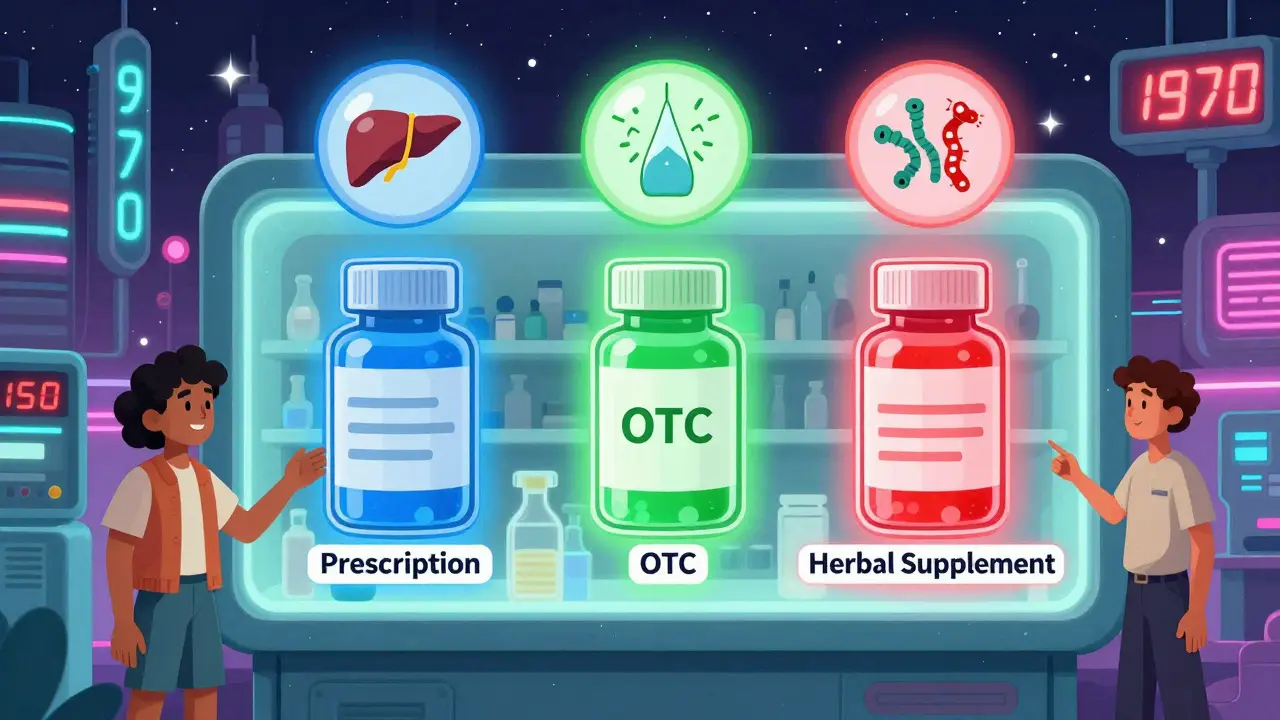
Prescription medications go through years of testing before they hit the shelf. The FDA requires proof of safety, effectiveness, and consistent manufacturing. That’s why you see detailed warnings on labels about liver damage, dizziness, or dangerous interactions. But over-the-counter (OTC) drugs? They’re held to a similar standard. If you buy ibuprofen or loratadine at the pharmacy, it’s been tested, approved, and monitored.
Now, contrast that with herbal supplements. Echinacea, ginkgo, St. John’s Wort-they’re sold as "natural" and "safe," but they don’t need FDA approval before being sold. That means no one checks if the bottle actually contains what it claims. One study found nearly 80% of herbal products had contamination or inaccurate labeling. And here’s the kicker: these supplements can still cause serious side effects. Echinacea has been linked to asthma attacks, hives, and muscle pain. Feverfew? It can trigger uterine contractions in pregnant women. These aren’t rare cases. They’re documented.
Generic Drugs: Same Active Ingredient, Different Risks
Most people assume generics are just cheaper versions of brand-name drugs. And technically, they’re right. The FDA says generics must have the same active ingredient, strength, and dosage form. But here’s what most don’t know: generics can differ in fillers, dyes, and binders. These inactive ingredients don’t treat your condition-but they can trigger reactions.
Take lactose. It’s a common filler in pills. If you’re lactose intolerant, even a tiny amount can cause bloating, cramps, or diarrhea. Some people switch from a brand-name drug to a generic and suddenly feel off-not because the medicine stopped working, but because the new version contains soy lecithin, sulfites, or aspartame they’re allergic to. Pullman Regional Hospital advises checking the ingredient list every time you refill, even if you’ve been on the same medication for years.

Narrow Therapeutic Index Drugs: Tiny Changes, Big Consequences
Some drugs live on a razor’s edge. Too little, and they don’t work. Too much, and they’re toxic. These are called narrow therapeutic index (NTI) drugs. Levothyroxine for thyroid issues and warfarin for blood thinning are two of the most common. Even a 5% difference in how your body absorbs the drug can throw off your entire treatment.
Studies show that switching between different generic versions of levothyroxine can cause your TSH levels to spike or drop. For warfarin, a small change in absorption can mean the difference between a safe blood clot prevention dose and a dangerous bleed. That’s why pharmacists and doctors urge patients on NTI drugs to stick with the same manufacturer. If your pharmacy switches your generic without telling you, ask. Don’t assume it’s safe.
Herbal Supplements: The Hidden Drug Interactions
People think herbs are harmless because they come from plants. But plants are powerful. St. John’s Wort, for example, speeds up how your liver breaks down other drugs. That means antidepressants, birth control pills, and even some heart medications can become ineffective. Worse, when St. John’s Wort is taken with SSRIs like fluoxetine or sertraline, it can cause serotonin syndrome-a rare but life-threatening condition with symptoms like high fever, tremors, confusion, and rapid heartbeat.
Ginkgo and ginseng increase bleeding risk. If you’re on aspirin, warfarin, or even daily ibuprofen, combining them with these herbs can lead to nosebleeds, bruising, or internal bleeding. Chamomile? It can amplify the effects of sedatives and anesthesia. And alcohol? It doesn’t just make you drowsy. With certain antibiotics like metronidazole, it can cause vomiting, flushing, and dangerously low blood pressure. These aren’t myths. They’re clinical facts.

What You Can Do: A Practical Guide
- Always list every supplement you take-including vitamins, fish oil, and herbal teas-when you see a doctor. Most don’t ask, so you have to bring it up.
- Read the inactive ingredients on every prescription and OTC label. Look for lactose, corn starch, artificial colors, and preservatives if you have known sensitivities.
- Don’t switch generics without talking to your pharmacist, especially for NTI drugs. Ask if the new version is from the same manufacturer as your old one.
- Be skeptical of "natural" claims. Just because something is plant-based doesn’t mean it’s safe or pure. Look for third-party testing seals like USP or NSF.
- Monitor your body when starting any new medication or supplement. Keep a simple log: date, dose, and any new symptoms. Even mild fatigue or a rash could be a sign.
Why Some Doctors Still Doubt Generics
Even though research shows generics work just as well as brand-name drugs for most conditions, nearly half of medical editorials still express doubt. Why? Because the exceptions are real. A 2008 study found that some epilepsy patients had more seizures and more ER visits after switching from brand-name to generic antiepileptics. Another study noted that a small number of people with depression had worse symptoms after switching from Celexa to citalopram.
It’s not that generics are unsafe. It’s that biology is messy. Some people’s bodies react differently. That’s why personalized medicine is the future. Genetic testing might one day tell us which version of a drug works best for us. Until then, awareness and communication are your best tools.
Final Thought: Your Body Is the Best Reporter
Medications aren’t one-size-fits-all. A side effect that’s harmless to one person could be dangerous to another. The key isn’t avoiding medicine-it’s understanding what you’re taking and how it might affect you. Whether it’s a generic pill, a herbal tea, or a prescription, always ask: What’s in this? What could it do? And who should I tell if something changes?
Are generic drugs really as safe as brand-name drugs?
Yes, for most people and most medications. The FDA requires generics to have the same active ingredient, strength, and absorption rate as brand-name drugs. But there are exceptions-especially with narrow therapeutic index drugs like levothyroxine or warfarin. Minor differences in inactive ingredients can trigger allergies or intolerances. Always check the label and talk to your pharmacist if you notice new side effects after switching.
Can herbal supplements really interact with prescription drugs?
Absolutely. St. John’s Wort can make antidepressants, birth control, and blood thinners ineffective. Ginkgo and ginseng increase bleeding risk when taken with aspirin or warfarin. Echinacea can interfere with liver-metabolized drugs, including some statins and antifungals. Because supplements aren’t regulated like drugs, these interactions aren’t always known or labeled. Always tell your doctor what herbal products you’re using.
Why do some people feel worse after switching to a generic?
It’s usually not the active ingredient-it’s the fillers. Lactose, soy, dyes, or preservatives in the generic version might trigger an allergic reaction or intolerance. For people on narrow therapeutic index drugs, even small differences in how the drug is absorbed can affect treatment. If you feel different after switching, don’t assume it’s "all in your head." Document your symptoms and ask your pharmacist to check if the new version has different inactive ingredients.
Should I avoid OTC medications if I’m on prescription drugs?
Not necessarily-but you need to be careful. Many OTC pain relievers, cold medicines, and sleep aids contain ingredients that interact with prescription drugs. For example, combining ibuprofen with blood pressure medication can reduce its effectiveness. Decongestants like pseudoephedrine can raise blood pressure and interfere with heart medications. Always check with your pharmacist before taking any new OTC product, even if it seems harmless.
Is it safe to drink alcohol while taking medication?
It depends on the drug. With antibiotics like metronidazole or tinidazole, alcohol can cause severe nausea, vomiting, and dangerously low blood pressure. With sedatives, antidepressants, or painkillers, alcohol increases drowsiness and risk of overdose. Even with medications like statins or blood pressure pills, alcohol can worsen side effects like dizziness or liver damage. The safest rule? Avoid alcohol when starting a new medication until you know how your body reacts.
Janelle Moore
December 20, 2025 AT 09:42Andrew Kelly
December 20, 2025 AT 16:11Isabel Rábago
December 20, 2025 AT 16:31Mike Rengifo
December 22, 2025 AT 08:35Ashley Bliss
December 22, 2025 AT 23:50Kelly Mulder
December 23, 2025 AT 23:48Emily P
December 25, 2025 AT 12:25Vicki Belcher
December 26, 2025 AT 10:12Jedidiah Massey
December 26, 2025 AT 12:27Lynsey Tyson
December 27, 2025 AT 08:06Edington Renwick
December 27, 2025 AT 21:34Kitt Eliz
December 28, 2025 AT 14:03anthony funes gomez
December 28, 2025 AT 22:45Laura Hamill
December 29, 2025 AT 17:22