
ADHD in Adults: How Organization, Coaching, and Medication Work Together for Real Results
 Dec, 3 2025
Adults with ADHD aren’t just forgetful or disorganized-they’re often fighting a silent battle every day. Missing deadlines, losing keys, overspending, zoning out in meetings, or canceling plans last minute aren’t laziness. They’re symptoms of a real neurodevelopmental condition affecting an estimated 8.7 million U.S. adults. The good news? With the right mix of organization tools, coaching, and safely managed medication, life doesn’t have to feel like a constant scramble.
Medication Isn’t a Quick Fix-It’s a Foundation
Stimulant medications like Vyvanse, Concerta, and Adderall are the most common first-line treatments for adult ADHD. They work by increasing dopamine and norepinephrine in the brain, helping with focus, impulse control, and task initiation. About 70-80% of adults see significant improvement when these are used correctly. But they’re not magic pills. You need to take them consistently, at the right dose, and under medical supervision.Non-stimulants like atomoxetine (Strattera) or guanfacine (Intuniv) are alternatives, especially if you have anxiety, heart concerns, or a history of substance use. They take longer to work-up to 4-6 weeks-but avoid the risk of abuse and have fewer side effects like jitteriness or appetite loss.
Cost matters. Generic methylphenidate can cost as little as $10 a month with insurance. Brand-name Vyvanse? Around $400 without insurance. Most people start with generics unless there’s a specific reason not to. The key isn’t which brand you get-it’s whether your doctor monitors you properly.
Cardiovascular safety is a real concern. Stimulants can raise blood pressure and heart rate. A 2023 JAMA Psychiatry study found each extra year of stimulant use slightly increased long-term cardiovascular risk-especially in adults over 40 with existing conditions. But here’s the twist: the same study showed people on medication had a lower risk of death overall because they were less likely to have accidents or develop complications from untreated ADHD.
That’s why baseline tests matter. Before starting any ADHD med, you should have a blood pressure check, an ECG if you’re over 40, and a discussion about family history of heart disease. Then, follow up every 3 months for the first year, then at least once a year after that. Too many adults are prescribed these meds by their primary care doctor who doesn’t check blood pressure for two years. That’s dangerous.
Organization Systems Are the Missing Link
Medication helps you focus-but it doesn’t teach you how to plan. That’s where organization systems come in. People with ADHD don’t need more to-do lists. They need systems that work with their brain, not against it.Here’s what actually works:
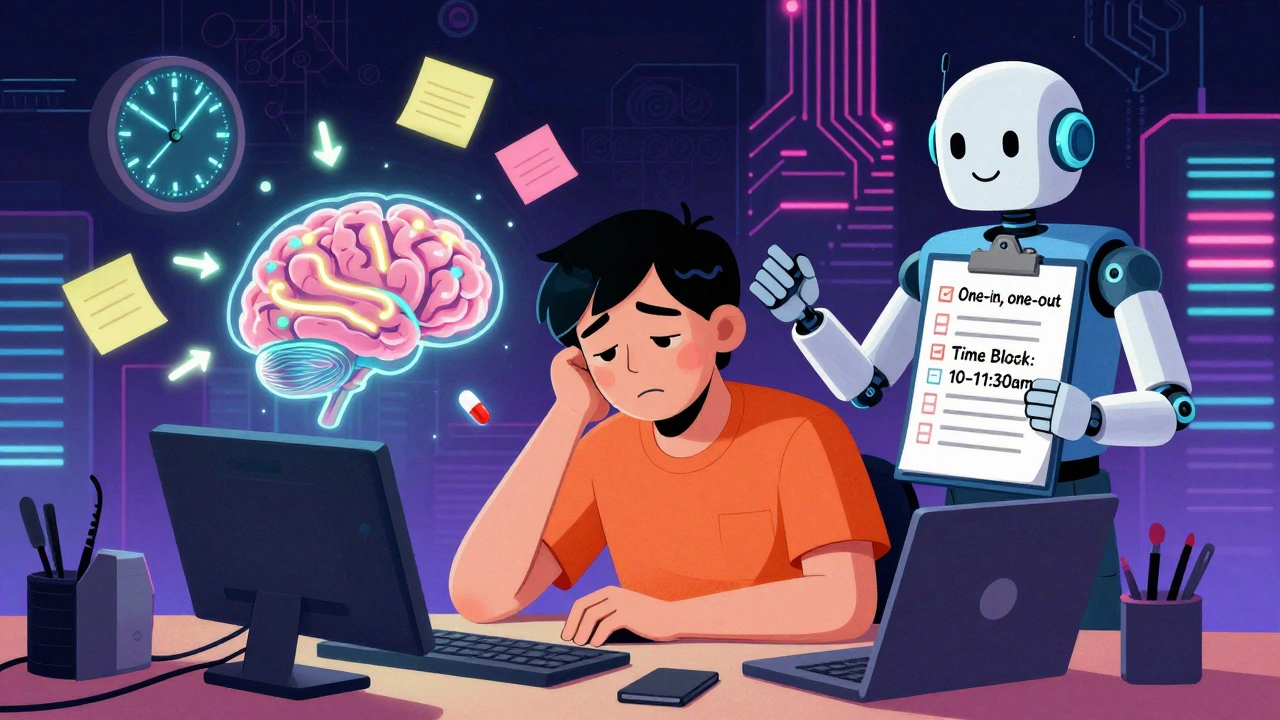
- Time blocking: Instead of writing “work on project,” block 90 minutes from 10-11:30 a.m. on Tuesday for “finish Q3 report.” Use a digital calendar with alerts.
- Two-minute rule: If a task takes less than two minutes, do it immediately. Reply to that email. Put the dishes away. It stops small tasks from piling up.
- Visual reminders: Sticky notes on the mirror, alarms on your phone, a whiteboard by the door. Your brain needs external cues because internal memory is unreliable.
- One-in, one-out rule: For every new item you bring into your space-a shirt, a file, a gadget-you remove one. Clutter overwhelms the ADHD brain.
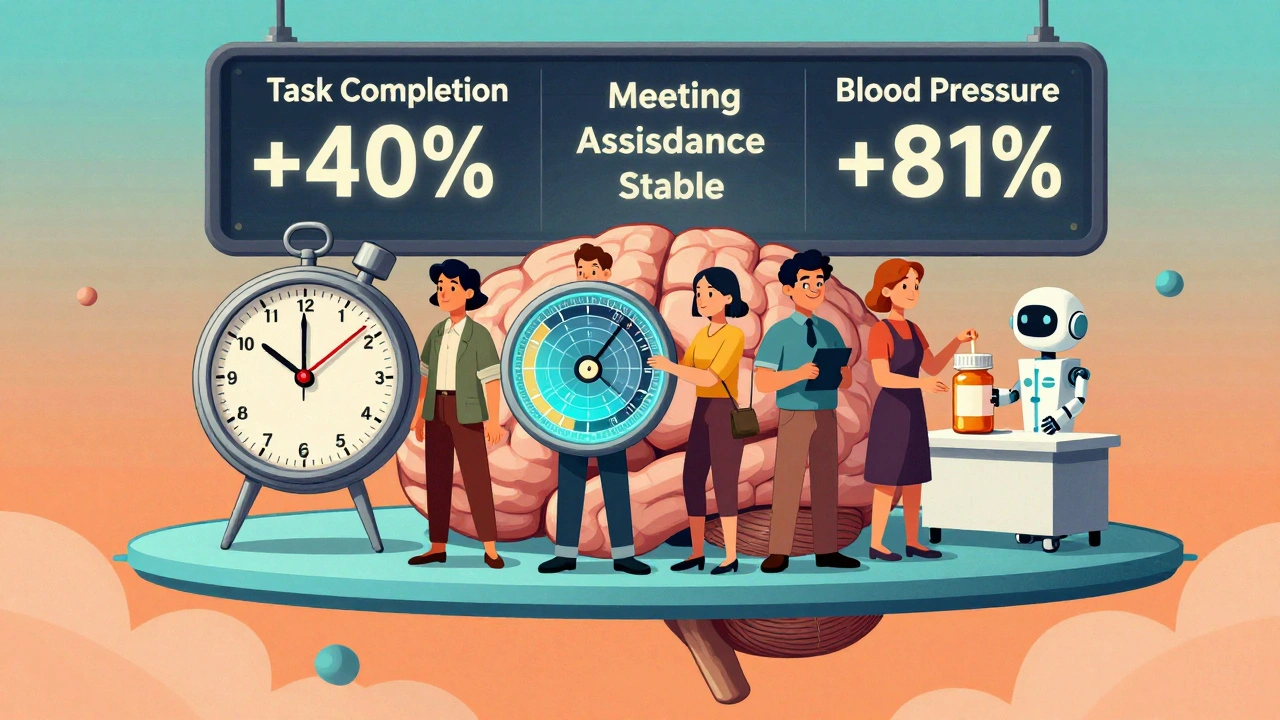
A 2022 study in the Journal of Attention Disorders found that 80% of adults who kept a daily symptom and task log saw a 40% improvement in task completion within three months. Tracking isn’t about perfection-it’s about awareness. You start noticing patterns: “I always miss meetings on Mondays” or “I can’t focus after lunch.” That’s data. And data leads to change.
Coaching Turns Awareness Into Action
Coaching isn’t therapy. It’s accountability with strategy. A certified ADHD coach doesn’t tell you what to do. They help you figure out what works for you.Think of a coach as your personal operations manager. They help you:
- Break down overwhelming tasks into micro-steps
- Build routines that stick, even on bad days
- Identify your energy patterns-when are you most focused? When do you crash?
- Use tools like the Eisenhower Matrix to sort tasks by urgency and importance
Research from the ADHD Coaches Organization shows that adults who combine coaching with medication are 81% more likely to report major improvements in time management than those using medication alone. Why? Because coaching addresses the habits medication can’t touch. You might be able to focus better on a report, but if you still don’t know how to set a deadline or delegate tasks, you’ll burn out.
Coaching isn’t cheap-$100-$200 per session-but many employers now offer it as part of workplace wellness programs. CHADD (Children and Adults with Attention-Deficit/Hyperactivity Disorder) offers free virtual workshops across the U.S. and has over 250 local chapters. Start there before paying out of pocket.
The Safety Gap: Why Monitoring Matters More Than the Drug
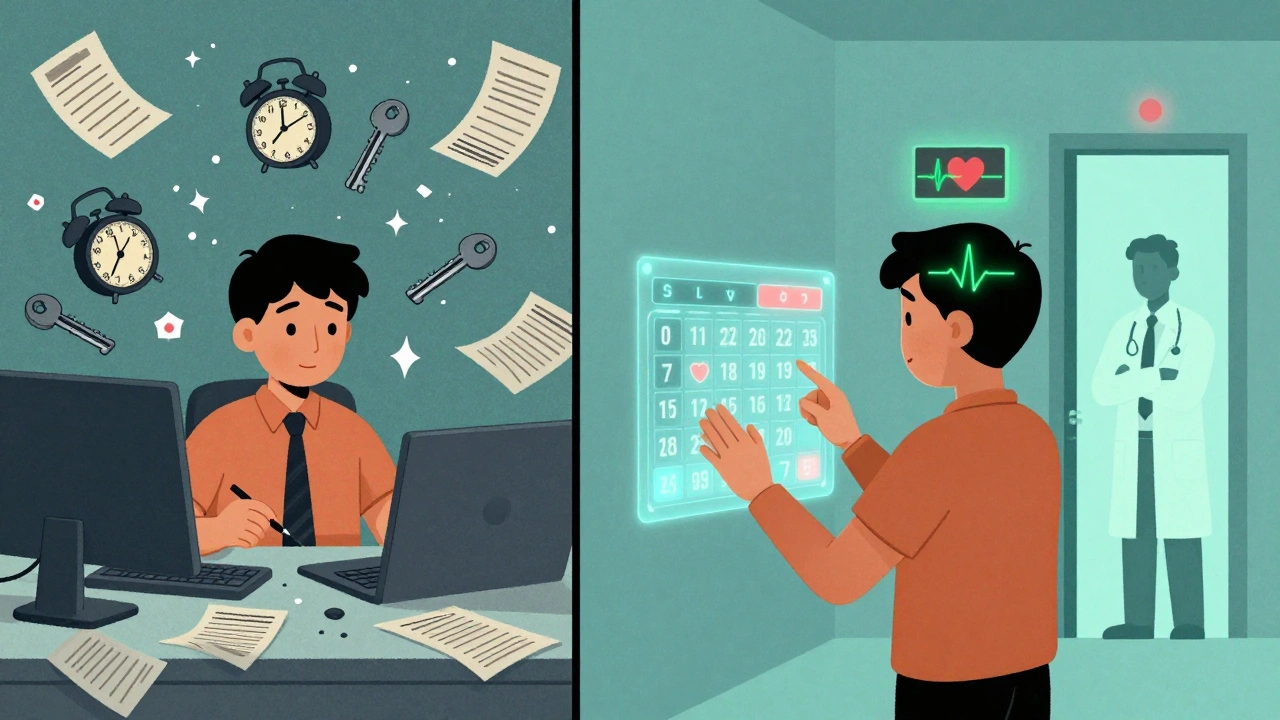
The biggest risk with ADHD medication isn’t the drug itself-it’s the lack of follow-up. A 2022 JAMA Internal Medicine study found that adults treated in primary care settings had blood pressure checked only twice a year on average. At university ADHD clinics? Every visit. That’s the difference between safe and risky.Here’s your checklist for medication safety:
- Get a baseline ECG and blood pressure reading before starting stimulants if you’re over 40.
- Check your blood pressure monthly for the first 3 months, then quarterly.
- Track your heart rate at home-anything over 100 bpm at rest should be reported.
- Never mix stimulants with MAO inhibitors (certain antidepressants) or alcohol.
- Keep a symptom journal: rate focus, mood, sleep, appetite daily for the first 6 weeks.
One Reddit user wrote: “My PCP didn’t check my BP for 2 years on Vyvanse. I ended up with undiagnosed hypertension.” That’s preventable. If your doctor won’t monitor you properly, ask for a referral to a psychiatrist or ADHD specialist. You deserve better.
What Doesn’t Work (And Why)
Not every strategy helps. Avoid these common traps:- Just buying planners: Buying a fancy bullet journal won’t fix your focus. If you don’t use it consistently, it’s just another thing to feel guilty about.
- Waiting until you’re overwhelmed: ADHD systems work best when built before crisis hits. Start small. One habit. One tool. One reminder.
- Self-medicating with caffeine or nicotine: These are temporary fixes that worsen anxiety and sleep, which makes ADHD worse.
- Thinking medication will fix relationships: Medication helps you show up better-but communication, boundaries, and empathy still require work.
Also, don’t assume your doctor knows everything. Many aren’t trained in adult ADHD. The American Professional Society of ADHD and Related Disorders has a directory of certified providers. Use it.
Real Progress Takes Time
Improvement doesn’t happen overnight. Most adults need 2-3 months to find the right medication dose. Coaching takes 4-6 sessions before patterns become clear. Organization systems need 30 days of daily use to stick.One woman shared her story: “I went from 30% task completion at work to 85% after 2 months on Concerta and weekly coaching. But I didn’t fix my life in a week. I fixed it one small win at a time.”
The goal isn’t perfection. It’s progress. Can you now show up to meetings on time? Pay bills without reminders? Finish one project without starting five others? That’s success.
The global adult ADHD market is growing fast-$14 billion in 2022, projected to hit $25 billion by 2030. More companies are offering workplace accommodations. More doctors are learning how to treat adults. But the real breakthrough isn’t in new drugs-it’s in combining them with smart, personalized systems and consistent support.
You don’t need to fix everything at once. Start with one medication checkup. Add one organizational tool. Schedule one coaching session. That’s how real change begins.
Can ADHD medication be safely used long-term?
Yes, for most adults, when monitored properly. Long-term studies show that while there’s a slight increase in cardiovascular risk with extended stimulant use, the overall benefits-including reduced accident rates, lower risk of substance abuse, and improved employment outcomes-outweigh the risks. Regular blood pressure checks, ECGs for those over 40, and annual reviews with a specialist make long-term use safe.
Is ADHD coaching worth the cost?
If you’ve tried medication alone and still struggle with time management, planning, or follow-through, then yes. Coaching addresses the behavioral gaps medication can’t fill. Research shows 81% of adults using both medication and coaching report major improvements in daily functioning, compared to 58% with medication alone. Many employers now cover coaching as part of mental health benefits.
What’s the best ADHD organization system?
There’s no single “best” system. The best one is the one you’ll actually use. Most successful adults with ADHD use a mix: digital calendars with alerts, a physical notebook for quick notes, the two-minute rule, and visual reminders. Tools like the Eisenhower Matrix help prioritize tasks. Start simple-use your phone’s calendar and set daily reminders. Build from there.
Can you take ADHD meds if you have high blood pressure?
It depends. Stimulants can raise blood pressure, so they’re used cautiously-or avoided-in people with uncontrolled hypertension. Non-stimulants like atomoxetine or guanfacine are often safer options. Always get a full cardiovascular evaluation before starting any ADHD medication. If you have high blood pressure, work with a specialist who can monitor you closely and adjust treatment as needed.
How do I know if my ADHD medication is working?
Track your symptoms daily for 4-6 weeks. Ask yourself: Am I starting tasks faster? Am I missing fewer deadlines? Do I feel less overwhelmed? Use the Adult ADHD Self-Report Scale (ASRS) checklist-it’s free online. A 30-50% reduction in symptoms is considered a strong response. If you’re not seeing improvement after 2-3 months, talk to your doctor about adjusting the dose or trying a different medication.
Are there natural alternatives to ADHD medication?
Exercise, sleep, and nutrition help manage symptoms but don’t replace medication for moderate to severe ADHD. Some people find omega-3 supplements or mindfulness helpful as add-ons, but no study shows they’re as effective as FDA-approved treatments. Be wary of products claiming to “cure” ADHD-they’re not backed by science. The most effective approach is still medication + coaching + organization systems.
Next Steps: What to Do Today
If you’re struggling with adult ADHD, here’s your action plan:- Take the free ASRS screening test online (from WHO or CHADD).
- If scores suggest ADHD, schedule an appointment with a psychiatrist or ADHD specialist-not just your primary care doctor.
- Ask about a baseline ECG and blood pressure check before starting any medication.
- Download a free calendar app and block out 30 minutes daily for planning.
- Find a local CHADD chapter or search for an ADHD coach certified by the International Coaching Federation.
You don’t need to fix everything today. But taking one step-any step-today changes the trajectory of your life. The tools exist. The support is there. You just have to start using them.
Elizabeth Crutchfield
December 4, 2025 AT 02:56i just started taking adderall last month and honestly? my life changed. i finally finished a project without starting 5 others. also, i stopped losing my keys. small wins, but they matter.
Martyn Stuart
December 5, 2025 AT 17:45So, let’s be clear: medication alone is like giving someone a Ferrari and saying, ‘Drive!’-but not teaching them how to shift gears, check the mirrors, or stop at red lights. Organization systems? Coaching? That’s the driver’s ed. Without it, you’re just a statistic waiting to happen. And yes, I’ve seen it-people on Vyvanse who still miss deadlines because they never learned to break tasks down. The drug doesn’t build habits; you do.
Also, the two-minute rule? Life-changing. I used to let emails pile up until they became a mountain. Now? If it takes less than two minutes? Done. Before I even sit down. It’s not about productivity porn-it’s about preventing cognitive overload. Your brain isn’t a filing cabinet; it’s a tornado with a Wi-Fi signal. External systems aren’t optional-they’re oxygen.
And coaches? They’re not therapists. They don’t dig into your childhood trauma (unless you want them to). They’re your accountability partner who knows that if you say ‘I’ll do it tomorrow,’ you’re lying to yourself-and they’ll call you on it. I had one for six months. I went from ‘I forgot my kid’s recital’ to ‘I scheduled a weekly family dinner and actually showed up.’ That’s not magic. That’s structure.
Oh, and please stop buying planners. I’ve seen ten people spend $80 on a bullet journal, then never open it. The best system is the one you already use-your phone calendar, a sticky note on your mirror, a voice memo. No one cares if it’s ‘pretty.’ They care if you show up.
And for the love of all that is holy, get your blood pressure checked. I had a friend on Concerta for two years. No BP checks. Ended up with atrial fibrillation. It’s not paranoia-it’s protocol. If your PCP doesn’t ask for it, ask them. If they roll their eyes, find a new doctor.
Also, non-stimulants aren’t ‘weaker.’ They’re just different. Strattera took six weeks to kick in for me-but no jitteriness, no appetite loss, no crash at 4 p.m. And guess what? I still got my work done. Maybe even better.
And if you think caffeine fixes ADHD? It doesn’t. It just makes you jittery, anxious, and sleep-deprived-which makes ADHD worse. It’s like pouring gasoline on a fire and calling it ‘energy.’
Bottom line: medication is the foundation. Coaching is the blueprint. Organization is the bricks. Skip any one, and the house collapses. You don’t need to fix everything today. Just start. One step. One reminder. One checkup. That’s how you rebuild.
Ben Choy
December 7, 2025 AT 14:34Thank you for this. I’ve been on Strattera for a year and honestly? I was ready to give up. Then I started using Google Calendar blocks and a sticky note on my fridge that says ‘WHAT’S THE NEXT STEP?’ And it’s… weirdly helpful. I don’t feel broken anymore. Just… human.
Also, I found a free CHADD group online. We meet every Thursday. No pressure. Just people who get it. If you’re out there feeling alone-reach out. You’re not.
Joe Lam
December 8, 2025 AT 10:20Everyone’s acting like ADHD is some new epidemic. Newsflash: people have always been distracted. Now we just have pills for it. You’re not broken-you’re just lazy and now you’ve got a fancy label to justify it. Also, coaching? That’s just expensive therapy for people who don’t want to take responsibility.
Scott van Haastrecht
December 9, 2025 AT 18:01Oh please. You think your ‘system’ is gonna fix your life? You’re just buying into the ADHD industrial complex. Big Pharma wants you dependent. Coaching? That’s a scam. I’ve seen people spend $10k on this stuff and still can’t manage their lives. Wake up. It’s all just fear-mongering dressed up as help.
Emmanuel Peter
December 10, 2025 AT 01:40Okay but why do we even care? Why not just accept that some people are just bad at life? Why do we need meds and coaches and calendars? Maybe the real problem is that society expects everyone to be productive robots. Maybe we should just chill and let people be messy.
Also, I’ve been on Vyvanse for 3 years. My BP is fine. My heart is fine. I’m not a lab rat. Stop acting like everyone’s gonna drop dead from a stimulant.
Ashley Elliott
December 10, 2025 AT 08:04Thank you for writing this with so much nuance. I’ve been avoiding doctors because I didn’t want to be labeled. But after reading this, I’m scheduling my first appointment. Not because I think I’m broken-but because I’m tired of feeling like I’m failing at being human.
Also, the ‘one-in, one-out’ rule? I just did it with my closet. It felt… peaceful. Like my brain finally had space to breathe.
Ollie Newland
December 12, 2025 AT 04:48Stimulants increase dopamine and norepinephrine-yes, but the neuropharmacology is more nuanced. D2 receptor occupancy varies across agents, and Vyvanse’s prodrug mechanism provides a smoother PK/PD profile than immediate-release Adderall. That’s why some folks tolerate it better. Also, non-stimulants like guanfacine act on alpha-2A receptors in the PFC-enhancing executive function without the peripheral adrenergic effects. So yeah, it’s not just ‘another pill.’ It’s targeted neuromodulation.
And coaching? It’s CBT with accountability. The behavioral activation component is critical. Most ADHD interventions fail because they’re cognitive-only. You need the behavioral reinforcement loop.
Also, the 2023 JAMA Psychiatry study? They adjusted for confounders like socioeconomic status and comorbid depression. The CV risk increase was marginal-HR 1.04 per year. But the all-cause mortality reduction was significant: HR 0.78. So the net benefit is positive. Don’t let fear override evidence.
Dematteo Lasonya
December 12, 2025 AT 23:01I’m 34 and was diagnosed last year. I thought I was just ‘bad at time management.’ Turns out my brain just doesn’t work like everyone else’s. I started with a $5 planner and a phone alarm for every task. No fancy apps. No coaching. Just me and my phone.
Now I pay bills on time. I show up. I finish things.
It’s not perfect. But it’s progress.
Rudy Van den Boogaert
December 13, 2025 AT 13:38I used to think ADHD was just for kids. Then I started missing meetings, forgetting my wife’s birthday, and spending $500 on Amazon ‘solutions’ that never worked. I got diagnosed at 38. Took me 3 months to find the right med. Started coaching. Now I have a whiteboard by my door that says ‘WHAT’S THE NEXT THING?’
It’s not glamorous. But it’s mine.
Gareth Storer
December 14, 2025 AT 07:32Wow. So now we’re medicating people for being disorganized? Next they’ll prescribe pills for forgetting where you put your socks. I mean, come on. Maybe if people just… tried harder?
Pavan Kankala
December 14, 2025 AT 22:30ADHD is a government tool to control the masses. Big Pharma, the DSM, the FDA-they all work together. The real issue? You’re being programmed to rely on pills instead of waking up spiritually. Your brain is a quantum field. You don’t need meds-you need enlightenment. And if you’re getting blood pressure checks? That’s just surveillance. They’re tracking your vitals to predict your rebellion.
Jessica Baydowicz
December 15, 2025 AT 14:49I cried reading this. Not because I’m sad-but because for the first time, someone didn’t call me lazy. I’ve been told I’m ‘unmotivated’ since middle school. Turns out my brain just needs different wiring. I started using voice memos to remind myself to brush my teeth. Yes, really.
And guess what? I’ve been brushing my teeth for 3 weeks straight. I’m a legend.
Alex Piddington
December 17, 2025 AT 01:37As someone who has managed adult ADHD for over a decade, I can confirm: consistency is everything. I use a physical planner, a daily 5-minute review, and a weekly reflection. Medication? Yes. Coaching? Absolutely. But the real key? Showing up-even on the days you feel like a failure. That’s the real victory.
Joe Lam
December 18, 2025 AT 17:06Wow, so now we’re validating laziness as a medical condition? This is what happens when society stops teaching discipline. You don’t need a coach-you need a boot camp. And you don’t need meds-you need to grow up.