
Ulcerative Colitis: Managing Colon Inflammation and Achieving Long-Term Remission
 Feb, 27 2026
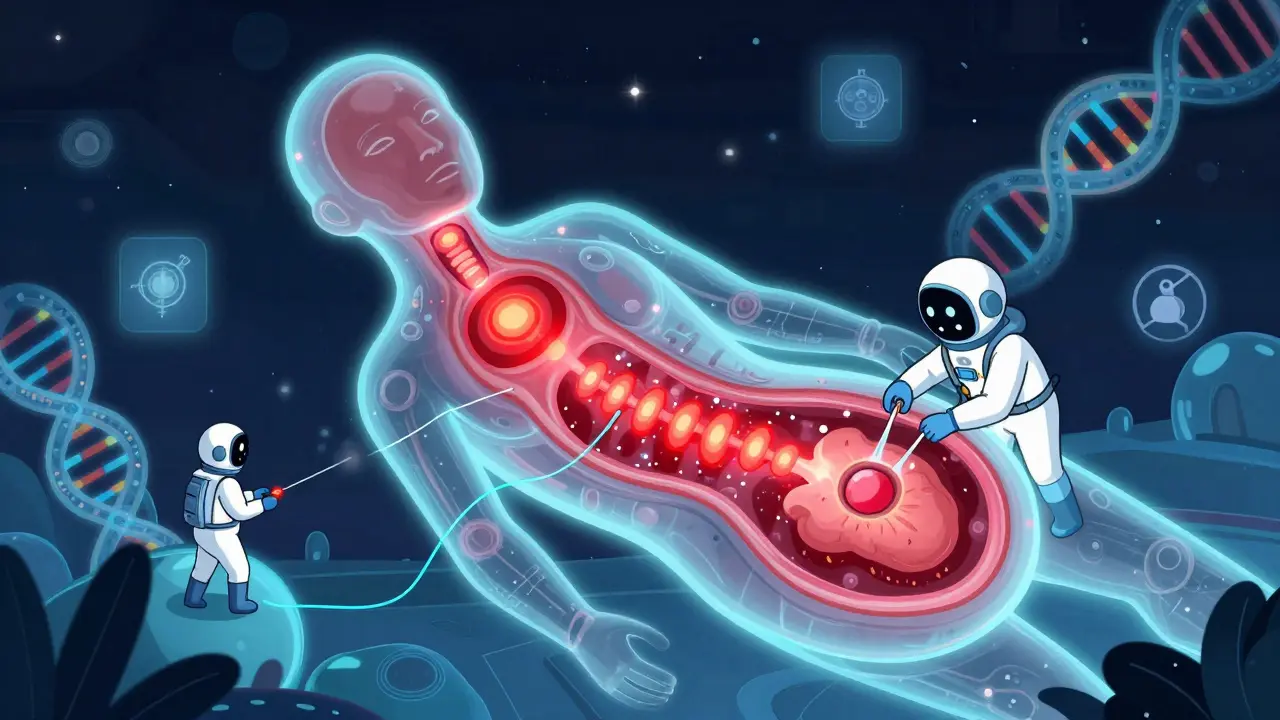
Ulcerative colitis isn't just a stomachache that comes and goes. It's a lifelong condition where the inner lining of your colon and rectum becomes inflamed, develops open sores, and triggers symptoms that can turn your daily life upside down. If you're dealing with bloody diarrhea, urgent bowel movements, or constant abdominal pain, you're not alone. About 1 in 200 people in the UK live with this form of inflammatory bowel disease (IBD), and while there's no cure, remission isn't just possible-it's achievable for most people with the right approach.
What Exactly Happens in Your Colon?
- Your colon is supposed to absorb water and form solid stool.
- In ulcerative colitis, your immune system mistakenly attacks the lining of your colon, thinking it's a threat.
- This attack causes inflammation, swelling, and ulcers-open sores that bleed and leak mucus.
- Unlike Crohn’s disease, which can hit any part of your gut and burrow deep into tissue, ulcerative colitis only affects the innermost layer of your colon and rectum.
- The inflammation doesn’t skip around. It starts in the rectum and moves upward in a continuous line, never leaving patches of healthy tissue behind.
There are five main types based on how far the inflammation spreads:
- Ulcerative proctitis: Only the rectum is affected. Symptoms are usually mild-rectal bleeding and urgency.
- Proctosigmoiditis: Inflammation reaches the sigmoid colon (lower left side). You may get cramps on your left side and more frequent bloody stools.
- Left-sided colitis: Inflammation goes up to the splenic flexure. This often brings weight loss, severe cramping, and more than 10 bowel movements a day.
- Pancolitis: The entire colon is inflamed. This is the most severe form. People often have bloody diarrhea with pus, fever, fatigue, and major weight loss.
- Rectal-sparing UC: Rare. The rectum stays healthy while the rest of the colon is inflamed.
The pattern matters because it tells doctors how serious your case is and what treatment you’ll need. Pancolitis has a higher risk of colon cancer over time, so regular colonoscopies are non-negotiable.
What Triggers Flare-Ups? (And What Doesn’t)
Many people blame stress or spicy food for their flare-ups. That’s understandable-but it’s not the full story.
Ulcerative colitis isn’t caused by diet, stress, or poor hygiene. It’s an autoimmune condition, meaning your body’s own defense system turns on you. But here’s the catch: while those things don’t cause the disease, they can absolutely trigger a flare.
Common triggers include:
- High-stress events-job loss, family crisis, even major travel
- Nonsteroidal anti-inflammatories (NSAIDs) like ibuprofen or naproxen
- Antibiotics that disrupt gut bacteria
- Smoking (yes, even though it’s linked to Crohn’s, it can worsen UC)
- Processed foods, dairy, or high-fat meals for some individuals
But here’s the key: triggers vary from person to person. What sends one person into a flare might do nothing to another. That’s why keeping a symptom diary-what you ate, how stressed you felt, your sleep, medications-is one of the most powerful tools you have.
How Doctors Treat Ulcerative Colitis
Treatment isn’t one-size-fits-all. It’s a step-up approach based on how severe your disease is.
1. Mild to Moderate Cases
Most people start with 5-aminosalicylates (5-ASAs)-meds like mesalazine or sulfasalazine. These are anti-inflammatory drugs that target the colon directly. They come as pills, suppositories, or enemas. For proctitis, an enema works better than a pill because it delivers the drug right where it’s needed.
2. Moderate to Severe Cases
If 5-ASAs aren’t enough, doctors turn to:
- Immunomodulators like azathioprine or 6-MP. These calm your immune system over time. They take 3-6 months to kick in, so they’re not for sudden flares.
- Biologics like infliximab, adalimumab, or vedolizumab. These are injectable or IV drugs that block specific parts of the immune response. They’re powerful and can bring deep remission-even healing ulcers.
Biologics have changed the game. Ten years ago, many people with pancolitis ended up needing surgery. Now, many stay off the operating table for decades.
3. Severe, Uncontrolled Cases
If medications fail and you’re losing weight, running fevers, or bleeding heavily, a colectomy (removal of the colon) may be the best option. It’s not a failure-it’s a solution. After surgery, most people report better quality of life. A J-pouch can be built from the small intestine to replace the colon, so you still go to the bathroom naturally.

Remission Isn’t Just About Stopping Diarrhea
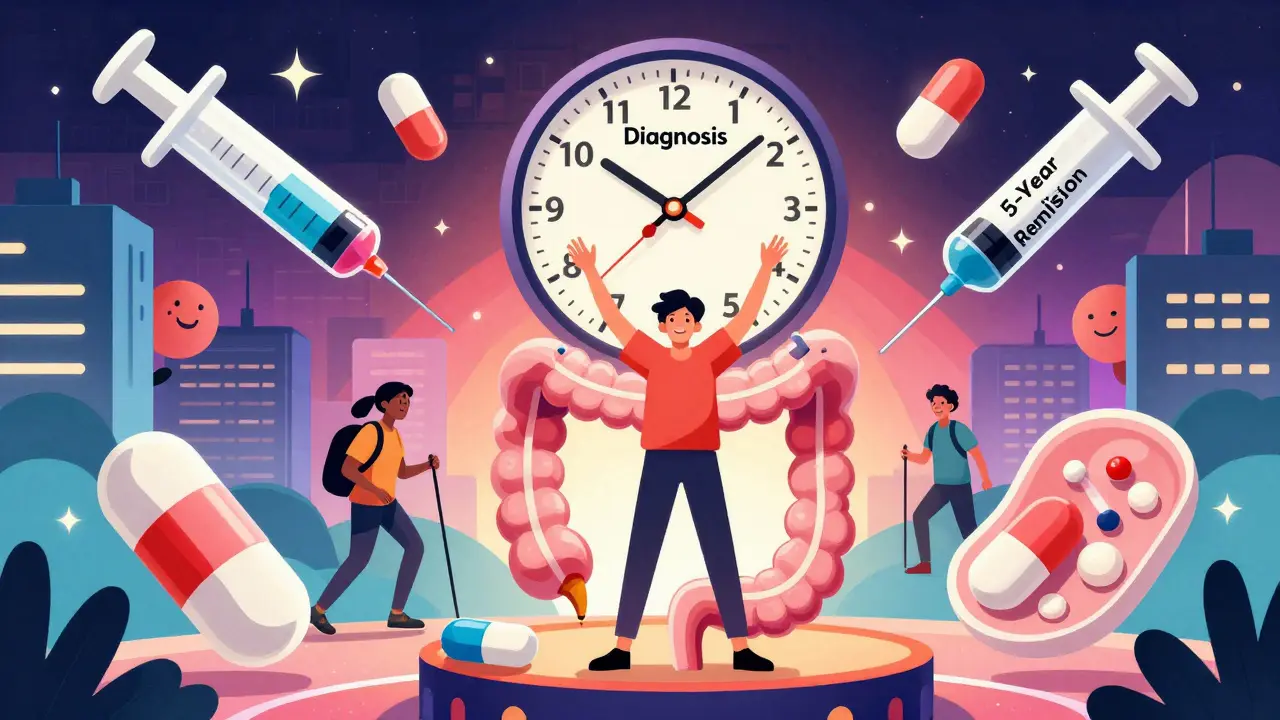
True remission means more than feeling better. It means:
- No bloody stools
- Normal bowel frequency (1-3 times a day)
- No abdominal pain or urgency
- Energy returning
- Colonoscopy shows healing of the lining
Many people stop their meds when they feel fine. Big mistake. Inflammation can still be hiding under the surface. Stopping treatment increases the chance of a flare-and raises your long-term cancer risk.
Studies show that people who stick to their treatment plan have three times the chance of staying in remission for over five years compared to those who don’t.
What You Can Do Every Day
Medications are the backbone, but daily habits make the difference.
Food and Nutrition
You don’t need a special “IBD diet.” But during flares, your gut is sensitive. Try:
- Low-fiber foods: white rice, pasta, peeled apples
- Lean proteins: chicken, fish, eggs
- Hydration: water, electrolyte drinks
- Avoid: dairy if it bothers you, caffeine, alcohol, spicy sauces
During remission, aim for a balanced diet rich in fruits, vegetables, and fiber-unless your doctor says otherwise. Many people find their tolerance improves over time.
Stress and Sleep
Stress doesn’t cause UC, but it can turn up the volume on your symptoms. Simple routines help:
- 10 minutes of deep breathing daily
- Walking in nature
- Yoga or gentle stretching
- Consistent sleep schedule-even on weekends
People who sleep less than 6 hours a night are twice as likely to have a flare.
Exercise
Yes, even with UC. Regular movement reduces inflammation, improves mood, and helps gut motility. You don’t need to run a marathon. A daily 30-minute walk or swim can make a measurable difference.
What About Cancer Risk?
Long-standing pancolitis increases your risk of colon cancer. That’s why colonoscopies are part of your routine.
Guidelines recommend:
- First colonoscopy 8 years after diagnosis
- Then every 1-2 years if you’ve had pancolitis for over 10 years
- More frequent if you have a family history of colon cancer
Biopsies during these scopes check for dysplasia-early changes that can lead to cancer. Catching it early means it can be removed before it spreads.
When to Call Your Doctor
Not every symptom needs an ER visit-but some do. Call your gastroenterologist if you have:
- Bloody diarrhea more than 6 times a day
- Fever over 100.4°F (38°C)
- Severe abdominal pain or swelling
- Signs of dehydration (dizziness, dark urine, dry mouth)
- Unexplained weight loss
These could mean a flare is getting out of control-or something else is going on.
Living Well With Ulcerative Colitis
Most people with UC don’t end up in surgery. Most don’t live in constant pain. Most go on to work, travel, raise families, and enjoy life.
The secret? Consistency. Not perfection. Taking your meds, knowing your triggers, staying connected to your care team, and giving yourself grace when things go sideways.
Remission isn’t a finish line. It’s a daily practice. And with the right tools, you’re not just managing a disease-you’re reclaiming your life.
Can ulcerative colitis be cured?
There is no cure for ulcerative colitis short of removing the entire colon. But for most people, medications and lifestyle changes can bring long-term remission-meaning no symptoms, no flares, and no need for surgery. Many live full, active lives for decades.
Do I have to take medication forever?
Yes, for most people. Stopping meds even when you feel fine increases the chance of a flare by up to 70%. Think of it like managing high blood pressure-you don’t stop because you feel okay. Medications keep the inflammation under control and reduce long-term risks like colon cancer.
Can diet cure ulcerative colitis?
No. No diet can cure ulcerative colitis. But eating the right foods during flares can help manage symptoms, and a balanced diet in remission supports overall health. Avoiding triggers like alcohol, caffeine, or processed foods may reduce flare frequency, but diet alone won’t heal the inflammation.
Is ulcerative colitis the same as Crohn’s disease?
No. Both are types of inflammatory bowel disease, but they’re different. Ulcerative colitis only affects the colon and rectum, and only the inner lining. Crohn’s can affect any part of the gut, from mouth to anus, and goes deeper into the tissue. Crohn’s also has "skip lesions"-patches of healthy tissue between inflamed areas. UC is continuous.
Will I need surgery?
Most people don’t. Surgery is usually only needed if medications fail, if there’s severe bleeding, or if cancer risk becomes too high. For those who do have surgery, many report better quality of life afterward. A J-pouch lets you keep normal bowel function without a permanent stoma.
Can stress cause ulcerative colitis?
No. Stress doesn’t cause ulcerative colitis. The condition is autoimmune, meaning your immune system attacks your own colon. But stress can trigger a flare in someone who already has the disease. Managing stress isn’t about preventing UC-it’s about preventing flares.
Aisling Maguire
February 28, 2026 AT 21:17Eimear Gilroy
March 2, 2026 AT 16:30Charity Hanson
March 3, 2026 AT 11:57Brandon Vasquez
March 5, 2026 AT 00:15Miranda Anderson
March 6, 2026 AT 18:11Katherine Farmer
March 7, 2026 AT 21:38Angel Wolfe
March 9, 2026 AT 11:44Vikas Meshram
March 10, 2026 AT 17:09Sneha Mahapatra
March 10, 2026 AT 18:29Byron Duvall
March 11, 2026 AT 12:23Ajay Krishna
March 12, 2026 AT 06:55Noah Cline
March 12, 2026 AT 20:00Justin Ransburg
March 13, 2026 AT 11:54bill cook
March 13, 2026 AT 18:52Aisling Maguire
March 13, 2026 AT 23:14