
Rifampin Drug Interactions: Managing TB Treatment Risks
 Aug, 23 2026
Rifampin Interaction Risk Checker
General Safety Tips for Rifampin Users
- Bring All Bottles: Show every medication, supplement, and herb to your doctor.
- Timing Matters: Enzyme induction peaks at Day 7-10 and lasts ~2 weeks after stopping.
- Monitor Closely: Watch for return of symptoms (e.g., bleeding, pregnancy, high cholesterol).
- Communication: Inform all specialists that you are on a strong enzyme inducer.
Imagine taking your daily birth control pill or blood thinner, only to find out that a new antibiotic for tuberculosis is silently rendering them ineffective. This isn't science fiction; it's the daily reality for millions of patients on Rifampin, also known as rifampicin, a cornerstone drug in fighting tuberculosis (TB). While Rifampin has revolutionized TB care by cutting treatment time from 18 months to just six, its superpower-accelerating how your body processes other drugs-creates a minefield of potential side effects and treatment failures.
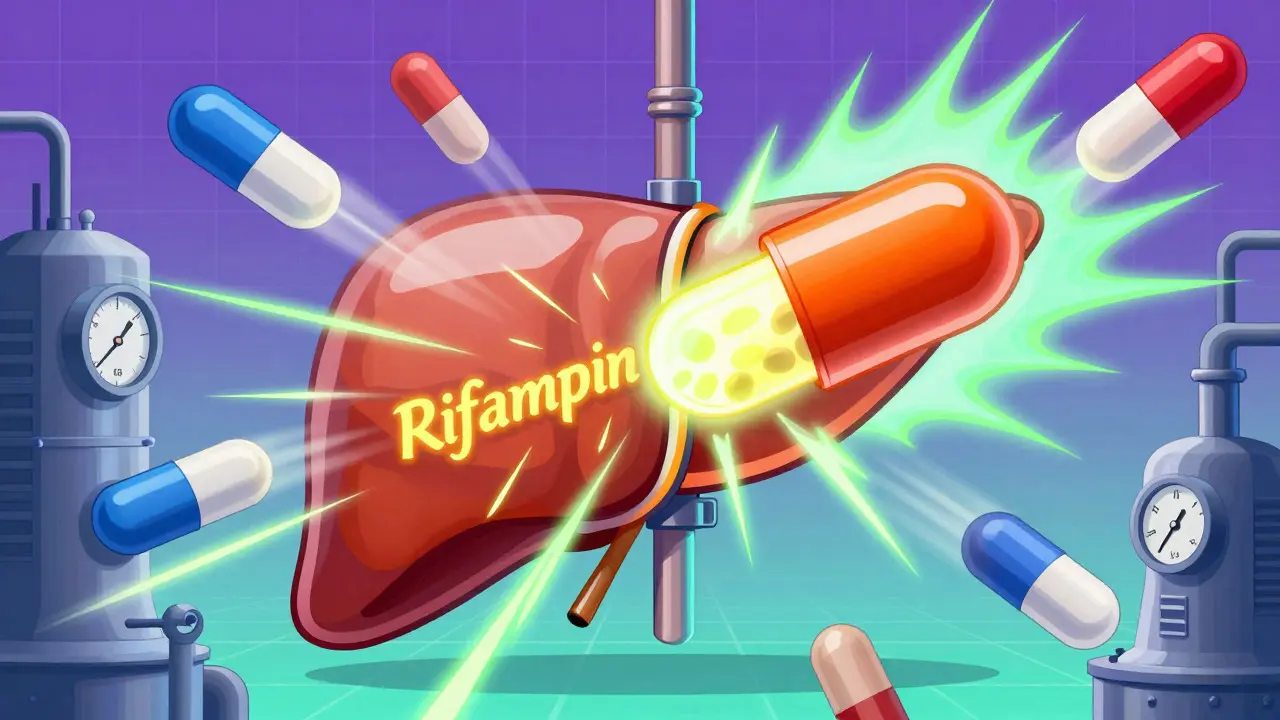
If you or someone you know is starting TB therapy, understanding these dynamics isn't optional; it's critical for survival and health stability. Rifampin doesn't just kill bacteria; it fundamentally changes your liver's chemistry, turning it into a high-speed factory that clears other medications out of your system faster than intended. Let's break down exactly how this happens, which drugs are at risk, and how to navigate this complex landscape safely.
How Rifampin Changes Your Body's Chemistry
To understand the problem, you first need to understand the mechanism. Rifampin works by binding to a specific enzyme in bacteria called DNA-dependent RNA polymerase, stopping them from making proteins they need to survive. But here’s the catch: while it targets bacteria, it also interacts with human cells in a way that triggers a massive response in the liver.
The key player here is the Pregnane X Receptor (PXR), a nuclear receptor in your liver cells. When Rifampin enters the bloodstream, it activates PXR. Think of PXR as a master switch. Once flipped, it turns up the volume on several systems:
- Cytochrome P450 Enzymes (CYP3A4): These are the primary enzymes responsible for breaking down many common drugs.
- UDP-Glucuronosyltransferases: Another group of enzymes involved in drug metabolism.
- P-glycoprotein (P-gp): A transporter protein that pumps drugs out of cells.
This process, known as enzyme induction, doesn't happen instantly. It starts within 24 hours of the first dose, peaks after about 7 to 10 days of continuous use, and can persist for two weeks even after you stop taking Rifampin. During this peak period, your body can increase the activity of CYP3A4 by 200% to 400%. In practical terms, this means if you take a drug that relies on CYP3A4 for processing, your body might clear it before it has time to do its job.
The High-Risk Interaction List
Not all drugs are affected equally. The most dangerous interactions occur with medications that have a "narrow therapeutic index," meaning there is a very small difference between an effective dose and a toxic one. Here are the most clinically significant pairs to watch out for:
| Drug Class | Specific Examples | Potential Consequence | Mitigation Strategy |
|---|---|---|---|
| Oral Contraceptives | Ethinylestradiol | Reduced efficacy by ~67%, leading to unintended pregnancy | Use barrier methods (condoms) throughout treatment and for 4 weeks after stopping Rifampin |
| Anticoagulants | Warfarin | Reduced effect by ~42%, increasing risk of blood clots/stroke | Frequent INR monitoring; dose adjustments often required |
| HIV Medications | Protease Inhibitors (e.g., Ritonavir) | Plasma levels drop by 75-90%, risking viral resistance | Switch to Rifapentine-based regimens or boost protease inhibitor doses significantly |
| Statins | Simvastatin, Lovastatin | Loss of cholesterol-lowering effect; increased risk of muscle toxicity if levels fluctuate | Hold statins during TB treatment or switch to non-CYP3A4 metabolized statins like Rosuvastatin |
| Immunosuppressants | Cyclosporine, Tacrolimus | Rejection of transplanted organs due to low drug levels | Close monitoring of trough levels; significant dose increases needed |
Notice a pattern? Most of these drugs rely heavily on CYP3A4. If you're on any of these, tell your doctor immediately. It’s not enough to just list your meds; you need to explain that you are starting a strong inducer like Rifampin. For example, a patient on Warfarin who starts Rifampin without adjusting their Warfarin dose could see their clotting times become dangerously long, putting them at risk for a stroke. Conversely, if they adjust too aggressively without monitoring, they might end up under-anticoagulated once the Rifampin wears off.
Liver Health and Side Effects
Beyond interactions, Rifampin itself carries risks, primarily involving the liver. Because it induces so many metabolic pathways, it can lead to drug-induced liver injury (DILI). Studies show that 10-20% of patients on standard TB therapy experience elevated liver enzymes (ALT >3x upper limit of normal).
However, there’s a fascinating paradox. In certain liver conditions, like primary biliary cirrhosis, Rifampin is actually used *off-label* to treat itching (pruritus). How does a drug that stresses the liver help with liver disease? By increasing the production of bile acids in a way that reduces their reabsorption in the gut. This lowers the concentration of itch-inducing compounds in the blood, providing relief to 70-80% of patients. This dual nature highlights why context matters: what is harmful in one scenario can be therapeutic in another, but only under strict medical supervision.
Navigating the Timeline: Induction and Washout
Timing is everything when managing Rifampin interactions. You can’t just start and stop other medications randomly. Here is a general timeline to keep in mind:
- Day 1-7: Induction begins. Levels of interacting drugs start dropping. Monitor closely.
- Day 7-10: Peak induction. This is when interaction risks are highest. Dose adjustments for sensitive drugs should be finalized here.
- End of TB Treatment: Do not stop Rifampin abruptly without planning. The induced enzymes stay active for about 2 weeks.
- Post-Treatment (Weeks 1-4): As Rifampin leaves the system, enzyme activity slowly returns to baseline. This is a dangerous window for drugs like Warfarin or Immunosuppressants. If you were on higher doses during TB treatment, you must taper back down carefully to avoid toxicity.
For drugs with a narrow therapeutic index, doctors often recommend a "washout" period or careful bridging. For instance, if you’re switching from a Protease Inhibitor to a different HIV regimen, the transition needs to be timed precisely to avoid gaps in coverage where the virus could mutate.
New Strategies to Reduce Risk
Scientists are actively working to mitigate these issues. One promising area is the use of efflux pump inhibitors. Research suggests that adding drugs like Verapamil or certain Proton Pump Inhibitors (like Omeprazole) might help keep Rifampin levels stable inside bacterial cells, potentially allowing for shorter treatment courses. Early trials indicate that combining Rifampin with Omeprazole could reduce relapse rates significantly by preventing bacteria from pumping the drug out.
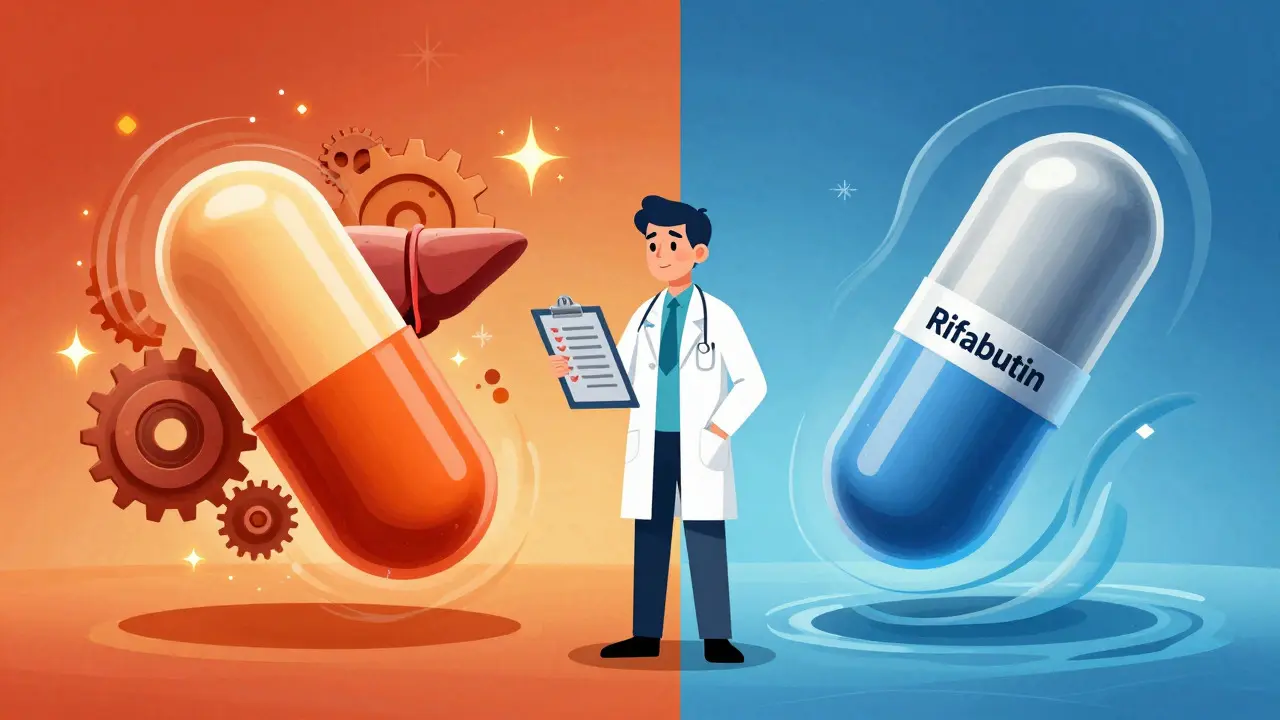
Another approach involves using Rifabutin instead of Rifampin. Rifabutin is a close cousin of Rifampin but is a much weaker enzyme inducer. It causes fewer interactions, making it safer for patients on multiple chronic medications, though it may require slightly longer treatment durations. Your healthcare provider will decide which agent fits your specific medical history best.
Practical Tips for Patients
So, what should you do if you’ve been prescribed Rifampin? Don’t panic, but do prepare.
- Bring All Bottles: Bring every single medication, supplement, and herb you take to your appointment. Include over-the-counter pain relievers and vitamins.
- Ask About Alternatives: Ask your doctor if any of your current meds can be temporarily paused or switched to a version that doesn’t rely on CYP3A4.
- Monitor Symptoms: Watch for signs of your other conditions returning. If you’re diabetic, check your blood sugar more frequently. If you’re on blood thinners, get your INR checked regularly.
- Communication is Key: Inform every specialist you see (cardiologist, gynecologist, etc.) that you are on Rifampin. They need to interpret your lab results in this context.
Managing Rifampin interactions is a balancing act, but with the right information and communication, it’s entirely manageable. The goal isn’t to avoid the drug-it’s essential for curing TB-but to ensure it works in harmony with the rest of your health plan.
How long do Rifampin interactions last after stopping the medication?
The enzyme induction caused by Rifampin typically persists for about two weeks after the last dose. However, for drugs with a narrow therapeutic index, caution is advised for up to four weeks to allow full normalization of liver enzyme activity.
Can I take birth control pills while on Rifampin?
It is generally recommended to use a backup method of contraception, such as condoms, throughout the entire course of Rifampin treatment and for four weeks after stopping. Oral contraceptives lose up to 67% of their effectiveness due to increased metabolism.
What is the difference between Rifampin and Rifabutin regarding interactions?
Rifabutin is a weaker inducer of liver enzymes compared to Rifampin. This makes Rifabutin a safer option for patients taking multiple interacting medications, such as those with HIV or organ transplants, although it may require different dosing schedules.
Does food affect how well Rifampin works?
Yes. Taking Rifampin with food can decrease its absorption by approximately 30%. For consistent blood levels, it is best taken on an empty stomach, usually one hour before or two hours after meals, unless otherwise directed by your doctor.
Why is Rifampin still used if it has so many interactions?
Despite its interactions, Rifampin is the most effective drug for shortening TB treatment duration. Without it, treatment would last much longer, increasing the risk of non-adherence and drug resistance. Its benefits in curing TB far outweigh the manageable risks of interactions when properly monitored.