
How to Prepare for a Medicare Annual Medication Review: A Complete Guide
 Aug, 9 2026
Imagine sitting down with a pharmacist who has forty-five minutes dedicated entirely to you. No rushing, no waiting in line, just a deep dive into every pill, powder, and supplement you take. This isn’t a fantasy; it’s your right under Medicare Part D if you qualify. But here is the catch: this service, known as a Comprehensive Medication Review (CMR), is only as good as the information you bring to the table. If you show up empty-handed or half-prepared, you might miss out on catching dangerous drug interactions or saving hundreds of dollars on prescriptions.
The Centers for Medicare & Medicaid Services (CMS) mandates that all Part D plans offer these reviews to eligible beneficiaries. The goal is simple: improve your health outcomes and lower costs by ensuring your medications work together rather than against each other. However, many seniors treat this appointment like a routine check-up without realizing they need to do some homework first. Let’s walk through exactly how to prepare so you get the most value from this free service.
Do You Qualify for a Comprehensive Medication Review?
Before you start gathering your pill bottles, you need to confirm you are actually eligible. Not every Medicare beneficiary gets an automatic invitation, though many should be receiving one. The Medicare Modernization Act established these requirements, but the specific criteria can shift slightly year to year based on CMS updates.
To qualify for a CMR in 2026, you generally need to meet three main conditions:
- Chronic Conditions: You must have at least two or three core chronic health conditions, such as diabetes, hypertension, asthma, congestive heart failure, or chronic obstructive pulmonary disease (COPD). Recent CMS updates have expanded eligibility to include those with just two conditions in certain high-risk categories.
- Medication Count: You are taking multiple maintenance medications. Typically, this means you are on between two and eight Part D-eligible prescribed drugs. Maintenance medications are those taken daily to manage a long-term condition.
- Cost Threshold: Your projected annual cost for covered Part D drugs exceeds a specific threshold. For 2025, this threshold was $1,623 in annual out-of-pocket expenses. In 2026, keep an eye on your plan’s communication for the updated figure, as it adjusts annually.
If you meet these criteria, your plan is required to actively engage you-not just send a passive flyer. They have sixty days after you enroll or become eligible to offer you this review. If you haven’t heard from them, call your pharmacy benefits manager. Don’t assume you aren’t eligible; sometimes administrative glitches happen.
Gathering Your Complete Medication List
This is the most critical step. A common mistake beneficiaries make is bringing only their prescription bottles. That is not enough. The pharmacist needs to see the full picture of what enters your body. Studies show that patients often omit two or three medications from self-reported lists, leading to incomplete reviews.
You need to collect everything in its original container. Yes, even the vitamins you bought at the grocery store last month. Here is what must be included:
- Prescription Drugs: All current prescriptions, including those from specialists you rarely see.
- Over-the-Counter (OTC) Products: Pain relievers like ibuprofen or acetaminophen, antacids, sleep aids, and cold medicines.
- Herbal Supplements: Items like St. John’s Wort, ginkgo biloba, or fish oil capsules. These can have powerful effects on how your liver processes prescription drugs.
- Dietary Supplements: Vitamins, minerals, and protein powders.
If you use a pill organizer, bring that too, but don’t rely on it alone. The pharmacist needs to read the labels to verify dosages. If you’ve lost the original box for a supplement, take a photo of the label before the appointment or search online for the exact product name and bring the screenshot. As one user noted in a Medicare forum, "I brought my fish oil capsules and found out they were interacting dangerously with my blood thinner. I never would have guessed that."

Creating a Medication Timeline
Bringing the bottles is step one. Step two is organizing your thoughts about them. The Medicare Rights Center recommends creating a simple timeline. This takes about thirty to forty-five minutes but pays off during the review. Write down when you started each medication and why. Did your doctor change your dose recently? Did you stop taking something because it made you feel dizzy?
Include any recent hospitalizations or changes in your health status. If you had surgery last month, note which antibiotics or painkillers you took afterward. This context helps the pharmacist understand if a new symptom is related to a temporary medication or a long-term issue. It also helps identify "duplicate therapy"-where two different doctors prescribe similar drugs for the same condition without knowing about the other.
Documenting Side Effects and Adherence Issues
Pharmacists are trained to spot problems, but they can’t read minds. You need to articulate what isn’t working. Be honest about whether you’re actually taking your meds as prescribed. Many seniors skip doses due to cost, forgetfulness, or unpleasant side effects. There is no judgment here; the goal is to find a solution.
Write down specific questions or concerns beforehand. For example:
- "This pill makes me nauseous every morning. Is there an alternative?"
- "I’m paying too much for this insulin. Are there generic options?"
- "I forgot to take my blood pressure med twice this week. Can we switch to a once-a-day version?"
Adherence barriers are a major focus of the CMR. If you struggle with complex regimens, ask about simplifying your schedule. Maybe you can consolidate doses to once or twice a day. Or perhaps a blister pack service would help. These conversations only happen if you voice the problem.
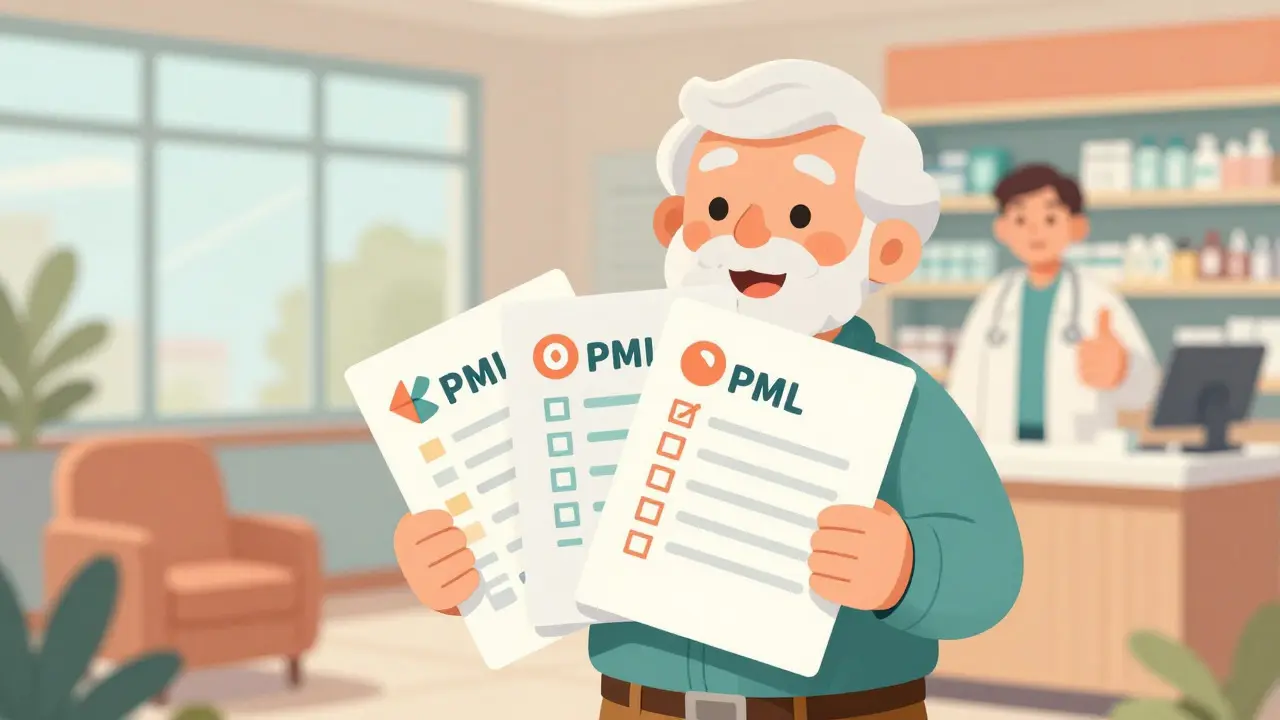
Understanding the Output: MAP, PML, and CL
At the end of the review, you shouldn’t just leave with advice. You are entitled to a written summary in a standardized format required by CMS. Make sure you receive and understand these three documents:
- Consultation Letter (CL): This explains the purpose of the review and summarizes the discussion.
- Medication Action Plan (MAP): This is your roadmap. It outlines steps you agreed upon, such as stopping a non-essential drug, switching to a cheaper alternative, or monitoring for specific side effects.
- Personal Medication List (PML): An updated, accurate list of all your medications, including doses and frequencies. Keep this in your wallet or on your fridge.
Review these documents carefully before leaving. If something is unclear, ask the pharmacist to explain it. This paper trail is crucial for continuity of care, especially if you see multiple providers.
| Feature | Standard Consultation | Comprehensive Medication Review (CMR) |
|---|---|---|
| Duration | 5-10 minutes | 30-45+ minutes |
| Scope | Single new prescription | All medications (Rx, OTC, supplements) |
| Format | Verbal advice | Interactive session + Written Summary (MAP/PML) |
| Goal | Ensure understanding of new drug | Optimize entire regimen, reduce costs, prevent interactions |
| Eligibility | All patients | High-risk beneficiaries meeting CMS criteria |
Tips for a Successful Review
Bring a family member or caregiver if possible. Having a second set of ears helps capture details, especially if you have memory concerns. Take photos of all medication labels before the appointment as a backup. Dress comfortably and arrive early. If you have lab results from your primary care physician, bring copies. Cholesterol levels, kidney function tests, and blood sugar logs provide objective data that helps the pharmacist tailor recommendations.
Remember, this is a partnership. The pharmacist is your advocate. Use this time to advocate for yourself. Ask about generic alternatives. Question medications that no longer seem necessary. The CMR is designed to empower you, not just audit your pills.
Is the Medicare Annual Medication Review really free?
Yes, if you are enrolled in a Medicare Part D plan, the Comprehensive Medication Review is a covered benefit with no additional cost to you. It is part of the Medication Therapy Management (MTM) services mandated by CMS. However, ensure you are talking about the formal CMR and not a private consultation with a retail pharmacist, which may incur fees.
Can I do the medication review over the phone?
Absolutely. CMS allows CMRs to be conducted person-to-person via telehealth technologies. This is particularly helpful for those with mobility issues. Just ensure you have your medication bottles nearby to reference during the call. The written summary (MAP and PML) will still be mailed or emailed to you.
What happens if I don't meet the eligibility criteria?
If you don't meet the strict criteria for a full CMR, your plan may still offer Targeted Medication Reviews (TMRs). These are shorter, focused consultations triggered by specific issues, like starting a new high-risk drug. You can also request a standard counseling session at your local pharmacy, though it won't be as comprehensive.
How often can I get a Comprehensive Medication Review?
CMS requires that eligible beneficiaries receive at least one CMR every 365 days. However, if your medication regimen changes significantly-for example, adding a new complex drug-you can request another review sooner. Pharmacists often welcome these opportunities to optimize care.
Will the pharmacist tell my doctor what to prescribe?
Not directly. The pharmacist acts as a consultant. During the CMR, they may recommend changes, such as switching to a generic or adjusting timing. With your permission, they can communicate these suggestions to your prescriber. Ultimately, the decision rests with your doctor, but having a pharmacist advocate for you can streamline this process.
Lilith Stepanyan
August 10, 2026 AT 04:30Most people treat this like a suggestion rather than a mandate. The system is designed to fail the patient if they don't read the fine print. I've seen too many seniors get screwed because they assumed their pharmacy would just 'handle it'. They won't. You have to force the issue. Bring every single bottle or you're wasting everyone's time.
charlie student
August 10, 2026 AT 09:55It's interesting how much responsibility is shifted onto the patient here. We are expected to be archivists of our own biology while navigating a bureaucratic maze. The pharmacist is there, sure, but the onus is entirely on us to present a coherent narrative of our health history. It feels less like care and more like an audit we have to pass.
Tegan Morey
August 11, 2026 AT 15:45I actually did this last year and it was a game changer for my mom. She was taking something for her heart that was interacting badly with her arthritis meds. The pharmacist caught it immediately once she brought the whole pile in. If you have someone who can help you organize the bottles beforehand, definitely bring them along. It takes the stress out of it.
Josh Atkinson
August 11, 2026 AT 20:00You folks really need to stop acting like this is optional homework :-). If you are on Part D, you are already paying into this system. Not using the CMR is basically throwing money away. It’s not about being 'prepared', it’s about being smart. I’ve saved hundreds by asking for generics during these reviews. Don’t let your laziness cost you health and cash. Get your act together and bring the list. :-)
Christina Thygesen
August 12, 2026 AT 00:14i always forget to write down when i started each med so i just guess during the review and it gets awkward lol but yeah bringing the actual bottles is key. my dad had a box of old pills he kept 'just in case' and they were expired. scary stuff. good reminder to clean out the cabinets before going
Minal Aditi
August 12, 2026 AT 09:26Oh, look at us, playing house with our little pill bottles. As if a thirty-minute chat with a pharmacist who has fifty other patients waiting is going to solve the existential dread of aging in America. But sure, let’s pretend that organizing our vitamin supplements will somehow cure the systemic rot of the healthcare industry. How quaint. I suppose we should all feel better now that we’ve sorted our fish oil from our blood thinners. Truly profound.
sam howard
August 13, 2026 AT 06:04stop overcomplicating it. bring the pills. ask questions. done. most people just want to know if they can stop taking something expensive. focus on that.
Samuel Hershberger
August 14, 2026 AT 23:42Great point about the timeline! I work in a clinic and we see so many interactions because patients see three different specialists who don't talk to each other. The CMR is one of the few times those silos break open. If you can get a copy of your recent lab results, especially kidney function (creatinine/eGFR), it helps the pharmacist adjust doses for drugs that clear through the kidneys. It’s a small step that makes a huge difference in safety.
Alli Crumley
August 16, 2026 AT 12:57The epistemological framework of self-reported medication adherence is fundamentally flawed :-). Patients lie. Or they forget. Or they misunderstand the dosage instructions. Relying on a 'timeline' created by a layperson is risky. However, the MAP document is crucial for establishing a shared mental model between provider and patient. Use the jargon correctly or don't bother showing up. :-)
Marc H
August 18, 2026 AT 10:40I’m still baffled why this isn’t automatic for everyone. Why do we have to jump through hoops to prove we’re sick enough to deserve a review? It’s insulting. I spent twenty minutes arguing with customer service just to schedule mine. By the time I got to the appointment, I was so angry I forgot half my questions. Typical.
Mathew Stuckey
August 19, 2026 AT 18:14This is such a helpful guide! 🌟 I never knew about the cost threshold part. I think I might qualify. Thanks for sharing this info, it’s super useful for planning ahead! 💊✨
Gary Browne
August 20, 2026 AT 04:06So you’re saying I need to dig through my medicine cabinet and find every dusty bottle I haven’t touched in three years? Sounds like a nightmare. I just take what works and ignore the rest. Who has time for this level of micromanagement? My doctor doesn’t even remember my name half the time, why would a pharmacist care?
Diane Nash
August 21, 2026 AT 04:29It is imperative that beneficiaries understand the strategic value of this consultation. The Comprehensive Medication Review is not merely a courtesy; it is a critical component of therapeutic optimization. One must approach this with the rigor of a scientific inquiry. Document everything. Verify every interaction. The margin for error in polypharmacy regimens is exceedingly slim. Do not squander this opportunity for clinical clarity.
Chris McQuaid
August 22, 2026 AT 10:27People really think a pharmacist is going to magically fix their life? Look, the guy just checks for interactions. He’s not a miracle worker. But yeah, if you’re taking St. John’s Wort with antidepressants, you’re gonna have a bad time. Common sense isn’t so common these days. Just bring the bottles and shut up while they talk.