
Grapefruit and Immunosuppressants: Why This Fruit Is Dangerous for Transplant Patients
 Jul, 3 2026
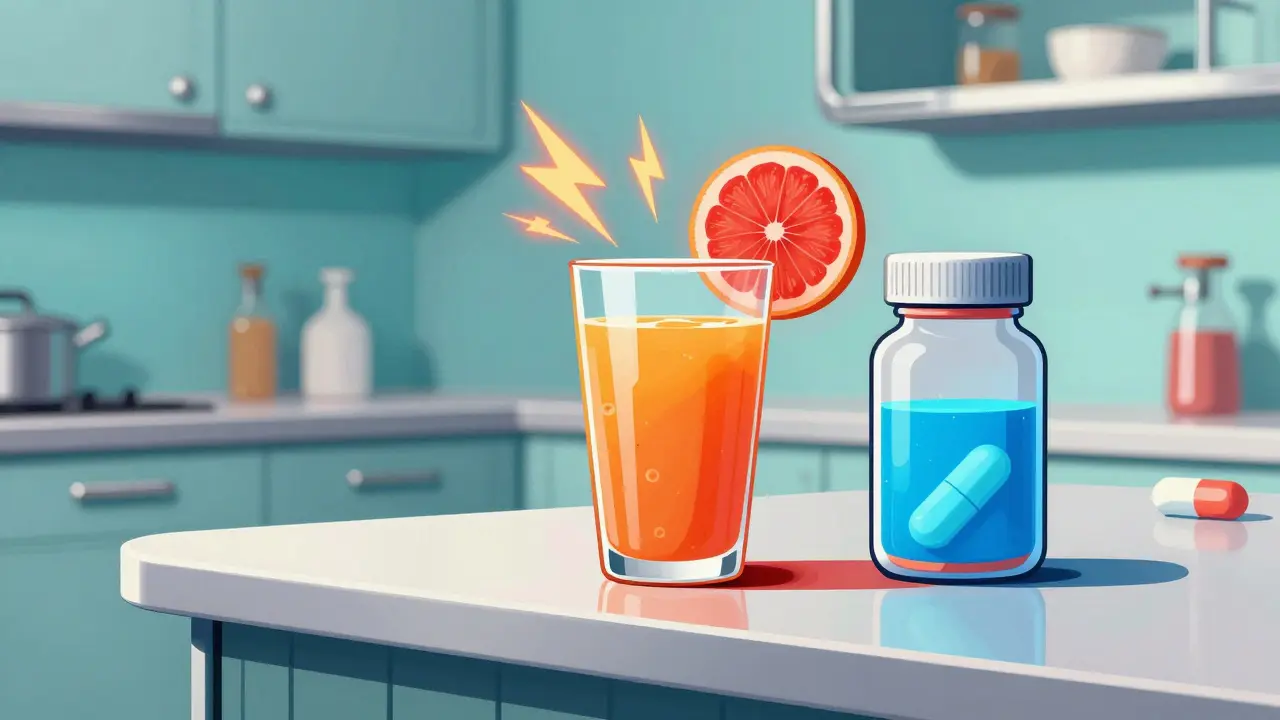
You love that morning glass of grapefruit juice. It’s tart, refreshing, and packed with vitamin C. But if you are taking immunosuppressant medications to protect a transplanted organ, that drink could be pushing your blood levels into a dangerous zone. This isn’t just a minor dietary suggestion; it is a life-threatening interaction that has hospitalized thousands of patients.
The relationship between grapefruit and certain drugs is one of the most well-documented yet frequently ignored risks in modern medicine. For transplant recipients, the stakes are incredibly high. A single serving can spike drug concentrations by up to 300%, turning a therapeutic dose into a toxic overdose. Understanding exactly how this happens, which fruits to avoid, and what to do if you slip up is critical for your long-term survival.
How Grapefruit Blocks Your Body’s Natural Filters
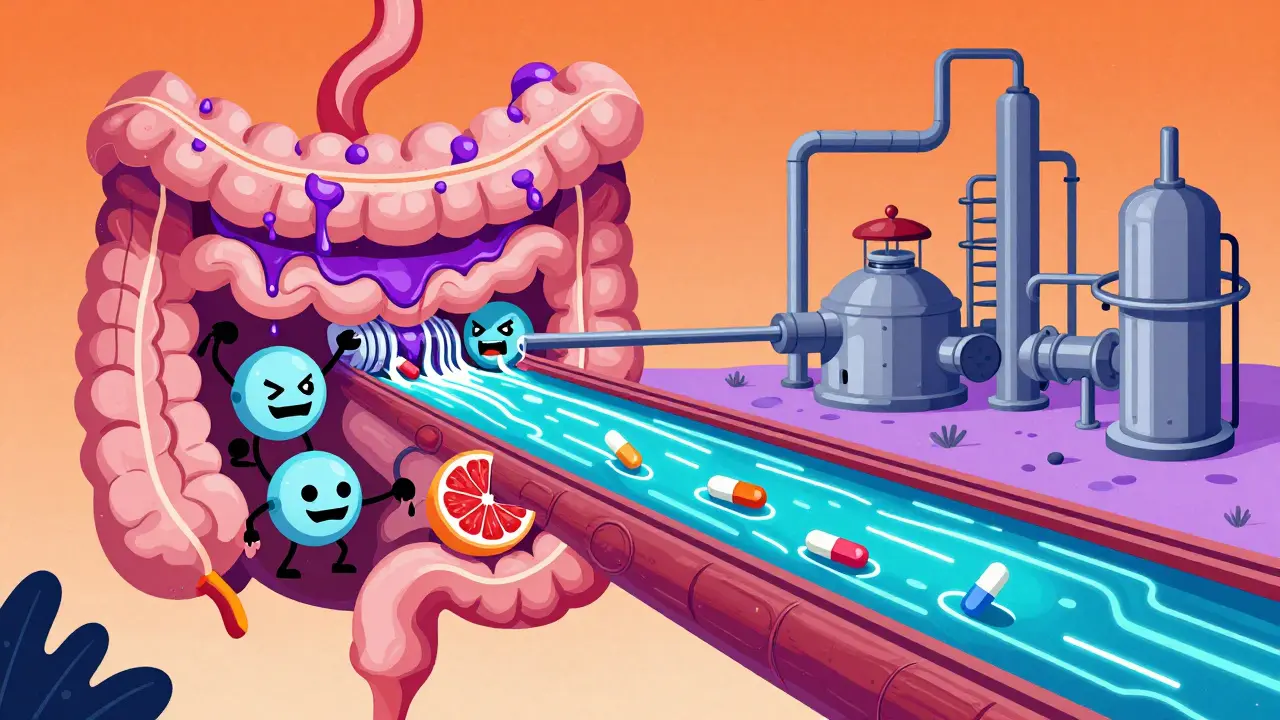
To understand why this interaction is so severe, we need to look at what happens inside your gut. When you swallow a pill, your body doesn’t absorb all of it immediately. An enzyme system called CYP3A4 acts as a gatekeeper. It sits in the lining of your intestines and breaks down a significant portion of orally administered drugs before they ever reach your bloodstream. This process is known as first-pass metabolism.
Grapefruit contains specific compounds called furanocoumarins, particularly bergamottin and 6',7'-dihydroxybergamottin (DHB). These compounds don’t just slow down the CYP3A4 enzymes; they bind to them irreversibly. Think of it like pouring superglue into a filter. The enzyme stops working, and because your body takes time to produce new enzymes, the blockage lasts for up to 72 hours after you consume the fruit.
When this pathway is blocked, the medication bypasses the filter entirely. Instead of being broken down, the full dose floods into your systemic circulation. Studies show that this can increase blood concentrations of certain drugs by two to three times higher than normal levels. For medications with a narrow therapeutic index-where the difference between a helpful dose and a harmful one is tiny-this surge is catastrophic.
Which Immunosuppressants Are Most Affected?
Not all rejection-prevention drugs react to grapefruit, but the most common ones do. If you are on any of the following, you must treat grapefruit as a poison:
- Cyclosporine (Sandimmune, Neoral): Levels can jump by 50-100%. Toxic levels (>500 ng/mL) can cause kidney damage and high blood pressure.
- Tacrolimus (Prograf, Envarsus XR, Astagraf XL): Levels may rise by 30-50%. Even small increases can lead to tremors, nausea, and nerve damage.
- Sirolimus (Rapamune): This drug is extremely sensitive, with levels potentially soaring by 200-300%.
- Everolimus (Zortress): Recently added to high-risk lists by health pharmacists due to similar metabolic pathways.
These drugs share three key traits: they are heavily processed by intestinal CYP3A4, they have low natural absorption rates, and they have a narrow safety margin. Because doctors carefully calibrate doses based on regular blood tests, introducing grapefruit throws off that calibration completely. You aren’t just taking a little extra medicine; you are effectively overdosing without realizing it.
The Hidden Risks: It’s Not Just Fresh Fruit
Many patients think they are safe because they don’t eat fresh grapefruit slices. They might drink orange juice or eat marmalade, assuming those are harmless. This is a dangerous misconception. The furanocoumarins responsible for the interaction are present in many citrus varieties, not just sweet or sour grapefruit.
| Fruit Type | Contains Furanocoumarins? | Risk Level | Common Products |
|---|---|---|---|
| Grapefruit | Yes (High) | Extreme Danger | Juice, fresh fruit, supplements |
| Pomelo | Yes (High) | Extreme Danger | Fresh fruit, Asian cuisine ingredients |
| Seville Oranges | Yes (Moderate-High) | High Danger | Marmalade, bitter orange liqueurs |
| Lemon | No | Safe | Juice, zest, fresh fruit |
| Regular Navel Oranges | No | Safe | Juice, fresh fruit |
| Tangerines/Clementines | No (Generally) | Safe | Fresh fruit, juice |
Pay close attention to Seville oranges. These bitter oranges are the standard ingredient in traditional British marmalade. If you enjoy breakfast toast with marmalade, check the label. If it says "Seville" or "bitter oranges," you are consuming the same enzyme-blocking compounds found in grapefruit. Pomelo, a larger relative often used in Asian cooking, also poses an equivalent risk. Stick to lemons, limes, and standard sweet oranges to stay safe.
Real-World Consequences: What Happens When You Slip Up?
Theoretical risks become real emergencies quickly. In 2022, a kidney transplant recipient was hospitalized with acute kidney injury after drinking a single glass of grapefruit juice while on tacrolimus. Within 36 hours, their drug levels spiked from a stable 8.2 ng/mL to a toxic 24.7 ng/mL. Symptoms included severe nausea, shaking tremors, and dangerously high potassium levels (hyperkalemia).
This isn’t an isolated incident. Transplant pharmacists at Mayo Clinic reported that 15-20% of unexpected toxicity cases involved undisclosed grapefruit consumption. The economic impact is staggering too, with each hospitalization averaging $18,500. But beyond the cost, there is the physical toll. High levels of immunosuppressants can damage your kidneys-the very organ you are trying to protect-and increase your risk of infections because your immune system becomes suppressed to unsafe levels.
Dr. David Huang, a pharmacologist at the FDA, warns that these high levels lead to "kidney problems, high blood pressure, and increased infection risk." The British Liver Trust notes that about 25% of transplant patients accidentally violate these restrictions, often because they underestimate how potent the interaction is. One Reddit user in the r/transplant community shared that their tacrolimus levels doubled after just one glass, reinforcing why doctors say "NEVER" instead of "limit."

Management Protocols: How to Stay Safe
Because the enzyme inhibition lasts for 72 hours, timing matters less than total avoidance. You cannot simply take your pill four hours apart from your juice. The blockage is irreversible until your body creates new enzymes. Here is the strict protocol recommended by major transplant centers like Memorial Sloan Kettering and the University of Pittsburgh Medical Center:
- Total Avoidance: Do not consume grapefruit, pomelo, or Seville oranges in any form-juice, fresh, dried, or extract.
- The 72-Hour Rule: If you accidentally consume grapefruit, you must wait at least three days before the interaction fully clears. However, since your drug levels will likely be elevated during this window, contact your doctor immediately.
- Immediate Testing: If you suspect exposure, get your blood levels checked within 3-5 days. Doctors may reduce your next dose by 25-50% pending results to prevent toxicity.
- Read Labels Carefully: Check salad dressings, smoothie mixes, and supplement bottles for hidden grapefruit derivatives.
If you are worried about missing out on Vitamin C, remember that regular oranges provide nearly the same amount without the risk. A half-cup of orange juice gives you plenty of nutrients and fiber without touching your CYP3A4 enzymes.
Frequently Asked Questions
How long does grapefruit affect my medication levels?
The effects of grapefruit on CYP3A4 enzymes last for up to 72 hours. This is because the furanocoumarins in the fruit bind irreversibly to the enzymes. Your body needs time to regenerate new enzymes, so even if you stop eating grapefruit, the interaction persists for three days.
Can I eat grapefruit seeds or peel safely?
No. The furanocoumarins are concentrated in the peel and juice of the grapefruit. Consuming any part of the fruit, including extracts or supplements derived from the peel, carries the same high risk of interacting with immunosuppressants.
Is pink or red grapefruit safer than white grapefruit?
No. All varieties of grapefruit contain furanocoumarins. Pink, red, and white grapefruits all inhibit the CYP3A4 enzyme to a similar degree. There is no "safe" variety of grapefruit for patients on immunosuppressants.
What should I do if I accidentally ate grapefruit?
Contact your transplant team or pharmacist immediately. Do not skip your next dose unless instructed to do so. Your doctor will likely order a blood test within 3-5 days to check your drug levels and may temporarily adjust your dosage to prevent toxicity.
Are there any other fruits that interact with immunosuppressants?
Yes. Pomelo and Seville oranges (used in marmalade) contain similar compounds and pose the same risks. Starfruit is also sometimes flagged for potential interactions with certain medications, though the mechanism differs. Always ask your pharmacist about specific fruits.