
Diverticulitis: Understanding Inflamed Pouches, Symptoms, and Modern Treatment Approaches
 Jun, 21 2026
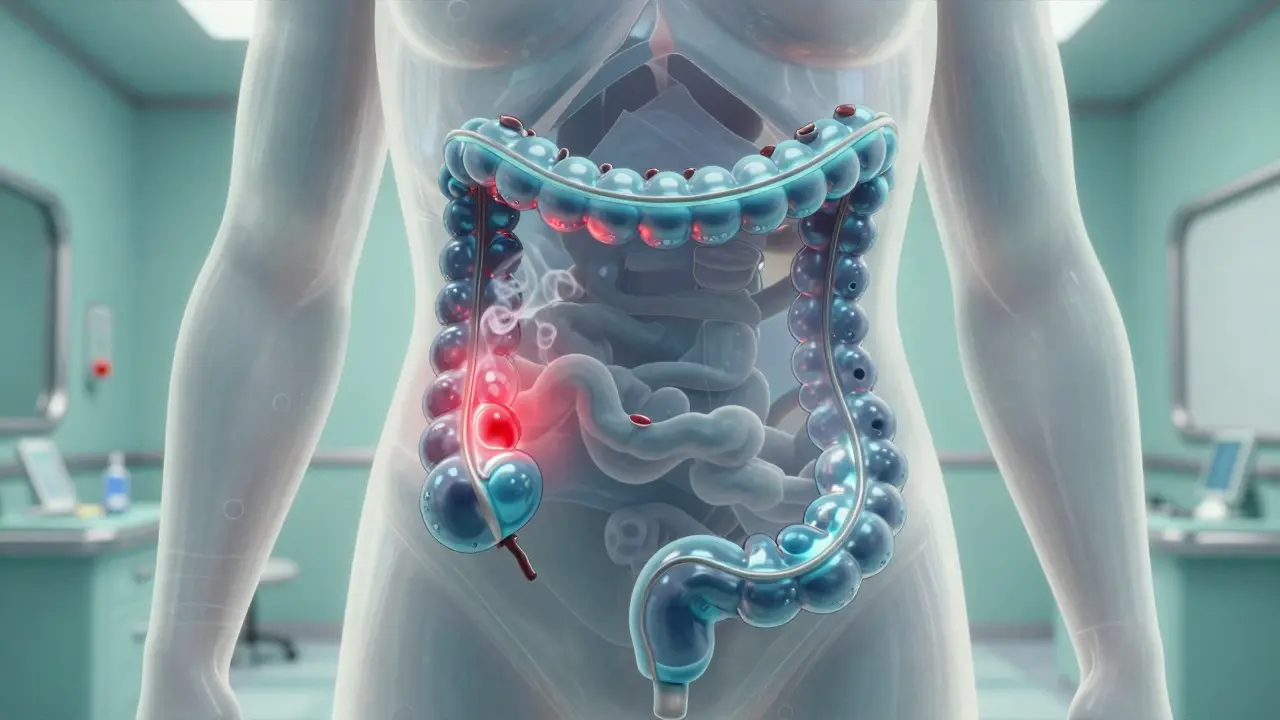
Imagine a sharp, stabbing pain in your lower left abdomen that feels like it won't stop. You might have a fever, feel nauseous, and suddenly find yourself unable to work or move comfortably. This isn't just a stomach bug; it could be diverticulitis, a condition where small pouches in your colon become inflamed or infected. For decades, doctors told patients to avoid nuts and seeds, but modern science has flipped many of those old rules on their head. Today, we know much more about what triggers these painful flare-ups and how to treat them effectively without unnecessary surgery or antibiotics.
If you are dealing with this condition, you likely have questions. Is it serious? Do you really need antibiotics? Will you ever eat normally again? The answers depend on the severity of your case and the latest clinical guidelines. Let's break down what is happening inside your body, how doctors diagnose it, and what the best treatment paths look like right now.
What Are Diverticula and How Do They Get Infected?
To understand diverticulitis, you first need to understand its precursor: diverticulosis, the presence of small pouches called diverticula in the colon wall. These pouches are tiny sacs, usually measuring between 5 and 10 millimeters in diameter, that bulge through weak spots in the muscular layer of your large intestine. Think of them like weak spots in an inner tube that bulge out when pressure builds up.
Most people with diverticulosis never know they have it. According to the National Institute of Diabetes and Digestive and Kidney Diseases (NIDDK), about 35% of U.S. adults aged 50 or younger have these pouches, and that number jumps to 58% for people over 60. However, diverticulosis only becomes a problem when one of these pouches gets blocked by stool or bacteria, leading to inflammation or infection. That is when it turns into diverticulitis.
The root cause often comes down to pressure. Chronic constipation or a long-term low-fiber diet increases the pressure inside the colon. Over time, this pressure pushes the lining of the colon outward through the muscle layer. While most of these pouches form in the sigmoid colon (the lower part of the large intestine), which explains why pain is usually felt on the lower left side, anatomy varies. In some Asian populations, for example, up to 40% of cases occur on the right side due to different colonic structures.
Recognizing the Symptoms: More Than Just Stomach Pain
Diverticulitis doesn't always announce itself gently. When a pouch becomes inflamed, the symptoms can escalate quickly. The most common sign is persistent abdominal pain, typically in the lower left quadrant. Unlike the cramping associated with gas or irritable bowel syndrome (IBS), this pain is often constant and worsens with movement. About 70-80% of patients also experience a fever above 38°C (100.4°F).
Other key indicators include:
- Nausea and vomiting
- A sudden change in bowel habits, such as constipation or diarrhea
- Bloating and excessive gas
- An urgent need to pass stool that cannot be satisfied
It is crucial to distinguish diverticulitis from other conditions. IBS shares symptoms like bloating, but it does not cause fever or localized tenderness. Crohn's disease causes inflammation throughout the digestive tract, whereas diverticulitis is confined to the specific pouches. Misdiagnosis is common; studies show that 25% of acute left lower quadrant pain cases are initially misidentified, sometimes confused with ovarian cysts in women or kidney stones. If you have severe pain accompanied by fever, do not wait-seek medical attention immediately.
How Doctors Diagnose Diverticulitis
Diagnosing diverticulitis requires a combination of physical examination, blood tests, and imaging. Doctors look for specific signs: localized tenderness in the abdomen, a high white blood cell count (leukocytosis >11,000 cells/µL), and fever. However, the gold standard for confirmation is a computed tomography (CT) scan.
A CT scan allows doctors to see pericolic inflammation-the swelling around the colon-and identify any complications like abscesses. It helps classify the severity of the condition using the Hinchey system:
- Stage I: Pericolic abscess smaller than 3cm.
- Stage II: Pelvic abscess between 3-5cm.
- Stage III: Generalized purulent peritonitis (infection spreading to the abdominal cavity).
- Stage IV: Fecal peritonitis caused by a hole in the colon (perforation).
While CT scans are expensive (averaging $1,200-$1,800 in the U.S.), they prevent costly mistakes. Misdiagnosis can lead to unnecessary surgeries, which cost thousands more. Some guidelines suggest that for very mild, clear-cut cases, clinical diagnosis alone might suffice to reduce radiation exposure, but CT remains the safest bet for accurate staging.
Modern Treatment Approaches: Antibiotics Are Not Always Necessary
Treatment for diverticulitis has changed dramatically in recent years. The old rule was "antibiotics for everyone." Today, expert consensus, including guidelines from the American Gastroenterological Association (AGA), suggests a more nuanced approach.
Mild, Uncomplicated Cases For patients with mild symptoms (Hinchey Stage Ia) who are stable and can tolerate liquids, antibiotics may not be needed at all. A landmark 2021 study published in the New England Journal of Medicine found no significant difference in recovery time between patients treated with antibiotics and those who were not. Recovery averaged 7 days for both groups. Instead, doctors recommend bowel rest (clear liquid diet for 48-72 hours) and hydration. Pain management focuses on acetaminophen, avoiding NSAIDs like ibuprofen, which can increase the risk of bleeding or perforation.
Moderate to Severe Cases If you have a high fever (>38.5°C), significant leukocytosis, or an abscess, antibiotics are essential. Hospitalization may be required for intravenous antibiotics like piperacillin-tazobactam. The goal is to control the infection before it spreads. For larger abscesses (Stage II), doctors might use image-guided drainage rather than immediate surgery.
Complicated Cases Stages III and IV involve perforation and widespread infection. These are medical emergencies requiring surgical consultation. Procedures like laparoscopic lavage (washing out the abdominal cavity) or primary resection (removing the affected part of the colon) may be necessary. Success rates for contained perforations via lavage are around 82%, making it a viable alternative to more invasive surgery in select cases.
Dietary Myths and What Actually Helps
One of the biggest shifts in diverticulitis care involves diet. For years, patients were told to avoid nuts, seeds, corn, and popcorn, fearing they would get stuck in the pouches. This advice has been thoroughly debunked. An 18-year study of 47,000 nurses found no increased risk of diverticulitis from eating these foods. In fact, a high-fiber diet is now considered protective.
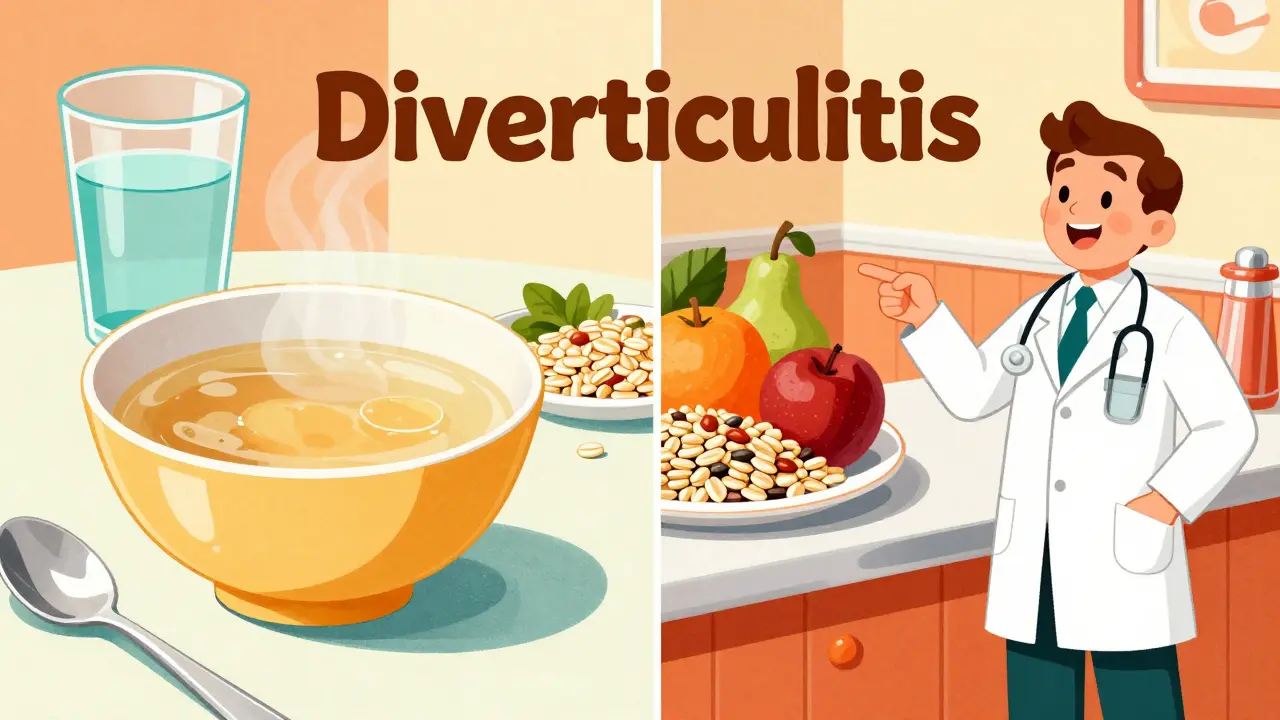
During an Attack: Stick to a clear liquid diet for the first few days to let your colon rest. As symptoms improve, transition to low-fiber foods like white bread, eggs, and cooked vegetables without skin. Avoid raw fruits and vegetables until the inflammation subsides.
Prevention and Maintenance: Once healed, aim for 25-35 grams of fiber daily. Soluble fiber from oats, beans, and fruits helps soften stool and reduces pressure in the colon. Stay hydrated-fiber works best with plenty of water. Regular exercise also plays a role; people who exercise less than two hours a week have a 38% higher incidence of diverticulitis.
| Severity Stage | Key Characteristics | Standard Treatment | Setting |
|---|---|---|---|
| Mild (Uncomplicated) | Low-grade fever, mild pain, no abscess | Bowel rest, fluids, optional antibiotics | Outpatient/Home |
| Moderate (Small Abscess) | Fever >38.5°C, localized abscess <3cm | IV antibiotics, possible drainage | Hospital |
| Severe (Perforation) | High fever, severe pain, peritonitis | Surgery (resection or lavage) | Emergency/Surgical ICU |
Long-Term Management and Recurrence
About 15-30% of patients experience a recurrence after their first episode. This is where long-term management becomes critical. After an acute attack resolves, doctors recommend a colonoscopy 6-8 weeks later. This step is vital to rule out colorectal cancer, which can mimic diverticulitis symptoms. Studies show a 1.3% detection rate of cancer in patients over 50 following a diverticulitis diagnosis.
New treatments are emerging to reduce recurrence. Mesalazine (Pentasa®), recently approved for maintenance therapy, showed a 31% reduction in recurrence rates over 12 months in clinical trials. Additionally, researchers are exploring the gut microbiome's role. Preliminary data suggests that patients with diverticulitis have lower levels of beneficial bacteria like Faecalibacterium prausnitzii. Probiotics and dietary changes aimed at boosting these bacteria may offer future preventive benefits.
Surgery used to be recommended after three attacks. Now, guidelines suggest considering elective surgery after two hospitalizations if quality of life is significantly impacted. Predictive analytics using AI are also helping doctors assess individual recurrence risks, allowing for more personalized care plans.
Can diverticulitis go away on its own?
Mild, uncomplicated diverticulitis can sometimes resolve with bowel rest and hydration alone, without antibiotics. However, medical supervision is essential to monitor for worsening symptoms. If you develop a high fever, severe pain, or inability to keep fluids down, immediate medical intervention is required.
Should I avoid nuts and seeds if I have diverticulosis?
No. Recent large-scale studies have debunked the myth that nuts, seeds, corn, and popcorn cause diverticulitis. In fact, a high-fiber diet including these foods may help prevent flare-ups by reducing pressure in the colon. Only avoid solid particles during an active acute attack while on a clear liquid diet.
When is surgery necessary for diverticulitis?
Surgery is typically reserved for complicated cases involving perforation, abscesses that cannot be drained, or failure of medical treatment. Elective surgery may be considered after two recurrent episodes if they significantly impact your quality of life, though this decision is highly individualized based on age, health status, and symptom severity.
What is the difference between diverticulosis and diverticulitis?
Diverticulosis is the presence of small pouches (diverticula) in the colon wall, which is common and often asymptomatic. Diverticulitis occurs when one or more of these pouches become inflamed or infected, causing pain, fever, and other symptoms. Everyone with diverticulitis has diverticulosis, but not everyone with diverticulosis develops diverticulitis.
How long does it take to recover from diverticulitis?
Recovery time varies by severity. Mild cases often resolve within 7 to 10 days with proper care. Moderate cases requiring hospitalization may take 2 to 4 weeks to fully recover. Complicated cases involving surgery can require several weeks to months of rehabilitation. Following post-attack dietary guidelines is crucial for preventing recurrence.