
Aspirin-Exacerbated Respiratory Disease: Diagnosis and Desensitization
 Feb, 8 2026
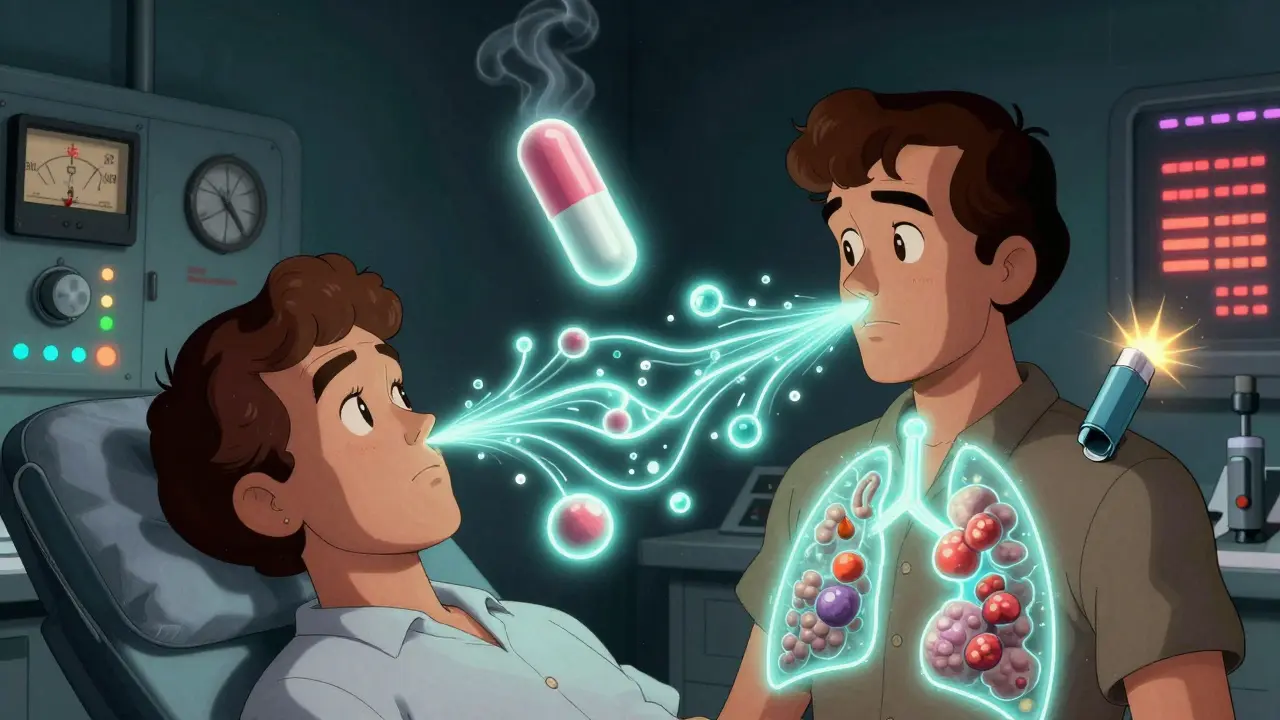
If you’ve had chronic sinus problems, asthma that won’t quit, and sudden breathing trouble after taking ibuprofen or aspirin, you’re not alone. About 7% of adults with asthma have a condition called Aspirin-Exacerbated Respiratory Disease (AERD), also known as Samter’s Triad. It doesn’t show up on a simple allergy test. It doesn’t go away with antihistamines. And if you don’t know what you’re dealing with, you could be stuck in a cycle of sinus surgeries, steroid bursts, and worsening breathing - all because your body reacts badly to common painkillers.
What Exactly Is AERD?
AERD isn’t just an allergy. It’s a chronic inflammatory disease that hits your nose, sinuses, and lungs all at once. You can’t catch it. You can’t prevent it. It usually shows up in your 30s or 40s, and it’s slightly more common in women. The three things that define it? Asthma (always), nasal polyps (almost always), and a reaction to aspirin or NSAIDs like ibuprofen or naproxen.
When someone with AERD takes aspirin or a similar drug, their body goes into overdrive. Instead of calming inflammation, these drugs trigger a surge in chemicals called cysteinyl leukotrienes. These are powerful inflammatory signals that cause your airways to swell, your sinuses to fill with fluid, and your polyps to grow. That’s why a simple headache pill can lead to a full-blown asthma attack, runny nose, and blocked sinuses - often within an hour.
How Is AERD Diagnosed?
There’s no blood test. No imaging scan that confirms it. Diagnosis comes down to one thing: your history. If you’ve had asthma since adulthood, recurring nasal polyps that keep coming back after surgery, and a clear pattern of breathing problems after taking NSAIDs - your doctor should suspect AERD.
But sometimes, the connection isn’t obvious. Maybe you only took ibuprofen once and didn’t think much of it. Or maybe you avoid NSAIDs so strictly that you’ve never had a reaction. That’s when doctors use the gold standard: the aspirin challenge.
This isn’t done in a regular clinic. It’s performed in a specialized allergy or asthma center with full emergency equipment on standby. You start with a tiny dose - 20 to 30 milligrams of aspirin. Then, every 90 to 120 minutes, the dose doubles. You’re monitored closely for wheezing, nasal congestion, or drops in lung function. The full test takes 5 to 6 hours. If you react, it’s a clear diagnosis. If you don’t, AERD is ruled out.
There are also supporting clues. Blood tests often show high eosinophils - a type of white blood cell that’s elevated in 76% of AERD patients. Urine tests can detect elevated leukotriene E4, which is present in 89% of active cases. These aren’t diagnostic on their own, but when combined with your symptoms, they strengthen the case.
What Happens If You Just Avoid Aspirin and NSAIDs?
Many patients think avoiding NSAIDs will solve everything. It doesn’t. AERD keeps progressing on its own. Even without taking aspirin, nasal polyps grow, asthma worsens, and your sense of smell fades. One study found that 78% of patients reported severe daily nasal congestion - even when they avoided all NSAIDs.
That’s because the underlying inflammation doesn’t stop. It’s like turning off the gas to a leaky pipe - the pipe still rusts, and the damage keeps getting worse. Avoidance helps prevent flare-ups, but it doesn’t treat the root problem.
First-Line Treatments: What Actually Works
Managing AERD starts with controlling inflammation. Here’s what works based on real clinical outcomes:
- Steroid sinus rinses: Using a neti pot with 50-100 mg of budesonide twice daily reduces polyp size by 30-40% in just eight weeks. It’s not a cure, but it keeps your sinuses clear longer.
- Intranasal sprays: Fluticasone (50 mcg per spray, two sprays per nostril twice a day) improves nasal congestion scores by 35% after 12 weeks. Consistency matters - skip days, and the benefit fades.
- Asthma control: A combination inhaler like fluticasone/salmeterol (250/50 mcg) two puffs twice daily improves lung function by 15-20% in 70% of patients. This isn’t optional - uncontrolled asthma in AERD can be life-threatening.
These treatments help, but they’re not enough for most people. Polyps come back. Asthma flares. And your sense of smell? It keeps fading.
The Game-Changer: Aspirin Desensitization
This is where things change. Aspirin desensitization isn’t a trick. It’s a medical procedure that resets your body’s response - and it’s backed by decades of data.
Here’s how it works: You go through the same aspirin challenge used for diagnosis - but this time, you keep going past the reaction point. Once you react, instead of stopping, the team continues giving you aspirin in small, controlled doses until your symptoms improve. Then, you’re sent home with a daily dose of 650 mg, twice a day - forever.
Why does this work? Because constant exposure to aspirin shuts down the inflammatory pathway. It stops your body from overproducing leukotrienes. It’s like retraining a misfiring alarm system.
The results? Patients who complete desensitization and stick with daily aspirin see:
- 40% fewer asthma attacks
- Reduction in oral steroid use from 4.2 bursts per year to just 1.1
- Nasal polyp recurrence drops from 85% to 35% within two years after sinus surgery
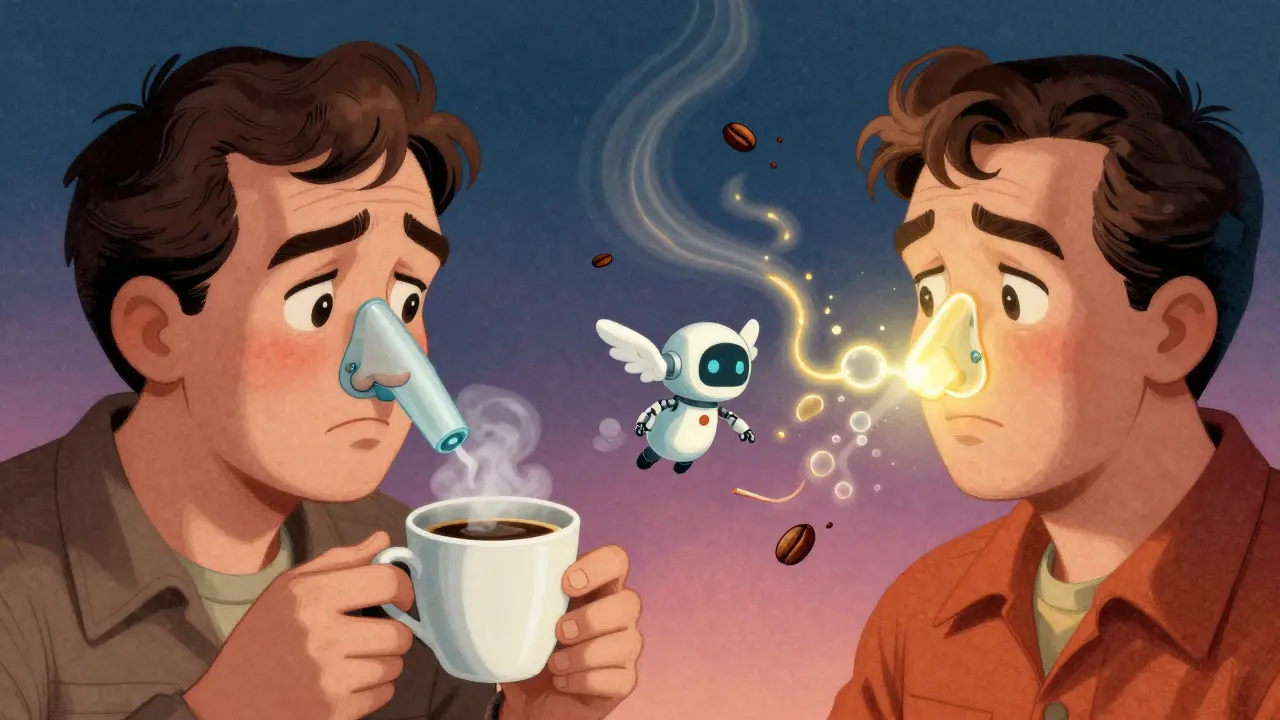
- Smell function improves dramatically - scores on smell tests jump from 12.4 to 23.7 out of 40
One patient on an AERD support forum wrote: “I hadn’t smelled coffee in 12 years. Two months after desensitization, I walked into my kitchen and burst into tears.” That’s not an outlier. It’s common.
When Surgery Fits In
Most people with AERD need at least one sinus surgery - usually a functional endoscopic sinus surgery (FESS). But if you do surgery and don’t do desensitization, polyps come back in 60-70% of cases within 18 months.
Do surgery and desensitization? Polyp recurrence drops to 25-30%. That’s the gold standard. The procedure clears the blocked passages. The aspirin therapy stops the inflammation from coming back.
Doctors now recommend that every AERD patient who needs surgery should be offered desensitization. It’s not an add-on - it’s part of the treatment plan.
What About Biologics?
For patients who can’t tolerate aspirin or still have severe symptoms after desensitization, biologics are a powerful option.
- Dupilumab (injection every two weeks) reduces polyp size by 55% and improves quality of life scores by 40% in 16 weeks. It’s FDA-approved for nasal polyps and works well with aspirin therapy.
- Mepolizumab (monthly injection) cuts eosinophil counts by 85% and reduces the need for repeat surgeries by 57% over a year.
These drugs are expensive - often $20,000+ per year. But for many, they’re life-changing. A 2023 study showed that combining dupilumab with aspirin therapy led to better outcomes than either alone.
The Hard Truth: Adherence Is Everything
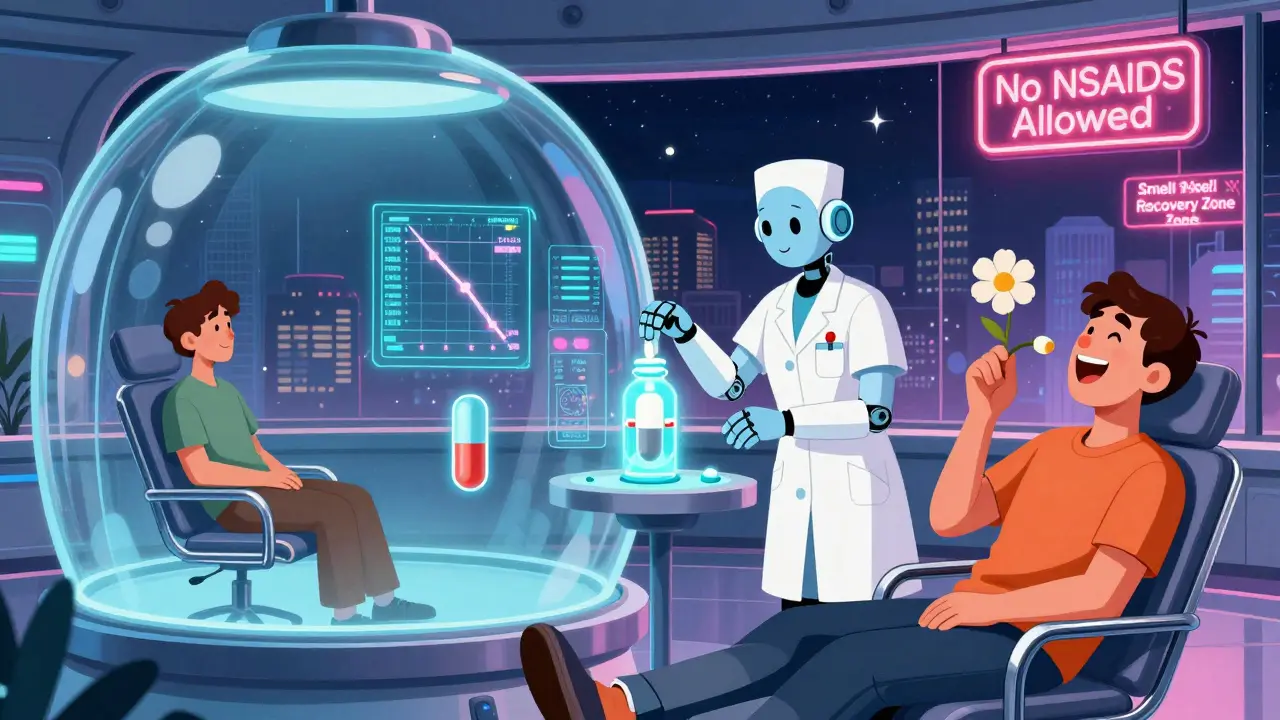
Aspirin desensitization only works if you take the pills every day. Miss two or three doses? You might lose your desensitization. Studies show 68% of people who skip doses need to go through the whole challenge again.
And there are side effects. About 22% of long-term users get stomach upset, ulcers, or bleeding. That’s why doctors check your history carefully. If you have peptic ulcers, severe heart disease, or can’t commit to daily pills - desensitization isn’t for you.
Some patients use enteric-coated aspirin or take it with food to reduce irritation. Others switch to a lower daily dose (325 mg once a day) if tolerated. It’s not one-size-fits-all.
Access and Real-World Challenges
Here’s the catch: There are only about 35 dedicated AERD centers in the entire United States. Most general allergists don’t feel comfortable doing aspirin challenges. If you live outside a major city, getting diagnosed or treated can mean driving hours.
Telemedicine has helped - 35% more patients accessed care since 2020. But rural patients still face barriers. Only 22% can reach a specialist within 100 miles.
Cost is another issue. Biologics are expensive. Even the aspirin challenge requires a full day at a specialized center. Insurance doesn’t always cover it. Many patients on forums say they’ve gone into debt just to get care.
What’s Next?
Research is moving fast. A new drug called MN-001 (tipelukast), which blocks two key inflammatory pathways at once, showed a 60% drop in leukotriene levels in early trials. It could one day replace daily aspirin for some.
Meanwhile, patient communities are filling gaps. Reddit’s r/SamtersTriad and AERD Warriors have thousands of members sharing tips: using tea tree oil in sinus rinses, scheduling aspirin with meals, checking OTC meds for hidden NSAIDs.
One thing is clear: AERD is not just another asthma case. It’s a complex, systemic disease that needs a coordinated, long-term plan. Avoidance alone won’t cut it. Surgery without desensitization is a band-aid. But with the right approach - diagnosis, surgery, daily aspirin, and targeted therapies - many patients go from struggling to breathe to living normally again.
Can you outgrow AERD?
No. AERD is an adult-onset condition that doesn’t go away. Once you develop it, it’s lifelong. But with proper management - especially aspirin desensitization - symptoms can be controlled so well that many patients live without major flare-ups.
Is aspirin desensitization safe?
Yes, when performed in a specialized center with trained staff and emergency equipment. The procedure has a 98% success rate for completing desensitization. Severe reactions are rare and managed immediately. The biggest risk is non-adherence - missing daily aspirin doses can reverse the benefits and require restarting the entire process.
Do I need to avoid all NSAIDs forever?
After successful desensitization and daily aspirin therapy, many patients can tolerate other NSAIDs like ibuprofen or naproxen. But this isn’t guaranteed. Some still react. It’s safest to avoid all NSAIDs unless you’ve been tested under medical supervision. Always check OTC labels - many cold and pain meds contain hidden NSAIDs.
Why does AERD cause loss of smell?
Chronic inflammation from nasal polyps physically blocks odor molecules from reaching smell receptors. Inflammation also damages the nerve endings in the nose. Studies show smell function improves dramatically after aspirin desensitization - not just because polyps shrink, but because the underlying inflammation calms down, allowing nerves to recover.
Can I use ibuprofen if I take aspirin daily?
Some patients can, but it’s risky. Aspirin desensitization makes your body tolerant to aspirin - not necessarily to other NSAIDs. Many people still react to ibuprofen, naproxen, or celecoxib. If you want to try, do it only under medical supervision. Most doctors recommend sticking to daily aspirin and avoiding other NSAIDs entirely.
How long does it take to see results after desensitization?
Improvement starts within weeks. Asthma symptoms often improve first - within 1 to 2 months. Nasal congestion and polyp size take longer. Most patients notice better breathing and less congestion by 3 months. Smell recovery can take 6 to 12 months. The full benefits - fewer surgeries, less steroid use - show up over 1 to 2 years.
Joseph Charles Colin
February 10, 2026 AT 10:34AERD is fundamentally a dysregulated 5-lipoxygenase pathway disorder with downstream cysteinyl leukotriene overproduction, not merely an NSAID hypersensitivity. The eosinophilic inflammation is systemic, not localized to the airways. That’s why topical steroids alone are insufficient-they don’t address the root biochemistry. The key insight is that aspirin’s COX-1 inhibition shunts arachidonic acid toward the leukotriene pathway, which is already hyperactive in AERD. Desensitization works by chronically suppressing 5-LOX expression via transcriptional modulation, not just receptor blockade. This is why daily low-dose aspirin is non-negotiable-it’s not palliative, it’s disease-modifying.
Joshua Smith
February 11, 2026 AT 07:38I’ve been living with this for 8 years. I didn’t know what was wrong until my ENT mentioned Samter’s Triad. I thought my sinus infections were just bad luck. The moment I started daily aspirin after desensitization, I could breathe through my nose again. I still use the budesonide rinse twice a day-it’s my lifeline. No more steroid bursts. No more polyp surgeries. Just consistency. It’s not glamorous, but it works.
Chima Ifeanyi
February 11, 2026 AT 18:50Let’s be real-the entire AERD narrative is overhyped by allergists trying to justify expensive procedures. You’re telling me a 650mg aspirin tablet daily is somehow ‘disease-modifying’? That’s not science, that’s placebo-driven dogma. The studies are all funded by pharma. I’ve seen patients with identical phenotypes who never took aspirin and had better outcomes. The real issue? Overdiagnosis. Most people with nasal polyps and asthma don’t have AERD-they have uncontrolled allergic rhinitis and poor inhaler technique. Stop medicalizing normal variation.
Ritteka Goyal
February 12, 2026 AT 15:15OMG I JUST REALIZED I’VE HAD THIS MY WHOLE LIFE AND NO ONE TOLD ME!!! I’VE BEEN TAKING IBUPROFEN FOR MY PERIOD CRAMPS SINCE I WAS 16 AND NEVER KNEW IT WAS MAKING MY ASTHMA WORSE!!! I HAD 3 SURGERIES IN INDIA AND STILL COULDN’T SMELL MY MOM’S CURRY!!! NOW I’M ON ASPIRIN AND I CAN SMELL GARLIC AGAIN OMG I’M CRYING RN I’M SO HAPPY I’M SO GRATEFUL TO THE DOCTOR WHO FIGURED IT OUT I LOVE AMERICA FOR THIS SCIENCE I’M SO PROUD OF US FOR BEING THE ONLY COUNTRY THAT DOES THIS RIGHT I’M SO EMOTIONAL I NEED A HUG
Monica Warnick
February 14, 2026 AT 01:35My husband had this. He went through the challenge. Did the aspirin. Then he missed two days. Then he had a full asthma attack in the middle of the night. We had to go to the ER. He’s been terrified to take it since. Now he’s on dupilumab. It’s $24,000 a year. Insurance denied it twice. We’re in debt. I don’t sleep. I check his oxygen levels every hour. I’m exhausted. This isn’t a ‘condition.’ It’s a life sentence.
Jonah Mann
February 15, 2026 AT 11:48so i just found out i have aerd last year and honestly? the aspirin desensitization was the hardest thing i’ve ever done. i was terrified. but once i started the daily 325mg? my sinuses stopped feeling like they were packed with wet cement. i still use the neti pot with budesonide-like, every single night. no exceptions. i also started reading labels like a hawk. turns out, tons of cold meds have naproxen in them. also, i found out i can’t take meloxicam. who knew? anyway, yeah. it’s not perfect. but i can breathe. i can smell coffee. i can sleep. i’m not dying. that’s enough.
Frank Baumann
February 17, 2026 AT 02:07I’ve had this since I was 31. I’ve had five sinus surgeries. I’ve been on oral steroids so many times my bones are crumbling. I’ve tried everything. Then I found out about aspirin desensitization. I thought it was a joke. But I did it. And now? I haven’t had a single asthma attack in 18 months. I can run. I can smell my daughter’s shampoo. I can sleep on my back. This isn’t medicine. This is a miracle. And they’re telling you it’s too expensive? Too dangerous? Too hard? Bullshit. If you’re not doing this, you’re not trying. You’re just giving up.
Ken Cooper
February 18, 2026 AT 02:30hey so i just got my dupilumab injection yesterday and honestly? i’m still processing. i’ve had nasal polyps since i was 28. i thought i’d be on prednisone forever. then my allergist said, ‘try aspirin first.’ i did the challenge. it was scary. but now i’m on 650mg daily. and dupilumab. and i can smell my coffee again. and my wife says i’ve been less grumpy. i don’t know if it’s the meds or just finally being able to breathe. but i’m alive. and that’s more than i thought i’d have.
MANI V
February 18, 2026 AT 02:50It’s tragic how Western medicine has turned a physiological anomaly into a profitable enterprise. You have patients being coerced into lifelong aspirin regimens, while the real root-environmental toxins, poor diet, chronic stress-is ignored. Why not address the systemic inflammation caused by processed foods and air pollution? Why not promote plant-based diets and nasal irrigation with saline alone? Instead, we’re sold a $20,000 biologic and a daily pill that causes GI bleeds. This isn’t healing. This is commodification of suffering.
Brett Pouser
February 20, 2026 AT 00:14I’m from rural Nebraska. There’s no AERD center within 300 miles. I had to drive 5 hours each way for the challenge. Paid out of pocket. Took two days off work. But I did it. Now I take aspirin every day. I use the budesonide rinse. I avoid NSAIDs. I’m not cured-but I’m not dying either. I just wish more people knew this existed. My cousin in Texas has the same symptoms. She thinks it’s just ‘bad allergies.’ She’s gonna end up in the ER one day. I wish I could send her this post.
Andy Cortez
February 20, 2026 AT 15:20Everyone’s acting like this is some revolutionary breakthrough. Newsflash: aspirin has been around since 1897. The fact that we’re treating a chronic inflammatory disease with a 127-year-old drug is a joke. Why aren’t we developing targeted leukotriene inhibitors? Why aren’t we funding gene therapy? Why are we still using a blunt instrument like aspirin? This isn’t innovation. It’s medical stagnation dressed up as progress. And don’t even get me started on the biologics-they’re just expensive Band-Aids for a broken system.
Andrew Jackson
February 20, 2026 AT 21:45The moral decay of modern medicine is epitomized by the normalization of chemical dependency in the name of ‘management.’ One must ask: why is the body’s natural inflammatory response-so essential to immune defense-viewed as an enemy to be suppressed by perpetual pharmacological intervention? The aspirin regimen, while ostensibly effective, imposes a lifelong chemical burden upon the patient, thereby institutionalizing vulnerability rather than restoring physiological autonomy. One cannot heal by poisoning. One must restore balance. And balance is not found in a pill bottle.
John Sonnenberg
February 21, 2026 AT 16:34I’ve been doing aspirin for 5 years. I had to restart the desensitization after I missed three days. It was terrifying. I didn’t sleep for two nights. My wife cried. I had to go back to the hospital. I’m not doing that again. Now I have a pill organizer. I set alarms. I even have a backup pill in my wallet. I’m not taking any chances. If I die because I forgot, I’m haunting my doctor.
Jessica Klaar
February 22, 2026 AT 05:58I’m a nurse. I work in an allergy clinic. I’ve seen 14 patients go through desensitization. Every single one of them cried the first time they smelled their child’s shampoo again. Or their husband’s cologne. Or fresh bread. It’s not just about breathing. It’s about reconnecting with the world. I used to think medicine was about fixing things. Now I know it’s about giving people back their humanity. I don’t know how to put that into a clinical trial. But I see it every day.