
Antihistamine Overdose First Aid: Emergency Steps & Warning Signs
 Aug, 16 2026
Antihistamine Overdose First Aid Checker
Answer a few questions to get immediate first-aid guidance and know whether to call Poison Control or rush to the ER.
Fill in the details on the left, then press Check My Situation.
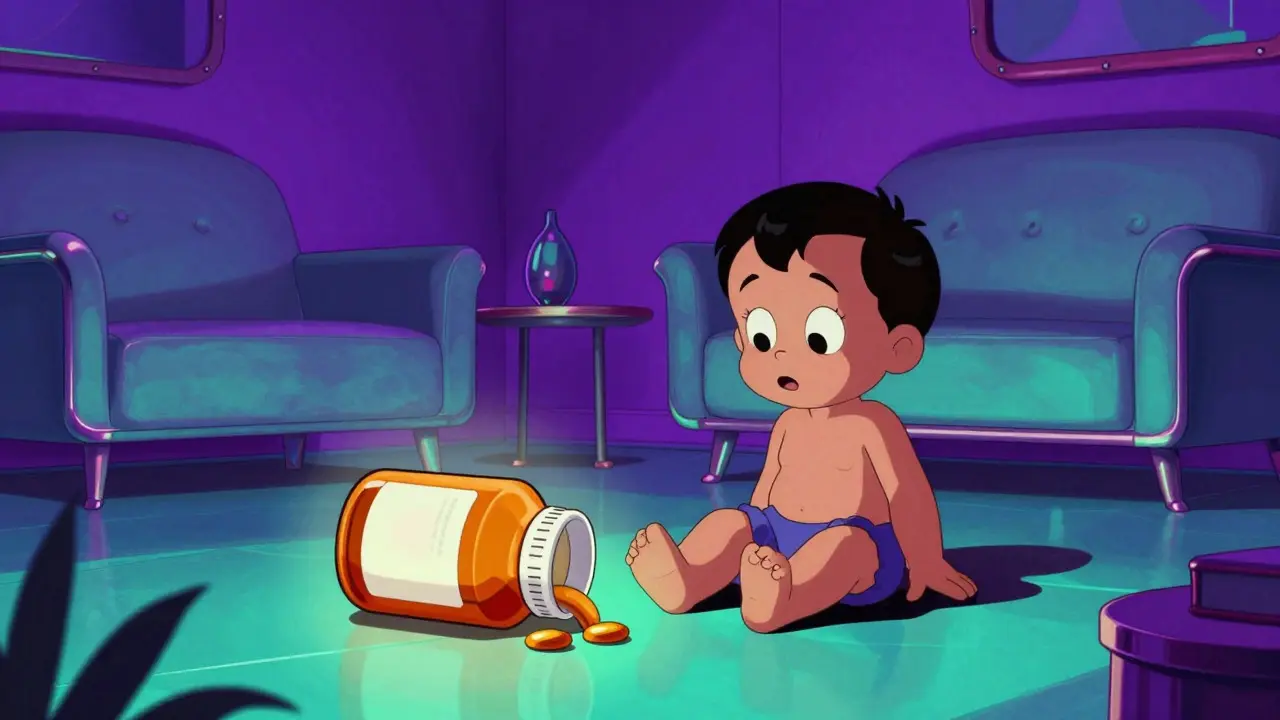
Imagine finding your toddler asleep on the floor next to an empty bottle of Diphenhydramine is a first-generation antihistamine commonly found in over-the-counter allergy and sleep aids like Benadryl. It was introduced in 1946 and remains one of the most common causes of pediatric poisoning. You check the label; they might have taken three times the recommended dose. Panic sets in. Do you make them throw up? Do you rush straight to the ER? Or do you wait and see if they wake up? This split-second decision can determine whether the situation stays manageable or becomes life-threatening. The good news is that with the right immediate actions, survival rates for Antihistamine Overdose is a medical condition resulting from ingesting more than the therapeutic dose of antihistamines, leading to symptoms ranging from drowsiness to cardiac arrhythmias. are exceptionally high, but only if you act correctly within the first few hours.
The core problem isn't just the drug itself, but how it interacts with your body's electrical systems. Unlike newer allergy meds, older antihistamines don't just block histamine; they also affect sodium channels in the heart. If you know what to look for and who to call, you can prevent complications like respiratory failure or dangerous heart rhythms. Here is exactly what needs to happen when you suspect an overdose, step by step.
Identify the Risk: First-Gen vs. Second-Gen Antihistamines
Not all antihistamines carry the same weight in an emergency. Understanding which type you are dealing with changes how urgently you need to react. There are two main generations of these drugs, and their toxicity profiles are vastly different.
- First-Generation (Sedating): Includes Diphenhydramine, Chlorpheniramine, and Promethazine. These cross the blood-brain barrier easily, causing deep sedation. More importantly, they have "anticholinergic" effects (dry mouth, blurred vision) and can block sodium channels in the heart at high doses. This makes them significantly more dangerous in overdose scenarios.
- Second-Generation (Non-Sedating): Includes Loratadine, Cetirizine, and Fexofenadine. These stay mostly outside the brain, so they cause less drowsiness. While massive overdoses can still cause issues like a fast heart rate, serious cardiac problems are rare compared to the first generation.
If you find a child with Diphenhydramine, treat it as a higher-priority emergency than if they had a few extra Zyrtec tablets. A 2020 study analyzing over 9,000 pediatric cases found that first-generation antihistamines caused serious outcomes in 1.8% of cases, while second-generation ones caused them in only 0.2%. That gap matters when you're deciding whether to drive to the hospital or call for advice.
Immediate First Aid Steps at Home
Before you even think about going to the hospital, you need to stabilize the scene. Your goal is to stop further absorption and keep the airway safe. Here is the protocol used by toxicologists and poison control centers:
- Check Responsiveness: Is the person breathing? Are they conscious? If they are unresponsive and not breathing, call 911 immediately and start CPR. If they are breathing but very drowsy, place them in the recovery position (on their side) to prevent choking if they vomit.
- Do NOT Induce Vomiting: This is the biggest myth. Making someone throw up increases the risk of aspiration (inhaling vomit into the lungs), especially since antihistamines make people sleepy and reduce their gag reflex. Unless a doctor explicitly tells you to, let nature take its course.
- Gather Evidence: Find the bottle. Note the name of the drug, the concentration (e.g., 12.5 mg/5 mL), and the expiration date. Estimate how much was taken based on the remaining amount or the number of pills missing. This information is critical for the medical team.
- Contact Poison Control: In the US, dial 1-800-222-1222. In the UK, contact your local NHS 111 service or the National Poisons Information Service. They will give you specific instructions based on the exact drug and dosage. Don't wait for symptoms to appear; call now.
If the overdose involved liquid medicine spilled on skin, rinse the area with cool water for 15-20 minutes. If it got in the eyes, flush continuously for 20 minutes. These steps minimize local irritation but won't fix systemic toxicity.

Warning Signs That Demand Hospital Care
Sometimes, home observation is enough. Other times, you need IV fluids and cardiac monitoring. How do you tell the difference? Look for these specific red flags. If you see any of these, go to the Emergency Department immediately.
| Symptom Category | Mild / Home Observation | Severe / Emergency Care |
|---|---|---|
| Alertness | Drowsy but wakes up when spoken to | Unresponsive, hard to wake, or confused/agitated |
| Heart Rate | Slightly elevated (up to 100 bpm) | Rapid (>120 bpm) or irregular rhythm |
| Physical Signs | Dry mouth, flushed skin | Blurred vision, inability to urinate, seizures |
| Respiration | Normal breathing pattern | Slow, shallow, or labored breathing |
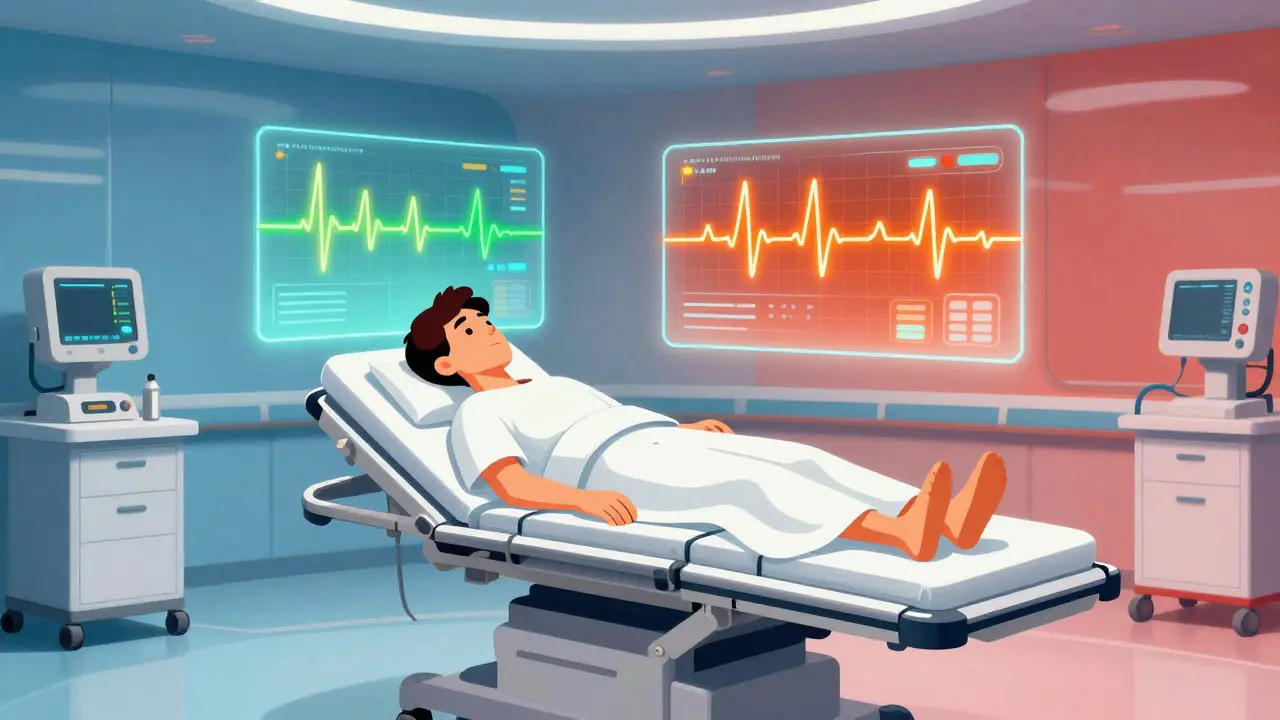
Why is the heart rate such a big deal? High doses of Diphenhydramine can widen the QRS complex on an EKG, a sign that the heart's electrical signals are moving too slowly. If the QRS interval exceeds 100 milliseconds, doctors may administer Sodium Bicarbonate is an intravenous solution used to alkalinize the blood and improve cardiac conduction in certain drug overdoses. to help the heart beat normally. This treatment works best when started early, which is why getting to a hospital with cardiac monitoring capabilities is crucial for severe cases.
What Happens at the Hospital?
Once you arrive, the medical team focuses on supportive care. They aren't looking for a magic antidote; they are managing the symptoms until the drug clears your system. Since antihistamines bind tightly to proteins in the blood, they stay in the body for a long time. You can't just dialyze them out quickly.
The standard treatment involves three pillars:
- Activated Charcoal: If you arrive within 1-2 hours of ingestion, doctors may give activated charcoal. This substance acts like a sponge in the stomach, binding to the drug and preventing it from entering the bloodstream. For adults, the dose is typically 25-100 grams. For children, it’s calculated by weight (0.5-1 gram per kilogram).
- Benzodiazepines: If the patient is agitated, twitching, or having seizures, doctors use benzodiazepines (like midazolam or lorazepam). Older guidelines suggested using physostigmine, but current consensus from the American College of Medical Toxicology recommends against it due to cardiac risks. Benzodiazepines are safer and effective for calming the nervous system.
- Continuous Monitoring: Patients with significant ingestions (over 300 mg of Diphenhydramine for adults) usually require 4-6 hours of continuous EKG monitoring. The median hospital stay for those admitted is about 22.7 hours. During this time, nurses watch for changes in heart rhythm and breathing patterns.
Prevention: Keeping Meds Safe
The best way to handle an antihistamine overdose is to never have one. Most cases are accidental, involving children under six who grab medications left within reach. The American Association of Poison Control Centers reports that 67% of antihistamine overdose cases involve kids in this age group.
To lower the risk, follow these simple habits:
- Use Child-Proof Caps: Ensure every bottle has a working safety cap. Test them occasionally; sometimes they break or get stuck open.
- Store High and Away: Keep medicines in a locked cabinet or on a high shelf, not in the bathroom or kitchen where kids play.
- Measure Accurately: Use the dosing cup that comes with the liquid medication, not a regular kitchen spoon. A teaspoon holds about 5 mL, but measuring spoons vary wildly. Dosing errors account for 42% of pediatric exposures.
- Read Labels Twice: Combination products often contain multiple ingredients. Make sure you aren't doubling up on antihistamines by taking two different brands that both contain Diphenhydramine.
Being prepared doesn't mean you need to be a doctor. It means knowing the difference between a mild tummy ache and a racing heart, and knowing exactly who to call. When in doubt, always lean toward caution. A quick call to poison control saves lives and prevents unnecessary panic.
How long does it take for antihistamine overdose symptoms to appear?
Symptoms usually appear within 30 minutes to 2 hours after ingestion. However, the most dangerous cardiac effects often peak between 4 and 6 hours post-ingestion. This is why the standard observation period in a hospital setting is at least 4 to 6 hours, even if the patient looks fine initially.
Can I induce vomiting if my child takes too many antihistamines?
Generally, no. Because antihistamines cause drowsiness and suppress the gag reflex, inducing vomiting increases the risk of aspiration pneumonia. Only induce vomiting if specifically instructed by a poison control center or healthcare provider. Instead, focus on keeping the child on their side if they are drowsy.
Is Diphenhydramine overdose more dangerous than other antihistamines?
Yes. Diphenhydramine is a first-generation antihistamine with strong anticholinergic and sodium-channel blocking properties. It accounts for a disproportionate number of serious outcomes compared to second-generation antihistamines like Cetirizine or Loratadine, which rarely cause severe cardiac issues unless taken in massive quantities.
What is the role of activated charcoal in treating overdose?
Activated charcoal binds to the drug in the stomach, preventing it from being absorbed into the bloodstream. It is most effective when given within 1 to 2 hours of ingestion. After that window, its benefit decreases significantly because the drug has already moved past the stomach. It is not a cure-all, but a tool to limit total absorption.
How long will a patient stay in the hospital for an antihistamine overdose?
For mild cases managed at home, there is no hospital stay. For moderate to severe cases requiring admission, the median length of stay is approximately 22.7 hours. This allows time for continuous cardiac monitoring to ensure no delayed arrhythmias occur as the drug metabolizes.
Simon-Pierre Bouchard
August 18, 2026 AT 07:11Oh look, another article telling us to call poison control instead of just shaking the kid awake like we do in movies. The part about sodium channels blocking is actually interesting though, who knew Benadryl was basically a heart rhythm disruptor at high doses? I guess my sarcastic tone is warranted when half the internet thinks 'natural' means safe and the other half thinks any drowsiness is a stroke.
Paul Coar
August 19, 2026 AT 22:29this is super helpful thanks for breaking it down so clearly i always felt confused about which meds were actually dangerous vs just making you sleepy. the bit about not inducing vomiting is a game changer because my mom used to swear by salt water for everything. glad its debunked now so we dont make things worse with aspiration risks. keep up the good work sharing this info
Vivek sharma
August 21, 2026 AT 02:09In our culture, we often view sleep as a blessing, but here it becomes a veil over potential danger 🧘♂️. It is fascinating how a simple molecule can disrupt the electrical symphony of the heart. We must teach children that medicine is not candy, a lesson that transcends borders. The distinction between first and second generation drugs is crucial wisdom for every parent. Let us share this knowledge widely so no family faces such panic alone. Knowledge is indeed the best first aid. 🌏💊
Garry Hedges
August 21, 2026 AT 10:44the real issue is people hoarding meds like they are survival supplies. why do we have so many benadryl bottles lying around? if you are taking more than the dose you are probably doing something wrong or just lazy. stop relying on otc fixes for everything and see a doctor. also the hospital stay stat is wild 22 hours is forever. just get better faster. less drama more action
Jamaal Johnson
August 22, 2026 AT 13:51One must appreciate the rigorous detail provided herein regarding the QRS complex widening. It is a sobering reminder that even common household items possess the capacity for profound physiological disruption. The recommendation to avoid physostigmine aligns with modern toxicological consensus, a fact that many older practitioners might still overlook. The median hospital stay of 22.7 hours underscores the necessity of prolonged monitoring, a period during which patience is paramount. Such information serves as a vital resource for the layperson navigating the treacherous waters of pediatric emergencies. Truly an illuminating piece of medical journalism.
Ankit Sinha
August 23, 2026 AT 13:50You all are missing the point. This isn't about the drug, it's about parental negligence. If your kid can reach it, you failed. Also, activated charcoal is overrated, most kids vomit anyway or drink too much. Stop panicking over every spilled bottle. The stats are skewed by people who take massive amounts on purpose too. Just lock the cabinet and move on. Don't let fear drive your parenting style. It's all about discipline, not chemistry. Wake up people.
Jw George John Warren
August 23, 2026 AT 21:14Wait, so we just sit there and watch them drool? 😱 That seems insane to me. I would rather risk the aspiration than let them choke on their own spit while waiting for poison control to pick up. Their lines are always busy! And don't get me started on the 'recovery position', sounds like a yoga pose from hell. 🤸♂️ Also, who decided 22 hours in a hospital is acceptable? My cousin stayed 3 days for a mild reaction. This whole system is broken. Just give them milk and pray. 🥛🙏
Rachel Robinson Interiors
August 24, 2026 AT 00:40This is excellent information. The section on prevention is particularly useful for anyone with young children in the home. It is reassuring to know that the difference between first-generation and second-generation antihistamines is well-documented and that the severity of outcomes varies significantly. Thank you for highlighting the importance of accurate dosing tools; using kitchen spoons is a very common mistake that leads to preventable errors. Please continue to share these educational resources with your community. It makes a real difference in preparedness.
Jesse Barlau
August 24, 2026 AT 12:11I think it is important to note that while the immediate steps are critical, the follow-up care is equally significant, and often overlooked in these types of discussions, which can lead to a false sense of security among parents who believe that once the child wakes up, the danger has completely passed, whereas in reality, the cardiac effects can linger for several hours beyond the initial sedation phase, necessitating the kind of continuous monitoring described in the article, which, although uncomfortable for both patient and family, is a necessary safeguard against delayed arrhythmias that could prove fatal if left unmonitored, and therefore, trusting the medical professionals to keep the patient for the recommended duration is a wise and prudent course of action that should be adhered to without exception, regardless of how well the child appears to be feeling during those final hours of observation.