
Alpha-Blockers and PDE5 Inhibitors: Managing Dizziness and Fainting Risk
 May, 27 2026
Orthostatic Hypotension Risk Calculator
Patient Parameters
Risk Assessment & Advice
Enter your details to see your specific risk profile.
Imagine standing up from your bed at night to use the bathroom. The room spins, your vision goes blurry, and suddenly you’re on the floor. This isn’t just a bad dream; it is a real risk for men taking two common medications together: alpha-blockers are medications that relax muscles in the prostate and blood vessels, often prescribed for an enlarged prostate or high blood pressure. These drugs are frequently paired with PDE5 inhibitors, which are drugs used to treat erectile dysfunction by increasing blood flow, such as sildenafil (Viagra) or tadalafil (Cialis). While this combination can effectively treat both urinary symptoms and sexual health issues, it creates a perfect storm for low blood pressure, leading to dizziness and fainting.
Why Do These Drugs Cause Dizziness?
To understand the risk, you need to look at how these medications work inside your body. Alpha-blockers, like tamsulosin (Flomax) or terazosin, block alpha-1 adrenergic receptors. Think of these receptors as tiny clamps that keep your blood vessels slightly constricted. When the medication blocks them, the vessels relax and widen, lowering your blood pressure. This helps urine flow more easily if you have benign prostatic hyperplasia (BPH).
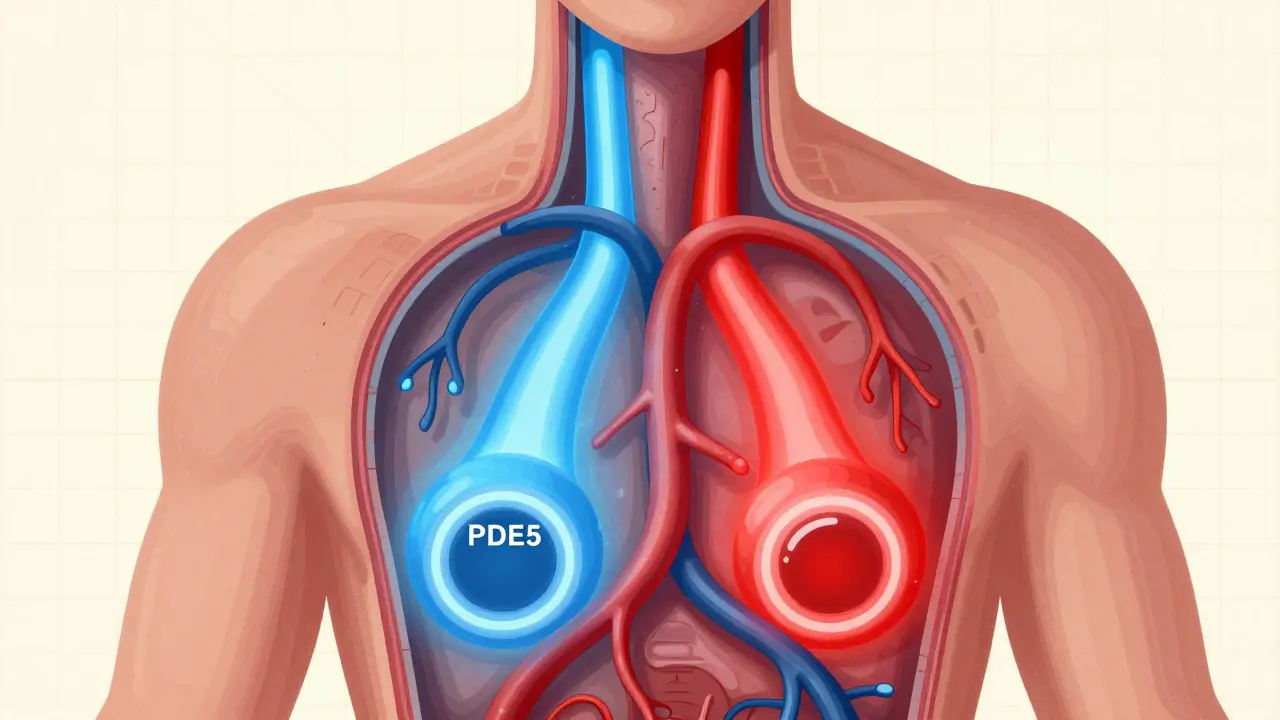
PDE5 inhibitors work differently but achieve a similar result regarding blood flow. They enhance the effects of nitric oxide, a chemical that signals your blood vessels to relax. By preventing the breakdown of cyclic guanosine monophosphate (cGMP), these drugs keep your vessels dilated longer. This is great for achieving an erection, but it also drops your systemic blood pressure.
When you take both drugs together, their effects add up. This is called additive vasodilation. Your blood vessels are being told to relax by two different mechanisms simultaneously. The result? A significant drop in blood pressure, especially when you change positions. This condition is known as orthostatic hypotension. It happens when your systolic blood pressure drops by 20 mmHg or more within three minutes of standing up. That sudden lack of blood flow to the brain causes the dizziness, lightheadedness, or fainting you might experience.
How Common Is the Risk?
You might wonder if this happens to everyone. The data suggests it is not universal, but it is frequent enough to require caution. A meta-analysis by Wang in 2014, covering nearly 30,000 patients, found that dizziness occurred in about 4.76% of those taking combination therapy. Another study by Urakami in 2019 reported vertigo or dizziness in 5.2% of patients using alpha-blockers with tadalafil.
While those percentages might sound small, consider the impact on quality of life. For many men, falling due to fainting can lead to serious injuries like broken bones or head trauma. User reports on medical forums paint a clearer picture of the daily reality. One patient described feeling like he was on a "rocking boat" for hours after combining Cialis with Flomax. Another reported fainting while getting up at 2 AM, resulting in a hard fall on his shoulder. These anecdotes highlight that while the statistical risk is moderate, the personal consequence can be severe.
| Symptom | Combination Therapy (Alpha-Blocker + PDE5i) | PDE5 Inhibitor Only | Alpha-Blocker Only |
|---|---|---|---|
| Dizziness | 4.7% - 5.2% | ~2.5% | ~3.0% |
| Headache | 5.36% | ~6.0% | ~2.0% |
| Flushing | 3.17% | ~4.0% | <1% |
| Fainting (Syncope) | 0.5% - 1.0% | <0.1% | 0.2% |
Which Medications Carry the Highest Risk?
Not all alpha-blockers are created equal when it comes to this interaction. The risk depends largely on whether the alpha-blocker is selective or non-selective.
- Non-selective alpha-blockers: Drugs like terazosin (Hytrin) and doxazosin (Cardura) affect blood vessels throughout the entire body. Because they lower blood pressure systemically, they pose a higher risk of orthostatic hypotension when combined with PDE5 inhibitors. Dr. Irwin Goldstein, a leading expert in sexual medicine, notes that symptomatic hypotension is highest with these agents.
- Uroselective alpha-blockers: Tamsulosin (Flomax) and alfuzosin (Uroxatral) are designed to target the prostate more specifically. While they still affect blood vessels, the impact on systemic blood pressure is generally less pronounced than with non-selective agents. However, the risk is not zero. Even with tamsulosin, patients report significant dizziness when adding a PDE5 inhibitor.
On the PDE5 inhibitor side, the duration of action matters. Sildenafil (Viagra) has a shorter half-life, meaning its peak effect wears off faster. Tadalafil (Cialis), especially the daily low-dose version, stays in your system for much longer. This prolonged presence means the window for potential interaction is wider, requiring consistent caution rather than just timing around a single dose.
Safe Management Strategies
If your doctor prescribes both medications, you don’t necessarily have to choose between treating your prostate and your sexual health. You just need to manage the combination carefully. The Princeton IV consensus guidelines, published in 2024, offer specific advice to minimize risks.
- Stabilize First: Never start a PDE5 inhibitor if you are already experiencing dizziness from your alpha-blocker. Wait until you have been on the alpha-blocker for 2 to 4 weeks and your body has adjusted to the blood pressure changes.
- Start Low: Begin with the lowest possible dose of the PDE5 inhibitor. For tadalafil, this means starting at 5 mg instead of the standard 10 mg or 20 mg. For sildenafil, start at 25 mg or 50 mg rather than 100 mg.
- Separate the Doses: Try to space out the medications. If you take your alpha-blocker at night, wait at least four hours before taking the PDE5 inhibitor. This reduces the chance that both drugs will hit their peak concentration in your bloodstream at the same time.
- Monitor Blood Pressure: If you are over 65, have a baseline systolic blood pressure below 110 mmHg, or take other blood pressure medications, talk to your doctor about home monitoring. The European Association of Urology recommends avoiding combination therapy entirely for high-risk patients unless closely monitored.

Lifestyle Adjustments to Prevent Falls
Medication management is only half the battle. How you move your body plays a huge role in preventing orthostatic hypotension. Here are practical steps you can take immediately:
- The Sit-and-Stand Rule: When waking up or sitting for long periods, do not jump straight up. Sit on the edge of the bed or chair for one to two minutes. Let your blood pressure adjust before standing. Once standing, pause for another minute before walking.
- Avoid Alcohol: Alcohol is a vasodilator. It widens your blood vessels, just like your medications. Combining alcohol with alpha-blockers and PDE5 inhibitors can increase the risk of symptomatic hypotension by up to 37%. Skip the drink on nights you plan to take your ED medication.
- Stay Hydrated: Dehydration lowers blood volume, which worsens dizziness. Drink plenty of water throughout the day, especially if you live in a warm climate or exercise regularly.
- Be Cautious at Night: Many men take alpha-blockers at bedtime to help with sleep-related urination. If you need to get up during the night, turn on a light immediately and move slowly. Keep a phone nearby in case you feel unstable.
When to Seek Medical Help
Some dizziness is expected, especially when first starting combination therapy. However, certain symptoms indicate that the interaction is too strong or that there is an underlying issue. Contact your healthcare provider if you experience:
- Fainting or loss of consciousness, even briefly.
- Chest pain or irregular heartbeat during sexual activity.
- Severe headache accompanied by vision changes.
- An erection lasting more than four hours (priapism), which is a rare but serious side effect of PDE5 inhibitors.
Your doctor may need to adjust your dosage, switch you to a different alpha-blocker, or reconsider the combination altogether. Remember, the goal is to improve your quality of life, not compromise your safety.
Can I take Viagra and Flomax together safely?
Yes, but with caution. Sildenafil (Viagra) and tamsulosin (Flomax) can be taken together, but you should start with a lower dose of sildenafil (25mg or 50mg). Ensure you are stable on Flomax for at least two weeks before adding Viagra. Space the doses apart by at least four hours to reduce the risk of dizziness and fainting.
Why does my head spin when I stand up after taking Cialis?
This is likely orthostatic hypotension. Cialis (tadalafil) and any concurrent alpha-blocker relax your blood vessels, causing a drop in blood pressure when you change positions. To prevent this, sit on the edge of your bed for a minute before standing, stay hydrated, and avoid alcohol. If the spinning persists, consult your doctor about adjusting your dose.
Is it safer to take daily low-dose Cialis or on-demand Viagra with an alpha-blocker?
Daily low-dose Cialis (2.5mg or 5mg) provides a steady level of medication in your system, which some doctors prefer because it avoids the sharp peaks associated with on-demand dosing. However, because it is always present, you must be cautious every day. On-demand Viagra has a shorter window of interaction. Discuss with your urologist which approach fits your lifestyle and cardiovascular profile best.
What should I do if I faint while taking these medications?
If you faint, lie down immediately with your legs elevated to restore blood flow to the brain. Check for injuries from the fall. Seek emergency medical attention if you hit your head, have chest pain, or do not regain consciousness quickly. Inform your doctor immediately afterward, as you may need to stop one of the medications or significantly lower the dose.
Does alcohol make the dizziness worse?
Yes, significantly. Alcohol acts as a vasodilator, widening blood vessels just like alpha-blockers and PDE5 inhibitors. Combining them can amplify the blood pressure drop, increasing the risk of dizziness and fainting by up to 37%. It is best to avoid alcohol when taking these medications, especially during the first few hours after dosing.